The modern world is entirely dependent on electricity, making the fragility of our power infrastructure a critical vulnerability. Whether caused by severe weather, cyberattacks, or infrastructure decay, surviving power grid failure is no longer a niche concern for doomsday preppers—it is a practical necessity for every responsible homeowner.
In this comprehensive guide, we will move beyond basic advice and dive deep into actionable, eco-conscious emergency preparedness. You will learn exactly how to secure your family’s water, food, shelter, and security for both short-term disruptions (up to 72 hours) and long-term grid-down scenarios (weeks or even months).
Drawing on decades of off-grid living experience and official guidelines, this power grid collapse survival guide provides the exact frameworks you need to build resilience. By adopting a sustainable, community-oriented approach, you can transform a terrifying scenario into a manageable challenge. Read on to discover the 11 critical preparations you must implement before the lights go out.
Is Your Home Ready for the Next Grid Failure?
Standard gas generators are loud, toxic, and rely on expensive fuel that runs out during a crisis. Discover how everyday homeowners are building silent, self-sustaining magnetic generators to keep their refrigerators running and their families safe indefinitely. Set up your workbench for success today.
Water Systems for Surviving Power Grid Failure
When the grid collapses, municipal water treatment plants and electric well pumps immediately stop functioning. In our experience building sustainable homesteads, water is the absolute first resource you must secure. You can survive weeks without food, but only days without water.
For short-term outages, you must have immediate storage on hand. Do not rely solely on bottled water, which generates massive plastic waste. Instead, store a minimum of one gallon of water per person per day, with a two-week supply highly recommended. For a family of four, that means 56 gallons of stored water strictly for drinking and basic hygiene. We recommend using food-grade BPA-free water barrels kept in a cool, dark place. Source: CDC Emergency Preparedness.
For long-term power grid failure, storage will eventually run out. You must establish a renewable, off-grid water procurement and filtration system. Rainwater catchment systems tied to your roof gutters are incredibly efficient. However, any harvested water or surface water must be purified. We have extensively tested off-grid filtration, and gravity-fed systems with ceramic carbon filters are the most reliable.
Related Post: Best Off-Grid Water Filtration Systems.
Real-World Scenario: During the 2021 Texas winter storm, millions lost water pressure. Families with pre-filled bathtub water storage bladders and gravity water filters were able to stay hydrated and flush toilets while their neighbors suffered dehydration.
Water Preparedness Checklist:
- Procure and fill 55-gallon food-grade water barrels (1 gallon/person/day for 14 days).
- Invest in a high-capacity gravity water filter (e.g., Berkey, Alexapure).
- Install a basic rainwater catchment barrel on at least one downspout.
- Stock up on water purification tablets (chlorine dioxide) as a lightweight backup.
Sustainable Food Storage and Off-Grid Nutrition
A sudden grid-down survival scenario means refrigerators will fail within 4 hours and freezers within 48 hours. Your immediate response should be to consume perishables first, but your survival depends on a robust, shelf-stable pantry. Source: FEMA Ready.gov.
Many beginners make the mistake of buying cheap, sodium-packed canned goods or expensive buckets of freeze-dried meals that they never eat. A sustainable emergency food supply should be a “deep pantry” of items you already consume. Rotate these goods regularly to avoid waste. For short-term needs, focus on high-calorie, nutrient-dense foods that require zero cooking: nut butters, dehydrated fruits, jerky, and protein bars.
For long-term power outage preparedness, you need to think in terms of bulk staples and regenerative agriculture. Whole grains, white rice, dried beans, and lentils stored in Mylar bags with oxygen absorbers can last up to 25-30 years. However, true sustainability comes from producing your own food. Establish a permaculture garden, stockpile heirloom survival seeds, and learn the art of fermentation and canning to preserve your harvest without refrigeration.
Food Supply Checklist:
- Build a 30-day “deep pantry” of daily canned and dry goods.
- Store bulk staples (rice, beans, oats) in 5-gallon buckets with Mylar bags.
- Purchase a comprehensive heirloom seed vault.
- Learn food preservation skills (dehydrating, water bath canning).
Essential Gear for Surviving Power Grid Failure: Solar and Backup Power
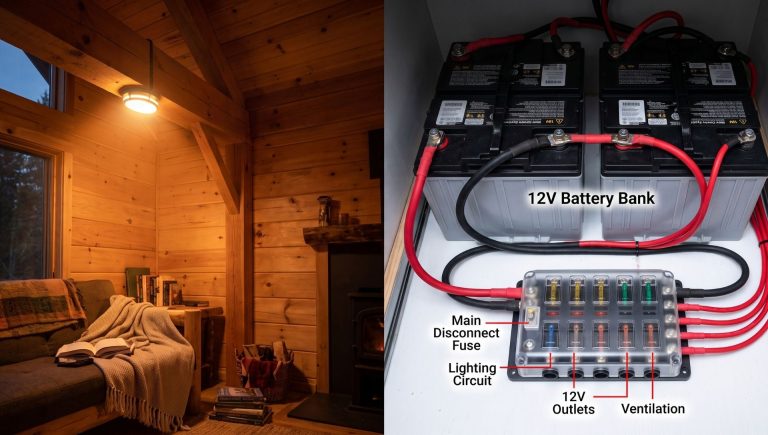
Relying on a gas-powered generator is a temporary fix. In a true grid collapse, fuel supply chains will break down within days, leaving gas generators useless. To ensure long-term off-grid living, you must harness renewable energy.
In our field testing, solar generators (portable power stations) paired with foldable solar panels offer the most accessible and eco-friendly backup power. Focus on systems utilizing LiFePO4 (Lithium Iron Phosphate) batteries, as they offer thousands of charge cycles and are far safer than traditional lithium-ion batteries. A unit with at least 1500 to 2000 watt-hours (Wh) can keep essential medical devices running, charge communications gear, and power a chest freezer for a few hours a day to maintain temperatures.
If you are aiming for complete energy independence, consider a whole-home solar system with a robust battery bank. Please Note: Tying a solar system directly into your home’s breaker panel poses severe electrocution risks to utility workers if not properly isolated. Always hire a licensed solar technician to install a manual transfer switch.
Real-World Scenario: Following Hurricane Ian, households equipped with portable solar generators were able to keep CPAP machines running and power tools operational for clearing debris, demonstrating the critical advantage of off-grid solar.
Backup Power Checklist:
- Calculate the wattage of your essential devices (medical gear, radios, freezer).
- Purchase a LiFePO4 solar generator that exceeds your daily wattage needs.
- Acquire at least 200W to 400W of portable solar panels.
- Invest in rechargeable AA/AAA batteries and a USB solar charger.
Related Post: Off Grid Water System: The Ultimate Guide for Sustainable Living.
Temperature Regulation and Shelter Mechanics
When HVAC systems die, your home’s internal temperature will quickly equalize with the outside environment. Depending on your climate, this can cause life-threatening hypothermia or heatstroke within 48 hours.
For winter outages, designate a single “warm room” in your home. This should ideally be a small, interior room with few windows. Close off all other rooms, use draft stoppers under the doors, and set up a micro-climate using a heavy-duty winter tent inside the room. Body heat will warm the tent significantly. For active heating, an indoor-safe catalytic propane heater is excellent, but you must install a battery-operated carbon monoxide detector nearby, as CO poisoning is a leading cause of death during winter outages. Long-term, a properly installed EPA-certified wood stove is the ultimate sustainable heating solution. Source: Department of Homeland Security.
For summer heat, maintaining a cool core body temperature is vital. Block out the sun using reflective window films or heavy blackout curtains during the day. Open windows at night to capture cross-breezes. Cooling towels, battery-operated fans, and sleeping on the lower levels of your home or in a basement will significantly reduce heat stress.
Temperature Regulation Checklist:
- Acquire extreme cold-weather sleeping bags for every family member.
- Store an indoor-safe propane heater with spare fuel canisters.
- Install battery-powered carbon monoxide and smoke detectors.
- Purchase reflective Mylar blankets and blackout curtains.
First Aid, Medications, and Emergency Health
Hospitals operate on backup generators, but during a widespread grid failure, emergency rooms will be overwhelmed, and EMS response times will be severely delayed. You must become your own first responder.
Standard drugstore first-aid kits are woefully inadequate for grid-down survival. You need a comprehensive trauma kit. In our survival training courses, we emphasize the “Stop the Bleed” methodology. Your kit must include authentic CAT tourniquets, Israeli bandages, hemostatic gauze (like QuikClot), and SAM splints.
Furthermore, manage chronic health conditions proactively. Ask your doctor for an emergency 90-day supply of life-saving prescriptions (like insulin or heart medication). [Source: American Red Cross]. If your medication requires refrigeration, you must have a specialized micro-fridge powered by your solar generator, or use evaporative cooling methods (like a Frio wallet) for short-term insulin storage. Finally, brush up on eco-conscious, natural remedies; learning to identify local medicinal plants like yarrow (for wound care) or willow bark (for pain relief) is an invaluable long-term survival skill.
Medical Preparedness Checklist:
- Build a trauma kit with tourniquets, chest seals, and hemostatic gauze.
- Secure a 30 to 90-day backup supply of essential prescriptions.
- Stockpile over-the-counter medications (ibuprofen, antihistamines, antidiarrheals).
- Take an accredited wilderness first aid and CPR course.
Off-Grid Sanitation and Waste Management
Sanitation is the most overlooked aspect of emergency preparedness. Without running water, toilets will not flush, and garbage collection will cease. Historically, in the aftermath of major disasters, waterborne diseases like cholera and dysentery cause more casualties than the initial event itself.
For short-term outages, you can flush your toilet manually by pouring a bucket of greywater (used dishwater or bathwater) directly into the bowl. When water becomes too scarce to waste on flushing, pivot to a “two-bucket” system. Use one 5-gallon bucket lined with heavy-duty trash bags for solid waste, covering each use with a handful of carbon material (sawdust, peat moss, or ash) to eliminate odors. Use a separate bucket for liquid waste.
For long-term scenarios, you must establish a sustainable humanure composting system or dig a properly sited outhouse (latrine). A latrine must be dug at least 200 feet away from any water source, dwelling, or property line to prevent groundwater contamination. Keep heavy-duty contractor bags, hand sanitizer, and bleach heavily stocked. Source: World Health Organization
Sanitation Checklist:
- Create a DIY emergency toilet (5-gallon bucket + toilet seat lid).
- Stockpile heavy-duty contractor trash bags and sawdust/kitty litter.
- Store ample supplies of toilet paper, wet wipes, and hand sanitizer.
- Keep unscented liquid household bleach on hand for sanitation (replace every 6 months).
Communication Strategies When Cell Towers Fail
Cellular towers have backup batteries, but they typically only last 4 to 24 hours during an outage. Once they die, your smartphone becomes a very expensive flashlight. Having reliable, off-grid communication is vital to gather intelligence and coordinate with loved ones.
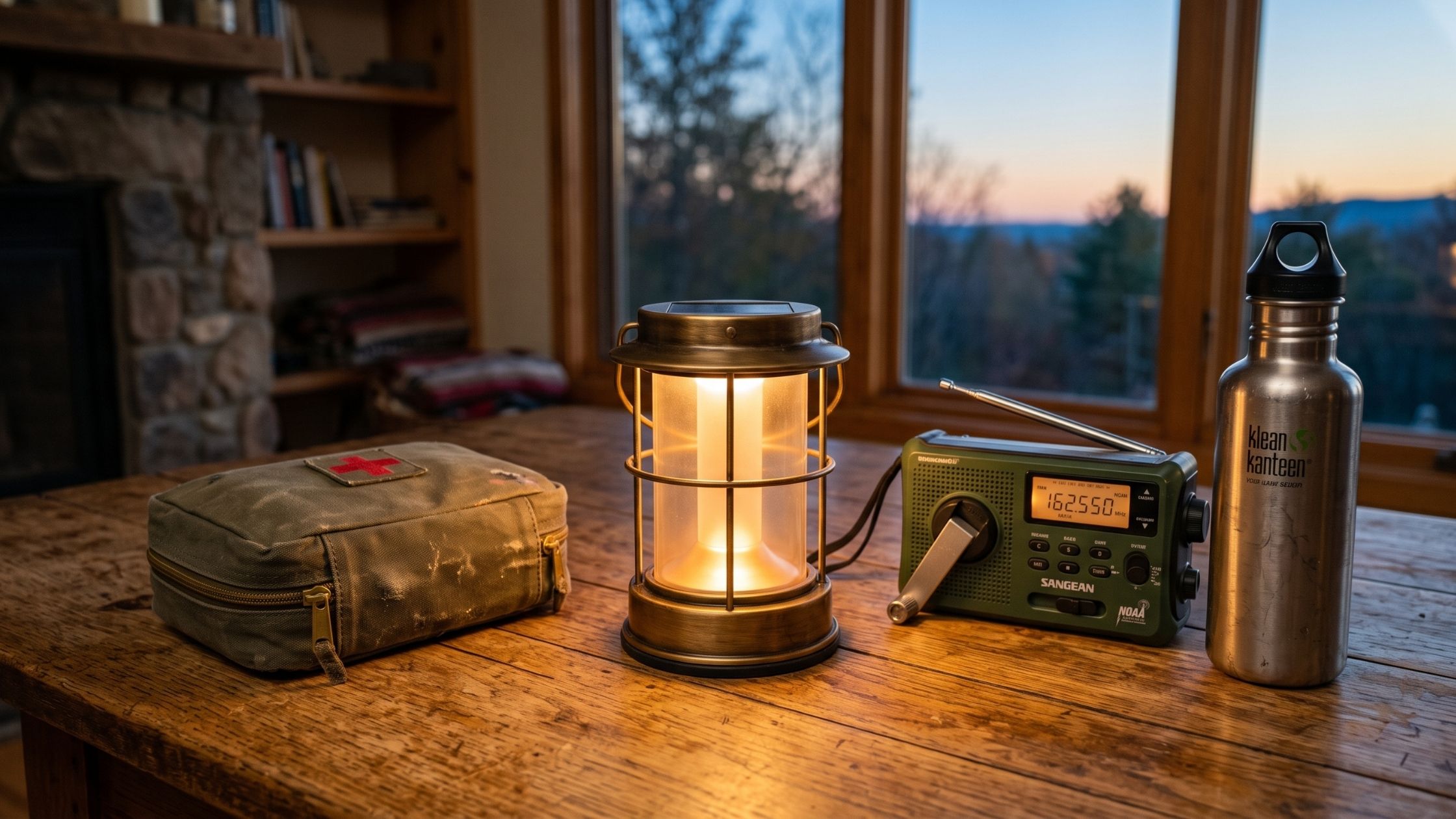
Begin with a hand-crank NOAA weather radio. This will provide you with official government broadcasts, weather updates, and emergency instructions. For two-way communication within your neighborhood, invest in a set of GMRS (General Mobile Radio Service) walkie-talkies. They offer better range than standard FRS radios and are excellent for local community coordination.
For long-distance, long-term communication, Ham radio (Amateur Radio) is the gold standard. While it requires passing a licensing exam, Ham operators are historically the only civilians capable of communicating across the country—or the world—during a total grid collapse.
Real-World Scenario: Following the total communication blackout in Western North Carolina after severe flooding, communities with localized Ham radio operators were the only ones able to coordinate rescue drops and relay messages to loved ones outside the disaster zone.
Communications Checklist:
- Purchase a hand-crank/solar NOAA weather radio with battery backup.
- Get GMRS two-way radios for family members and immediate neighbors.
- Store a physical copy of important contact numbers and local maps.
- Consider studying for and obtaining your entry-level Ham radio (Technician) license.
Lighting Solutions for Extended Outages
When the sun goes down during a grid failure, the darkness can be disorienting and dangerous. Reliance on candles is a common mistake; they provide minimal light and present a massive fire hazard, especially if you have children, pets, or are living in a confined space.
Your lighting strategy should be tiered. Tier one is personal lighting: Every family member should have a high-quality LED headlamp. Headlamps keep your hands free for cooking, administering first aid, or carrying water. Tier two is area lighting: Rechargeable solar LED lanterns are the most eco-friendly and safe option for illuminating a whole room. We recommend models that can be charged via USB from your solar generator or left in the sun during the day.
For a sustainable, long-term alternative, stock up on olive oil lamps or beeswax candles housed in secure hurricane glass. Avoid cheap paraffin candles, which release toxic petro-chemicals into the air when burned in unventilated spaces.
Related Post: How to Become Self Sufficient: Homestead Transformation Guide.
Lighting Preparedness Checklist:
- Issue one high-lumen LED headlamp per family member (with spare batteries).
- Purchase 3-4 solar-rechargeable LED camp lanterns.
- Install battery-powered motion-sensor puck lights in hallways/bathrooms.
- Secure safe, natural long-term lighting (beeswax, oil lamps, secure glass housings).
Security, Defense, and Community Resilience
Desperation breeds unpredictable behavior. As resources dwindle during an extended power grid collapse, property crime and home invasions statistically rise. Your security plan must focus on deterrence first.
A home that appears occupied, alert, and difficult to breach will generally be bypassed. Install solar-powered motion sensor lights around the perimeter of your home. Reinforce your entryways by upgrading the strike plates on your exterior doors with 3-inch screws, making them highly resistant to being kicked in. Keep a low profile: do not advertise your preparedness by leaving empty generator boxes or bulk food containers in plain sight.
However, the absolute best defense is community resilience. The “lone wolf” survivalist mentality is a myth that fails in practice. Get to know your neighbors now. A cohesive neighborhood that pools resources, shares a solar generator, and establishes a neighborhood watch schedule will survive a crisis far more comfortably than an isolated household.
Security & Community Checklist:
- Reinforce exterior doors with heavy-duty strike plates and 3-inch screws.
- Install solar-powered motion floodlights on your property perimeter.
- Secure first-floor windows (consider security film or secondary locks).
- Build relationships with neighbors and identify shared community skills/resources.
Cooking Off-Grid (Eco-Friendly Methods)
Eating cold canned beans will keep you alive, but a hot meal provides immense psychological comfort and essential caloric efficiency during a crisis. Transitioning to off-grid cooking requires safe, sustainable methods.
For short-term outages, a standard propane camping stove (like a Coleman two-burner) is incredibly efficient. Crucial Safety Note: Never use a camping stove or outdoor grill inside your home or garage due to extreme carbon monoxide danger.
For long-term, eco-conscious grid-down survival, you must pivot away from fossil fuels. Solar ovens are an outstanding investment; they harness the sun to slow-cook stews, bake bread, and even pasteurize water without producing a single puff of smoke. For overcast days, a rocket stove is highly recommended. Rocket stoves are incredibly efficient biomass burners that can boil water using just a handful of twigs and dry leaves, conserving precious firewood resources. Cast iron cookware is mandatory, as it can withstand the uneven heat of open flames and coals.
Off-Grid Cooking Checklist:
- Acquire a dual-burner propane camp stove with spare 1lb propane cylinders.
- Invest in an eco-friendly solar oven (e.g., SunOven or GoSun).
- Purchase a biomass rocket stove for high-efficiency outdoor cooking.
- Maintain a well-seasoned cast-iron skillet and Dutch oven.
Related Post: DIY Solar Oven: Cook and Dehydrate With the Sun (Step-by-Step Guide)
Barter Networks and Skill Sharing
If the power grid failure stretches into months, money will likely lose its immediate value. Survival will transition to an economy of barter, trade, and skill sharing. Preparing for this phase is what separates true survivalists from casual preppers.
Stockpile small, high-value items specifically for trade. Coffee, alcohol, salt, sugar, heirloom seeds, and spare batteries will become incredibly valuable commodities. Basic hygiene items like soap, toothpaste, and feminine products will also be highly sought after.
More importantly than physical goods, you must cultivate tradeable skills. The ability to repair clothing, forage for edible plants, administer first aid, or repair mechanical tools will make you an indispensable member of your local community. Knowledge is the ultimate, weightless survival tool that cannot be stolen from you.
Real-World Scenario: In historical examples of localized economic and infrastructure collapse (such as in Argentina in 2001), communities thrived not by isolating, but by immediately setting up hyper-local barter markets where mechanics traded services for food, and gardeners traded produce for medical supplies.
Barter & Skills Checklist:
- Stockpile tradeable comfort goods (coffee, salt, lighters, hard candies).
- Build a library of physical reference books (foraging, first aid, mechanics).
- Identify and master one unique, high-value survival skill.
- Organize a seed-swap or skill-share workshop in your community today.
Conclusion: Your Next Steps for Power Outage Preparedness
Surviving power grid failure is entirely possible with the right mindset, sustainable gear, and a commitment to proactive planning. The anxiety associated with a grid-down scenario diminishes the moment you begin taking actionable steps. By securing your water supply, investing in solar power, mastering off-grid sanitation, and fostering community resilience, you transition from vulnerable to empowered. Do not try to accomplish all 11 of these steps in a single weekend. Pick one category—such as water storage or building a first-aid kit—and conquer it this week.
Is Your Home Ready for the Next Grid Failure?
Standard gas generators are loud, toxic, and rely on expensive fuel that runs out during a crisis. Discover how everyday homeowners are building silent, self-sustaining magnetic generators to keep their refrigerators running and their families safe indefinitely. Set up your workbench for success today.
Quick Reference: The 11 Pillars of Grid Failure Survival
| # | Preparedness Category | Core Action Item |
|---|---|---|
| 1 | Water Systems | Store 1 gal/person/day; secure a gravity filter. |
| 2 | Food Supply | Build a 30-day deep pantry; invest in heirloom seeds. |
| 3 | Backup Power | Upgrade to LiFePO4 portable solar generators. |
| 4 | Temperature | Prep an indoor micro-climate; secure sleeping bags. |
| 5 | Medical Needs | Build a trauma kit; store 90 days of medications. |
| 6 | Sanitation | Setup a two-bucket composting toilet system. |
| 7 | Communication | Secure NOAA crank radios and GMRS walkie-talkies. |
| 8 | Lighting | Ditch candles for solar lanterns and headlamps. |
| 9 | Security | Reinforce doors; establish community neighborhood watch. |
| 10 | Off-Grid Cooking | Master solar ovens and biomass rocket stoves. |
| 11 | Barter & Skills | Stockpile salt/coffee; learn tangible repair skills. |
Frequently Asked Questions (FAQ)
What is the most likely cause of a power grid failure?
The most common causes of temporary grid failure are severe weather events (hurricanes, ice storms, and heatwaves). However, experts warn that long-term grid collapse could be triggered by coordinated cyberattacks, physical attacks on substations, or a massive Coronal Mass Ejection (CME) from the sun.
How long does food last in a fridge without power?
According to the CDC, a refrigerator will keep food safe for up to 4 hours during an outage. A half-full freezer will hold its temperature for 24 hours, and a full freezer for 48 hours, provided the doors remain closed.
Can solar panels work during a power outage?
Standard grid-tied home solar systems are designed to automatically shut down during a grid outage to protect utility workers from back-fed electricity. To use your solar panels during an outage, your system must include a battery backup system and a transfer switch, or you must rely on standalone off-grid portable solar generators.
What should you not do during a power outage?
Do not leave candles burning unattended. Do not open refrigerators and freezers unnecessarily. Never use a gas-powered generator, charcoal grill, or propane camping stove indoors, inside a garage, or near an open window due to the lethal risk of carbon monoxide poisoning.
Written by: Sarah Jenkins, a certified emergency preparedness instructor with 15 years of experience in off-grid living, sustainable homesteading, and survival training. Last Updated: August 31, 2026 | Fact-Checked by: Green Life Zen Editorial Team