Rising electricity costs and the growing environmental impact of electronic waste demand immediate, actionable solutions from modern consumers. According to the United States Department of Energy, “phantom loads” or standby power can account for up to 10% of an average household’s monthly electricity bill, costing consumers hundreds of dollars annually. When you scale this issue across millions of households and factor in the constant degradation of lithium-ion batteries in personal devices, the need for intervention becomes clear. Implementing scientifically backed power-saving techniques directly addresses both ecological concerns and personal financial drain.
This comprehensive guide outlines practical methods to drastically reduce your technological energy footprint. We will explore five key areas: minimizing silent energy drain during device downtime, managing screen illumination, restricting background application activity, configuring operating system defaults, and adopting smarter charging schedules. By applying these specific strategies, you can lower your monthly utility costs, extend device battery lifespans, and contribute to a more sustainable energy grid.
Standby Mode Optimization
Many tech users assume that pressing the power button completely turns off a device. In reality, most modern electronics enter a dormant state that continues to draw electricity. Standby mode optimization addresses this silent energy drain—often referred to as vampire draw—which keeps devices ready to receive updates or power on instantly.
To combat this constant draw, you must explicitly configure standby settings on high-consumption devices like smart televisions, desktop computers, and gaming consoles. For example, modern gaming consoles can draw between 10 to 15 watts of continuous power when left in “Instant-On” or “Rest” modes. Navigate to the system settings of your console or television and switch the power profile to “Energy Saver” or “Eco Mode.” This adjustment reduces the standby draw to less than 1 watt.
Automating the power-off process provides an even more reliable solution. You can integrate smart power strips into your home entertainment centers or home offices. These strips detect when you power down a primary device, like a television or desktop computer, and automatically cut electrical current to peripheral devices like soundbars, monitors, or printers.
Additionally, disabling unnecessary notifications on mobile devices and smart home hubs prevents screens from illuminating and processors from waking up. Every time an application pushes an alert to your locked smartphone, the device temporarily exits its deep sleep state. By navigating to your notification settings and revoking permissions for non-essential applications, you drastically reduce the frequency of these micro-awakenings and decrease overall standby power consumption. Read our related post on smart home automation for more efficiency tips.
Power-Saving Techniques for Display Brightness Adjustment
The screen acts as the single largest power consumer on nearly every modern portable electronic device, often accounting for 50% to 70% of total battery drain. Mastering display brightness adjustment directly correlates to immediate reductions in energy consumption and significantly extended battery life throughout the day.
Manufacturers integrate ambient light sensors into most modern smartphones, tablets, and laptops. These sensors power automatic brightness features, which dynamically scale the screen’s backlight intensity based on your surrounding environment. Enabling “Auto-Brightness” (found under Accessibility settings in iOS or Display settings in Android and Windows) prevents your device from pushing maximum illumination in a dimly lit room, thereby conserving substantial power.
However, relying entirely on automatic features is not always the most efficient route. For optimal energy efficiency, take manual control of your brightness slider. In well-lit indoor environments, setting your brightness manually to 30% or 40% typically provides more than enough clarity without overtaxing the battery. When working in darker spaces, manually lowering the screen to its minimum readable threshold preserves maximum energy.
Balancing visibility with energy efficiency requires building a simple habit: only use the brightness you actually need to read the screen comfortably. If you constantly keep your display at 100% brightness, you force the device to expend excess energy generating unneeded light, which generates additional heat and degrades battery health over time.
Battery Usage Optimization
The applications installed on your devices do not simply stop functioning when you navigate away from them. Many applications continue to run background processes, ping location services, and refresh data streams silently. This persistent background activity drains battery reserves and forces you to recharge more frequently. Proper battery usage optimization requires strictly managing what your software can do when you are not actively interacting with it.
To restrict background application activity on iOS, open the Settings app, tap General, and select Background App Refresh. Here, you can disable the feature entirely or toggle it off for individual applications like social media platforms or retail apps that do not require constant data synchronization. On Android devices, open Settings, navigate to Battery, and select Background Usage Limits. You can place infrequently used applications into “Deep Sleep,” which prevents them from running entirely until you manually open them.
Establish a weekly routine for reviewing and restricting your applications. Check your device’s built-in battery usage monitor to identify which apps consume the highest percentage of background power. Revoke location tracking permissions for any application that does not strictly require GPS data to function.
These optimization practices do more than just get you through the day on a single charge; they actively extend the long-term health of your hardware. Lithium-ion batteries degrade based on charge cycles. By reducing the speed at which your battery drains, you reduce how frequently you must plug the device into the wall, thereby slowing the natural chemical degradation of the battery cell and delaying the need for expensive hardware replacements.
Advanced Power-Saving Techniques Using Power Management Settings
Desktop operating systems provide robust tools designed to control how and when hardware components consume electricity. Navigating and configuring these power management settings produces measurable efficiency gains, particularly for individuals who leave their computers running for 8 to 10 hours a day.
Begin by accessing the power configuration tools on your operating system. On Windows, press the Start button, type “Choose a power plan,” and select the control panel interface. Switch your active plan from “High Performance” to “Balanced” or “Power Saver.” On macOS, open System Settings and navigate to the Displays and Energy Saver menus.
Next, strictly configure your sleep mode thresholds. For optimal efficiency, set the display to turn off after 5 minutes of inactivity and configure the computer to enter a full sleep state after 15 minutes of inactivity. When a computer enters a full sleep state, it saves your current session to the system memory and powers down the hard drive, processor, and cooling fans, reducing energy consumption by up to 80% compared to an idle, awake state.
Take advantage of built-in power-saving software tools. Windows 11 includes a feature called Battery Saver, and macOS offers Low Power Mode. When activated, these tools automatically throttle processor speeds, pause background email syncing, and lower display brightness. By fine-tuning these specific settings, corporate offices and home users alike can reduce annual computer energy costs by $30 to $50 per machine, proving that software adjustments yield highly measurable physical savings. Explore these 10 Sustainable Home Upgrades Worth Every Penny.
Energy-Efficient Charging Methods
How and when you transfer electricity from the wall to your devices matters just as much as how your devices use that power. Adopting energy-efficient charging methods minimizes electricity waste and aligns your consumption habits with a more sustainable energy grid.
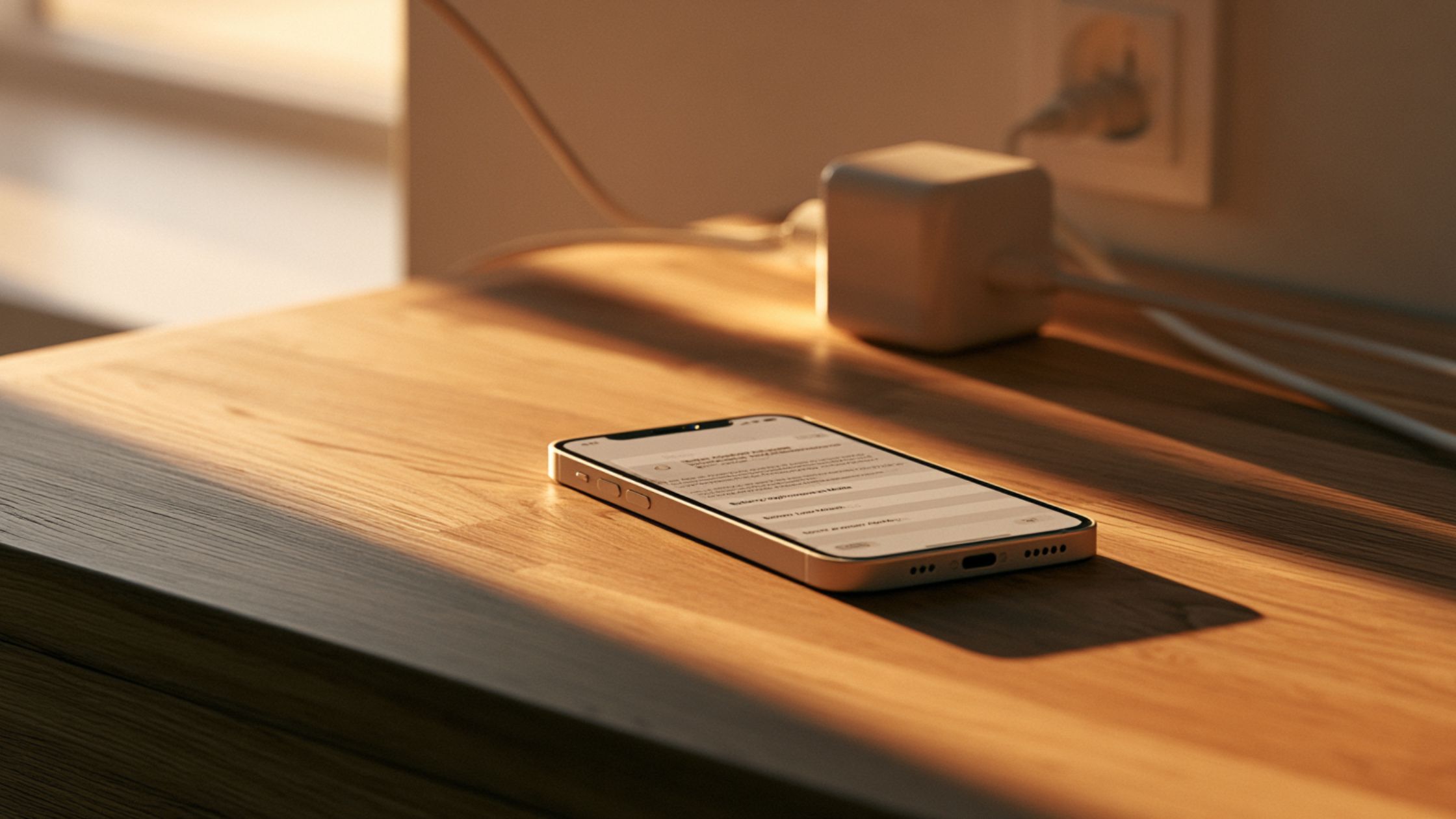
The simplest way to upgrade your charging habits involves smart plug integration. Connecting your device chargers to Wi-Fi-enabled smart plugs allows you to schedule exact charging windows through a smartphone application. You can set the plug to activate for exactly two hours—just long enough to bring a laptop or smartphone to full capacity—and then automatically cut the power entirely, eliminating the trickle-charge energy waste that occurs when a device sits at 100% capacity on an active charger overnight.
Scheduling your charging sessions during off-peak electricity hours offers significant financial benefits. Many utility companies utilize Time-of-Use (TOU) billing, where electricity costs significantly less during the late evening or early morning when grid demand drops. By using smart plugs to charge high-capacity devices like laptops, electric bicycles, or power banks between 11:00 PM and 6:00 AM, you drastically reduce the physical cost of the electricity you consume.
For a completely sustainable alternative, integrate solar charging into your device management routine. Portable solar chargers and high-capacity solar power banks allow you to harness free, renewable energy to power your smartphones and tablets. Placing a small 20-watt solar panel in a sunlit window can generate enough daily electricity to keep your mobile devices fully charged year-round, completely removing them from your monthly utility bill and demonstrating how smarter, renewable charging practices physically reduce electricity costs.
Conclusion
Reducing your environmental footprint and lowering your utility bills requires a proactive approach to device management. By implementing the five core power-saving techniques covered in this guide—optimizing standby modes, manually adjusting display brightness, restricting background battery usage, configuring aggressive power management settings, and adopting smart, off-peak charging schedules—you gain total control over your technological energy consumption.
The true power of these strategies lies in their cumulative impact. While dimming a screen or disabling one background application might only save a few watts individually, combining all five methods across every device in your household can reduce your technology-related energy consumption by 15% to 20% annually. Do not wait to start lowering your energy footprint. Navigate to the settings menu on the device you are currently using, locate the background application refresh toggle, and take your first step toward immediate, measurable energy efficiency today.