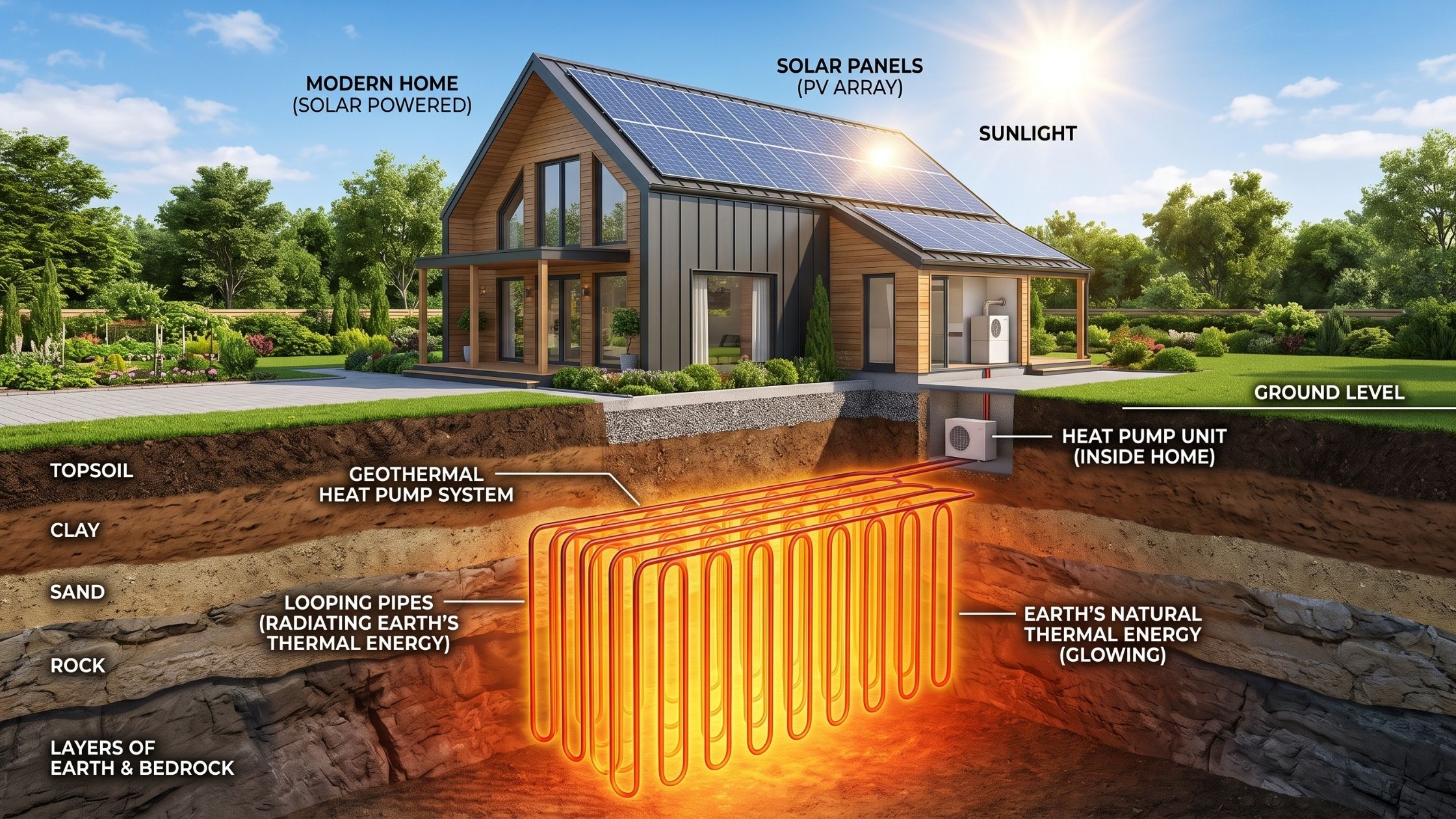
When homeowners and sustainability enthusiasts research renewable options, they often view geothermal and solar energy as vastly different technologies. It makes sense: solar power harvests radiation from the sun using photovoltaic technology, while geothermal systems tap into Earth’s thermal energy stored deep underground. However, a deeper renewable energy comparison reveals that these two clean power powerhouses share a remarkable amount of common ground.
Every second, an astounding 47 Terawatts of heat leaves the Earth’s surface, while the sun bathes our planet in practically limitless solar radiation. Harvesting both of these incredible natural forces is critical to our sustainable future. Whether you are weighing geothermal energy vs solar power for a residential home upgrade or simply want to understand the future of sustainable power, knowing how these technologies align is essential. Let’s explore the seven foundational points that geothermal and solar energy have in common and how they are collectively reshaping the global energy landscape.
1. How Geothermal and Solar Energy Power Homes and Businesses
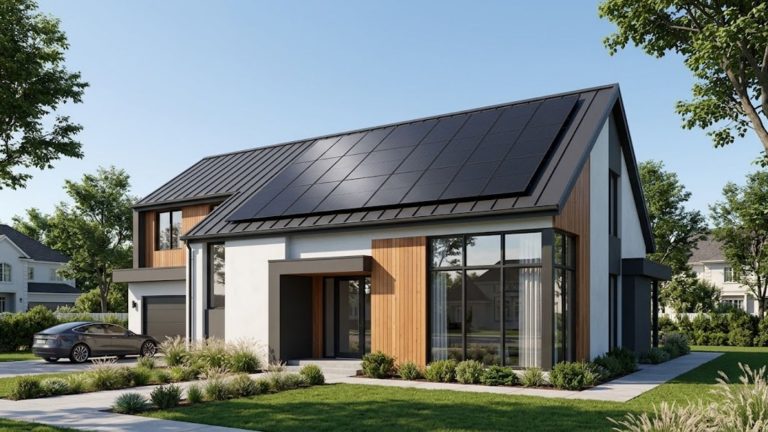
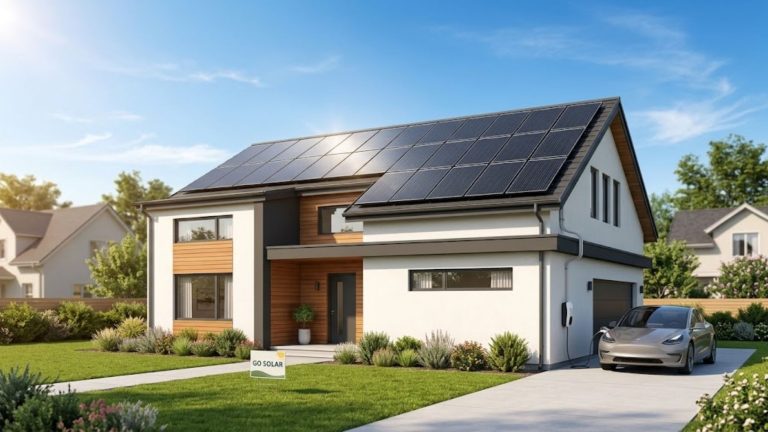
While the underlying mechanics of geothermal energy vs solar power differ significantly, their end applications are remarkably similar. Both technologies successfully generate functional electricity and provide advanced climate control for residential homes and commercial enterprises alike. Solar energy utilizes photovoltaic panels to convert sunlight directly into electricity, making it highly accessible for neighborhood rooftops and sprawling corporate campuses. Geothermal energy captures underground heat to drive massive steam turbines for utility-scale electricity, while also utilizing ground-source heat pumps for highly efficient residential heating and cooling.
When looking at the scale of deployment, the financial investments look quite different but achieve the same reliable outcome. Average residential solar installation costs typically range from $10,000 to $30,000, allowing homeowners to generate their own power independently. Conversely, utility-scale geothermal plant costs regularly exceed $100 million due to the complex deep-earth drilling and infrastructure required. Despite this massive difference in initial capital, both systems are incredibly effective at decentralizing our modern power grid. They give property owners the unprecedented ability to produce sustainable power on-site, reducing our reliance on centralized, fossil-fuel-burning utility companies.
2. True Renewable Energy Sources That Will Never Run Dry
At the heart of any honest renewable energy comparison is the question of resource longevity and sustainability. Fortunately, both geothermal and solar energy tap into practically inexhaustible forces of nature that will outlast human civilization. Solar power relies on the sun, a celestial fusion reactor that will continue beaming vast amounts of energy to our planet for billions of years. As long as the sun continues to rise, modern photovoltaic systems will reliably harvest its rays to power our lives.
Geothermal energy looks inward, drawing from the immense, continuous heat generated by the Earth’s core. To understand the sheer scale of this resource, scientists estimate that a staggering 47 Terawatts of heat continuously leaves the Earth’s surface. This constant thermal radiation is fueled by the slow decay of radioactive particles deep underground, ensuring our planet acts as a limitless battery of thermal energy. Unlike finite resources such as coal, oil, or natural gas—which require destructive extraction and will eventually be depleted—both sunlight and Earth’s thermal energy are permanently available. Tapping into these natural systems guarantees a reliable power supply that eliminates the risk of future resource scarcity.
3. Environment-Friendly Solutions with Zero Carbon Emissions
Transitioning to a green economy requires power sources that do not pollute our atmosphere, and both geothermal and solar energy excel in this vital category. Neither technology relies on the combustion of fossil fuels to generate electricity or heat, meaning their daily operation produces virtually zero carbon emissions. By replacing traditional coal and natural gas plants, these eco-friendly options directly improve local air quality and drastically reduce the emission of harmful greenhouse gases into our atmosphere.
While the manufacturing and installation phases of solar panels and geothermal plants do carry a minor initial carbon footprint, their operational phases are completely clean. Solar arrays silently convert sunlight into usable electricity without emitting a single puff of toxic smoke. Similarly, geothermal plants utilize advanced closed-loop systems that simply circulate water and steam, safely returning fluids back into the earth without venting pollutants into the sky. For homeowners and policymakers alike, investing in these technologies represents a tangible commitment to environmental stewardship. Choosing either of these clean energy pathways guarantees a drastic reduction in corporate and personal carbon footprints.
4. Significant Expense Reductions and Long-Term Cost Savings
A major factor driving the widespread adoption of renewable technology is the promise of long-term financial relief. While evaluating the initial geothermal energy cost versus solar power expenses can seem daunting, both systems deliver spectacular expense reductions over their lifespans. Once the upfront capital is invested and the systems are activated, the ongoing fuel costs for both are essentially zero. The sun and the earth do not send monthly utility bills, which instantly isolates consumers from the volatile price spikes of global fossil fuel markets.
For residential applications, standard solar installation costs of $10,000 to $30,000 generally see a financial break-even point within six to ten years, depending on local rates and sun exposure. After this brief period, homeowners enjoy decades of practically free electricity. While large-scale geothermal plant costs exceeding $100 million represent massive utility investments, residential ground-source heat pumps also offer remarkable household savings by cutting heating and cooling bills by up to 70%. Ultimately, the high initial capital required for both technologies is vastly outweighed by decades of dependable financial returns and total energy independence.
5. Outstanding System Longevity and Life Expectancy
When you invest in clean energy infrastructure, you are purchasing decades of reliable, uninterrupted performance. Both systems boast incredibly long life expectancies, far outlasting conventional household HVAC systems and commercial fossil fuel generators. Modern solar panels are remarkably durable, featuring zero moving parts that can wear out from daily mechanical friction. Most tier-one solar arrays come with strict performance warranties guaranteeing 25 years of strong output, but their actual usable life expectancy often stretches well past 30 years.
Geothermal infrastructure is equally, if not more, robust. Utility-scale geothermal power plants consistently operate for more than 25 to 30 years with proper, routine maintenance. For residential properties, the indoor heat pump components typically last over 20 years, while the underground loop systems—which are safely protected from weather and extreme surface temperature fluctuations—can function flawlessly for more than 50 years. This impressive longevity dramatically lowers the lifetime cost of ownership. By requiring fewer replacements and producing consistent clean energy for decades, both solar and geothermal systems prove themselves to be resilient, generational investments.
6. Driving Economic Growth Through Clean Energy Jobs
The global shift toward sustainable power is not just an environmental imperative; it is a massive economic engine driving wealth creation. The widespread deployment of geothermal and solar technologies is currently generating record numbers of clean energy jobs worldwide. As the demand for renewable infrastructure skyrockets, so does the desperate need for skilled professionals across manufacturing, engineering, installation, and long-term system maintenance.
The growth in the geothermal sector is particularly striking. Global geothermal electrical power capacity has seen consistent, steady expansion, growing from 10.38 GW in 2011 to an impressive 15.96 GW in 2021. Building and operating this complex infrastructure requires geologists, drilling experts, and specialized engineers. Similarly, the solar industry has become one of the fastest-growing sectors for employment, offering thousands of local jobs to roofers, electricians, and sales teams that simply cannot be outsourced overseas. By transitioning our power grid to these technologies, we are fostering resilient, future-proof employment that provides stable, high-paying career opportunities for decades to come.
7. Why Geothermal and Solar Energy Are Essential Climate Change Solutions
Ultimately, the most critical similarity between these two technologies is their role as indispensable climate change solutions. To successfully halt the warming of our planet, modern society must completely overhaul its energy infrastructure, and neither solar nor geothermal can achieve this massive goal alone. By strategically integrating both resources, we create a diversified, highly resilient green energy grid capable of supporting modern civilization.
Performance metrics clearly highlight why both are necessary for a sustainable future. Current solar panel efficiency hovers around 15–22%, making it highly effective for decentralized, daytime power generation across millions of rooftops. However, solar power is inherently intermittent. This is where geothermal technology truly shines, boasting a remarkable operational geothermal system efficiency of 40–60%. Geothermal plants operate 24 hours a day, providing the vital baseload power needed when the sun goes down. Together, these renewable powerhouses complement each other perfectly—solar manages daytime peak demand, while geothermal supplies unwavering grid stability.
The Future of Clean Energy: Integrating Geothermal and Solar
Choosing between geothermal and solar energy isn’t about finding a single winner; it’s about understanding how these powerful technologies work together to power our future. Both systems offer incredible, overlapping benefits that make them the absolute foundation of a modern green economy.
Here are the primary takeaways from our comparison:
- Cost Stability: Both technologies eliminate ongoing fuel costs entirely, protecting consumers from unpredictable energy markets and inflation.
- Grid Resilience: Pairing the daytime peaks of solar power with the 24/7 baseload reliability of geothermal energy creates a highly stable, completely green power grid.
- Environmental Impact: Utilizing Earth’s internal thermal energy and the sun’s radiation directly halts the carbon emissions driving global climate change.
Whether you are a homeowner calculating residential solar installation costs or a policymaker evaluating massive geothermal plant expansions, investing in these sustainable solutions is a guaranteed step forward. By embracing both geothermal and solar energy, we can successfully build a cleaner, wealthier, and far more resilient world for future generations.
References
- Dye, S. T. (2012). “Geoneutrinos and the radioactive power of the Earth”. Reviews of Geophysics -https://agupubs.onlinelibrary.wiley.com/doi/full/10.1029/2012RG000400
- https://www.irena.org/Energy-Transition/Technology/Geothermal-energy