Standing in the damp undergrowth of a Pacific Northwest forest, I once spent twenty minutes squinting at a worn field guide, trying to distinguish true Solomon’s Seal (Polygonatum biflorum) from its toxic lookalike. Today, the landscape of foraging and plant study has drastically changed. When evaluating the best apps for medicinal herb identification, I look for tools that bridge the gap between ancient ethnobotanical wisdom and cutting-edge plant recognition technology.
If you are wondering what the top options are, the short answer is this: the best app for identifying medicinal herbs combines a massive botanical database with highly accurate image recognition, offline field capabilities, and community-verified insights to ensure safe, accurate identification.
Whether you are a beginner exploring herbal remedy apps or a seasoned practitioner upgrading your field plant identification toolkit, modern digital health tools can transform your practice. In this comprehensive guide for Green Life Zen, we will explore the top five applications currently available, examining their strengths, limitations, and practical utility for modern herbalists.
How We Evaluate Medicinal Plant Identification Apps
Not all botanical applications are created equal. As a practicing herbalist, I cannot rely on superficial listicles or generalized gardening apps when evaluating tools for medicinal foraging. Misidentifying a plant in the Apiaceae (carrot) family, for example, can mean the difference between harvesting medicinal wild carrot and deadly poison hemlock. Therefore, I assess each application based on rigorous field criteria.
First, database depth and accuracy are paramount. An effective app must possess a comprehensive botanical database that utilizes accepted scientific naming conventions (genus and species) rather than relying solely on colloquial regional names. Second, I look for robust medicinal use documentation. The best herbal medicine apps go beyond basic taxonomy to include historical context, preparation methods, and traditional dosage information.
User interface and accessibility also play a crucial role. When you are elbow-deep in a thorny bramble, you need an app that is intuitive and fast. This naturally ties into offline functionality; true field work rarely happens in areas with perfect cell service, so offline access to identification models is a non-negotiable feature for serious foragers.
Finally, I evaluate community features and pricing and platform availability. Is there a network of botanists verifying findings? Is a plant identification app free, or does it require a premium subscription? By weighing these factors, we can separate the genuinely useful ethnobotany apps from novelty tools.
Tired of Second-Guessing Wild Lookalikes?
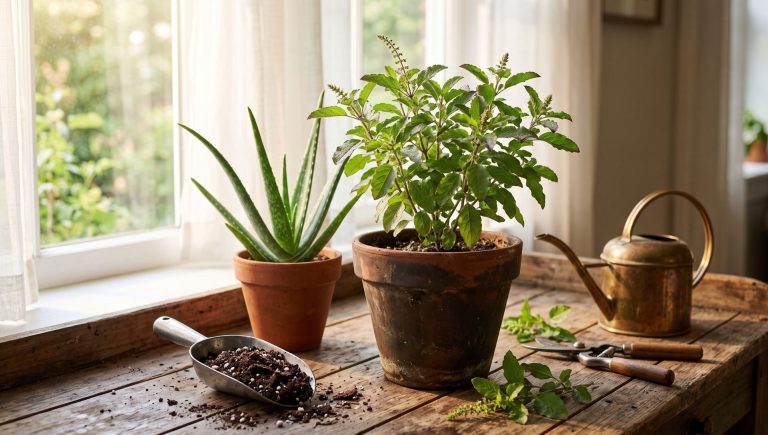
While plant apps are incredible field guides, wild foraging always carries risks: contaminated soil, trespassing laws, and toxic double-gangers. The safest way to ensure 100% botanical certainty is cultivating your own home apothecary. The Medicinal Garden Kit delivers 10 heirloom, non-GMO medicinal plant seeds (including Yarrow, Chamomile, and Echinacea) paired with a step-by-step master guide for home tinctures, teas, and salves. Claim Your Medicinal Garden Kit & Free Herbal Guide Here →
Top 5 Apps for Medicinal Herb Identification
Herbalist
For those who want a digital materia medica in their pocket, Herbalist is an exceptional starting point. Developed with a focus on traditional plant uses, this application serves as a comprehensive encyclopedia of medicinal plants, their active constituents, and their traditional preparations. Unlike purely photographic identification tools, Herbalist focuses heavily on what to do with the plant after you have accurately identified it.
The app features detailed monographs for hundreds of common and obscure herbs. Its documented strengths lie in its structured preparation methods—offering traditional instructions for tinctures, decoctions, and poultices. However, a notable limitation is its reliance on manual search and text-based identification rather than active camera-based plant recognition technology. It is better used as a cross-referencing tool alongside a visual identifier.
Herbalist offers a robust free tier, with premium ad-free versions and expanded libraries typically costing around $2.99 to $9.99 annually (subject to change). Available on both iOS and Android, this app is best suited for intermediate practitioners and wellness enthusiasts focusing on herbal preparations.
Expert Field Tip: Use a dedicated photo ID app to confirm the plant’s genus and species, then immediately open Herbalist to check its traditional contraindications before harvesting.
Herbarium
Herbarium acts as a beautifully designed digital catalog that appeals deeply to botanical traditionalists. Built to mimic the tactile joy of classical botanical illustrations, this app provides users with a vast, elegantly organized database of plants, complete with detailed notes on traditional healing properties, parts used, and historical ethnobotanical context.
The application shines in its offline functionality and its focus on the holistic history of herbal medicine. It is incredibly user-friendly, allowing foragers to create their own digital “herbariums” by logging their local finds. However, community feedback notes a limitation: its database, while highly detailed, can lack coverage for highly obscure, hyper-regional medicinal plants native to specialized micro-climates.
Herbarium offers limited free access, with a premium subscription usually priced around $14.99 annually to unlock full offline databases and advanced logging features. It is available across major mobile platforms. This app is highly recommended for organized foragers and herbalists who want to meticulously document their local bioregion.
Expert Field Tip: Take advantage of the app’s personal logging feature to record the exact bloom times of local medicinals, creating a personalized harvesting calendar for your specific micro-climate.
iNaturalist
Considered the gold standard for field plant identification, iNaturalist is a joint initiative by the California Academy of Sciences and the National Geographic Society. While it is not strictly marketed as an herbal medicine app, it is an indispensable tool for any practicing herbalist. iNaturalist utilizes a massive, crowdsourced botanical database and highly advanced AI to suggest identifications based on your photos.
Its greatest strength is its community-driven verification process. When you upload an observation, a network of amateur naturalists and professional botanists reviews it, helping to confirm your identification to research-grade status. The main limitation for herbalists is that it provides no medicinal preparation or dosage information—it is purely for identification.
iNaturalist is entirely free to use with no premium subscription tiers, making it the premier plant identification app free of paywalls. Available on both iOS and Android, it is ideal for herbalists of all levels who require absolute certainty in their botanical identifications.
Expert Field Tip: When uploading photos for identification, do not just photograph the flower. Capture clear images of the stem, leaf arrangement (alternate vs. opposite), and basal rosette. These morphological details are what community botanists need to verify your find.
PlantSnap
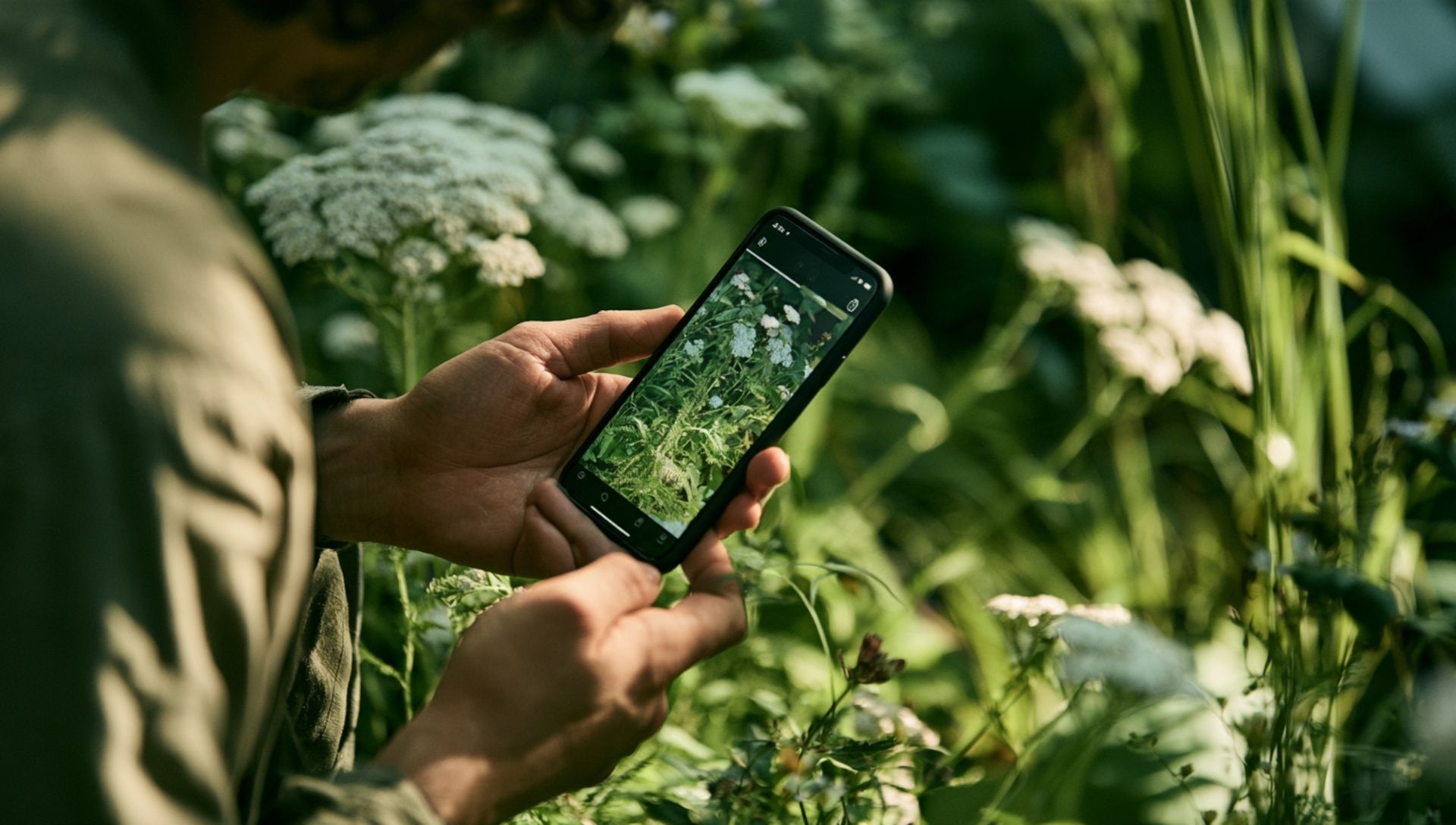
If your primary goal is to quickly identify medicinal plants with a phone in real-time, PlantSnap is one of the most commercially successful visual recognition apps on the market. Boasting a database of hundreds of thousands of plants, flowers, trees, and mushrooms, its algorithm is trained to recognize botanical features with impressive speed.
PlantSnap’s major strength is its frictionless user experience and massive scope, making it highly accessible for general wellness enthusiasts stepping into the world of wildcrafting. Users can instantly snap a photo and receive an algorithmic match in seconds. However, users should be aware that because it relies entirely on AI rather than human verification, it can occasionally struggle with closely related lookalikes, particularly in dense foliage. Furthermore, its medicinal application data is sparse compared to dedicated ethnobotany apps.
The app features a limited free tier (often restricted by a set number of daily photos), with premium subscriptions ranging from $19.99 to $29.99 annually for unlimited, ad-free identification. It is available on iOS and Android and is best for beginners who want immediate, on-the-go plant recognition.
Expert Field Tip: Ensure your subject is isolated in the frame. If you are trying to identify a low-growing medicinal like Cleavers (Galium aparine), place your hand or a plain piece of paper behind the plant to help the AI focus on the distinct whorled leaves.
Seek by iNaturalist
Developed as the more accessible, family-friendly sibling to the main iNaturalist app, Seek utilizes the same powerful image recognition AI but operates primarily through your device’s live camera view. Using augmented reality (AR), Seek identifies plants, fungi, and wildlife in real-time as you pan your camera across the forest floor.
Seek’s outstanding strength is its absolute ease of use and its privacy-first design; it requires no registration or user login, making it incredibly safe and accessible. It actively encourages users to explore their local environments through gamified badges and challenges. The main limitation is that, unlike its parent app, Seek does not upload data to the community for expert verification, meaning you are relying entirely on the AI’s judgment.
Seek is completely free on iOS and Android. It is the perfect application for beginners, families introducing children to foraging, and casual naturalists who want to learn the basic ecology of their surroundings without delving into complex taxonomic data.
Expert Field Tip: Use Seek to quickly scan a meadow to locate patches of potential medicinals like St. John’s Wort (Hypericum perforatum), then use a dedicated field guide to verify the specific identifying markers, such as the translucent dots on the leaves.
Comparative Summary Table
To help you choose the right tool for your specific foraging and clinical needs, here is a quick comparison of our top-rated applications.
| App Name | Best For | Database Depth | Community Features | Free Access | Annual Premium Cost (Approx.) |
|---|---|---|---|---|---|
| Herbalist | Medicinal preparations & properties | Hundreds of traditional herbs | None (Reference tool) | Yes (Basic) | $2.99 – $9.99 |
| Herbarium | Logging finds & historical context | Thousands of global species | Low | Yes (Limited) | $14.99 |
| iNaturalist | High-accuracy field identification | Millions (Research-grade) | High (Expert curation) | 100% Free | $0.00 |
| PlantSnap | Quick AI visual recognition | 600,000+ species | Medium (Social feed) | Yes (Ad-supported) | $19.99 – $29.99 |
| Seek | Beginners, casual foraging, AR | Based on iNaturalist data | None (Privacy focused) | 100% Free | $0.00 |
(Note: Pricing and database metrics are approximate and subject to change based on platform and regional app store policies.)
User Experience and Community Considerations
While digital health tools have revolutionized field botany, they are not without user frustrations. A deep dive into community feedback reveals common pain points among app users. The most frequent complaint is the lack of coverage for uncommon or highly regional plants. An app trained predominantly on North American and European flora often misidentifies native medicinal plants in tropical or arid bioregions. Furthermore, many photographic identifier apps lack robust preparation recipes and safe dosage guidance, leaving intermediate practitioners with an accurate name but no actionable ethnobotanical knowledge.
To combat this, the most successful ethnobotany apps rely heavily on community-driven feedback loops. Platforms like iNaturalist thrive because they are not static; they actively improve their content quality over time through crowdsourcing. When an AI misidentifies a plant, expert community moderators and verified botanists step in to correct the taxonomy. This collaborative network between amateur foragers, citizen scientists, and professional herbalists effectively democratizes access to botanical knowledge.
These human-in-the-loop systems are vital for building trust. The presence of verified contributors ensures that the massive botanical database remains academically rigorous. When evaluating an app, looking for this community oversight is a strong trust signal that elevates the tool from a simple tech novelty to a reliable field instrument.
An app can point you in the right direction, but when health is on the line, certainty is non-negotiable. If you want the benefits of fresh herbal medicine without the risk of misidentifying a toxic wild plant, the best alternative is cultivating your own verified varieties. Setting up a dedicated home plot using a curated package like The Medicinal Garden Kit guarantees you are harvesting clean, correctly identified medicinals from soil you trust.
The Role of Technology in Modern Herbal Medicine
In my years of field practice, I have watched app-based identification tools genuinely transform herbalism and foraging practices. Gone are the days of carrying five pounds of heavy, regional field guides into the woods. Today, plant recognition technology offers unprecedented opportunities for education. It allows for faster identification, broadens the scope of self-directed education, and democratizes access to natural wellness for people who may not have access to formal botanical mentors.
However, this technological convenience comes with profound responsibilities. The ease of snapping a photo can sometimes breed a dangerous overconfidence, a common trap for novices. An app can tell you a plant looks like Yarrow (Achillea millefolium), but an algorithm cannot smell the crushed leaves, nor can it perfectly distinguish the subtle stem variations that differentiate safe herbs from toxic lookalikes in varied lighting conditions.
Safety Disclaimer: You should never rely solely on a smartphone application for medicinal use decisions. Digital tools are incredible aids for pointing you in the right taxonomic direction, but absolute 100% positive identification using multiple senses and cross-referencing is required before ingesting any wild plant. All medicinal information sourced from apps should be viewed as educational, traditional use only. Always consult a qualified herbalist or healthcare provider before incorporating new wildcrafted remedies into your wellness routine.
Conclusion
The intersection of ancient plant wisdom and modern technology is an exciting space for today’s practitioner. Finding the best apps for medicinal herb identification ultimately depends on where you are in your herbal journey.
- For Beginners: Start with Seek by iNaturalist for risk-free, gamified learning, and transition to PlantSnap when you want faster, on-the-go results.
- For Intermediate Practitioners: Combine the identification accuracy of the free iNaturalist app with the rich preparation methods found in Herbalist to safely build your apothecary.
- For Advanced Herbalists: Use Herbarium to meticulously catalog your bioregional finds and document seasonal shifts in your local medicinal populations.
Continuing your education is the most critical step in safe foraging. To expand your knowledge beyond digital identification, we highly recommend exploring our comprehensive guides on medicinal plants and traditional remedies and learning how to cultivate your own botanical sanctuary in our guide to self-sufficiency gardening.
Identifying herbs in the wild is a foundational skill, but relying solely on public trails and smartphone batteries limits your self-reliance. True herbal security comes from walking out your back door and snipping fresh leaves you grew from verified seed.
Take Your Herbalism From the Screen to the Soil
Whether you have an acre of land or a sunny balcony, The Medicinal Garden Kit provides everything you need to establish a thriving home pharmacy:
- 10 High-Potency Medicinal Seeds: Non-GMO, open-pollinated varieties chosen specifically for everyday wellness (fever, digestion, sleep, and skin care).
- Zero Identification Guesswork: Know with 100% confidence exactly what plant you are harvesting every single time.
- Detailed Companion Guide: Learn the exact harvest times, drying techniques, and extraction recipes for each plant in the kit.
Build Your Own Living Medicine Cabinet with The Medicinal Garden Kit →