Last updated: October 2026
Disclaimer: This article may contain affiliate links. If you purchase through these links, we may earn a small commission at no extra cost to you. Always consult a licensed electrician and refer to manufacturer datasheets for exact specifications.
What are the best batteries for an off-grid energy system? The top choices are Lithium Iron Phosphate (LiFePO4) for their long lifespan and zero maintenance, 6V flooded golf cart batteries for budget-friendly beginner setups, and heavy-duty L16 or forklift batteries for large, high-capacity cabins requiring reliable daily cycling at a lower initial cost.
Because of the falling costs of renewable energy, more individuals are utilizing alternative power to save money, break their reliance on big utility companies, and achieve true energy independence. However, setting up a reliable off-grid energy system requires a significant initial investment. The battery bank is often the most expensive component of your solar array or wind turbine setup, making your choice of energy storage critical to the longevity and success of your system.
Here is everything you need to know to choose the right energy storage for your needs.
Understanding Battery Types: LiFePO4 vs. Lead-Acid
When building an off-grid battery bank, it helps to understand a few core concepts:
- Capacity (Ah or kWh): How much energy the battery can hold. Amp-hours (Ah) measure current over time, while kilowatt-hours (kWh) measure total energy.
- Depth of Discharge (DoD): The percentage of the battery’s total capacity that has been used. Discharging a battery too deeply damages it.
- Cycle Life: How many complete charge and discharge cycles a battery can endure before its capacity degrades significantly.
Historically, heavy lead-acid batteries dominated the off-grid market. Today, Lithium Iron Phosphate (LiFePO4) has become the mainstream standard for home energy storage.
LiFePO4 batteries offer incredibly high cycle life (often 3,000 to 5,000+ cycles) and allow you to safely use 80% to 100% of their rated capacity (Depth of Discharge). They are lightweight, charge quickly, and require absolutely no maintenance. However, they carry a high upfront cost and cannot be charged in sub-freezing temperatures without built-in heating mechanisms.
Deep cycle lead-acid batteries, on the other hand, require more hands-on maintenance and should only be discharged to about 50% of their capacity to prevent permanent damage. While their upfront cost is much lower, their battery cost per cycle (lifetime cost) is often higher than lithium because they need to be replaced every 3 to 7 years.
Flooded vs. Sealed Lead-Acid (AGM and Gel)
If you opt for lead-acid technology, you must choose between Flooded Lead-Acid (FLA) and Sealed Lead-Acid (SLA), which includes Absorbed Glass Mat (AGM) and Gel batteries.
Flooded Lead-Acid (FLA) batteries contain liquid electrolyte. They require regular maintenance, specifically checking the water levels and topping them up with distilled water. They also require periodic “equalization” (a controlled overcharge) to prevent sulfation on the lead plates. Because they vent hydrogen gas while charging, they must be housed in a well-ventilated enclosure.
Sealed Lead-Acid (SLA / VRLA) batteries, such as AGM and Gel, require no watering and emit minimal off-gassing, making them much easier to live with. However, this convenience comes with tradeoffs. AGM and Gel batteries are more expensive than flooded types, generally have a slightly shorter lifespan, and are highly sensitive to overcharging. If you accidentally overcharge an AGM battery and the electrolyte boils off, you cannot refill it—the battery is permanently damaged.
For off-grid systems where cost-efficiency and heavy daily cycling are priorities, well-maintained flooded batteries usually outlast their sealed counterparts.
The 3 Best Batteries for Off-Grid Systems
Based on upfront cost, cycle life, and practical daily use, here are the three best deep cycle batteries for solar and wind energy systems.
1. Lithium Iron Phosphate (LiFePO4) Batteries
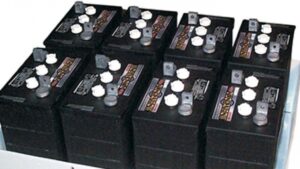
LiFePO4 has revolutionized off-grid power. Unlike the older lithium-ion chemistries found in cell phones or electric vehicles, LiFePO4 is highly stable, inherently safe, and not prone to thermal runaway.
A standard LiFePO4 battery contains a built-in Battery Management System (BMS). The BMS monitors cell voltage and temperature, automatically shutting the battery down to protect it from overcharging, deep depletion, or freezing temperatures.
Why they are a top choice:
- Usable Capacity: You can use nearly 100% of their rated capacity without damaging them.
- Lifespan: They typically last 10 to 15 years, boasting 3,000 to 5,000+ cycles.
- Efficiency: They charge faster and waste less solar energy during the charging process compared to lead-acid.
- Best for: Full-time off-grid homes, users with a higher upfront budget, and those who want a “set it and forget it” system without maintenance.
Related Post: LiFePO4 Batteries: The Ultimate Buyer’s Guide.
2. 6V Flooded Deep-Cycle Golf Cart Batteries (GC2)
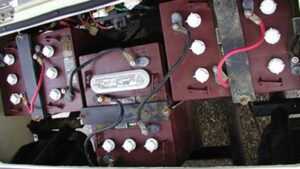
If you are just starting out or have a tight budget, 6V golf cart batteries are an excellent entry point. You will typically wire these in series to create a 12V, 24V, or 48V battery bank.
Unlike standard car batteries—which are “shallow cycle” batteries built with thin plates meant only to deliver a quick burst of power for starting an engine—golf cart batteries are true deep-cycle batteries. They have thick, durable lead plates designed to be discharged and recharged day after day.
Why they are a top choice:
- Affordability: They are arguably the cheapest way to build a functional off-grid battery bank.
- Availability: They are extensively produced and easy to find locally, saving you massive shipping costs.
- Durability: They are rugged and forgiving of minor mistakes if you maintain their water levels.
- Best for: Weekend cabins, beginner DIY solar builders, and those who don’t mind performing monthly maintenance. Expect a realistic lifespan of 3 to 5 years depending on your depth of discharge.
3. L16 and Industrial Forklift Batteries
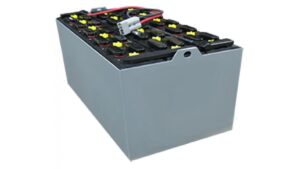
If you need massive power storage but want to stick with lead-acid chemistry, L16 batteries and 2V industrial forklift batteries are the ultimate heavy-duty options.
L16 batteries were originally designed for commercial floor scrubbers. They are taller and heavier than golf cart batteries, offering roughly twice the capacity.
Forklift batteries take this a step further. Instead of wiring dozens of small batteries together, you can purchase large 2V industrial cells. These tubular-plate batteries are exceptionally robust.
Why they are a top choice:
- Massive Capacity: Perfect for large off-grid homes running heavy appliances.
- Longevity: With strict watering and maintenance schedules, a high-quality forklift battery bank can last 10 to 15 years.
- Fewer Connections: Using large 2V cells means fewer cables and connection points, reducing the risk of loose wiring and resistance.
- Best for: Large off-grid homesteads, users with heavy machinery, and those who want long-term reliability at a lower initial cost than a massive lithium array. Be prepared—these batteries weigh hundreds to thousands of pounds and require heavy equipment to move.
Battery Comparison Table
| Battery Type | Typical Lifespan | Usable DoD | Approx. Upfront Cost | Maintenance Required | Best For |
|---|---|---|---|---|---|
| LiFePO4 Lithium | 10–15+ years | 80%–100% | High | None | Full-time homes, zero maintenance, lowest long-term cost. |
| 6V Golf Cart (FLA) | 3–5 years | 50% | Low | High (Watering) | Budget DIY setups, hunting cabins, beginners. |
| L16 / Forklift (FLA) | 7–15 years | 50% | Medium | High (Watering) | Large off-grid homes, heavy daily cycling, high capacity needs. |
| AGM / Gel (SLA) | 3–6 years | 50% | Medium-High | Low (No watering) | Remote locations where maintenance is difficult; cold climates. |
How to Size Your Off-Grid Battery Bank
Proper battery bank sizing is critical. If your bank is too small, you will over-discharge your batteries and destroy them prematurely. If it is too large, your solar panels won’t be able to fully charge them, leading to sulfation in lead-acid batteries.
To size your bank, you need to know three things:
- Daily energy usage: How many kWh you consume per day.
- Days of autonomy: How many days you want to run on batteries without sun (typically 2 to 3 days).
- System voltage: Usually 12V, 24V, or 48V.
A Worked Example Calculation:
Let’s say your off-grid cabin uses 5 kWh (5,000 watts) of electricity per day.
You want 2 days of autonomy (backup power for cloudy days).
Total energy storage needed: 5 kWh × 2 days = 10 kWh.
If you choose Lead-Acid:
Because you should only discharge lead-acid to 50% DoD to preserve their lifespan, you need to double your storage capacity.
10 kWh / 0.50 = 20 kWh total capacity required.
If you choose LiFePO4:
Because you can safely discharge lithium to 80-100%, you can buy a much smaller battery bank.
10 kWh / 0.80 = 12.5 kWh total capacity required.
Note on Inverters and Charge Controllers: Always ensure your solar charge controller and inverter are programmed with the correct charge profile for your specific battery chemistry. Mixing lithium and lead-acid batteries in the same bank is dangerous and will cause system failure.
Essential Safety and Installation Guidelines
Working with massive amounts of stored DC energy is dangerous. Always adhere to local electrical codes (such as the NEC in the United States) and consult a licensed electrician.
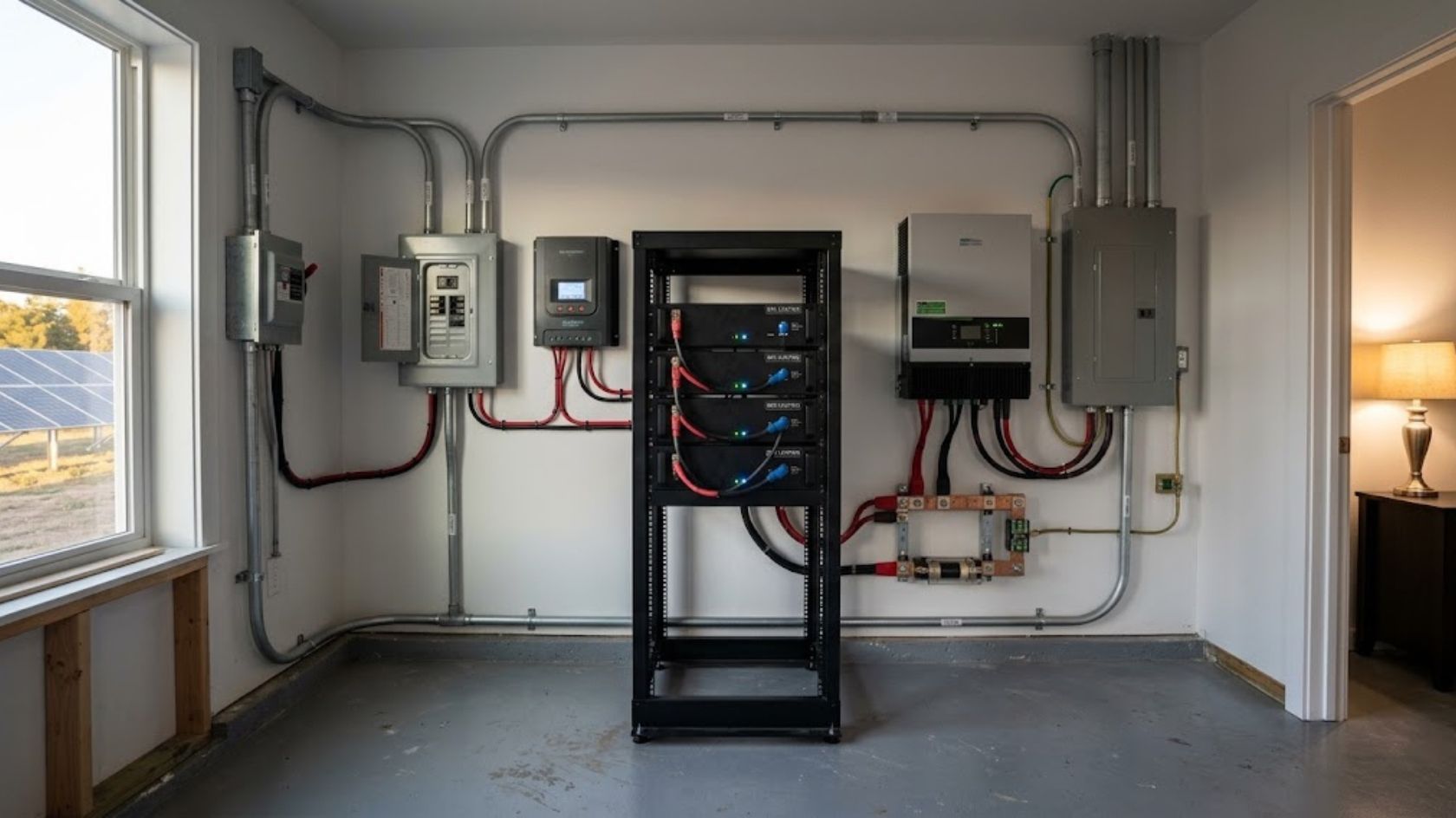
- Ventilation: Flooded lead-acid batteries release explosive hydrogen gas when charging. They must be placed in a sealed battery box vented to the outdoors. Do not install spark-producing equipment (like inverters or breakers) in the same compartment.
- Overcurrent Protection: Every battery bank must be fused. Place a properly sized Class T fuse or DC circuit breaker on the main positive cable as close to the battery terminal as possible to protect against short circuits and fires.
- Heavy Lifting: L16 and forklift batteries are incredibly heavy. Use proper lifting straps and never attempt to manually move a 2,000-pound forklift battery without heavy machinery.
- Personal Protective Equipment (PPE): When watering flooded batteries, always wear safety goggles and acid-resistant gloves. Keep baking soda nearby to neutralize acid spills.
- Wiring Limits: When wiring batteries, use heavy-gauge copper cables (e.g., 2/0 or 4/0 AWG) cut to the exact same length. Avoid wiring more than 3 strings of batteries in parallel, as this creates unequal charging and discharging, which drastically shortens battery life.
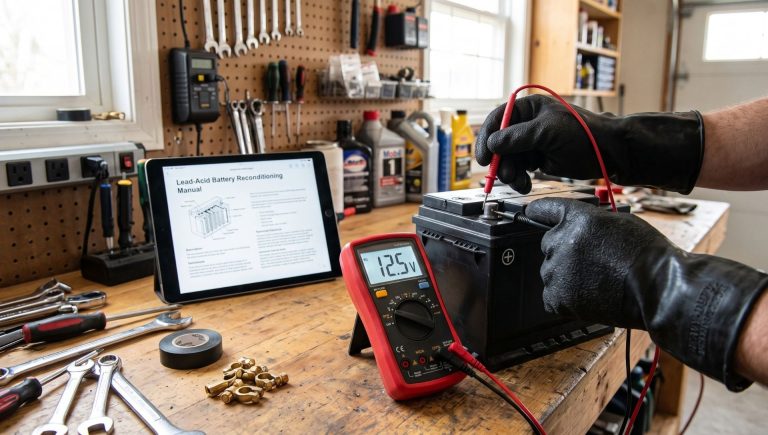
A Note on Battery Reconditioning (The EZ Battery Method)
If you are on a tight budget, you may have heard of the EZ Battery Reconditioning program. This program teaches users how to take old or “dead” lead-acid batteries and attempt to restore a portion of their capacity.
While this can be a cost-saving method for acquiring golf cart or forklift batteries cheaply, it is important to have realistic expectations.
- It only applies to lead-acid: You cannot recondition LiFePO4 batteries.
- It is not magic: If a battery has physically broken lead plates, a shorted cell, or severe, hardened sulfation, it cannot be recovered.
- Testing is key: The program involves testing the specific gravity of the battery acid and using equalization charges or Epsom salts (magnesium sulfate) to break down light sulfation.
For a DIY enthusiast building a small cabin setup, salvaging used batteries can be a fun and educational project. However, for a home where you rely on medical equipment, refrigeration, or essential well-pumps, investing in reliable, new energy storage is always the safer route.
Frequently Asked Questions (FAQ)
No. Car batteries are “shallow cycle” batteries designed to provide a massive burst of amps for a few seconds to start an engine. Continually draining and recharging a car battery in a solar setup will warp its thin internal plates and destroy the battery in a matter of weeks.
Lifespan depends heavily on battery chemistry, maintenance, and depth of discharge. Flooded lead-acid batteries typically last 3 to 7 years if properly watered and not discharged below 50%. High-quality LiFePO4 batteries can last 10 to 15 years (or 3,000 to 5,000 cycles) with virtually zero maintenance.
Yes, in almost all long-term scenarios. While LiFePO4 batteries require a larger upfront investment, their high cycle life and 100% usable capacity mean their “cost per cycle” is significantly lower over a 10-year period than replacing lead-acid batteries two or three times.
This depends on your daily energy usage and system voltage. An average energy-efficient off-grid cabin might use 5 to 10 kWh a day. To provide two days of backup power, you would need roughly 10 to 20 kWh of usable battery storage, which equals two to four 48V 100Ah server rack batteries.
Never mix old and new batteries, or batteries of different capacities and chemistries. The older batteries will drag down the performance of the new batteries, causing them to overwork, undercharge, and fail prematurely. Always start with a fresh, identical batch of batteries.
Conclusion and Next Steps
Choosing the best batteries for an off-grid energy system ultimately comes down to your budget, your power demands, and your willingness to perform maintenance.
If you want the most reliable, modern, and maintenance-free setup, LiFePO4 lithium batteries are the undisputed champions of residential off-grid solar. If you are building a starter system on a budget and don’t mind watering cells, 6V golf cart batteries remain an excellent entry point. Finally, for those requiring massive capacity at a lower initial price tag, L16 or 2V forklift batteries provide unmatched ruggedness.
Next Step: Before making a purchase, conduct an energy audit of your home. Calculate your total daily watt-hours, decide on a system voltage (ideally 48V for modern whole-home setups), and use the sizing math above to determine exactly how much capacity you need.
Sources and Further Reading
- National Renewable Energy Laboratory (NREL): For statistics on LiFePO4 battery efficiency and lifecycle costs.
- Battery University (Cadex Electronics): For the technical explanation of lead-acid sulfation, depth of discharge, and AGM charging sensitivities.
- U.S. Department of Energy (Energy.gov): For general guidelines on residential off-grid energy storage systems.
- National Electrical Code (NEC) / NFPA 70: For authoritative references on proper wire sizing, overcurrent protection, and battery venting requirements.
About the Author:
Richard is a senior renewable energy specialist and solar system designer with over a decade of hands-on experience in off-grid battery storage, system sizing, and residential solar compliance.
Affiliate Disclosure: This site is supported by its audience. When you purchase through links on our site, we may earn an affiliate commission. We only recommend products we trust and that meet our rigorous editorial standards.