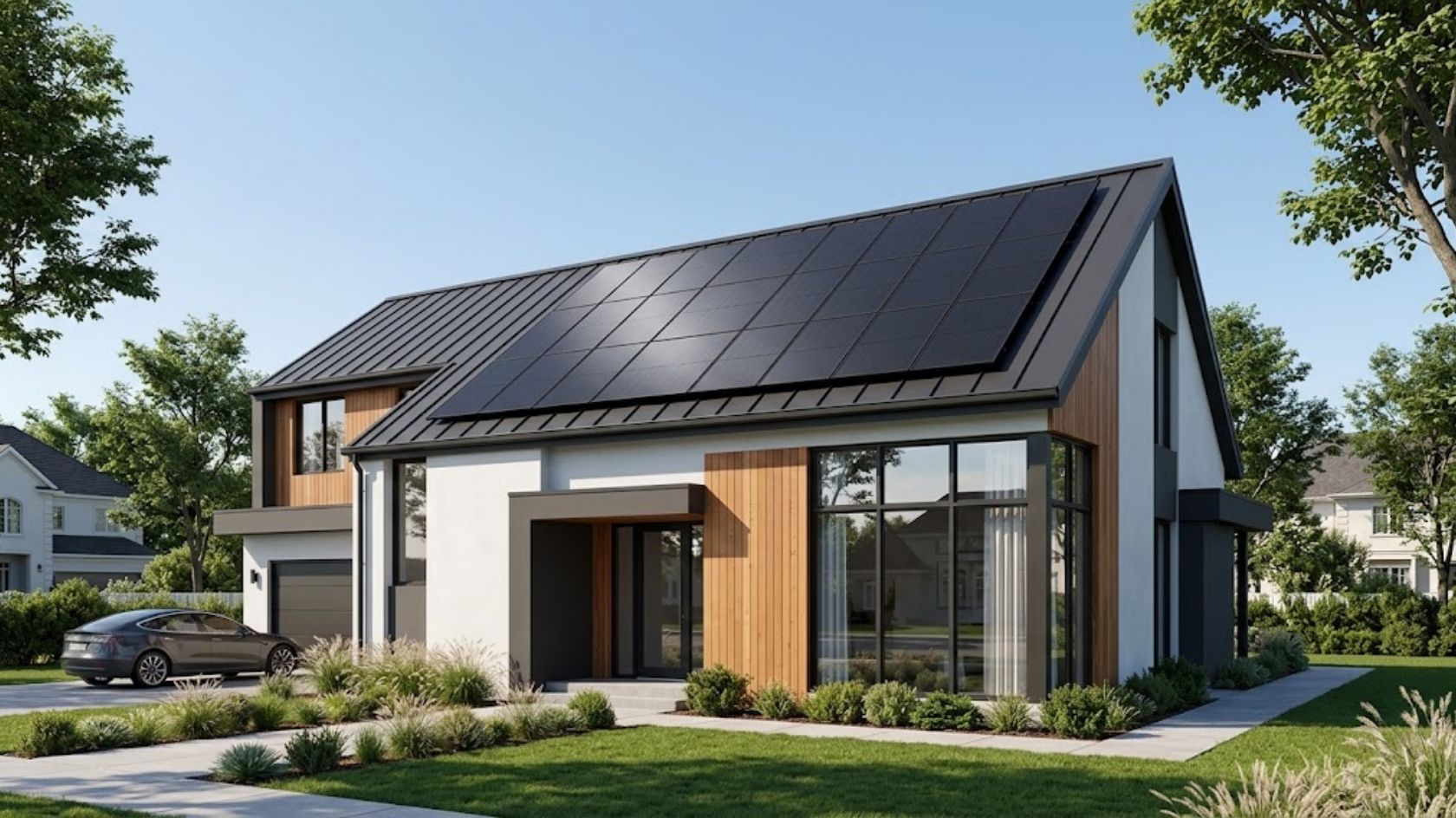
Deciding to invest in renewable energy is a significant financial step, but finding the best solar panels and a reputable installer can quickly become overwhelming. The solar market is crowded with aggressive sales pitches, fluctuating prices, and rapidly evolving technology. If you make the wrong choice, you could end up with an underperforming system, unexpected roof damage, or voided warranties.
This comprehensive guide is designed to cut through the industry jargon. We will walk you through exactly what defines high-quality solar hardware, how the latest technologies like TOPCon and HJT maximize your roof’s potential, and how to spot red flags when interviewing solar panel providers. Whether you are paying in cash, looking for financing, or trying to navigate local tax incentives, this article will equip you with the knowledge to make a confident, cost-effective decision.
Key Takeaways
- Look beyond the brand: The best solar panels are defined by measurable metrics: high efficiency (20% or more), low degradation rates (under 0.5% per year), and robust temperature coefficients.
- Verify your installer: Always choose contractors who hold North American Board of Certified Energy Practitioners (NABCEP) certifications and offer comprehensive workmanship warranties.
- Understand your warranties: A solar panel comes with two distinct guarantees—a product warranty against defects and a performance warranty guaranteeing power output over 25 years.
- Maximize incentives: The federal residential clean energy credit offers a 30% tax credit on solar installations, but local net metering laws dictate how much your utility company pays you for excess energy.
What Defines a High-Quality Solar Panel?
When evaluating solar quotes, sales representatives will frequently use the term “Tier 1.” While Tier 1 indicates a manufacturer’s financial stability and manufacturing scale, it does not guarantee the highest performance for your specific roof. To determine the actual quality of a panel, you must look at the manufacturer’s specification sheet for the following critical metrics.
Solar Panel Efficiency
Efficiency measures how much of the sunlight hitting the panel is converted into usable electricity. The industry average currently sits between 17% and 19%. However, the best solar panels on the market today boast efficiency ratings of 21% to 23%. High-efficiency panels are essential if you have limited roof space, as they allow you to generate more power from a smaller physical footprint.
Temperature Coefficient
Solar panels actually lose efficiency as they get hotter. The temperature coefficient tells you exactly how much power output drops for every degree Celsius the panel reaches above 25°C (77°F). A standard panel might have a coefficient of -0.40% / °C. Premium panels achieve coefficients closer to -0.25% / °C, making them vastly superior for homes in hot climates like Arizona or Texas.
Annual Degradation Rate
All solar panels slowly lose their ability to generate power over time. This is known as the degradation rate. Most standard panels lose about 2% to 3% of their capacity in the first year, and 0.5% to 0.7% every year after. Premium panels degrade at a much slower rate—often dropping just 1% in year one and 0.25% annually thereafter, guaranteeing more power generation in years 15 through 25.
Certifications and Safety Standards
Legitimate solar equipment must pass rigorous independent testing. Ensure any panel you consider is certified by Underwriters Laboratories (UL 1703 or UL 61730) for safety and fire resistance. Internationally, the International Electrotechnical Commission (IEC) sets standards for durability against wind, snow, and hail.
Types of Solar Panels: Which is Right for You?
Understanding solar panel technology requires looking at the silicon cells inside the panel. The industry has largely moved away from older, less efficient technologies in favor of advanced manufacturing methods.
Monocrystalline vs. Polycrystalline Panels
Monocrystalline panels are made from a single, continuous crystal structure of silicon. They are easily recognizable by their sleek, black appearance. Because the silicon is purer, they offer the highest efficiency and longevity. They are the standard choice for residential installations today.
Polycrystalline panels are made from silicon fragments melted together, resulting in a blue, speckled appearance. While they are cheaper to manufacture, their lower efficiency and faster degradation rates make them increasingly obsolete for residential rooftops, though they are still used in some large-scale utility projects.
N-Type vs. P-Type Silicon
Within the monocrystalline category, the market is undergoing a massive shift from P-type (positive) to N-type (negative) silicon cells. N-type cells are immune to Light Induced Degradation (LID)—a phenomenon where panels lose a small percentage of their power the moment they are first exposed to sunlight.
The best solar panel providers are currently utilizing advanced N-type sub-technologies:
- TOPCon (Tunnel Oxide Passivated Contact): Adds an ultra-thin oxide layer to the cell to reduce electron loss, pushing efficiencies past 22%.
- HJT (Heterojunction Technology): Combines traditional crystalline silicon with thin-film silicon, offering exceptional performance in extreme heat.
- Back-Contact Cells: Moves all the metal wiring to the back of the panel. This eliminates shading on the front of the cell, maximizing sunlight absorption and providing a clean, all-black aesthetic.
How to Evaluate Top Solar Manufacturers
When comparing manufacturers, the most objective way to measure their confidence in their own product is through their warranties. Do not assume a warranty covers everything; solar panels come with two separate guarantees.
- Product Warranty: This covers physical defects, premature wear and tear, and manufacturing flaws. The industry standard is 10 to 12 years. Premium manufacturers offer 25-year product warranties.
- Performance Warranty: This guarantees the panel will produce a specific baseline of power after a certain time. A standard performance warranty guarantees 80% output at year 25. The top manufacturers guarantee 90% to 92% output at year 25.
To make an apples-to-apples comparison, request the spec sheets for the exact panel models your installer is quoting.
How to Choose a Reputable Solar Installer
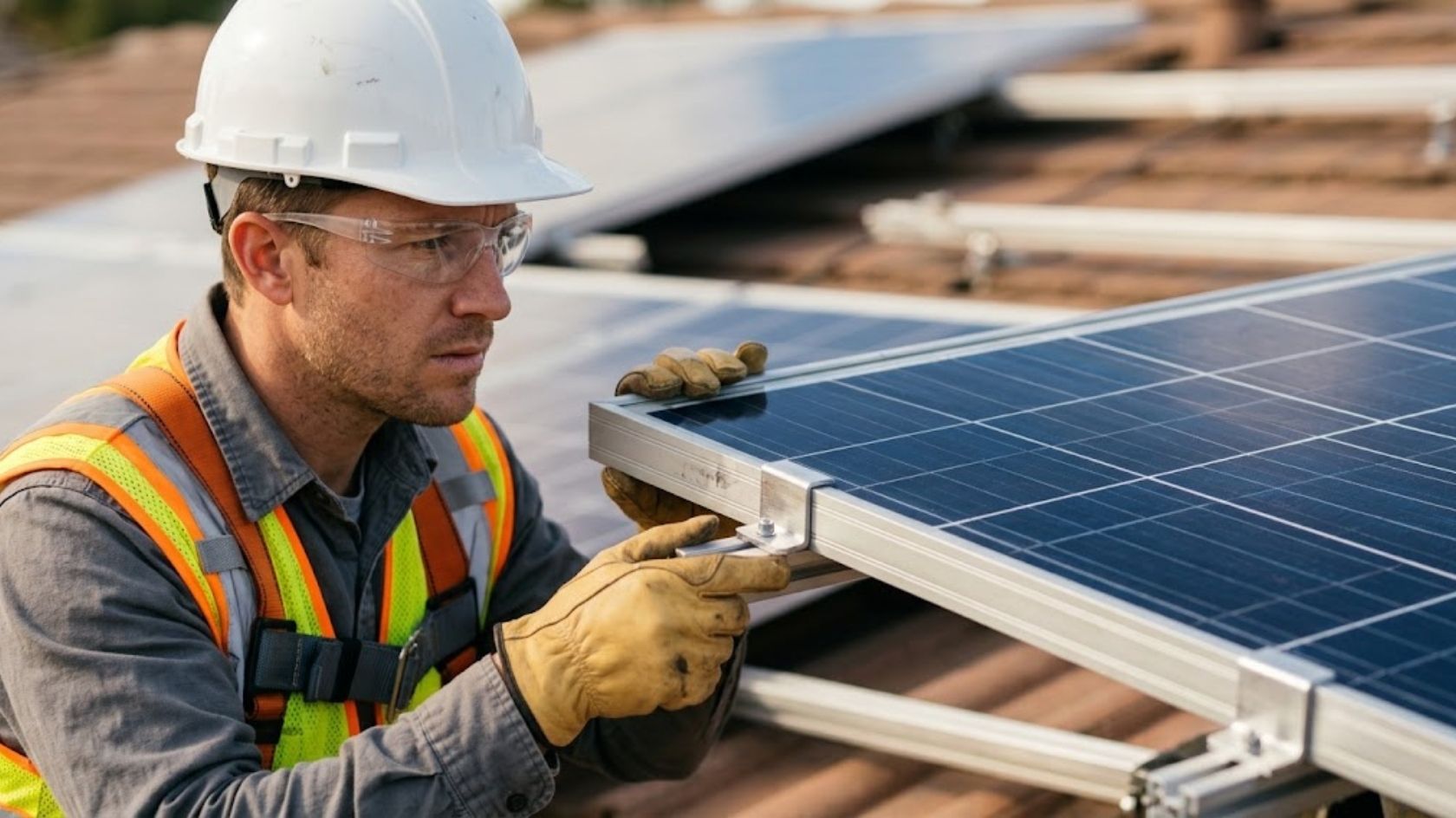
Your solar panels are only as good as the team bolting them to your roof. A poor installation can lead to roof leaks, voided warranties, and electrical hazards. Here is what you must look for during the vetting process.
Look for NABCEP Certification
The North American Board of Certified Energy Practitioners (NABCEP) is the gold standard for solar installation training. If the lead installer or project manager is not NABCEP-certified, look elsewhere. This certification ensures they are trained in the latest electrical codes and structural safety standards.
Local Expertise vs. National Scale
National solar companies often have deep pockets and slick software, but they frequently outsource the actual manual labor to local subcontractors. This can lead to a disjointed customer service experience if something breaks. Local or regional installers rely heavily on community reputation, handle their own labor, and typically possess a deeper understanding of your specific utility company’s permitting rules.
Workmanship Warranties
While the manufacturer warranties the physical panel, the installer must warranty the labor. A workmanship warranty covers roof leaks, faulty wiring, and mounting hardware failures. Accept nothing less than a 10-year workmanship warranty; premium installers will offer 25 years.
Insurance and Licensing
Demand to see proof of general liability insurance and a valid state contractor’s license. If they damage your roof during a site assessment or installation and lack insurance, you will be liable for the repairs.
Solar Panel Costs, Financing, and Payback
According to recent data from the National Renewable Energy Laboratory (NREL) and marketplace aggregators, the average gross cost of a residential solar system in the U.S. ranges from $2.70 to $3.50 per watt. For a standard 8-kilowatt (kW) system, this translates to a gross cost of $21,600 to $28,000 before any tax credits or incentives are applied.
How you pay for your system drastically alters your long-term return on investment (ROI).
- Cash Purchase: Paying upfront yields the highest long-term savings. You own the system immediately, reap all tax benefits, and eliminate your electric bill on day one. Payback periods typically range from 6 to 9 years.
- Solar Loans: Loans allow for $0 down installations. You will own the system and claim the tax incentives, but you must account for interest rates and dealer fees, which can inflate the total cost by 15% to 30%.
- Leases and Power Purchase Agreements (PPAs): You do not own the system; a third party installs it on your roof and sells the power back to you at a fixed rate. While this protects against utility rate hikes, you cannot claim the federal tax credit, and it adds complexity if you try to sell your home.
Pairing Solar with Battery Storage
With grid instability on the rise, many homeowners are adding batteries (like lithium iron phosphate systems) to their solar arrays. While batteries add $10,000 to $15,000 to the project cost, they are essential if you want backup power during grid outages, as standard grid-tied solar panels will shut down during a blackout for safety reasons.
Federal and State Solar Incentives (2024–2025)
Government incentives dramatically reduce the barrier to entry for clean energy, but policies change frequently. Always verify current rules with a tax professional.
The Federal Solar Tax Credit
The Residential Clean Energy Credit allows homeowners to deduct 30% of their total solar installation costs (including batteries and labor) from their federal taxes. According to the Internal Revenue Service (IRS), this 30% rate is locked in through 2032. If your tax liability is lower than your credit amount, the remaining credit rolls over to the following tax year.
State Rebates and Net Metering
Incentives at the state and utility level vary wildly. The most critical policy to understand is Net Energy Metering (NEM). Net metering dictates how your utility compensates you for the excess solar energy you send backward into the grid.
Some states offer 1-to-1 retail compensation. However, markets like California have shifted to new billing structures (such as NEM 3.0), which drastically reduce the compensation rate for exported solar power. In states with reduced net metering, pairing your panels with a solar battery is highly recommended to store your own power rather than selling it back for pennies.
(Tip: Check the Database of State Incentives for Renewables & Efficiency (DSIRE) to find localized rebates in your zip code).
Crucial Questions to Ask Before Signing a Contract
Do not sign a contract until a solar panel provider has performed a physical or highly detailed remote site assessment. Ask these specific questions during the quote process:
- Will you perform a physical roof inspection before installation?
If your asphalt shingle roof is more than 15 years old, it likely needs replacing before solar panels go up. Paying to remove and reinstall panels later will cost thousands. - Are your installers in-house employees or subcontractors?
In-house teams generally provide higher quality control. If they use subcontractors, ask who holds the workmanship warranty. - What is the estimated first-year production in kilowatt-hours (kWh)?
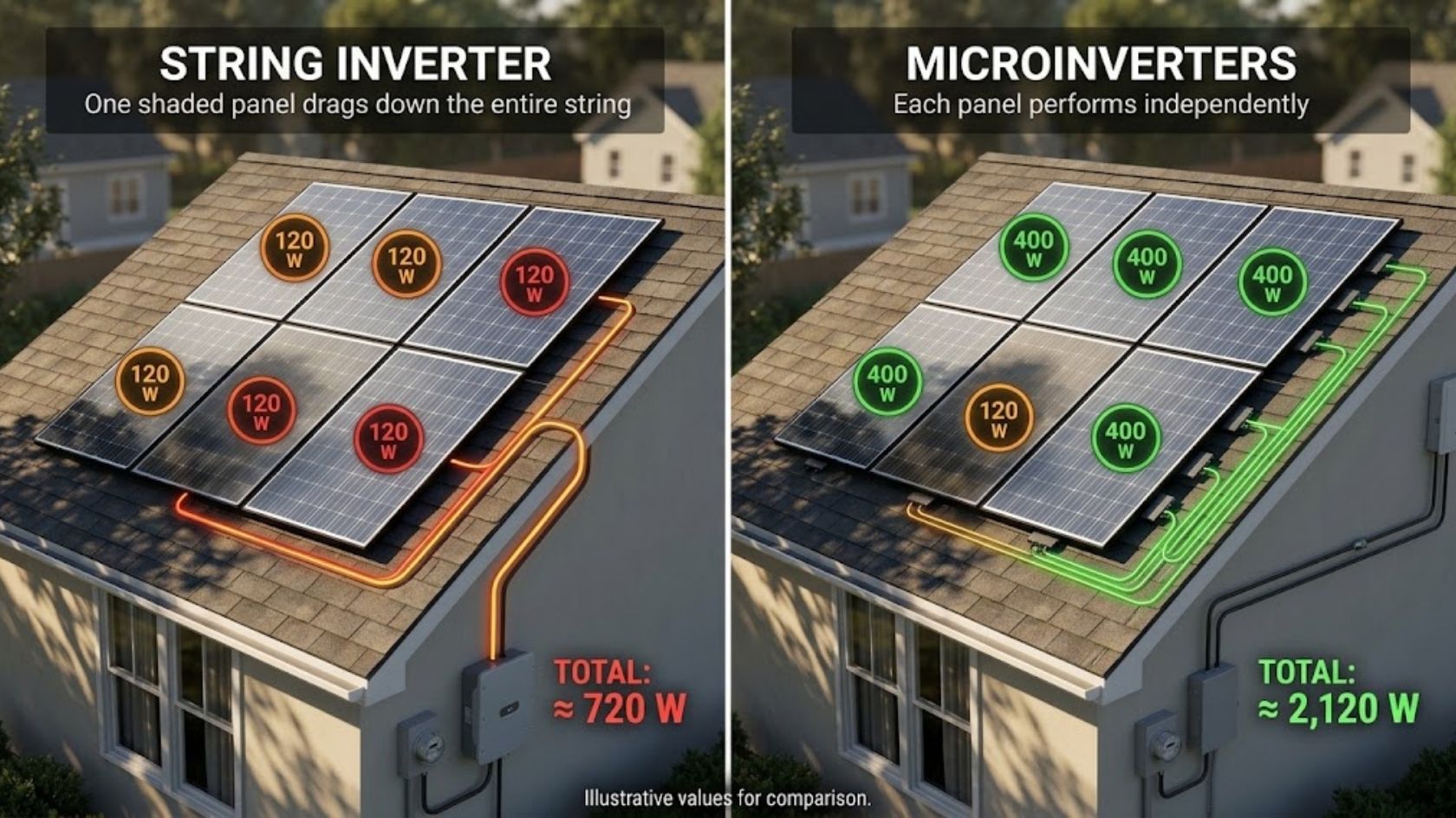
Do not accept estimates in “dollars saved,” as utility rates fluctuate. Demand the estimated kWh production so you can compare it against your past utility bills. - Which inverter technology are you quoting?
String inverters are cheap but throttle the whole system if one panel is shaded. Microinverters or power optimizers attach to individual panels, ensuring shade on one panel doesn’t impact the others.
Common Solar Installation Mistakes and Red Flags
Protect yourself from predatory tactics by watching for these common industry red flags:
- “Free Solar” Advertisements: There is no such thing as free solar. These ads are deceptive lead-generation tactics meant to push you into a long-term PPA or lease where you do not own the system.
- High-Pressure Sales Tactics: If a representative claims an artificial discount “expires today” or refuses to leave your home without a signature, ask them to leave immediately.
- Overpromising Payback Periods: If an installer promises a payback period of under four years without showing the mathematical breakdown of your local utility rates and sun hours, they are likely manipulating the numbers.
Maintenance, Monitoring, and Long-Term Performance
One of the great advantages of solar panels is their lack of moving parts, which keeps maintenance minimal.
Most modern systems come with app-based monitoring software. This allows you to track real-time energy production on a panel-by-panel basis. Check this app once a month. If production suddenly drops on a sunny day, your inverter may have tripped, or a panel may be experiencing a hardware failure.
Physical maintenance is usually limited to occasional cleaning. If you live in a dusty environment, an agricultural area, or a region prone to wildfires, a layer of dirt and ash can reduce system efficiency by 5% to 10%. Rinsing the panels with a standard garden hose (never hot water on hot glass, and never abrasive brushes) once or twice a year is sufficient to keep them operating optimally.
Standard vs. Premium Solar Panel Specifications
When reviewing your quotes, use this table to determine if you are being sold older, standard hardware or premium, high-efficiency technology.
| Specification | Standard Market Panels | Premium Tier-1 Panels | Why It Matters |
|---|---|---|---|
| Cell Technology | P-type Monocrystalline | N-type (TOPCon, HJT) | N-type prevents immediate initial degradation and handles heat better. |
| Efficiency Rating | 17% – 19% | 21% – 23% | Higher efficiency produces more power in less physical roof space. |
| Degradation Rate | 0.5% – 0.7% per year | 0.25% per year | Lower degradation guarantees thousands of extra kilowatt-hours over 25 years. |
| Product Warranty | 12 to 15 Years | 25 Years | Protects against manufacturing defects, water ingress, and frame failure. |
| Performance Warranty | 80% to 85% at Year 25 | 90% to 92% at Year 25 | Ensures the system remains financially viable for its entire lifespan. |
Frequently Asked Questions
Are solar panels worth the investment?
Yes, for most homeowners with unshaded, south- or west-facing roofs and high local electricity rates. A properly sized system can eliminate your monthly electric bill, yielding a return on investment within 6 to 9 years and generating free power for decades thereafter.
How long do solar panels actually last?
High-quality solar panels are designed to last 25 to 30 years. While they will not stop working entirely after 25 years, their power output will have degraded by 10% to 20% from their original baseline, making them less efficient over time.
Do I need a solar battery with my panels?
You do not strictly need a battery to go solar, but they are highly recommended if you live in an area with frequent power outages or if your state has phased out 1-to-1 net metering. Batteries allow you to store your excess daytime solar power for use at night.
What is the solar tax credit?
The federal Residential Clean Energy Credit is a tax incentive that allows U.S. taxpayers to deduct 30% of the total cost of a solar energy system from their federal income taxes. The system must be installed at your primary or secondary residence.
Should I choose a local or national solar installer?
Local installers typically offer more personalized customer service, employ their own in-house installation crews, and have a stronger grasp of local building codes. National companies may offer standardized financing but often outsource the physical labor to subcontractors.
Conclusion
Finding the best solar panels comes down to prioritizing verified technical specifications over brand names and flashy marketing. Focus on efficiency, low degradation rates, and robust 25-year warranties. Just as importantly, remember that the highest-quality panel in the world will fail if poorly installed. Take the time to verify your installer’s NABCEP certifications, demand transparency regarding subcontractors, and scrutinize the workmanship warranty.
Your next step is to gather at least three customized quotes from certified local installers. Compare their proposed system sizes, specific hardware models, and cash vs. financing options to find the ideal clean energy solution for your home.
Sources and References
- U.S. Department of Energy (DOE): Homeowner’s Guide to Going Solar.
- National Renewable Energy Laboratory (NREL): U.S. Solar Photovoltaic System and Energy Storage Cost Benchmarks.
- Internal Revenue Service (IRS): Residential Clean Energy Credit Guidelines.
- Solar Energy Industries Association (SEIA): Residential Consumer Guide to Solar Power.
- DSIRE: Database of State Incentives for Renewables & Efficiency.
- NABCEP: North American Board of Certified Energy Practitioners.
About the Author
Our content is developed by senior SEO content strategists and renewable energy writers with deep industry expertise in residential and commercial solar technology. We specialize in breaking down complex electrical engineering concepts, installation methodologies, and solar financing structures to help homeowners make informed, sustainable energy decisions.
Last updated: October 2023 | Reviewed by our Renewable Energy Editorial Board