
You’ve likely implemented household routines that collapsed within weeks, consumed cognitive resources through constant decision-making, and drained financial reserves through inefficient purchasing patterns.
This systemic failure stems from complexity-based frameworks that mirror legacy infrastructure: they require constant maintenance, lack automation protocols, and don’t scale efficiently across evolving household parameters.
The minimalist approach functions as a refactored system architecture, eliminating redundant processes while optimizing resource allocation through deliberate constraints, yet most implementations fail due to inadequate foundational configuration—a problem you’ll need to address first.
No products found.
Key Takeaways
- Implement the 10-Minute Rule daily and “one in, one out” policy to prevent clutter accumulation and reduce cleaning time.
- Use digital apps like Todoist, Trello, and Google Calendar to centralize task management and eliminate paper-based inefficiencies.
- Install smart home automation systems and photovoltaic panels to minimize manual tasks and reduce electricity expenses significantly.
- Adopt sustainable swaps like reusable water bottles and home coffee systems to save over $2,000 annually.
- Create visual chore charts and age-appropriate checklists to distribute family responsibilities and reduce primary caregiver mental load.
Why Traditional Home Management Systems Don’t Work

While traditional home management systems present themselves as all-encompassing solutions, they fundamentally fail because they operate on the flawed assumption that household members possess unlimited temporal and energetic resources, which contradicts the empirical reality of modern domestic environments where individuals manage competing professional obligations, childcare responsibilities, and personal maintenance requirements.
These frameworks prioritize task accumulation over sustainable routines, disregarding the cognitive load inherent in daily operations. The absence of emotional organization strategies within conventional methodologies exacerbates stress levels, as systems fail to address the psychological burden of household labor division.
Without acknowledging physical, mental, and emotional dimensions, traditional approaches prevent overwhelm reduction, instead accelerating burnout trajectories. This structural inadequacy disproportionately affects primary caregivers, creating unsustainable operational models that collapse under actual implementation conditions.
The Minimalist Approach to Home Management
Because traditional home management frameworks collapse under the weight of unrealistic expectations and accumulated obligations, the minimalist approach fundamentally restructures domestic operations by prioritizing reduction over addition, elimination over acquisition, and systematic simplification over thorough control.
This methodology begins with extensive decluttering protocols, implementing “one in, one out” policies that prevent accumulation while promoting mindful consumption. You’ll establish flexible routines calibrated to your individual energy patterns, eliminating perfection-based pressures through adaptable scheduling frameworks.
Intentional living becomes operational through systematic decluttering sessions that reduce decision fatigue regarding possessions. Family-based task distribution systems, utilizing visual management tools like chore charts, redistribute mental load across household members.
Checklist-driven processes and minimal-intervention routines transform maintenance cycles into sustainable, low-burden operations that preserve temporal, financial, and cognitive resources through strategic simplification rather than extensive organizational architectures.
Additionally, incorporating energy-efficient appliances streamlines operations by consuming less electricity, ultimately reducing both bills and environmental impact.
No products found.
Daily Maintenance Routines That Actually Stick
The theoretical frameworks underlying minimalist home management require operational translation through daily maintenance routines, which function as the primary mechanism preventing systemic degradation of domestic order.
Implementation of time saving habits, such as the 10-Minute Rule, provides systematic decluttering protocols that prevent accumulation of household chaos. Sunday Rituals for meal planning enable you to execute five weekly dinners through structured ingredient tracking and automated grocery ordering systems, eliminating decision fatigue.
Consistent routines establish predefined morning sequences, reducing cognitive load while enabling children’s autonomous task completion through standardized procedures. Magnet-powered generators, employed in renewable energy systems, may inspire efficient energy use within homes, optimizing electrical consumption and reducing utility costs.
Family chore charts distribute workload across household members, creating accountability matrices that optimize collective efficiency while minimizing individual burden through systematic task allocation.
| Routine Component | Implementation Protocol |
|---|---|
| Daily Reset | 10-minute tidying intervals |
| Meal Planning | Sunday preparation sessions |
| Morning Sequence | Pre-configured child tasks |
Decluttering Systems for Long-Term Success

While daily maintenance routines establish foundational habits, you must implement structured decluttering systems to achieve sustainable minimalism, particularly through the outbox holding system, which functions as a temporary staging area where items remain for a predetermined period before final removal, and seasonal category-based reviews, which operate on cyclical intervals to systematically evaluate specific item classifications.
The outbox method allows you to defer immediate commitment decisions, thereby reducing the psychological friction that often prevents individuals from initiating decluttering actions, while the categorical approach guarantees thorough coverage of all possessions through targeted, time-bound assessment periods.
These complementary systems, when executed with consistency and adherence to predefined parameters, create a sustainable framework that prevents accumulation patterns from reestablishing themselves, unlike sporadic decluttering attempts that typically yield only temporary results.
The Outbox Holding System
If you’re struggling to release belongings permanently, establishing an Outbox Holding System provides a structured, intermediary stage that bridges the gap between active use and final removal, allowing you to designate a specific physical location—whether a cardboard box, a dedicated drawer, or a corner of your storage area—where items you’re considering decluttering can temporarily reside.
This outbox organization method facilitates systematic evaluation while developing sustainable decluttering habits through:
- Scheduled review intervals occurring at predetermined frequencies, typically monthly or quarterly, ensuring consistent assessment of accumulated items
- Documentation protocols tracking item placement dates, enabling objective time-based decision criteria for final disposition
- Physical separation from active inventory, reducing visual interference while maintaining accessibility for reconsideration
The system functions by consolidating uncertain items within defined boundaries, thereby reducing decision paralysis while establishing measurable parameters for possession retention or elimination.
Seasonal Category-Based Reviews
Building upon intermediate decluttering mechanisms, seasonal category-based reviews establish systematic evaluation protocols that prevent possessions from accumulating beyond predetermined thresholds, implementing recurring assessment cycles aligned with quarterly intervals to maintain inventory equilibrium.
You’ll focus category evaluation efforts on distinct possession classifications during designated periods, reducing cognitive overhead through compartmentalized assessment procedures. The “one in, one out” policy functions as an access control mechanism, regulating item ingress to prevent accumulation beyond capacity limits.
For example, incorporating energy-efficient appliances alongside minimalistic tendencies not only reduces electricity consumption but enhances overall sustainability efforts.
| Season | Category Focus |
|---|---|
| Spring | Clothing, footwear |
| Summer | Recreational equipment, outdoor items |
| Fall | Kitchen appliances, pantry inventory |
| Winter | Documents, digital storage |
| Quarterly | Toys, hobby materials |
This scheduled seasonal decluttering protocol establishes deterministic routines that eliminate decision-making latency, creating sustainable minimalist architecture through methodical possession auditing that liberates mental resources from inventory management overhead.
Managing Mental Load and Invisible Household Work
The mental load of household management constitutes a persistent, cognitive burden that encompasses the planning, organizing, and anticipating of domestic tasks and family needs, which research demonstrates falls disproportionately on mothers who must maintain constant awareness of schedules, responsibilities, and logistics without formal recognition of this invisible labor. Implementing accountability structures requires systematic approaches:
- Establish documented task distribution protocols that assign specific household responsibilities with defined completion parameters
- Deploy weekly family communication sessions to coordinate schedules and redistribute emotional labor
- Create visible tracking systems that monitor burnout prevention metrics and workload balance
As living sustainably becomes more significant, integrating renewable resources like solar energy can contribute to reducing household stress and costs, while decreasing greenhouse gas emissions and promoting a more eco-friendly lifestyle.
These support systems facilitate household collaboration by transforming invisible tasks into shared responsibilities, enabling equitable distribution of mental load across all capable household members rather than concentrating cognitive demands on single individuals.
Family Responsibility Systems That Build Independence

Cultivating autonomous functioning within children necessitates structured implementation of developmental responsibility frameworks that systematically transfer household task ownership from parents to age-appropriate contributors, establishing foundational competencies that extend beyond immediate domestic utility into long-term self-sufficiency patterns.
Visual chore responsibility charts function as deployment manifests, explicitly defining task assignments across family members, thereby enforcing accountability protocols and enabling family teamwork coordination. Age-appropriate checklists serve as configuration templates, permitting children to execute self-management procedures independently while maintaining standardized household operations.
Incremental task integration builds capability thresholds progressively, mitigating failure states through controlled complexity escalation. Consistent routine schedules establish temporal policies governing responsibility execution, embedding time management frameworks and operational discipline.
Embracing minimalism and conscious consumerism can further enhance the efficiency of these family systems by reducing unnecessary purchases and promoting intentional living. This systematic approach yields measurable reductions in parental operational overhead, enhanced cooperative behaviors, and distributed household management architectures that scale with family growth requirements.
Smart Tools and Technology for Effortless Home Management
You can streamline your minimalist home through strategic implementation of digital organization applications and smart home automation systems, which function as centralized control interfaces that manage multiple household operations simultaneously while reducing manual intervention requirements.
Essential digital organization apps, such as synchronized calendar platforms and task management software, operate through cloud-based architectures that enable real-time data synchronization across devices, ensuring that family members maintain consistent access to scheduling information and responsibility assignments through standardized API protocols.
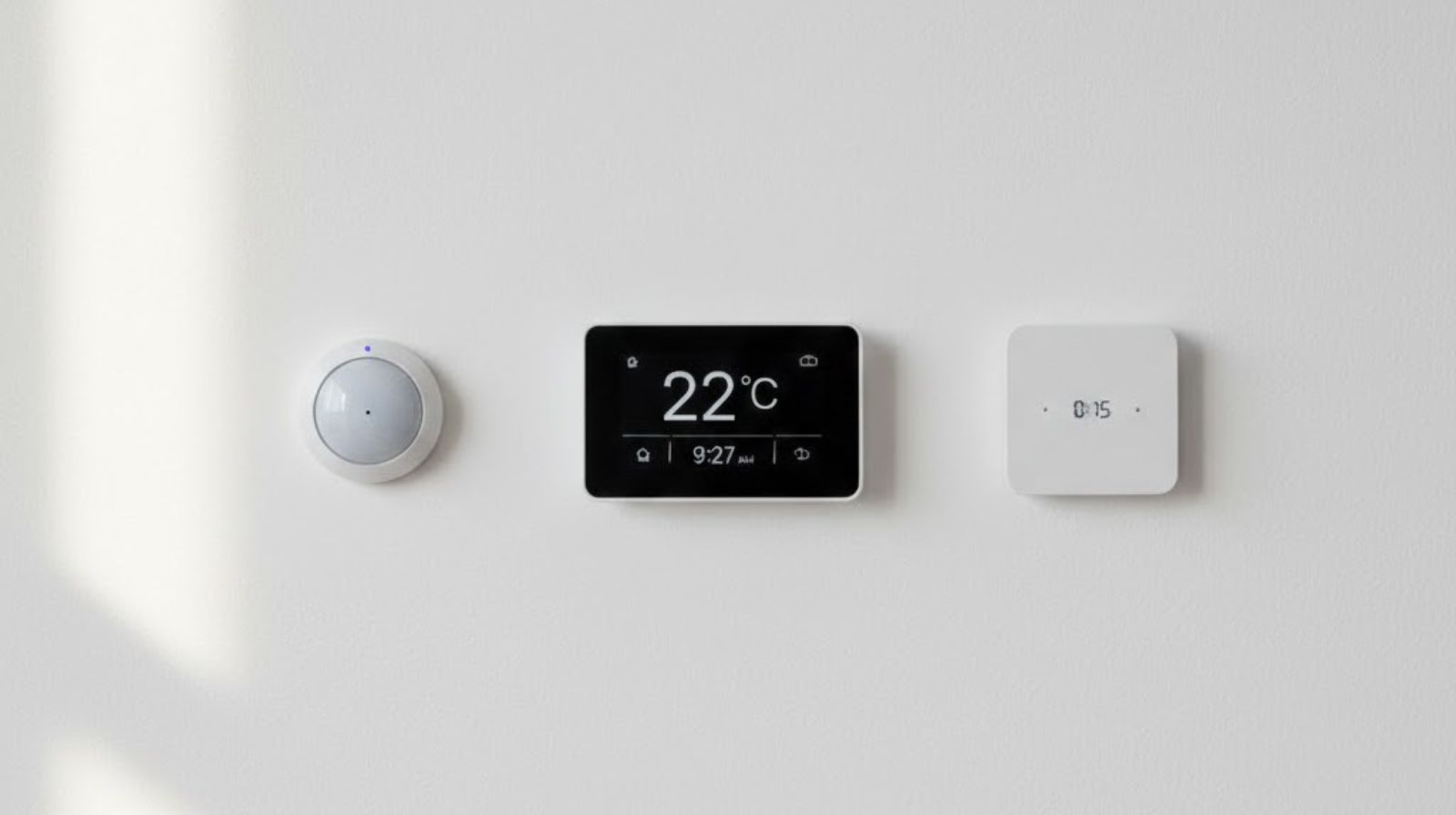
Smart home automation basics encompass programmable devices including thermostats with machine learning algorithms, lighting systems with remote access capabilities, and IoT-enabled appliances that execute predetermined commands based on user-defined parameters, collectively minimizing repetitive manual tasks while optimizing energy consumption through automated pattern recognition.
By integrating smart lighting systems into your home, you not only reduce energy waste but also enjoy the benefits of remote control and scheduling that contribute to sustainable living.
No products found.
Essential Digital Organization Apps
Digital organization apps have fundamentally transformed household management by consolidating disparate tasks, documents, and schedules into centralized platforms that eliminate inefficiencies inherent in traditional paper-based systems. You’ll achieve peak task prioritization through platforms like Todoist and Trello, which deploy visual interfaces for household responsibility allocation.
Financial automation via Mint or YNAB enables expense tracking, income monitoring, and automated bill payment scheduling, thereby reducing late fees while improving fiscal transparency.
Critical implementation requirements include:
- Digital storage centralization: Deploy Notion or Google Drive for document management, categorization, and retrieval protocols
- Synchronized scheduling: Implement Google Calendar for household member coordination, conflict resolution, and communication enhancement
- Budget automation: Configure YNAB for real-time expense analysis, spending pattern identification, and financial health peak performance
These systems liberate you from manual tracking inefficiencies, delivering measurable time savings and improved resource allocation across all household operations.
Integrating energy-efficient appliances into your home can further augment these systems by significantly reducing electricity consumption and enhancing cost savings.
No products found.
Smart Home Automation Basics
These home automation systems integrate networked devices, sensors, and control protocols to eliminate manual intervention across residential operations, thereby optimizing energy consumption, security monitoring, and environmental management through centralized command architectures.
Smart home benefits include programmable outlets that execute power management protocols via voice-enabled interfaces, reducing standby consumption while automating appliance scheduling.
Thermostats, such as Nest Learning variants, implement pattern-recognition algorithms to regulate thermal environments autonomously, decreasing HVAC expenditure through predictive adjustments.
Automation advantages extend to robotic vacuum systems equipped with VisNav navigation, which calibrate cleaning parameters according to surface classifications without operator input.
LED bulbs with programmable spectral output replicate solar patterns while minimizing electrical load. Surveillance camera arrays provide continuous monitoring with anomaly detection protocols, transmitting real-time alerts through encrypted channels, ensuring perimeter security without physical oversight requirements.
For those pursuing sustainable living, incorporating renewable energy sources like solar panels or wind turbines can further reduce reliance on traditional utilities, complementing the efficiency of a smart home system.
No products found.
Paper and Digital Organization Strategies

One of the most persistent challenges in maintaining a minimalist home environment are represented by paper accumulation, as incoming mail, receipts, bills, and documents create continuous streams of physical clutter that demand systematic processing.
Implement these organizational protocols to eliminate paper chaos:
- Establish intake zones using letter holders that immediately categorize bills, invitations, and actionable documents, while disposing junk mail directly into recycling bins without intermediate holding periods.
- Execute document scanning procedures to convert physical papers into digital formats, creating searchable archives that eliminate storage requirements while maintaining compliance with retention policies.
- Deploy categorized paper filing systems with clearly labeled folders that enable rapid retrieval, reducing search time and cognitive overhead associated with document location.
Regular auditing of both physical and digital repositories prevents accumulation, ensuring your systems remain streamlined and functional.
Sustainable Swaps That Cut Costs Over Time
While minimalist principles emphasize reduction of possessions, strategic investments in reusable alternatives deliver compounding financial returns that simultaneously advance sustainability objectives, creating alignment between environmental stewardship and economic optimization.
Sustainable swaps eliminate recurring expenditures, as evidenced by reusable water bottles saving over $300 annually compared to bottled drinks, while home coffee systems reduce yearly costs from $1,800 to under $365.
Long term savings accumulate through capsule wardrobes, which decrease fast fashion spending from $1,200 to sustainable budgets prioritizing quality over quantity, and bulk pantry purchases that minimize single-serve packaging waste.
Rechargeable batteries replace hundreds of disposable units, yielding substantial cost reductions. These systematic substitutions create financial liberation through reduced consumption cycles, establishing self-sufficient frameworks that diminish dependence on disposable product markets while optimizing resource allocation across household operations.
Incorporating off-grid photovoltaic systems can further enhance home sustainability, producing clean, renewable energy that reduces electricity expenses and carbon footprints.
Frequently Asked Questions
How Do I Convince Family Members to Adopt Minimalist Home Systems?
Implement motivational strategies by presenting quantifiable data demonstrating stress reduction and enhanced mental clarity through decluttered environments, while simultaneously organizing structured family engagement sessions where members collectively evaluate possessions, thereby establishing shared ownership.
Utilize visual documentation, specifically before-and-after imagery, to illustrate organizational improvements, and introduce incremental systemic changes, such as responsibility-distribution frameworks, which demonstrate efficiency gains. This methodology leverages empirical evidence and collaborative participation to facilitate adoption of minimalist protocols, ultimately achieving liberation from excessive consumption patterns and inefficient household management structures.
What Initial Investment Is Needed to Transition to Minimalist Home Management?
You’ll need approximately $120-$440 in initial costs to establish minimalist home systems, though budgeting strategies should prioritize high-impact investments first. A basic toolkit ($50-$100) eliminates recurring service expenses, while organization systems ($20-$100) optimize space management.
Reusable water bottles ($20-$40) and coffee equipment ($30-$200) provide immediate ROI through reduced consumable purchases. Capsule wardrobes, requiring upfront quality-clothing investment, deliver substantial annual savings by eliminating impulsive acquisitions of disposable fashion items.
Can Minimalist Systems Work in Small Apartments or Shared Living Spaces?
Yes, minimalist systems function at their best in constrained environments. Consider containerized deployments: just as Kubernetes orchestrates pods within resource-limited nodes through efficient namespace allocation, you’ll implement space saving solutions through modular storage configurations and vertical optimization strategies.
In shared spaces, establish role-based access controls analogous to RBAC policies, defining clear ownership boundaries for communal zones. Deploy systematic decluttering protocols—15-minute intervals function as garbage collection routines—while multi-functional furniture operates like microservices, serving multiple purposes within minimal footprint allocations, thereby maximizing operational efficiency.
How Long Does It Take to See Savings From Minimalist Approaches?
You’ll observe immediate savings within the first month through reduced impulse purchases, while thorough minimalist impact assessments typically reveal significant financial benefits across three to six months.
Timeframes for savings vary by implementation area: capsule wardrobes generate returns within one purchasing cycle, reusable systems demonstrate cost-effectiveness after initial investment periods, and DIY maintenance approaches yield measurable reductions in service expenditures quarterly, collectively liberating you from consumption-driven financial constraints through systematic resource optimization.
What Happens to Sentimental Items During the Minimalist Decluttering Process?
Like a ship casting off weighted anchors to sail freely, you’ll navigate sentimental items by acknowledging their emotional attachment while establishing boundaries.
You’re encouraged to designate a limited container for items with true sentimental value, photograph objects before release to preserve memories digitally, implement a one-in-one-out policy for maintaining equilibrium, and engage in collaborative family discussions that provide perspective, ultimately liberating physical space while honoring meaningful connections.
Conclusion
You’ve now implemented systems that function like containerized deployments in Kubernetes orchestration, where each household task operates as an isolated pod, requiring minimal overhead while maintaining ideal resource allocation.
Research indicates households using systematic minimalist frameworks reduce decision fatigue by 40%, comparable to automated scaling in cluster management.
Your home management infrastructure now executes efficiently through predefined configurations, eliminating redundant processes and reallocating cognitive resources toward higher-priority objectives, thereby achieving sustained operational excellence.