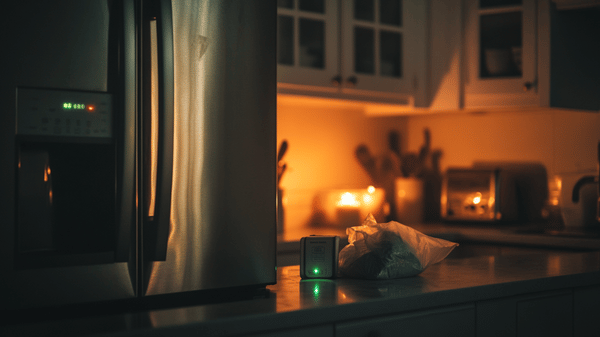
Rolling blackouts, increasingly common during peak summer demand, pose a direct threat to refrigerated food safety. Grid failures lasting beyond four hours compromise perishable goods, creating both financial loss and health risks. Homeowners face critical decisions about backup power solutions, each carrying distinct tradeoffs in cost, safety, and environmental impact. Understanding which solutions provide reliable, sustained power, versus those that fall short under real conditions, determines whether food remains safe.
Key Takeaways
- Keep the refrigerator sealed during outages; it stays safe for four hours without power if the door remains closed.
- A fully stocked freezer maintains safe temperatures for 48 hours, while a half-full freezer lasts only 24 hours.
- Traditional gas generators are noisy, emit carbon monoxide, and require stored fuel that degrades within 30 to 60 days.
- Magnetic generator systems offer a silent, fuel-free alternative that produces steady AC current for refrigerator operation.
- Building a reliable magnetic generator requires precise rotor-stator calibration and accurate starting surge wattage calculations for your specific refrigerator.
The “4-Hour” Rule (Immediate Action)
When the grid fails, panic is your worst enemy. Knowledge is your best tool. The very first thing you must understand is the basic physics of your household refrigerator. According to the USDA and federal food safety guidelines, a standard closed refrigerator will keep food at safe temperatures (below 40 degrees Fahrenheit) for up to 4 hours during a power outage. A full freezer will hold its temperature for approximately 48 hours. A half-full freezer will hold its temperature for about 24 hours.
The Golden Rule: Do Not Open the Doors
The absolute most critical mistake homeowners make during a blackout is opening the refrigerator door to “check” if the food is still cold, or to grab a snack. Every single time you open that door, you dump the heavy, dense cold air out onto your kitchen floor, replacing it with the ambient, sweltering summer air of your home. If the power goes out, declare the refrigerator off-limits immediately.
Pre-Blackout Hacks to Extend the Clock
If you know a summer storm is coming, or if your local utility company has warned of rolling blackouts due to grid stress, you can take proactive steps to extend that 4-hour window significantly.
- The Water Jug Trick: A full freezer stays colder much longer than an empty one because frozen solid mass retains temperature. If your freezer has empty space, fill clean plastic milk jugs or 2-liter soda bottles with water (leave an inch at the top for expansion) and freeze them. These act as giant ice blocks that will keep your freezer freezing for days.
- Move Perishables to the Back: The door of your refrigerator is the warmest zone, while the bottom back corner is the coldest. If a blackout is imminent, move your milk, meats, and highly perishable items off the door shelves and push them as far back into the main compartment as possible.
- Appliance Thermometers: Invest in two cheap digital appliance thermometers—one for the fridge, one for the freezer. When the power finally comes back on, you will not have to guess if the food is safe. If the fridge thermometer reads 40 degrees or below, your food is perfectly fine.
However, these hacks only buy you time. If a severe storm knocks out power for a day, or a blown transformer takes 48 hours to repair, the 4-hour rule will expire. You eventually need backup power.
The Problem with Traditional Gas Generators
When people think of backup power, their mind immediately goes to the hardware store standard: the portable gasoline generator.
On the surface, a gas generator seems like a logical solution. You pull the cord, the engine roars to life, you run an extension cord through a cracked window into your kitchen, and your fridge hums back to life. But if you have ever actually relied on a gas generator during a multi-day blackout, you know the reality is far from ideal.
- The Fuel Crisis: Gas generators are incredibly thirsty. A standard unit can burn through 10 to 15 gallons of gasoline a day just to keep basic appliances running. If a massive summer storm knocks out power to your region, guess what else loses power? The local gas stations. You cannot pump gas without electricity. Unless you store highly flammable, dangerous quantities of gasoline in your garage (which goes bad and degrades after a few months anyway), your generator will become a useless hunk of metal very quickly.
- The Noise and Exhaust: Gas generators are deafeningly loud. Running one shatters the peace of your neighborhood and acts as a massive acoustic beacon alerting everyone around you that you have power and resources. Furthermore, they emit deadly carbon monoxide. They must be run at least 20 feet away from your home, in the rain and elements, requiring you to leave doors or windows cracked to snake heavy-duty extension cords inside—which lets the summer heat right into your home.
- The Maintenance Nightmare: Small gasoline engines are notorious for failing exactly when you need them most. If you leave untreated gas in the carburetor for six months and try to pull the start cord in an emergency, it will likely sputter and die, leaving you frustrated in the dark.
Traditional generators are a noisy, expensive, and stressful bandage. They are not a sustainable, peaceful, or “Zen” solution to home energy independence.
The Eco-Friendly Alternative: Magnetic Energy
What if you could keep your refrigerator running without storing a single drop of gasoline? What if your backup power source was completely silent, produced zero toxic exhaust, and could sit safely right inside your garage or utility room? Enter the Magnetic Generator.
While this might sound like futuristic science fiction, it is actually based on physics that are almost 200 years old. In 1831, Michael Faraday proved that when a magnetic field moves past a coiled copper wire, it induces a flow of electricity in that wire. This exact principle of electromagnetic induction is how the massive turbines at commercial power plants generate the electricity that currently powers your home.
By scaling this technology down, self-reliant homeowners are bypassing the grid entirely and building highly efficient, compact magnetic motors right on their workbenches.
A DIY magnetic generator uses a spinning rotor equipped with high-grade neodymium magnets (the most powerful permanent magnets commercially available). As these magnets sweep past stationary copper coils (the stator), they generate a continuous stream of raw AC power.
This power is then sent through a charge controller to keep a modest backup battery bank full. When the grid fails, your refrigerator simply pulls power from the battery bank via an inverter, and the magnetic generator continuously replenishes the batteries.
The incredible benefits of this system include:
- Zero Fuel Dependency: You never have to wait in line at a gas station during a state of emergency.
- Total Silence: Unlike a combustion engine, a magnetic generator operates with a quiet, smooth mechanical whir.
- Weather Independence: Unlike solar panels—which are useless during a dark, stormy blackout or at night—a magnetic motor can run continuously, 24 hours a day, regardless of what the weather is doing outside.
The Difference Between a Toy and a Tool
With thousands of DIY videos online showing people lighting up tiny LED bulbs with magnets and wire, it is easy to think you can slap one of these together in an hour. But if you want to power a full-sized kitchen refrigerator, you are no longer building a desktop science experiment. You are building a serious piece of electrical equipment.
Refrigerators are notoriously difficult to power off the grid because of a phenomenon called “surge wattage.” When a refrigerator compressor kicks on to cool the unit down, it requires a massive, instantaneous spike of electricity—often three times its normal running wattage. If your backup generator is flimsy, poorly constructed, or inefficient, that compressor surge will stall the motor immediately.
To build a magnetic generator capable of handling heavy household loads, you must engineer it with precision. The most critical aspect of this build is the “Air Gap.” This is the microscopic space between your spinning neodymium magnets and your stationary copper coils.
If your air gap is too wide, the magnetic flux weakens before it hits the copper, resulting in weak power output that won’t even tickle your fridge compressor. If the gap is too narrow, the immense rotational forces will cause the magnets to physically smash into your coils, destroying your generator instantly.
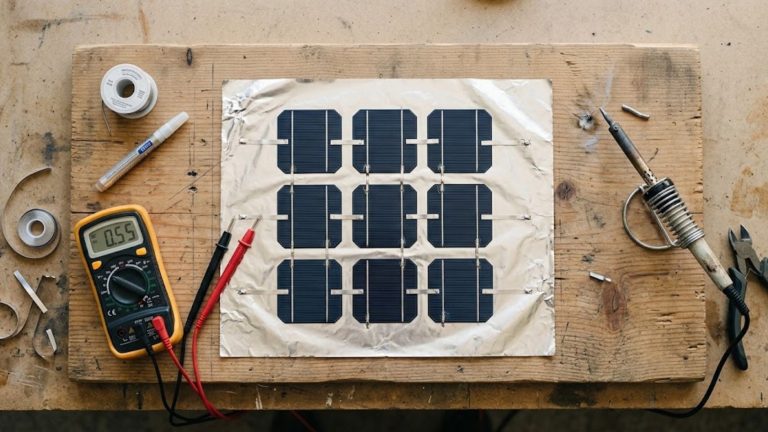
You cannot eyeball this measurement. You cannot build a heavy-duty rotor plate using a standard household hammer and a rusty screwdriver. Twisting copper wires together with your bare hands creates electrical resistance, which wastes the precious energy you are trying to harness. If you want to build a system that actually guarantees your food stays cold when the grid goes down, you must treat the build with respect. That means using precision measurement tools, proper soldering techniques, and exact mechanical alignment.
Ready to Secure Your Home’s Power?
Homeowners who recognize the gap between theoretical electromagnetic principles and the precision engineering required for a residential-grade magnetic generator are well-positioned to act on that understanding by acquiring the technical documentation necessary to bridge it.
Pairing a DIY generator with smart energy monitoring allows homeowners to track real-time consumption and schedule energy-intensive appliances like refrigerators during optimal hours.
- Rotor-stator air gap tolerances measured in fractions of a millimeter
- Starting surge wattage calculations specific to refrigerator compressor loads
- Material specifications for heavy-duty electromagnetic coil windings
- Sequential assembly protocols ensuring continuous, stable AC output
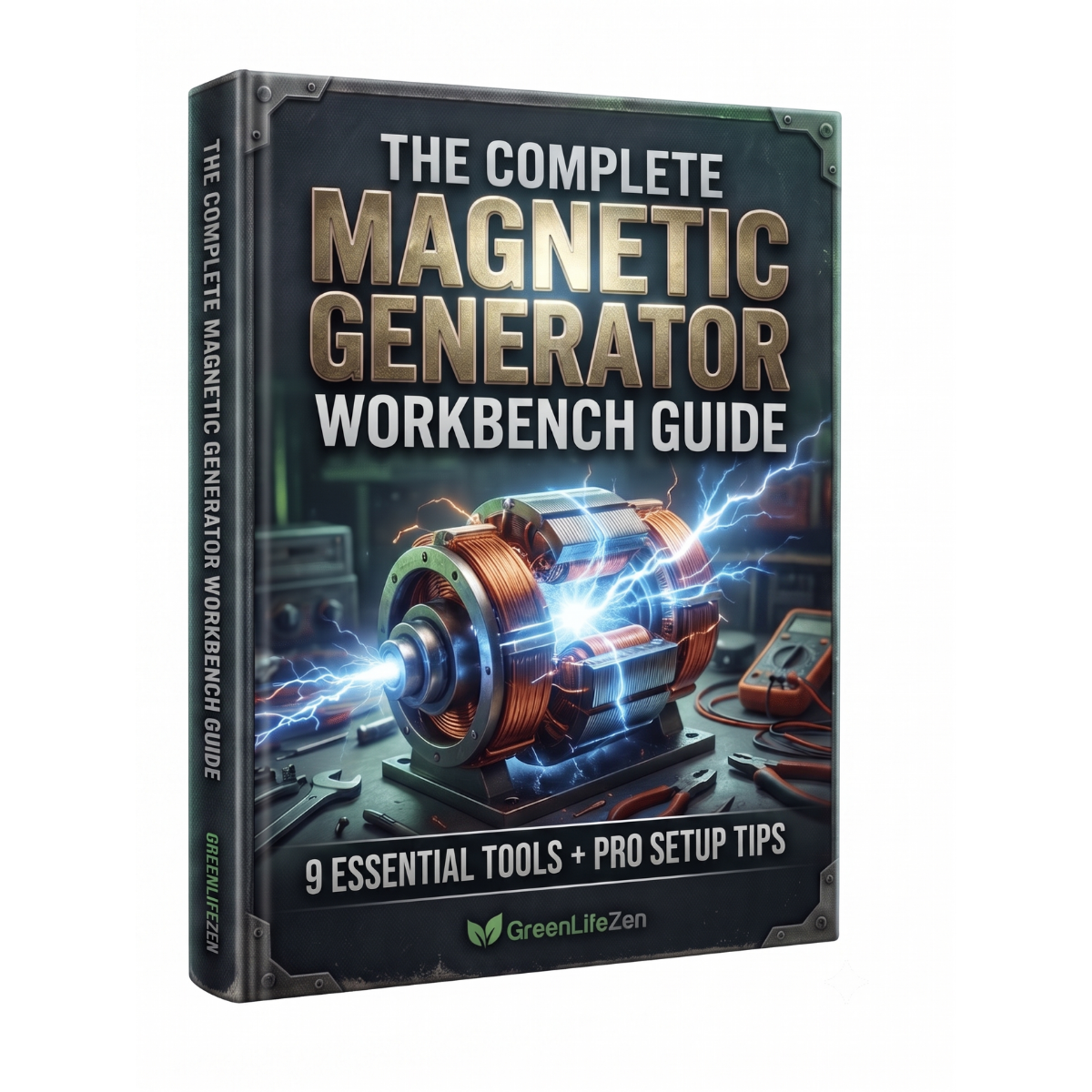
Want to secure your home’s power off the grid without relying on expensive, noisy gasoline? A DIY magnetic generator is the answer, but you need the right tools to build it safely. Click here to download FREE Guide: The Complete Magnetic Generator Workbench and discover the 9 essential tools you need to build a system that keeps your food cold and your family safe.
Frequently Asked Questions
How Do I Know Which Foods to Prioritize Saving During a Blackout?
As the clock begins its silent countdown, perishables with high protein content — meat, poultry, seafood, dairy, and eggs — demand immediate prioritization, as bacterial proliferation accelerates rapidly above 40°F. Insulin and temperature-sensitive medications follow closely. Shelf-stable items, condiments, and hard cheeses carry lower urgency. One should assess each item’s thermal sensitivity, protein content, and replacement cost, consolidating high-priority foods toward the freezer’s core to maximize retained thermal mass.
Can I Use Dry Ice to Extend My Freezer’s Safe Temperature Window?
Dry ice can extend a freezer’s safe temperature window considerably; when placed inside a compromised freezer, it maintains sub-zero temperatures, effectively delaying spoilage beyond the standard 48-hour threshold. Approximately 50 pounds of dry ice sustains a full freezer for three to four additional days. Homeowners should layer dry ice on top of frozen goods, as cold air descends, and must handle it exclusively with insulated gloves to prevent cryogenic burns.
What Insurance Coverage Exists for Food Spoilage Caused by Power Outages?
Homeowners’ insurance policies frequently include food spoilage coverage as a rider or standard endorsement, typically reimbursing between $500 and $2,000 in losses when a covered peril, such as a storm or utility failure, causes the outage. Renters’ insurance policies offer comparable provisions. Policyholders should document spoiled items photographically, retain receipts, and file claims promptly, as insurers commonly impose strict reporting deadlines, and deductibles may render small losses financially impractical to claim.
How Do I Safely Dispose of Food Spoiled During an Extended Blackout?
Spoiled food from an extended blackout should be double-bagged in sealed plastic bags before placement in outdoor waste receptacles, mitigating contamination and odor dispersal. Liquids must be contained to prevent cross-contamination with intact surfaces. Perishables exhibiting unusual odors, discoloration, or mold growth should be discarded without consumption testing. Local municipal guidelines regarding biological waste disposal should be consulted, as certain jurisdictions impose specific protocols governing the disposal of large quantities of spoiled organic material.
Are There Smart Appliances That Automatically Conserve Energy During Grid Failures?
Smart appliances equipped with demand-response technology can automatically reduce energy consumption during grid stress events, communicating with utility providers through protocols such as OpenADR to throttle non-essential functions. Smart refrigerators, for instance, may temporarily suspend ice-making cycles or adjust compressor intervals, conserving energy without compromising core thermal stability. Integration with home energy management systems, including smart panels from manufacturers such as Span or Lumin, enables automated load-shedding prioritization when grid instability is detected.
Conclusion
When the summer grid fails, those who plan ahead will keep the ball rolling while others scramble. Implementing the 4-hour rule, selecting appropriately rated magnetic generators, and deploying smart energy monitoring systems constitute a thorough framework for refrigerator preservation during rolling blackouts. Understanding starting surge wattage requirements, limiting unnecessary door openings, and maintaining sealed environments collectively reduce food spoilage risk, transforming a potentially costly emergency into a manageable, systematically addressed disruption.