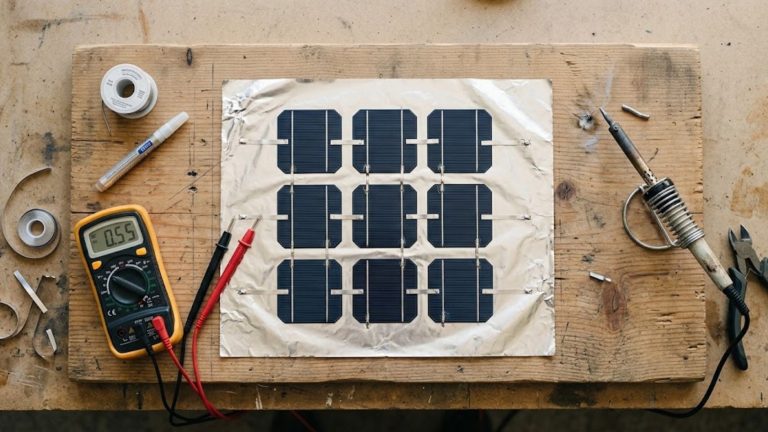
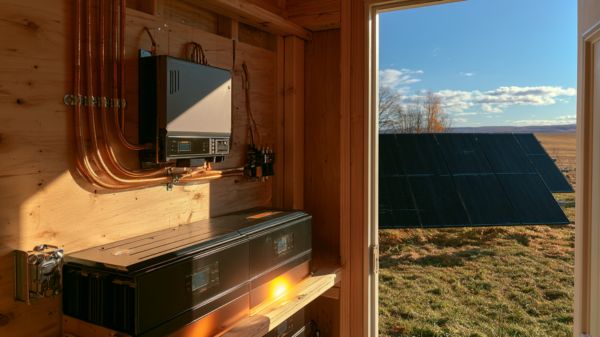
Looking to completely disconnect from the grid? Before you take the leap into building your own home solar power system, it is important to weigh the real-world costs involved. Many beginners price out solar panels and think they have their budget figured out, only to be hit by the massive hidden costs of batteries, heavy-gauge wiring, and mounting hardware.
Before you start pricing out individual panels and charge controllers, make sure you understand the foundational concepts outlined in The Ultimate Guide to DIY Off-Grid Energy Systems (2026).
In this guide, we break down exactly what you can expect to spend to build a robust, off-grid system in 2026, moving far beyond just the initial panel purchase.
The Off-Grid Solar Cost Breakdown
| Component Category | Estimated DIY Cost | What to Look Out For |
|---|---|---|
| Solar Panels (PV) | $2.50 – $3.50 per Watt | Seek high-efficiency Monocrystalline |
| Battery Bank (LiFePO4) | $7,000 – $16,000+ | Never skimp on storage capacity |
| Inverter & Charge Controller | $1,000 – $3,500 | Pure Sine Wave is mandatory |
| Balance of System (Wiring/Racking) | $1,500 – $3,000 | Copper wire prices fluctuate heavily |
1. The Initial Investment: Panels and Hardware
The upfront cost of a solar array varies based on size and efficiency, but in 2026, you can generally expect to pay between $2.50 and $3.50 per watt for the panels themselves.
However, the panels are just the tip of the iceberg. The real expense in a DIY setup comes from the Balance of System (BOS) components. You need heavy-duty ground or roof mounting racking built to withstand high winds, thick-gauge copper wiring, specialized disconnects, and breaker boxes.
2. The Battery Bank (Your Biggest Expense)
When you are off the grid, you don’t have a municipal power company to act as your battery at night. You must store your own power.
In 2026, standard off-grid systems rely on Lithium Iron Phosphate (LiFePO4) batteries. While they are incredibly safe and offer 5000+ cycles, a typical off-grid home battery setup will easily add $7,000 to $16,000 to your overall budget depending on how many days of autonomy you require during winter storms.
3. Inverters and Charge Controllers
To safely step down the voltage from your panels and charge your battery bank, you need a high-quality MPPT charge controller. Then, to convert that stored DC battery power into the AC power your household appliances need, you must purchase a Pure Sine Wave inverter.
Combined, a heavy-duty inverter and a reliable MPPT charge controller will run you between $1,000 and $3,500.
4. Maintenance and Lifespans
While solar panels themselves have no moving parts and boast a lifespan of 25 to 30 years, the other components of your system will not last forever.
- Cleaning and Inspection: Free if you do it yourself, but requires your time.
- Inverter Replacement: The inverter works incredibly hard. You should budget for an inverter replacement every 10 to 15 years, which currently costs around $1,000 to $2,500.
5. The 2026 Financing & Incentive Reality
If you are reading older guides, you might be counting on a massive federal tax rebate to offset your costs. Warning: The rules have drastically changed.
As of January 1st, 2026, the traditional 30% Residential Clean Energy Credit (Section 25D) for homeowner-owned systems was eliminated. The credit is now primarily available for commercial projects, or systems installed via third-party leases and Power Purchase Agreements (PPAs) where the leasing company owns the panels.
When building a DIY off-grid system in 2026, you must plan to cover the gross cost entirely out of pocket, without relying on federal kickbacks on your next tax return.
Conclusion
The costs of a DIY home solar power installation require a significant initial investment, especially when purchasing the necessary battery storage. However, by thoroughly calculating your loads, properly sizing your equipment, and budgeting for the Balance of System components, you can successfully build a resilient hybrid architecture that provides true energy independence.