Affiliate & Editorial Disclosure: This comparison review contains affiliate links. If you purchase through our links, we may earn a commission at no extra cost to you. All performance assertions made by the Energy Revolution System vendor are treated as experimental DIY claims; we do not guarantee specific electricity bill reductions. The $39 Energy Revolution System is a digital PDF and video blueprint—physical hardware materials are purchased separately.
When you want to build an entry-level emergency power setup without spending $1,500 on a commercial lithium power station, your choices usually narrow down to two distinct weekend projects: downloading the $39 Energy Revolution System blueprint to build an indoor electromagnetic coil unit, or buying an off-the-shelf 100W DIY solar panel starter kit.
If you have watched the promotional video for the Energy Revolution System, you have probably heard bold claims suggesting that a compact, Tesla-inspired pancake coil is “7 times more effective than solar panels.” On the other hand, if you have priced out a 100W monocrystalline solar kit from brands like Renogy or Rich Solar, you know that once you add a charge controller, wiring, and a 12V LiFePO4 battery, a basic “budget” solar setup quickly climbs past $350.
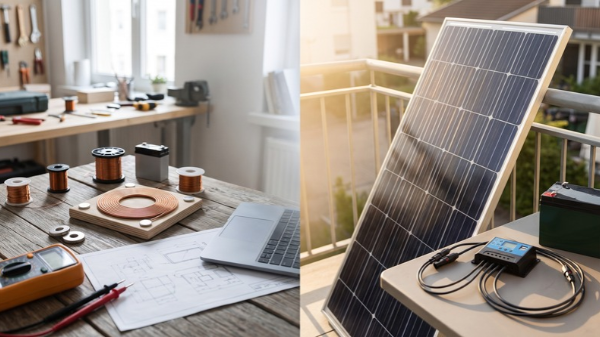
So which project actually makes sense for your wallet, living space, and outage preparedness goals? In this Energy Revolution System vs. DIY solar kit review, we strip away the sales hype and compare both setups head-to-head across total upfront cost, verified wattage output, apartment suitability, and beginner assembly difficulty.
Quick Comparison: Coil Blueprint + Efficiency vs. Photovoltaic Kits
Before diving into the wiring details, here is how a completed Energy Revolution System build stacks up against a standard 100-Watt 12V DIY Solar Starter Kit:
| Feature / Metric | The Energy Revolution System (DIY Build) | 100W 12V DIY Solar Starter Kit |
|---|---|---|
| Product Format | Instant Digital Blueprint (47-p. PDF + 2 hrs video) | Physical Hardware Kit (Panel + Charge Controller) |
| Upfront Guide / Base Price | $39 (One-time digital access) | $140 – $299 (Panel, controller & MC4 cables only) |
| Extra Hardware / Battery Cost | ~$72 – $147 (Copper wire, magnets, small 12V battery) | ~$150 – $220 (12V 50Ah–100Ah LiFePO4 battery + inverter) |
| Total All-In Project Spend | $111 – $186 | $290 – $519 |
| Realistic Continuous Output | ~12W – 18W DC trickle + household load-reduction habits | ~60W – 85W peak DC in direct midday sunlight (~350Wh/day) |
| Weather & Sunlight Dependency | Zero (Operates indoors 24/7 regardless of weather) | High (Produces 0W at night; drops 70%–90% in heavy clouds) |
| Apartment / HOA Friendly | Yes — Fits in a small plastic enclosure on a shelf | Difficult — Requires south-facing balcony, yard, or roof mount |
| Skill Level Required | Beginner DIY (Winding copper coils, basic terminals) | Plug-and-Play Wiring (Connecting MC4 leads & battery lugs) |
| Refund Protection | 60-Day ClickBank Money-Back Guarantee | Standard 30-Day Retail Return (Minus heavy return shipping) |
Dual-Path Quick Verdict:
- Choose The Energy Revolution System if: You want an indoor-friendly, weather-independent weekend electronics project for under $160 all-in, live in an apartment or cloudy climate, and want to pair a 12V micro-backup charger with actionable strategies to cut household phantom loads. Download the $39 Digital Blueprints Risk-Free Here.
- Choose a 100W DIY Solar Kit if: You have an unobstructed south-facing yard, roof, or balcony, have $350 to $500 to invest upfront, and want higher daily watt-hour generation from direct sunlight without winding your own copper coils.
Upfront Cost Breakdown ($150 Total Build vs. $350+ Solar Setup)
One of the biggest traps beginners fall into with both options is overlooking the “hidden” balance-of-system costs required to store and use the electricity.
1. The Energy Revolution System Budget ($111 to $186 All-In)
As we documented item-by-item in our Energy Revolution System materials list and cost review, your $39 purchase covers the digital schematics, itemized parts directory, and video walkthroughs.
To turn those plans into a working benchtop unit, you will spend roughly $72 to $114 for a small-scale prototype (or up to $147–$210 for an expanded build) sourcing enameled copper magnet wire, neodymium rotor magnets, diodes, capacitors, and a small 12V buffer battery. Even when buying brand-new spools of magnet wire, your total out-of-pocket investment stays well under $200.
2. The 100W DIY Solar Kit Budget ($290 to $519 All-In)
When you see a 100-watt solar panel kit advertised online for $140 to $175, it is easy to assume that $165 gets you a working backup power system. In reality, a “solar starter kit” only includes the photovoltaic module (solar panel), a solar charge controller (PWM or MPPT), and a pair of adapter cables.
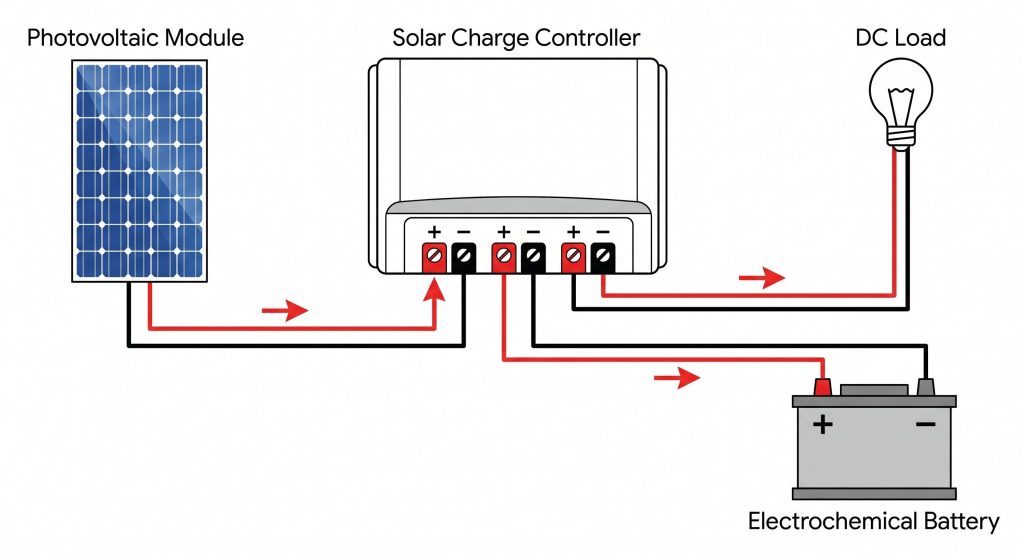
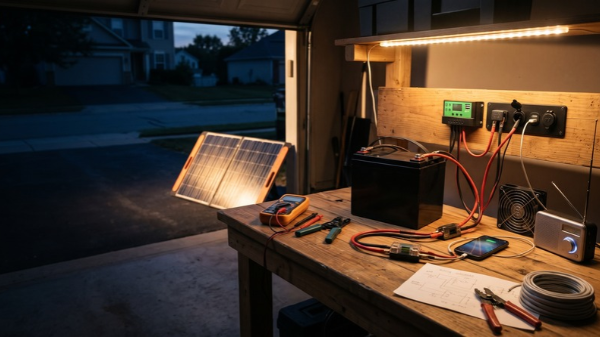
As illustrated in the standard off-grid wiring diagram above, a solar panel cannot power a DC load smoothly or store energy for nighttime blackouts without two additional components that are sold separately:
- The Electrochemical Battery ($110–$180): You must wire the solar charge controller to a 12V deep-cycle AGM or LiFePO4 battery.
- Pure Sine Wave Inverter & Fuse Blocks ($45–$85): To plug in standard household chargers or AC cords without damaging sensitive electronics, you need a 300W pure sine wave inverter and inline fuses.
Once you add the battery, inverter, and fuse protection to a $165 panel kit, a true entry-level 100W solar setup costs $320 to $500+.
Space, Weather & Apartment Suitability
Your physical living situation often makes the decision between these two projects automatic.
Why Solar Struggles Indoors and in Apartments:
A 100W monocrystalline solar panel measures roughly 32 x 28 inches and weighs 15 pounds. More importantly, solar panels do not work effectively through modern double-pane apartment windows (which have Low-E UV/infrared coatings that block 50% to 75% of solar irradiance), and even slight shading across a single cell on a balcony rail can drop the entire panel’s output by more than half. If you live in an HOA-restricted neighborhood, a shaded wooded lot, or the Pacific Northwest during winter, a fixed 100W panel will spend days trickling almost zero current.
Why the Energy Revolution System Excels in Tight Spaces:
Because the Energy Revolution System is a self-contained benchtop electromagnetic project housed inside a small plastic enclosure box, it has zero footprint outdoors. It makes no noise, emits no fumes, requires no sunlight, and can sit quietly on a utility closet shelf, workbench, or apartment corner during a winter ice storm.
Power Output & Physics Reality Check
As we emphasized in our comprehensive Energy Revolution System review, we believe in giving DIYers straight engineering numbers rather than repeating exaggerated marketing scripts.
Let’s address the elephant in the room: Does the Energy Revolution System really generate “7 times more power than solar panels” as claimed in some promotional email swipes?
No—not in raw wattage. Here is the honest physics comparison:
- 100W Solar Panel Output: On a clear, sunny afternoon with the panel angled directly at the sun, a 100W monocrystalline panel will produce 65 to 85 Watts of real charging power for 4 to 5 peak sun hours, banking roughly 300 to 400 Watt-hours (Wh) per sunny day into a 12V battery. That is enough to run a 12V portable car cooler, charge a laptop, and run LED lights.
- Energy Revolution System Output: A small DIY bifilar pancake coil assembly (inspired by Nikola Tesla’s 1894 US Patent 512,340) operates in the 12 to 18 Watt continuous trickle range (12V DC at ~1.0–1.5A). It will not outperform a sunny 100W solar array in raw watt-hour generation.
Where the Energy Revolution System Bridges the Gap:
Why do so many budget-conscious homeowners still prefer starting with the Energy Revolution System? Because the $39 guide combines two distinct mechanisms:
- Reliable 12V Micro-Backup: Even during a 3-day nighttime blizzard when a solar panel is buried in snow and producing 0 Watts, your indoor coil-and-buffer-battery bench unit can keep emergency LED strips lit, smartphones charged, and a 12V fan spinning.
- Immediate Household Load Reduction: While a 100W solar kit does nothing to lower your existing home’s energy waste, the Energy Revolution System manual includes a step-by-step household efficiency protocol for hunting down and cutting phantom (vampire) loads. Eliminating 60W to 100W of 24/7 standby power drain across your home saves 43 to 72 kWh every month—delivering a real, measurable drop on your monthly utility statement regardless of how small your workbench coil is.
Check Official Energy Revolution System Availability & 60-Day Guarantee Here
Assembly Experience: Winding a Bifilar Coil vs. Crimping Solar Cables
Both projects are genuinely beginner-friendly, but they teach very different skills:
- Building the Energy Revolution System (3 to 4 Hours): This is a true hands-on workbench project. You will spend roughly 90 minutes carefully winding two parallel strands of enameled copper magnet wire into a flat spiral pancake coil, scraping the clear enamel insulation off the wire tips, and connecting your bridge rectifier diodes and capacitors inside a project box. It is deeply rewarding if you enjoy learning how electromagnetic induction works firsthand.
- Wiring a 100W DIY Solar Kit (1 to 2 Hours): This is more like assembling heavy-duty stereo wiring. You bolt the battery cables to the solar charge controller FIRST (so the controller detects 12V system voltage), snap the waterproof MC4 connectors from the solar panel into the PV input terminals, and mount the panel outside where the sun can hit it.
Final Verdict: Which Project Should You Tackle First?
You don’t actually have to view these two setups as enemies—in fact, many off-grid homesteaders eventually use both. Because a 12V buffer battery is the common denominator in both systems, the skills you learn wiring a 12V circuit on your workbench transfer directly to outdoor solar projects later on.
Here is the smartest way to decide where to put your money today:
- Start with a 100W DIY Solar Kit if: You have $350 to $500 ready to spend on physical hardware, have a sunny yard or RV roof, and want up to 350Wh of daily solar recharging for camping or medium DC loads.
- Start with The Energy Revolution System if: You want to keep your initial risk to just $39 (and your total hardware build under $160), want an indoor project that works in apartments or winter storms, and want to immediately cut wasted electricity on your monthly utility bill while learning Tesla’s bifilar coil design.
Remember, because the Energy Revolution System is backed by ClickBank’s 60-day money-back guarantee, you can download the 47-page manual and watch the 2-hour video series today, compare the schematics and materials list against your local solar options, and request a full refund within 60 days if you decide to go the commercial solar route instead.
Click Here to Download The Energy Revolution System Blueprints (Backed by 60-Day Guarantee)
If you decide to explore the photovoltaic route alongside your indoor workbench build, watching this 100 Watt Solar Panel Kit Setup for Beginners Step by Step 2026 walkthrough is a helpful visual reference for seeing how panels, charge controllers, and 12V batteries connect in practice.