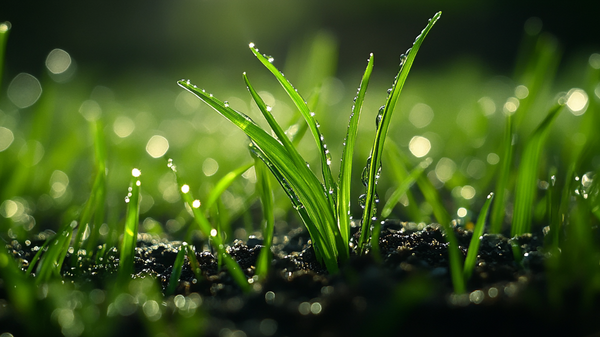
If you notice a perfectly rectangular patch of vibrant, rapidly growing grass in your yard, do not celebrate your landscaping skills just yet. This ultra-green grass is one of the most common early warning signs that your septic drain field is actively failing. Instead of filtering clean water, your underground pipes are leaking nutrient-rich, raw sewage directly into your topsoil, acting as a massive dose of toxic fertilizer.
The Hidden Ecosystem Beneath Your Lawn
Have you ever looked out your kitchen window during the dry days of August and wondered why one specific patch of your yard looks like a pristine golf course, while the rest is turning yellow?
It seems like a blessing at first, doesn’t it? But to understand why this is actually a homeowner’s nightmare, we have to zoom in and look at the microscopic war being waged just a few feet beneath that beautiful grass.
Your septic system is not just a concrete holding tank; it is a sprawling, fragile biological factory. When functioning correctly, millions of aerobic (oxygen-breathing) bacteria consume your household waste, breaking it down until only a clear, practically odorless liquid—called effluent—flows out into your drain field. This liquid trickles deep into the gravel and soil, safely filtering back into the groundwater.
When the Microbes Lose the Battle
But what happens when that delicate ecosystem collapses?
Perhaps someone poured harsh chemical drain cleaner down the sink, instantly wiping out your beneficial bacteria. Or maybe your tank simply hasn’t been pumped in five years, and the heavy, indigestible sludge at the bottom has crept dangerously high.
Whatever the cause, the result is the same: the tank stops processing waste. Instead of sending clear water out to the drain field, it pushes thick, sludgy, untreated sewage into those narrow, perforated pipes.
When solid waste enters pipes meant only for liquid, what does the surrounding soil do? The microscopic pores in the dirt become hopelessly plugged. The water has to go somewhere, doesn’t it? Because it can no longer drain down, it is forced completely up.
The Ultimate Toxic Fertilizer
This brings us back to your surprisingly beautiful lawn. Human waste is incredibly rich in nitrogen and phosphorus—the exact same active ingredients found in commercial lawn fertilizers.
When that untreated sewage pushes its way to the surface, the shallow roots of your grass eagerly drink it up. The result? A massive, localized explosion of deep green, hyper-fast-growing grass right over the failing pipes.
It is a fascinating display of nature utilizing available resources, but it is also a ticking time bomb for your wallet.
The Invisible Threat: What Happens Next?
A patch of green grass might seem like an isolated, easily ignored quirk, but it is actually the symptom of a much larger, invisible collapse happening inside your tank.
If raw sewage is currently spilling into your yard, it’s only a matter of time before the soil becomes 100% saturated. Once the earth cannot absorb another drop, where does your household wastewater go the next time you flush a toilet or run the dishwasher? It reverses course and violently backs up through your main plumbing line, directly onto your bathroom floor.
Are you prepared to deal with a biohazard inside your home? Or write a $5,000 to $15,000 check to an emergency excavation crew to rip up your yard and install a completely new drain field?
Stop the Backup Before It Starts
Don’t wait for your unusually green grass to turn into a foul-smelling swamp. The secret to a healthy, permanent septic system isn’t luck; it’s knowing exactly how to protect your underground ecosystem.

Download our ultimate homeowner’s blueprint to preventing catastrophic backups, destroying toxic odors, and saving thousands on completely avoidable repairs.
👉 Click Here to Download Your FREE Copy of “Septic System Survival” Now!
Frequently Asked Questions (FAQs)
Does green grass always mean my septic tank is failing?
Not necessarily. If the green grass is directly over the tank itself (not the drain field), it could simply mean the tank’s lid is cracked and allowing condensation and steam to escape, which waters the grass above it. However, this still requires a professional inspection to seal the hazardous leak.
What should I do if my drain field is squishy to the touch?
If the green grass is accompanied by soil that feels spongy under your boots, or you see puddles of black water, your system has officially failed. Stop using your household water immediately and call an emergency pumping service.
Can pouring bleach down the sink cause my drain field to fail?
Yes! Bleach acts as a nuclear bomb to your tank’s ecosystem, killing the bacteria required to process waste. Without those microbes, sludge builds up rapidly and destroys the drain field.
How often should I pump my tank to prevent this?
For a standard four-bedroom home, you should have a professional pump and inspect the tank every 3 to 5 years. If you use a garbage disposal daily, you may need to pump it every single year.