
You’ll systematically reduce your household’s waste stream by 30-40% through a structured 30-day protocol that begins with a thorough three-day audit, wherein you’ll collect, segregate, and weigh refuse across distinct categories—food scraps, packaging materials, plastics—to establish quantifiable baseline metrics.
Subsequently, you’ll shift from disposable systems to sustainable infrastructure by replacing plastic containers with glass storage solutions, implementing composting protocols for organic waste conversion, sourcing provisions from bulk purchasing facilities to eliminate packaging, and cataloging existing reusable inventory to prevent redundant acquisitions. This challenge’s methodological framework, when properly executed, facilitates permanent behavioral modifications that extend beyond the initial implementation period.
Key Takeaways
- Conduct a three-day waste audit by weighing and categorizing refuse to establish baseline metrics for reduction strategies.
- Inventory existing reusable items like glass jars and cloth napkins to prevent redundant purchases and optimize resources.
- Replace plastic containers with glass jars and shop bulk bins to minimize packaging waste from groceries.
- Start composting organic waste and implement meal planning to reduce food waste and consumption patterns.
- Join local zero-waste communities for accountability while setting measurable quarterly reduction objectives to sustain habits.
Why Take the 30-Day Zero Waste Kitchen Challenge?
The accumulation of disposable materials in residential kitchens, which includes single-use plastics, food packaging, and organic waste that could otherwise be diverted from landfills, represents a significant contributor to municipal solid waste streams, and the 30-Day Zero Waste Kitchen Challenge provides a structured framework for identifying, quantifying, and systematically eliminating these waste sources through targeted behavioral modifications.
This zero waste challenge enables you to conduct thorough audits, tracking waste volumes and establishing baselines for reduction initiatives. Through sustainable living practices such as composting, bulk purchasing, and reusable container implementation, you’ll reduce food waste while achieving measurable financial savings.
The challenge’s duration permits iterative experimentation, allowing you to refine approaches and establish permanent behavioral patterns that minimize environmental impact, ultimately granting you autonomy from disposable product dependency and corporate waste generation systems. Composting organic waste diverts materials from landfills, reducing methane emissions that contribute to greenhouse gases.
No products found.
Week 1: Audit Your Waste and Build Awareness
During the first week, you’ll establish a baseline understanding of your waste generation patterns by conducting a thorough zero-waste audit on Day 1, which requires collecting all household refuse for a designated period, sorting it into distinct categories—food scraps, packaging materials, plastics—and recording the weight of each classification to identify primary waste contributors.
On Day 2, you’ll compile a detailed inventory of existing reusable items, such as cloth bags and glass jars, which will reduce your dependence on single-use products and prepare you for implementing subsequent sustainable practices.
By Day 5, you’ll maintain a food waste log to document the specific types and quantities of discarded food items, enabling you to recognize consumption patterns that, when analyzed, will inform improved purchasing decisions and meal planning strategies. As you track your organic waste throughout the week, designate separate bins for plastics and other recyclables to establish an organized sorting system that will become the foundation of your zero-waste kitchen.
Conduct Your Waste Audit
Before implementing any reduction strategies, you must establish an extensive baseline of your household’s waste generation through a systematic audit, which involves collecting all refuse produced over a designated three-day period, segregating materials into distinct categories such as food scraps, packaging materials, recyclables, and residual waste, and documenting both the weight and volume of each classification.
Execute your waste audit using these protocols:
- Designate collection bins for food scraps, packaging materials, recyclables, and residual waste
- Weigh each category using a calibrated scale, recording measurements in a standardized log
- Analyze consumption patterns to identify primary waste output sources
- Calculate baseline metrics to track progress toward your zero-waste lifestyle implementation
This systematic approach enables you to reduce waste through data-driven decision-making, establishing quantifiable parameters for measuring subsequent improvements.
Inventory Reusable Kitchen Items
Following your thorough waste audit, you’ll now systematically catalog the reusable kitchen items currently in your possession, examining each storage location—including cabinets, drawers, pantries, and utility areas—to compile a detailed inventory that will serve as the foundation for eliminating redundant purchases and optimizing your zero-waste infrastructure.
Document reusable bags, food storage containers, glass jars, cloth napkins, and multi-functional implements, noting quantities, conditions, and functional capacities to prevent acquiring unnecessary packaging alternatives. This inventory establishes baseline metrics for waste reduction initiatives, identifying gaps in your zero-waste lifestyle framework while revealing underutilized assets that can substitute for single-use products.
Maintain this catalog as a reference document during shopping activities, ensuring deliberate consumption patterns aligned with sustainable resource management principles and preventing duplicate acquisitions that contradict waste-minimization objectives. Implement the one-in-one-out rule for any new kitchen items to maintain organization and prevent accumulation of redundant reusable products that could undermine your zero-waste goals.
Track Daily Food Waste
As you shift from cataloging reusable infrastructure to examining consumption outcomes, you must initiate systematic food waste tracking on Day 5 of the zero-waste challenge, establishing a quantitative foundation for behavioral modification and procurement optimization. This methodology enables you to reduce their waste through data-driven interventions, particularly when Americans discard 119 billion pounds annually, representing 40% of total food production.
Track daily discards by categorizing:
- Produce spoilage indicators requiring adjusted grocery store purchasing frequencies
- Leftover volumes signaling portion miscalculations
- Packaged goods expiration patterns informing buy in bulk decisions
- Perishable item degradation timelines necessitating consumption prioritization
Analyze Week 1 findings to recalibrate acquisition protocols, enabling you to live sustainably through evidence-based meal planning and procurement strategies that eliminate redundant purchases. Similar to how off-grid solar systems require calculating daily energy consumption in watt-hours to determine optimal system size, measuring your household’s waste output in pounds per week provides the baseline data necessary for designing an effective waste reduction strategy.
No products found.
Week 2: Transform Your Food Storage and Shopping Habits
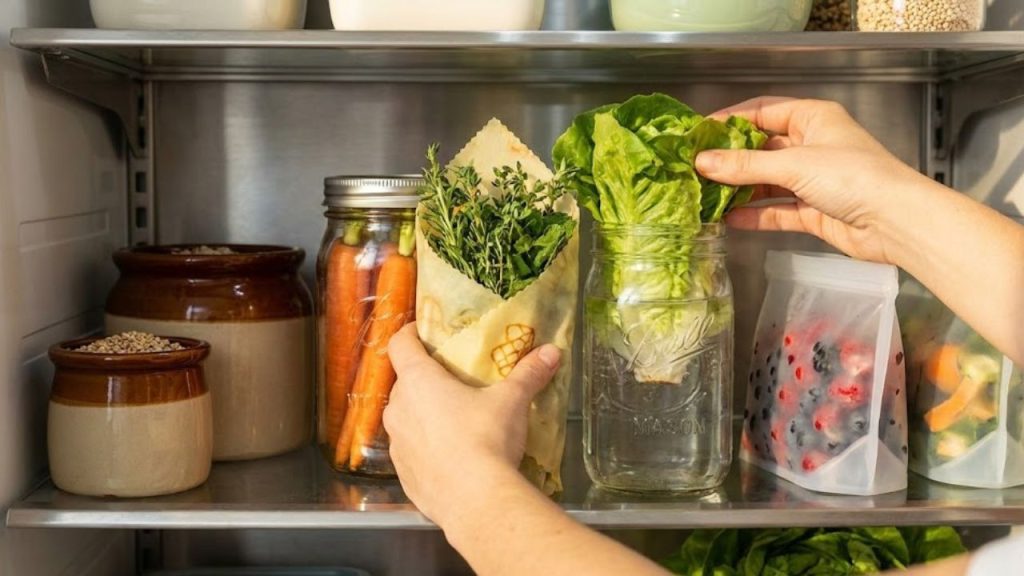
While transforming your kitchen’s approach to food storage and shopping represents a fundamental shift in household waste management, the practical implementation requires methodical evaluation of current systems, identification of sustainable alternatives, and strategic modification of purchasing behaviors. Begin by replacing conventional plastic containers with glass jars, which provide durable, reusable storage solutions that eliminate single-use materials.
When shopping sustainably, locate grocery stores offering bulk purchasing options, enabling you to fill personal containers and bypass excessive packaging. Select loose produce rather than pre-packaged alternatives, supporting local agricultural systems that minimize waste generation. Establish composting infrastructure to convert organic waste into valuable soil amendments, creating closed-loop nutrient cycles.
Document all discarded items to refine procurement strategies, ensuring purchases align with actual consumption patterns and eliminate unnecessary waste streams. Additionally, collect cold water in a bucket while waiting for kitchen taps to reach desired temperatures, then reuse this water for plant irrigation or cleaning tasks, maximizing resource efficiency throughout your zero-waste kitchen transformation.
Week 3: Extend Zero Waste Practices Beyond the Kitchen
Though kitchen-focused waste reduction strategies establish foundational environmental practices, thorough household sustainability requires systematic expansion of zero waste principles into additional domestic domains, including personal care spaces, textile management systems, and energy consumption infrastructure.
Take inventory of bathroom waste to identify single-use items requiring elimination, changing to reusable alternatives such as cotton rounds and refillable dispensers. Implement energy efficiency protocols through low-flow fixtures and LED infrastructure to minimize resources used across domestic operations. Consider these systematic approaches:
- Switch to paperless billing for all household accounts to reduce paper consumption
- Audit textile inventories, donating excess items while prioritizing sustainable, repairable garments
- Install programmable thermostats to optimize energy consumption patterns
- Establish community recycling participation through proper waste sorting protocols
Week 4: Lifestyle Changes for Lasting Impact
Because sustainable practices achieve durability only through fundamental behavioral modifications rather than temporary interventions, the shift from initial zero-waste implementation to permanent lifestyle integration necessitates deliberate restructuring of consumption patterns, maintenance protocols, and community engagement frameworks.
| Action Category | Implementation Method | Impact Metric |
|---|---|---|
| Energy Conservation | Switch LED bulbs, unplug devices | Save money, reduce carbon footprint |
| Waste Reduction | Deploy washable rags, eliminate paper towels | Shrink your trash footprint |
| Item Maintenance | Repair possessions, extend lifespan | Minimize landfill contributions |
| Community Engagement | Share journey, join local initiatives | Become change agent |
| Daily Decluttering | Sort donate, recycle, repurpose categories | Help save environment every day |
This systematic approach encourages us toward liberation through conscious consumption.
Sustaining Your Zero Waste Journey After 30 Days
As you progress beyond the initial 30-day period, you must establish systematic protocols for building long-term habits that reinforce waste reduction behaviors through consistent execution, periodic evaluation of your waste audit metrics, and iterative refinement of your kitchen processes.
To guarantee accountability and prevent regression to previous consumption patterns, you should integrate yourself into community networks where sustainability practitioners exchange empirical data, document their methodological approaches, and provide mutual oversight through regular progress assessments.
These structured social frameworks, combined with your individual commitment to measurable objectives such as weekly plastic-free intervals and quarterly waste volume analyses, will create the necessary conditions for sustained zero waste practices that extend well beyond the foundational month.
Building Long-Term Habits
When you complete the 30-day zero waste challenge, you must establish concrete frameworks that transform temporary behavioral modifications into permanent lifestyle adjustments, which requires systematic implementation of measurable targets, continuous monitoring protocols, and deliberate integration of waste-reduction methodologies into your operational routines.
Every three months, take stock through waste audits to identify inefficiencies and track metrics. The challenge breaks behavioral patterns, allowing you to incorporate sustainable practices systematically. You need to understand that liberation from consumer dependency demands structured approaches:
- Set quantifiable objectives, such as reducing waste by 50% over subsequent quarters
- Plan meal preparation and procurement lists to save resources and minimize packaging waste
- Connect with local zero waste communities for knowledge exchange and accountability support
- Integrate composting, bulk purchasing, and DIY solutions into daily operations
By using apps or tools to monitor your recycling habits and waste output, you can identify specific areas where consumption patterns need adjustment and celebrate measurable progress toward your zero waste goals.
Community and Accountability
While structured approaches and systematic monitoring provide the foundation for sustained waste reduction, the integration of community networks and accountability mechanisms greatly amplifies your capacity to maintain zero waste practices beyond the initial 30-day period, particularly when you leverage collective resources, shared knowledge bases, and peer-driven commitment structures that counteract the isolation inherent in individual behavioral change efforts.
Engaging in local zero-waste initiatives, including swap meets and bulk buying cooperatives, establishes accountability through shared learning experiences and resource pooling. Social media platforms serve as documentation systems for tracking progress while facilitating peer review and knowledge transfer.
Online forums dedicated to zero-waste methodologies provide continuous support through asynchronous communication channels, enabling you to access distributed expertise and troubleshoot implementation challenges, thereby reinforcing commitment to waste elimination protocols and expanding your operational capabilities through collaborative problem-solving frameworks.
These collective sustainability efforts parallel the economic advantages demonstrated in renewable energy communities, where shared infrastructure and energy independence reduce individual costs while strengthening community resilience against resource price fluctuations.
Essential Resources and Community Support for Success
Although shifting to a zero-waste kitchen requires individual commitment and behavioral modification, the process becomes markedly more sustainable through strategic engagement with established resources and community networks that provide technical guidance, practical implementation strategies, and ongoing accountability mechanisms.
Zero-waste community groups facilitate direct knowledge transfer regarding bulk sections navigation, composting infrastructure development, and sustainable living implementation protocols. Access extensive resources through multiple channels:
- ZeroWaste.org documentation repositories containing standardized procedures for waste elimination frameworks
- Local governments hosting certification workshops for composting systems and bulk purchasing methodologies
- Social media networks enabling real-time troubleshooting and solution-sharing among practitioners
- Educational materials including technical manuals, instructional podcasts, and implementation case studies addressing zero-waste kitchen deployment
These interconnected support systems accelerate your shift while maintaining operational consistency throughout the thirty-day implementation cycle.
No products found.
Frequently Asked Questions
What Is the Theme of Zero Waste Month 2025?
Like knights of old beginning noble quests, you’ll discover that Zero Waste Month 2025 champions sustainable practices through waste reduction, whereby participants engage in composting techniques, food preservation, and meal planning.
The initiative liberates you from consumerist constraints by promoting eco-friendly products, conducting waste audits, and implementing zero-waste challenges that track environmental footprints, while fostering community networks with local businesses, thereby empowering collective action against climate degradation through mindful consumption protocols.
How to Start a Zero Waste Kitchen?
Start your zero-waste kitchen by conducting a waste audit, which’ll identify reduction targets, then implement composting techniques for organic scraps while shifting to reusable containers and bulk shopping for staples. You’ll maximize food preservation through proper storage methods, enhance energy efficiency by optimizing appliance usage, and adopt sustainable cooking practices that minimize resource consumption. This systematic approach, requiring methodical execution of sequential steps, establishes foundational protocols for waste elimination while maintaining operational kitchen functionality throughout the alteration process.
What Is a Zero Waste Menu?
A zero waste menu eliminates approximately 90% of packaging waste through creative meal planning that prioritizes bulk shopping and seasonal ingredients. You’ll design adaptable recipes utilizing compost recipes from vegetable scraps, implement food preservation techniques to extend ingredient viability, and strategically plan portions for reducing leftovers. This systematic approach requires sourcing transparency, whereby you’ll select organic items from local producers, thereby minimizing transportation emissions while maximizing ingredient utilization through thorough meal frameworks.
How to Start Going Zero Waste?
Start by auditing your waste, then implement eco-friendly swaps like reusable containers for bulk buying at local stores. Master composting basics to divert organic waste from landfills, which liberates you from dependency on municipal systems. Develop meal planning strategies to minimize food waste, and learn food preservation techniques to extend ingredient longevity. These foundational practices, when executed systematically, establish a zero-waste framework that empowers you to operate independently of disposable packaging systems while optimizing resource utilization.
Conclusion
You’ve completed thirty days of intentional waste reduction, yet the true measure of success lies in what you’ll do tomorrow, and the day after, when the challenge’s structure no longer guides you. Your kitchen’s transformation isn’t finished; rather, you’ve established foundational systems requiring continuous refinement, adaptation, and commitment. The habits you’ve cultivated will either solidify into permanent practice or gradually erode without sustained vigilance, community engagement, and periodic reassessment of your waste-reduction protocols.