If you spend any time in homesteading, preparedness, or natural wellness circles, you have almost certainly seen the Medicinal Garden Kit curated by biologist and Alone survivalist Dr. Nicole Apelian. Pitched as a complete “backyard pharmacy” inside a single box, it promises 4,818 non-GMO seeds across 10 classic medicinal herbs, paired with a printed step-by-step guide on turning your harvest into teas, salves, and tinctures.
At the same time, if you search for Medicinal Garden Kit Reddit threads or independent gardening forums, you will quickly spot healthy skepticism. The sales page leans heavily on high-urgency countdown timers, bold anecdotal health stories, and crisis preparedness hooks that make some buyers pause before pulling out their credit cards.
So, what actually shows up at your door when you order? How does the $59 price tag compare to buying individual seed packets from reputable nurseries, and which of these 10 seeds are notoriously finicky for beginner gardeners?
In this 2026 Medicinal Garden Kit review, we strip away the marketing hype to examine the actual seed varieties, germination realities, real cost math, and buyer complaints so you can decide whether this bundle belongs in your garden.
Check Current Availability & Official Bonus Bundle on the Medicinal Garden Kit Website →
Affiliate & Medical Disclosure: As an affiliate, I earn a commission from qualifying purchases made through links in this review, at no additional cost to you. This article is for educational and gardening purposes only and does not constitute medical advice. Herbal preparations are not intended to diagnose, treat, cure, or prevent any disease. Always consult a qualified healthcare professional before using home-grown herbs—especially if you are pregnant, nursing, taking prescription medications, or managing a health condition.
Quick Verdict: Who This Kit Is (and Isn’t) For
Before diving into the botanical specs, here is the bottom-line summary of how the Medicinal Garden Kit stacks up as a gardening and home-apothecary starter package.
| Feature | Details |
|---|---|
| Product Name | Medicinal Garden Kit |
| Creator / Brand | Dr. Nicole Apelian, Ph.D. (Global Brother) |
| What’s Included | 10 non-GMO herb seed packets (4,818 seeds total), printed Herbal Medicinal Guide, 10 plant markers, + 2 digital bonus eBooks |
| Current Price | $59.00 + $4.99 standard shipping (one-time purchase, no subscription) |
| Refund Policy | 365-day, 100% money-back guarantee |
| Best For | Beginner herbalists, homesteaders, and preppers who want a curated, done-for-you starter set with a physical recipe manual |
| Skip If | You already own an extensive seed vault, live in an apartment with zero sun, or expect instant remedies without a full growing season of patience |
The Short Answer: Is the Medicinal Garden Kit Worth It?
Yes—for beginners and convenience-minded gardeners, the Medicinal Garden Kit is a solid value. While you could theoretically source similar seeds from bulk nurseries for roughly $35 to $45 before shipping, you would spend hours researching compatible varieties, paying multiple shipping fees, and still lack a cohesive physical reference book tying those exact 10 plants to step-by-step preparation methods.
No—for experienced seed-savers, you will find the total seed count (4,818 seeds) heavily weighted toward tiny-seeded plants like chamomile and yarrow, and you likely already have your preferred seed suppliers and herbalism books on your shelf.
Who Created the Medicinal Garden Kit?
The Medicinal Garden Kit was co-created by Dr. Nicole Apelian, Ph.D., an herbalist, biologist, and survival skills instructor. She holds a biology degree from McGill University, conducted doctoral fieldwork living alongside the San Bushmen in the Kalahari Desert, and gained mainstream recognition in 2015 after surviving 57 days solo on Season 2 of the History Channel’s Alone.
Apelian frequently shares her personal background of being diagnosed with Multiple Sclerosis (MS) in her late twenties and incorporating lifestyle changes, foraging, and home-grown herbal preparations into her daily wellness routine.
Note on expectations: While Apelian’s personal story is central to the product’s marketing, readers should view her background as inspiration for learning traditional plant cultivation rather than clinical proof that backyard herbs can replace modern medical care.
What’s Inside the Box? (Physical & Digital Components)
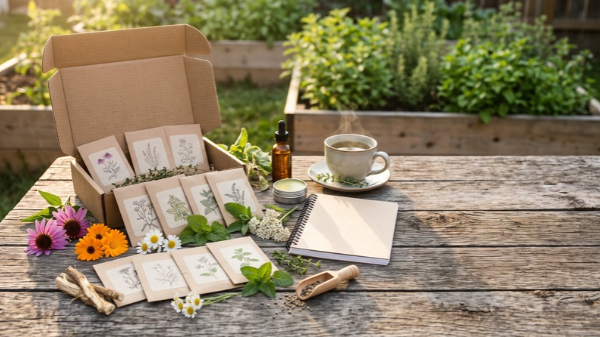
Unlike digital-only ClickBank offers, the Medicinal Garden Kit ships a physical package to your door (packaged in the USA) alongside two immediate digital downloads:
- 10 Individual Labeled Seed Packets (4,818 Seeds Total): Non-GMO, open-pollinated seeds spanning annuals, biennials, and hardy perennials. (Important note: Seed counts are not split evenly—tiny seeds like Chamomile and Yarrow account for well over half the total seed count, while larger seeds like Calendula and Marshmallow have fewer seeds per packet).
- Printed Herbal Medicinal Guide: From Seeds to Remedies: A physical booklet covering basic planting, harvesting, and step-by-step instructions for making herbal infusions (teas), decoctions, oil infusions, beeswax salves, poultices, and alcohol tinctures.
- 10 Plant Markers: Simple labels to help you tell seedlings apart during spring sprouting—genuinely useful when young Feverfew and Chamomile leaves look nearly identical.
- Digital Bonus #1 – Healing Yourself At Home With Household Items: A downloadable guide covering traditional folk pantry preparations (such as onion syrups, garlic infusions, and mustard/potato poultices).
- Digital Bonus #2 – Wild Edible and Medicinal Herbs You Can Forage or Find Around the House: A beginner’s field guide to identifying common backyard “weeds” like dandelion, plantain, and clover while you wait for your planted seeds to mature.
Breakdown of All 10 Medicinal Plants in the Kit
One major weakness of the official sales page is that it focuses heavily on traditional folk uses while leaving out practical gardening data—such as USDA hardiness zones, sunlight requirements, and germination difficulty. Below is the complete horticultural and traditional-use breakdown of all 10 varieties included in the kit so you know what to expect in your specific climate.
| Herb Name | Plant Type | USDA Zones | Sun & Soil Needs | Germination Difficulty | Traditional Folk & Culinary Uses |
|---|---|---|---|---|---|
| 1. Chicory (Cichorium intybus) | Perennial | 3–10 | Full sun; tolerant of poor, dry soil | Easy | Roasted root used as a caffeine-free coffee substitute and prebiotic digestive bitter; leaves used in salads. |
| 2. Yarrow (Achillea millefolium) | Perennial | 3–9 | Full sun; well-drained, average soil | Easy | Historically used in topical washes, salves, and compresses for minor scrapes; attracts predatory beneficial insects. |
| 3. California Poppy (Eschscholzia californica) | Annual / Tender Perennial | 6–10 | Full sun; sandy, well-drained soil (drought-tolerant) | Moderate (Direct sow; hates transplanting) | Traditionally brewed as a mild evening tea to promote relaxation and restful sleep. |
| 4. Marshmallow (Althaea officinalis) | Perennial | 3–9 | Full sun to part shade; moist, rich soil | Hard (Needs cold stratification) | Mucilage-rich root traditionally prepared as a cold water infusion to soothe dry throats and digestive lining. |
| 5. German Chamomile (Matricaria recutita) | Self-Seeding Annual | 2–9 | Full sun to light shade; average soil | Easy (Surface sow; needs light to sprout) | Classic calming bedtime tea; infused into carrier oils for soothing dry or sensitive skin. |
| 6. Evening Primrose (Oenothera biennis) | Biennial | 4–9 | Full sun; dry to medium well-drained soil | Moderate | Seeds are rich in gamma-linolenic acid (GLA); leaves and roots used traditionally in skin poultices and teas. |
| 7. English Lavender (Lavandula angustifolia) | Perennial | 5–9 | Full sun; dry, sandy/alkaline soil | Hard (Slow germination; needs cold stratification) | Aromatherapy for relaxation and sleep pillows; infused into oils and salves for skin comfort. |
| 8. Purple Coneflower / Echinacea (Echinacea purpurea) | Perennial | 3–9 | Full sun to part shade; well-drained soil | Moderate–Hard (Benefits from cold stratification) | Roots and petals brewed into traditional seasonal-support teas and tinctures. |
| 9. Calendula (Calendula officinalis) | Self-Seeding Annual | 2–11 | Full sun; average, well-drained soil | Easy | Petals infused into olive or coconut oil to make gentle, skin-soothing salves, balms, and creams. |
| 10. Feverfew (Tanacetum parthenium) | Short-Lived Perennial | 5–9 | Full sun to part shade; well-drained soil | Easy | Leaves traditionally steeped in tea or tinctured in European folk herbalism for head and joint comfort. |
Key Takeaway From the Plant List
Notice the smart horticultural balance here: Calendula, German Chamomile, Chicory, Yarrow, and Feverfew are forgiving, fast-growing workhorses that reward beginners in their very first summer. Meanwhile, Echinacea, Lavender, and Marshmallow are long-lived perennials that establish deep root systems over two seasons, turning your plot into a returning perennial bed.
(Planning a small yard or balcony setup? See our full breakdown of what seeds are in the Medicinal Garden Kit and exact USDA zone spacing for container recommendations.)
Real Buyer Complaints & Germination Reality (What the Sales Page Doesn’t Tell You)
To give you an honest assessment, we looked closely at recurring Medicinal Garden Kit complaints across gardening boards, Reddit discussions, and consumer reviews. Nearly every negative review stems from three avoidable misunderstandings:
1. “My Lavender and Echinacea Didn’t Sprout!”
This is by far the #1 complaint—and it has less to do with seed quality and more to do with basic botany. Unlike tomatoes or zinnias, Lavender, Echinacea, and Marshmallow seeds have built-in dormancy mechanisms. In nature, they drop in autumn, sit under cold, damp winter soil, and sprout in spring.
If you plant these packets directly into warm May soil without mimicking winter, germination rates drop dramatically.
- The Fix: Place those three seed packets inside a damp paper towel in a sealed zip-top bag in your refrigerator for 3 to 4 weeks (cold moist stratification) before sowing indoors or in early spring.
2. Expecting Instant Medicine Instead of a Gardening Project
Some buyers order the kit expecting immediate relief, only to realize they are holding raw seeds. Annuals like Chamomile and Calendula will give you flowers to harvest in 60 to 75 days, while root crops like Chicory, Marshmallow, and Echinacea are best harvested in autumn of their first or second year so the roots have time to store energy. If you need dried herbs this week, buy bulk dried herbs—not a seed kit.
3. Aggressive Sales Funnel & Countdown Timers
On the official landing page, you will encounter a ticking 50-minute countdown timer, “Last Kits Available” banners, and optional post-checkout upsells (such as digital foraging books or extra seed vaults).
Rest assured: the countdown timer resets, and you do not need to buy any upsells for the core kit to work. Simply decline any extra offers during checkout if you only want the base seed box and printed guide.
Price Breakdown: Medicinal Garden Kit vs. Buying Seeds Separately
Is $59 + $4.99 shipping ($63.99 total) a fair price, or are you overpaying for marketing? Let’s run the actual numbers against buying 10 individual non-GMO medicinal herb seed packets from established US seed houses (such as Strictly Medicinal Seeds, Baker Creek, or Eden Brothers).
| Cost Component | Buying Separately (Retail Seed Houses) | Medicinal Garden Kit Bundle |
|---|---|---|
| 10 Non-GMO Medicinal Seed Packets | ~$3.50–$4.50 per packet = $35.00–$45.00 | Included (4,818 seeds across 10 packets) |
| Shipping (Often Across 2–3 Vendors) | ~$5.00–$12.00 | $4.99 flat shipping |
| Printed Seed-to-Remedy Manual | ~$15.00–$22.00 (comparable beginner herbal book) | Included (Physical copy) |
| 10 Plastic/Wood Plant Markers | ~$3.00–$5.00 | Included |
| 2 Digital Foraging & Pantry Guides | ~$10.00–$20.00 | Included |
| Return / Germination Guarantee | Usually 30 days (unopened packets only) | 365-day money-back guarantee |
| Total Out-of-Pocket Cost | ~$68.00 – $104.00 | $63.99 Total |
The Math Verdict: If you only wanted seeds and already knew how to grow, harvest, dry, and formulate tinctures and salves on your own, buying individual packets from a specialty seed catalog would save you roughly $15 to $20. However, once you factor in the printed preparation guide and the 365-day refund window, the bundle comes out ahead on total value.
(Want to see how this kit compares against other ready-made seed vaults? Check out our side-by-side roundup of the 7 best medicinal herb seed kits for a backyard apothecary.)
Important Safety & Herbalism Guidelines
Because this kit is designed for growing herbs intended for traditional teas, oils, and salves, keep three basic safety rules in mind before harvesting your first crop:
- Plants Are Pharmacologically Active: “Natural” does not mean risk-free. For example, Feverfew and Chamomile belong to the Asteraceae (ragweed/daisy) family and can trigger reactions in people with severe ragweed allergies; Marshmallow mucilage can slow the absorption of oral prescription drugs if taken at the exact same time; and California Poppy or Lavender teas can compound drowsiness when combined with sedatives.
- Verify Positive Identification: Always use the included plant markers and double-check leaf and flower characteristics before harvesting—especially if self-seeding volunteers pop up next to wild weeds in year two.
- Organic Soil Only: Never plant medicinal herbs in soil treated with synthetic pesticides, systemic herbicides, or heavy-metal-contaminated runoff, as roots (like Chicory and Marshmallow) concentrate compounds from the soil.
Where to Buy & How the 365-Day Guarantee Works
To ensure you receive fresh, viable seed stock along with the physical printed guide and digital bonuses, order directly through the official Medicinal Garden Kit website. Third-party marketplace listings on Amazon or eBay frequently lack the printed manual, use older repackaged seeds, and are not covered by the vendor’s refund policy.
Understanding the 365-Day Refund Policy
The strongest consumer protection attached to this offer is its full 1-year (365-day) money-back guarantee. Unlike standard seed companies that refuse returns once a packet is opened, this window gives you an entire four-season planting cycle to sow your seeds, test germination in your local climate, and read through the guides. If you are unhappy with your sprout rates or the materials for any reason within 365 days, you can request a full refund through the order support desk.
Final Verdict: Should You Buy the Medicinal Garden Kit?
The Medicinal Garden Kit is not a magic pill cabinet in a box—it is a well-curated, beginner-friendly gardening and traditional herbalism starter kit.
If you ignore the over-the-top urgency timers on the sales page and approach it with realistic expectations, you get 10 foundational, non-GMO medicinal herbs (including hard-working perennials that return year after year), a clear printed guide that demystifies tinctures and salves, and a full year to test the seeds risk-free. For anyone looking to turn a sunny 4×4 raised bed or a collection of patio containers into a productive home apothecary, it is one of the easiest ways to start.
Visit the Official Medicinal Garden Kit Website to Check Current Stock & Bonus Guides →
Frequently Asked Questions
The kit contains 4,818 non-GMO seeds divided across 10 individually labeled packets (Chicory, Yarrow, California Poppy, Marshmallow, Chamomile, Evening Primrose, Lavender, Echinacea, Calendula, and Feverfew). Tiny-seeded herbs like Chamomile and Yarrow make up a larger portion of the count than larger-seeded varieties.
No. It is a single one-time payment of $59.00 plus $4.99 standard shipping. You will not be billed recurring monthly fees.
Yes. Compact herbs like German Chamomile, Calendula, English Lavender, and Feverfew thrive in 8- to 12-inch patio containers with good drainage. Deep-taprooted plants like Chicory and Marshmallow perform best in deep raised beds (at least 12–18 inches deep) or in-ground garden plots.
Yes, all 10 varieties are open-pollinated, non-GMO seeds packaged in the United States, meaning you can save seeds from your mature plants at the end of the season to replant next year.