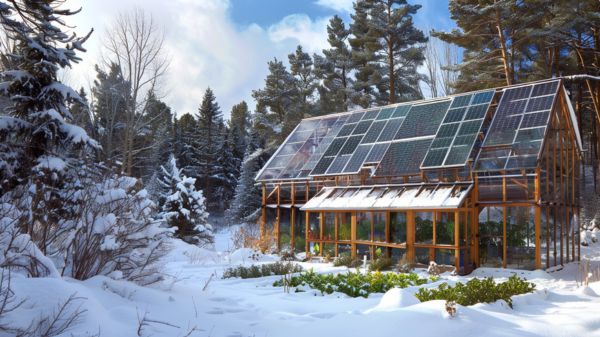
You’re thinking about building a solar greenhouse that performs year-round, even when temperatures drop below freezing. That’s achievable, but only if you avoid the critical design mistakes that cause most cold-climate greenhouse projects to fail before spring arrives. Structural orientation, thermal mass sizing, and panel configuration all determine whether you’re harvesting heat or hemorrhaging it. What follows will show you exactly how to get this right.
Key Takeaways
- Orient the greenhouse within 25° of true south with an east-to-west long axis to maximize winter solar gain.
- Use double-layer polycarbonate glazing on south-facing walls to enhance light transmission and maintain energy stability.
- Install adequate thermal mass based on your climate zone, ranging from 0.4–1.0 gallons per square foot.
- Insulate north walls with 8–12 inch clay walls and high-quality insulation to retain 15–20°F of heat.
- Oversize your solar panel array by 20–30% and include battery storage for 3–5 days of grid autonomy.
Why Most Solar Greenhouses Fail in Cold Climates
Despite their promise as energy-efficient growing environments, most solar greenhouses fail in cold climates due to a convergence of structural, thermal, and mechanical deficiencies that compound under winter conditions.
Design faults in asymmetrical pipe-framed structures create uneven load distribution, triggering failure mechanisms like full-section yielding in north columns during heavy snow events. Poor thermal management, including insufficient thermal mass and inadequate insulation, allows heat to escape rapidly overnight.
Ventilation issues arise when undersized systems can’t maintain airflow during overcast periods, causing humidity spikes and temperature stratification. Material choices that ignore cold climate challenges compromise structural integrity under combined wind and snow loads.
Compounding these issues, many greenhouse builders neglect to evaluate shading patterns from obstructions like nearby trees and structures, which further reduces the limited solar gain available during short winter days. You can’t achieve true energy efficiency until you understand and systematically address each of these interconnected vulnerabilities.
Design Your Solar Greenhouse for Passive Winter Heat
Achieving passive winter heat in a solar greenhouse demands precise integration of orientation, thermal mass, glazing, and insulation—each element reinforcing the others to create a self-regulating thermal system.
Orient your structure no more than 25° from true south, or consider 18° east to capture morning sun for early snow melt. Your thermal mass sizing must meet 0.6-0.8 gallons per glazing square foot in Zone 5, preventing shoulder-season overheating.
Clay walls require 8-12 inches thickness, maintaining thermal conductivity below 0.5 W/m·K. Your insulation techniques must prioritize the north wall, where high-quality insulation sustains 15-20°F above ambient overnight.
Double-layer polycarbonate glazing on south-facing walls maximizes light transmission, while sealed surfaces prevent the energy losses that undermine thermal stability after sunset.
Incorporating solar panels into your greenhouse roof can further stabilize interior temperatures, as plants naturally cool the panels through evapotranspiration heat exchange, improving both energy efficiency and growing conditions simultaneously.
Choose the Right Solar Panel Setup for Year-Round Growing
While passive thermal design establishes the foundation of your year-round greenhouse, it can’t eliminate the need for powered systems that regulate temperature, circulate air, and sustain plant growth through the coldest, darkest months.
Selecting panels with efficiency ratings between 18-22% guarantees your installation generates adequate power for heaters, circulation fans, and automated controls simultaneously. Monocrystalline technology, despite higher upfront costs, outperforms alternatives in partial shade and cooler temperatures, making it the strongest choice for cold-climate installation considerations.
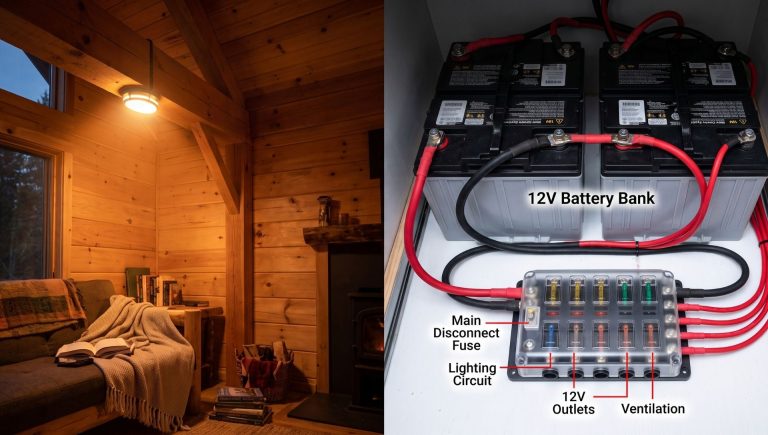
You’ll also need to oversize your array by 20-30% to compensate for winter’s reduced solar radiation, which drops 40-60% below summer peaks. Panel efficiency, combined with properly sized battery storage providing 3-5 days of autonomy, frees you from grid dependency throughout every growing season.
Monocrystalline panels carry an average lifespan of 30-35 years and are less prone to degradation over time, meaning your greenhouse investment continues generating reliable power well into the future.
Size Your Thermal Mass to Match Your Climate Zone
Thermal mass sizing isn’t a one-size-fits-all calculation; your climate zone determines the precise volume of water, earth, or masonry your greenhouse requires to maintain stable overnight temperatures.
Zone 4 regions, carrying 20 psf snow loads, demand 0.4-0.6 gallons of water per square foot of glazing, while Zone 5 requires 0.6-0.8 gallons, and Zone 6 necessitates 0.8-1.0 gallons.
Effective climate adaptation means rejecting the oversimplified industry standard of one gallon per square foot, which ignores these critical zone-specific distinctions. Heavy-snow regions require thermal mass volumes exceeding standard recommendations by 20-40%, whereas temperate shoulder seasons demand downsized configurations to prevent spring and fall overheating.
Strategic climate adaptation empowers you to achieve the 15-20°F overnight temperature retention that year-round growing genuinely requires. Just as reusable bags require consistent use to meaningfully offset their carbon footprint, your thermal mass system only delivers its full climate-stabilizing benefit when sized and maintained with disciplined, season-by-season attention.
Orient Your Solar Greenhouse for Peak Winter Sun
When positioning your solar greenhouse, you’ll want to align the long axis east-to-west so that the south-facing wall intercepts the sun’s rays at the most effective angle throughout the day, particularly during winter months when the sun tracks low across the southern sky.
If your site doesn’t permit true south alignment, you can deviate up to 45° in either direction and still capture approximately 70% of potential solar gain, with south-southeast and south-southwest orientations remaining highly effective for year-round growing.
Orienting your greenhouse approximately 15° east of due south offers a measurable advantage, as it captures early morning sunlight precisely when ambient temperatures are at their coldest and your plants require the most supplemental warmth.
To further reduce heat loss through the greenhouse structure, applying caulk and weather-stripping to gaps around frames, vents, and baseboards can help retain the solar warmth your greenhouse collects throughout the day.
True South Alignment
Orienting your solar greenhouse to face true south is the single most important siting decision you’ll make, as it determines how much usable sunlight your structure captures during winter’s shortest, coldest days. Your structure thrives within 45 degrees of true south, though due south maximizes passive solar gain and reduces your backup heater’s workload considerably.
Conduct a thorough site survey, walking your property at morning, midday, and late afternoon to complete a shadow assessment, identifying trees, fences, and neighboring structures that cast long, light-blocking shadows when winter’s sun rides lowest on the horizon.
Use a compass or smartphone apps like Sunseeker and Sun Surveyor, which provide 3D solar path visualization, confirming your alignment relative to true geographic south before breaking ground.
Deviation Tolerance Limits
Although true south alignment represents the ideal, understanding how far you can deviate from that benchmark without sacrificing meaningful winter performance is equally critical to your greenhouse’s long-term success.
Standard recommendations tolerate up to 15° east of true south, while snow-prone zones permit deviation impacts extending to 25° before measurable performance loss occurs. Beyond 30°, you’ll face a 20%+ reduction in December heat gain, precisely when your greenhouse demands maximum solar collection.
Climate adaptation requirements vary greatly by zone: Zone 5 tolerates 25° deviation under 30 psf snow loads, whereas Zone 6 demands stricter adherence to compensate for reduced winter daylight. Verify your actual orientation using a clinometer app, adjusting for magnetic declination to confirm your true south baseline accurately.
Morning Sun Advantages
Key morning sun advantages include:
- Stomatal activation triggers ideal gas exchange and nutrient uptake during peak photosynthetic hours
- Thermal benefits accumulate as water barrels and stone absorb morning heat, releasing it through evening hours
- Shadow elimination through east-west alignment delivers unobstructed south-facing exposure from mid-morning forward
- Seedling development improves substantially, preventing leggy growth caused by insufficient early-day light intensity
Pairing your solar greenhouse with native drought-tolerant plants reduces overall water consumption while maintaining productive growing conditions year-round.
Calculate Your Solar Greenhouse Cost and Long-Term Savings
Building a solar greenhouse demands careful financial planning, because the upfront capital investment spans multiple interdependent cost categories that collectively determine your long-term return on investment.
Your cost breakdown should account for structural materials representing 15–25% of total costs, climate control systems consuming 25–40%, and irrigation components adding another 5–10%.
Solar panels, battery storage, and charge controllers increase initial expenditure, but eliminate utility dependence over time, directly serving your energy efficiency goals. Annual operating costs for heating, ventilation, and maintenance typically range from $350–$1,400, while solar systems progressively offset those figures year over year.
Site preparation, auxiliary facilities, and water storage require separate budget allocations, ensuring you’re capturing every expense before committing capital and accurately calculating your true payback timeline.
Why Solar Greenhouses Cut Carbon Costs Conventional Systems Cannot
Solar greenhouses eliminate carbon costs that conventional systems can’t avoid by integrating renewable energy independence, passive thermal design, and smart automation into a unified growing environment.
You’re breaking free from utility dependency while dramatically reducing your carbon footprint through compounding efficiency strategies that traditional operations simply cannot replicate.
- Energy Independence: Solar panels eliminate grid transmission losses, protecting your operation from rate increases and outages.
- Thermal Mass Integration: Water barrels reduce active heating demands by 30-40%, shrinking your required solar array size.
- Smart Automation: Demand-based equipment switching eliminates idle standby consumption that continuously drains conventional systems.
- Zero Operational Emissions: Photovoltaic generation produces no emissions across a 25+ year lifespan, compounding long-term carbon footprint reductions.
Frequently Asked Questions
Can I Retrofit an Existing Greenhouse With Solar Panels and Battery Storage?
You can retrofit an existing greenhouse with solar panels and battery storage, though you’ll need to assess roof load capacity, structural integrity, and electrical compatibility first. The retrofit benefits include long-term energy efficiency gains and operational cost reductions, with systems lasting 25-30 years. Expect 15-30% higher costs than new builds, a 7-12 year payback period, and eligibility for the 30% Federal Investment Tax Credit.
What Permits or Building Codes Apply to Solar Greenhouse Construction?
Coincidentally, zoning regulations, construction permits, and safety standards converge at the same threshold: structures exceeding 120–200 sq ft typically require full permitting. You’ll need to verify local zoning regulations for setback requirements, confirm construction permits for foundations and utilities, and meet safety standards for wind and snow loads. Energy efficiency upgrades, like solar integration, trigger electrical permits, while environmental considerations may apply in flood zones or historic districts.
How Do I Manage Solar Greenhouse Systems During Extended Cloudy Seasons?
During extended cloudy seasons, you’ll maximize thermal mass efficiency by ensuring black-painted water barrels absorb every available photon, mitigating cloud cover impact on stored heat reserves. Activate supplemental lighting strategically when passive solar gain drops below minimum thresholds, while reducing ventilation to retain accumulated warmth. Deploy polyethylene curtains to concentrate heat in critical growing zones, and trigger backup propane or electric heating only when passive systems can’t maintain ideal temperatures.
Which Crops Grow Best in Solar Greenhouses During the Coldest Winter Months?
During the coldest winter months, you’ll achieve ideal yields by prioritizing crop selection alongside effective heating techniques. Focus on cold-hardy leafy greens, including spinach, kale, and tatsoi, which survive down to -15°C under glass. Root vegetables like carrots, beets, and radishes, alongside brassicas such as Brussels sprouts and broccoli, perform exceptionally well, while specialty herbs, including parsley and chervil, mature rapidly, providing continuous, liberation-sustaining harvests throughout winter’s harshest conditions.
How Long Do Solar Greenhouse Battery Storage Systems Typically Last Before Replacement?
Your solar greenhouse battery storage system’s battery lifespan typically spans 10-15 years, though cold climates can reduce this by 2-3 years. You’ll extend longevity considerably by following key maintenance tips: implementing thermal management, preventing deep discharge cycles, and ensuring your battery management system guards against overcharging. Annual degradation runs 2-3%, and warranties generally guarantee 70-80% capacity retention over 10 years.
Conclusion
You’ve now got the knowledge to build a greenhouse that’ll generate genuine, year-round growing gains. By balancing brilliant building techniques, precise panel placement, and purposeful thermal mass planning, you’re positioned to produce sustainably through every season. Don’t delay deploying these design decisions — your future harvests, heating costs, and carbon footprint all depend on deliberate, data-driven choices made today.