Affiliate & Editorial Disclosure: This guide and review contains affiliate links. If you purchase through our links, we may earn a commission at no extra cost to you. All performance assertions made by the vendor of The Energy Revolution System are treated as experimental DIY claims; we do not guarantee specific electricity bill reductions. Any downloadable blueprints referenced on this page are digital PDF and video instructions—physical hardware components are purchased separately.
When a winter ice storm, hurricane, or rolling heatwave grid failure knocks out neighborhood electricity, most emergency preparedness guides immediately tell you to buy a $1,200 portable lithium power station or a $900 dual-fuel gas generator.
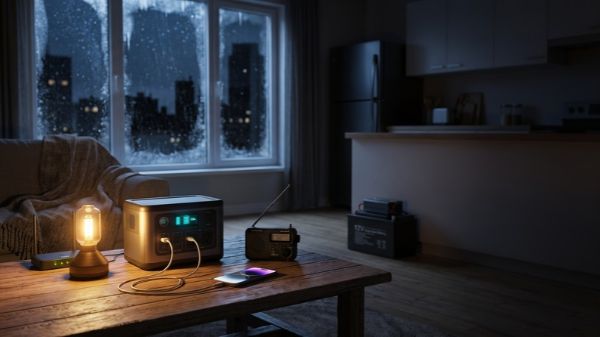
That advice is useless if you live in an apartment where gas engines are strictly banned, or if you don’t have $1,000+ sitting around for a box that sits in your closet 360 days a year. You need cheap emergency backup power for power outages that costs under $250, works safely indoors without deadly carbon monoxide fumes, and keeps your family’s essential electronics and lighting running when the grid goes dark.
As we demonstrated in our budget off-grid power system under $200 pillar guide, surviving a 24-to-72-hour blackout comfortably doesn’t require powering your central air conditioner or electric stove. By targeting low-wattage 12V micro-loads and using smart thermal-cycling tricks for your refrigerator, a modest $120 to $245 setup can carry your household through a multi-day outage with zero stress.
In this hands-on blackout guide, we compare 6 proven emergency backup power options under $250, break down what each setup can realistically run, and share a clever $200 battery-plus-timer hack for keeping your refrigerator cold without a gas generator.
Quick Comparison: 6 Cheap Emergency Backup Power Setups Under $250
| Backup Power Option | All-In Cost | Capacity / Output | Recharges During Blackout? | Best Blackout Use Case |
|---|---|---|---|---|
| 1. The Energy Revolution System (DIY 12V Coil + Buffer) | $111 – $186 ($39 PDF + ~$72–$147 parts) | ~12W–18W DC trickle + 240Wh–400Wh 12V buffer battery | Yes (24/7 Indoors) | Best Overall DIY: Continuous indoor trickle charging for LEDs, phones, routers + lower monthly utility bills |
| 2. Entry-Level 240Wh–288Wh LiFePO4 Power Station | $189 – $230 (e.g., EcoFlow River 2 / Bluetti Elite 30) | 243Wh–288Wh storage / 300W–600W AC inverter | No (Unless you spend $120+ extra on solar panels) | Best Plug-and-Play: Zero-tool grab-and-go box for laptops, CPAPs (1 night), and phones |
| 3. 100Ah Deep-Cycle Battery + Pure Sine Inverter | $215 – $248 ($130 100Ah battery + $85 1000W inverter) | ~1,020Wh usable storage / 1,000W AC output | No (Requires AC wall charger after grid returns) | Best for Refrigerators: Runs a cycling kitchen fridge for 12–18 hours on a tight budget |
| 4. Car Alternator + 400W Pure Sine Inverter | $45 – $85 (Inverter + heavy alligator clamps) | 300W–400W continuous from idling vehicle | Yes (Uses car gas tank in driveway) | Best Ultra-Cheap Emergency: Running extension cords from driveway for short bursts |
| 5. Dedicated Mini DC UPS for Wi-Fi Router | $38 – $55 (10,000mAh–20,000mAh 12V DC UPS) | 37Wh–74Wh pure 12V DC output (0ms switchover) | No | Best for Work-From-Home: Keeps fiber/cable internet & VoIP phone alive for 6–10 hours |
| 6. DIY 50W Folding Solar + 12V 20Ah Battery Box | $175 – $225 (Panel, PWM controller, 20Ah LiFePO4) | 204Wh storage + ~150Wh/day sunny recharge | Yes (Sunny Daytime Only) | Best for Sunny Climates: Multi-day daytime recharging on an unshaded patio or yard |
#1. The Energy Revolution System (DIY 12V Bifilar Coil + Buffer Battery) — Best All-Around Indoor Value ($111–$186)
The biggest flaw with standard $200 battery banks is simple: once the battery hits 0% on Day 2 of a winter blackout, you are sitting in the dark. And if ice or storm clouds block the sun, a budget solar panel sitting on your balcony produces almost zero watts.
That is why The Energy Revolution System ranks #1 in our roundup of the best DIY home energy guides for beginners. For a $39 digital blueprint purchase plus $72 to $147 in standard hardware store parts (see our itemized Energy Revolution System materials list and cost review), this weekend workbench project shows you how to wind a flat spiral bifilar pancake coil based on Nikola Tesla’s 1894 US Patent 512,340 and wire it into a 12V buffer battery.
Why Preppers & Budget Homeowners Prefer This Setup:
- Continuous 12V Trickle Support Indoors: Instead of relying on sunny skies or toxic gasoline fumes, your enclosed benchtop circuit provides a steady 12W to 18W DC trickle charge into your 12V buffer battery—stretching your runtime for essential blackout micro-loads like 12V LED room strips, smartphone chargers, NOAA weather radios, and 12V cooling fans.
- Pays for Itself When the Grid Is On: Unlike an emergency generator that collects dust 99% of the year, the second half of the manual walks you through a step-by-step Household Efficiency & Phantom Load Protocol (similar to the steps in our guide to lowering your electric bill without solar panels), helping you cut $20 to $35/month in wasted standby electricity year-round.
- 60-Day ClickBank Refund Protection: You can download the 47-page PDF schematic and 2-hour video series for $39, inspect the build steps and parts list on your computer, and claim a 100% refund within 60 days if you decide you prefer a pre-built battery box instead.
Click Here to Download The Energy Revolution System Blueprints (Backed by 60-Day Guarantee)
#2. Entry-Level 240Wh–288Wh Portable Power Station — Best Zero-Tool Option ($189–$230)
If you have zero interest in stripping copper wire or using a screwdriver, 2026 retail pricing on entry-level LiFePO4 (Lithium Iron Phosphate) portable power stations—such as the EcoFlow River 2 (243Wh, ~$189), Anker 521 (256Wh, ~$219), or Bluetti Elite 30 V2 (288Wh, ~$219)—finally brings plug-and-play lithium boxes under the $250 mark.
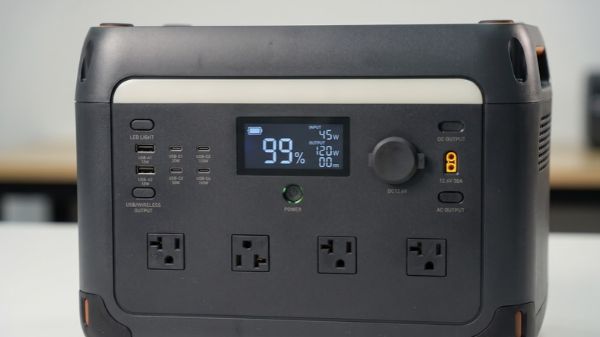
As shown on the front control panel above, these compact 8-to-10-pound cubes feature built-in digital watt-hour displays, fast USB-C PD ports, a regulated 12V DC car socket, and one or two 120V AC outlets rated for 300W to 600W.
- What It Powers: Recharges a smartphone 18+ times, runs a 5W LED lamp for 40 hours, or powers a CPAP machine (with the heated humidifier turned off) for a single 8-hour night.
- Where It Falls Short: You only get 240 to 288 Watt-hours of fixed storage, which is not enough to run a kitchen refrigerator, and once those 250 Watt-hours are gone, you cannot recharge the box during a multi-day outage without spending another $120 to $180 on a folding solar panel.
#3. The “$230 Fridge Saver”: 12V 100Ah Deep-Cycle Battery + 1,000W Inverter
One of the most searched questions during hurricane and winter storm season is: “How to keep my fridge and lights running during a blackout cheap?”
If you buy a pre-built name-brand power station capable of running a full-size refrigerator for 15+ hours (which requires at least 1,000Wh to 1,500Wh of battery capacity and a 1,500W surge rating), you will pay $650 to $1,000+.
However, if you assemble two basic off-the-shelf components yourself, you can get 1,200 Watt-hours of raw 12V battery capacity for under $245:
- A 12V 100Ah Deep-Cycle Marine/AGM or Budget LiFePO4 Battery ($125–$155): Available at Walmart, auto parts stores, or online battery retailers, storing 1,200 total Watt-hours (~1,020Wh usable on LiFePO4)—more than four times the capacity of a $220 mini power station!
- A 1,000W Pure Sine Wave Inverter ($75–$90): Bolts directly to the battery posts (always include an inline 100A ANL fuse on the positive cable) and provides the 2,000W split-second surge needed to kick-start your refrigerator’s compressor.
Pro Blackout Trick — The $12 Programmable Timer Hack:
Never leave your refrigerator plugged into a backup battery continuously during a blackout—the inverter’s internal cooling fan and transformer alone will waste 15 to 25 Watts every hour even when the fridge compressor is idle! Instead, plug a $12 programmable appliance timer into your inverter so the refrigerator runs for 45 minutes every 3 to 4 hours (and keep the fridge doors closed). Cycling your fridge this way keeps food safely below 40°F while stretching a single 100Ah battery across 36 to 48 hours of blackout time.
#4. Your Car Alternator + $60 Pure Sine Wave Inverter — Best Under-$85 Emergency Fallback
If you have a car, truck, or hybrid parked in an open, outdoor driveway (never inside an attached garage or enclosed carport), you already own a liquid-cooled gasoline generator with a 12-gallon fuel tank.
By clamping a $55 to $75 400W-to-600W Pure Sine Wave Inverter directly to your vehicle’s 12V starter battery terminals while the engine idles outdoors for 30 to 45 minutes at a time, you can run a heavy-duty outdoor extension cord through a cracked window (sealed with a towel) to recharge your indoor 12V buffer batteries, laptops, tool batteries, and phones—or cycle your chest freezer for an hour morning and night.
- Critical Safety Rule: Never clamp an inverter larger than 600W–800W to a standard passenger car battery, as drawing more than 50–65 Amps continuously at idle can overheat your vehicle’s factory alternator.
#5. Dedicated 12V Mini DC UPS for Your Wi-Fi Router & Modem ($38–$55)
Did you know that when your neighborhood electric grid goes down during a localized storm, underground fiber-optic and coaxial cable internet lines usually still have power from the telecom company’s central office backup generators?
The only reason your home Wi-Fi dies during a power outage is because the 12V power brick plugged into your wall outlet loses power. Instead of burning 20W of inverter overhead on a big power station just to run a 12W router, buy a $42 Mini 12V DC Uninterruptible Power Supply (UPS). It stays plugged inline between your wall outlet and your router/modem 24/7, switches to battery in 0 milliseconds the instant the grid flickers so your Zoom call or emergency weather stream never drops, and keeps your Wi-Fi running for 6 to 10 hours.
#6. DIY 50W Folding Solar Panel + 12V 20Ah Battery Box ($175–$225)
If you live in the Sunbelt, Southwest, or have an unshaded south-facing patio, pairing our DIY 12V Waterproof Battery Box (from Pillar 2) with a $55 50-Watt folding solar panel gives you an expandable daylight recharging station under $225.
As we noted in our Energy Revolution System vs. DIY Solar Kit comparison and our Backyard Revolution review, 50W of solar won’t run heavy AC appliances, and it produces almost nothing during dark winter storms. However, on clear post-storm days, 4 hours of direct midday sun puts ~150 Watt-hours back into your 12V battery—more than enough to replenish a full night of LED lighting and smartphone charging.
How to Combine Two Budget Options for Complete Blackout Peace of Mind
You don’t have to rely on a single piece of gear when the lights go out. The smartest sub-$250 preparedness strategy layers your backup power into two tiers:
- Tier 1 (24/7 Indoor Micro-Loads & Everyday Savings): Build The Energy Revolution System on your workbench (~$111–$186 all-in). Use its 12V buffer battery and bifilar coil trickle circuit indoors to handle all your LED lighting, phone charging, weather radios, and 12V fans during blackouts—while using its household load-reduction protocol to save $20 to $35/month on your regular utility bill.
- Tier 2 (Emergency Fridge Cycling): Keep a $55 12V inverter in your car trunk (or pair a $130 100Ah deep-cycle battery with a $12 cycle timer) strictly for running your refrigerator compressor 45 minutes every few hours during multi-day outages.
Because The Energy Revolution System comes with a 60-day ClickBank money-back guarantee, you can download the $39 PDF blueprint and 2-hour video guide today, review the schematics and materials list, and test the household efficiency audit completely risk-free for two full months.
Click Here to Download The Energy Revolution System Blueprints (Backed by 60-Day Guarantee)
To see how a simple deep-cycle battery and programmable timer trick can keep your food cold without buying an expensive commercial generator, watch The Cheapest Way to Keep Your Refrigerator Running During a Blackout, which demonstrates practical low-cost battery setups for household refrigerator backup.