The quest for complete water independence often hits a geographic wall. If your property lacks a deep aquifer, or you travel extensively in an RV across arid climates, traditional water sourcing methods fall short. While drilling a deep well can cost upwards of $15,000 with no guarantee of hitting potable water, a new class of technology has emerged to bridge the gap: the commercial Atmospheric Water Generator (AWG).
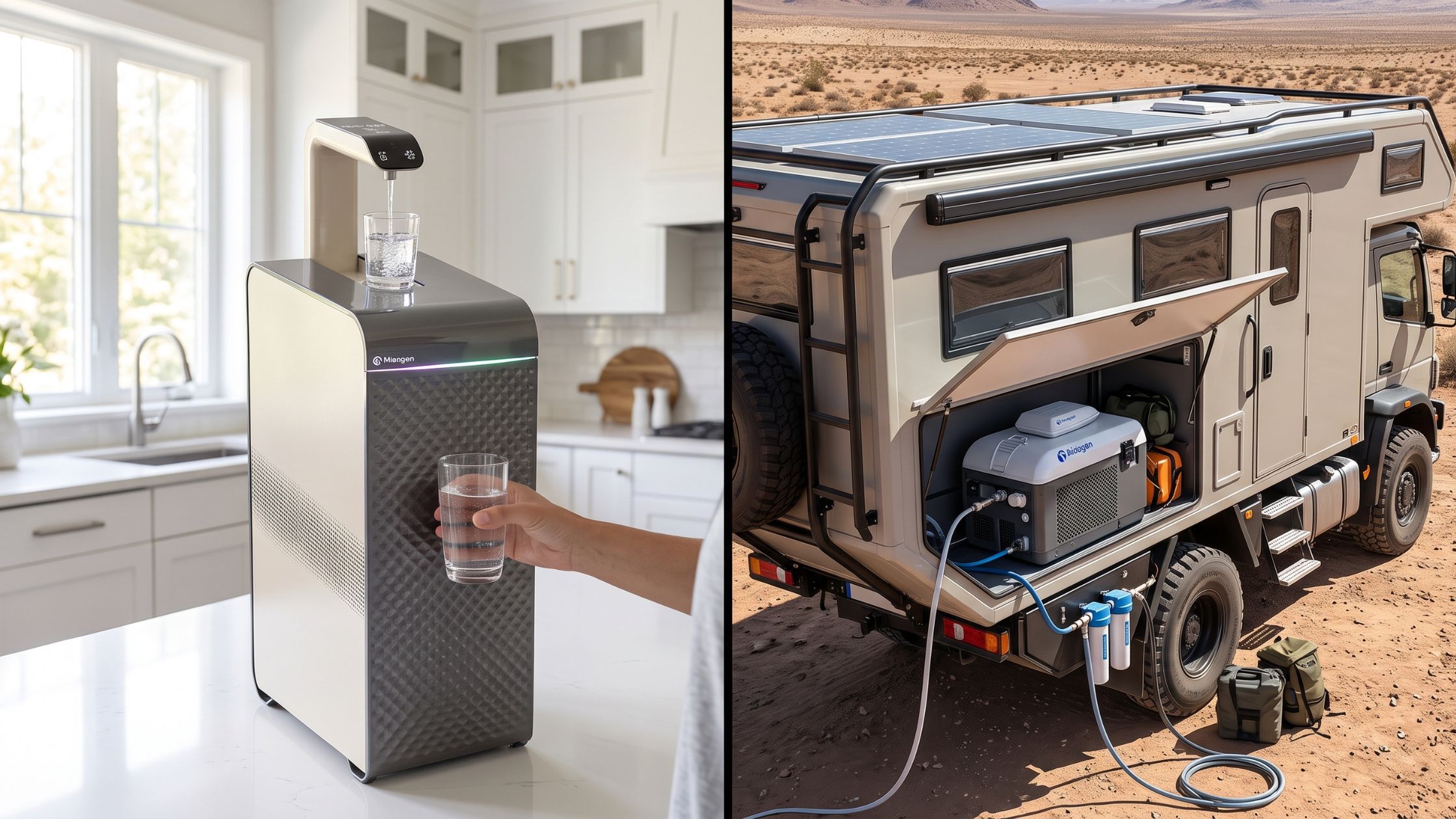
Atmospheric Water Generators extract moisture directly from the air, filter it through hospital-grade purification stacks, and dispense crisp, remineralized drinking water. For households and mobile setups in high-humidity tropical environments—like Bali, where ambient moisture is limitless—an AWG represents the ultimate plug-and-play solution for off-grid survival.
This comprehensive buyer’s guide breaks down the engineering, power requirements, and filtration specs of the top commercial AWG models on the market today, helping you choose the exact system to secure your home or RV water supply.
The Commercial AWG Revolution: Why Buy Instead of Build?
While building a DIY water generator out of a repurposed basement dehumidifier is a popular weekend project, relying on a DIY rig for your primary drinking water carries significant health and engineering risks. Commercial AWGs have evolved dramatically by 2026, transitioning from bulky, inefficient prototypes into sleek, highly refined smart appliances.
Investing in a commercial AWG over a DIY build provides three non-negotiable advantages:
- Food-Grade Heat Exchangers: Standard dehumidifiers use bare copper and aluminum coils coated in toxic anti-corrosives. Commercial AWGs utilize FDA-approved, food-safe condensation coils that prevent heavy metal leaching and oxidative rusting.
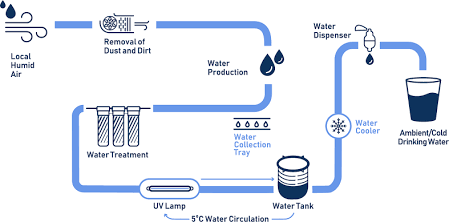
- Integrated Purification Stacks: A DIY build requires you to manually plumb external UV lights and carbon filters. Premium AWGs feature internal, multi-stage filtration systems (HEPA, Reverse Osmosis, UV-C, and Calcite remineralization) perfectly calibrated to the machine’s flow rate.
- Advanced Micro-Compressors: Commercial units utilize variable-speed, highly efficient compressors that extract significantly more water per kilowatt-hour (kWh) of electricity than standard residential dehumidifiers.
Decoding the Specs: What to Look For Before Buying
Before purchasing an AWG, you must ignore the marketing hype and focus strictly on the underlying thermodynamics and operational limitations of the machine.
Peak Output vs. Realistic Output
Manufacturers always advertise the “Maximum Daily Output” based on ideal laboratory conditions (typically 30°C / 86°F and 80% Relative Humidity). If you place that same machine in an air-conditioned living room (20°C / 68°F and 45% Relative Humidity), the water output will drop by 50% to 70%. Ensure the machine’s baseline capacity meets your daily drinking and cooking needs under the actual climatic conditions of the room where it will operate.
The Efficiency Ratio (Liters per kWh)
Because these machines use thermodynamic refrigeration cycles, they require significant electrical power. The critical metric to compare is the Liters per kWh efficiency rating.
- Budget AWGs: Generate 1.5 to 2.0 Liters per kWh.
- Premium AWGs: Generate 2.5 to 3.5 Liters per kWh.
Higher efficiency translates directly to smaller solar array requirements and lower monthly utility bills.
The Purification and Remineralization Stack
When water condenses from the air, it is essentially distilled water—meaning it is highly acidic and entirely devoid of minerals. Drinking demineralized water long-term is unhealthy. A high-quality AWG must include a remineralization cartridge (adding calcium and magnesium back into the water) to raise the pH to a healthy alkaline level and improve the taste.
Best Atmospheric Water Generators for the Home
For residential use, an AWG needs to balance high daily output with aesthetic design and quiet operation. These three models represent the pinnacle of home water generation in 2026.
1. Watergen GENNY (Best Premium High-Capacity)
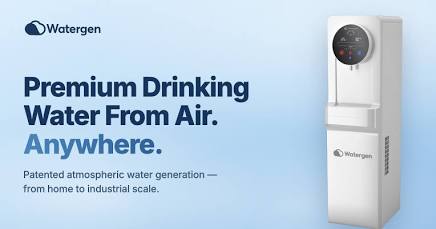
Watergen is the undisputed heavyweight champion of the AWG industry, producing machines that range from home appliances to massive industrial units used by militaries and disaster relief NGOs. The GENNY is their flagship residential model.
- Daily Maximum Output: Up to 30 Liters (8.0 Gallons) per day.
- Internal Storage: 23 Liters (6.0 Gallons).
- Power Consumption: 550W nominal running draw (up to 1,200W when actively heating water).
- Efficiency: ~2.5 Liters / kWh.
- Filtration Stack: Sub-micron air barrier, activated carbon, NanoCeram membrane, UV-C sterilization, and mineral balancing.
- Average Price: ~$3,500
The Verdict: The GENNY is the most reliable, heavy-duty home water generator available. It functions as a complete hot and cold water dispenser. While it has a larger physical footprint (weighing 176 lbs empty), its patented heat-exchange core is virtually bulletproof. If you are supplying a family of four, this is the machine to buy.
2. Innovaqua NUBE SS30 (Best Value High-Output)
The NUBE has been on the market for several years and has undergone numerous refinements, establishing itself as a robust, no-nonsense water workhorse.
- Daily Maximum Output: Up to 30 Liters (8.0 Gallons) per day.
- Internal Storage: 13.2 Liters (3.5 Gallons).
- Power Consumption: 450W running draw.
- Filtration Stack: HEPA air filtration, Reverse Osmosis (RO), activated carbon, and UV sterilization.
- Average Price: ~$2,700
The Verdict: The NUBE offers exceptional value. It matches the GENNY’s daily output but comes in at a significantly lower price point. A unique feature for off-grid homesteaders is the external gravity-feed drain port on the back of the unit, allowing you to bypass the internal 3.5-gallon reservoir and continuously pipe generated water into a larger external holding tank.
3. Spout Monolith (Best for Modern Kitchens & Alkaline Water)
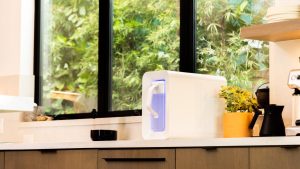
For users who do not need 8 gallons of water a day and prefer a sleek, countertop aesthetic, the Spout Monolith uses a vastly different technological approach.
- Daily Maximum Output: Up to 9.5 Liters (2.5 Gallons) per day.
- Internal Storage: Dispenses directly into a UV-lit glass pitcher.
- Power Consumption: ~300W.
- Filtration Stack: Hospital-grade air filtration, desiccant wheel absorption, NASA-inspired liquid filtration, and high-alkaline remineralization.
- Average Price: ~$800 – $1,200
The Verdict: Instead of a traditional noisy compressor, the Spout uses a desiccant wheel to absorb moisture from the air, heating the desiccant to release the vapor into a condenser. It is incredibly quiet and functions as a high-end room air purifier as a secondary benefit. The water quality is exceptional, often testing at a 99% purity score.
4. Best Portable & RV Atmospheric Water Generators
Securing clean water while traveling in an RV, camper van, or boat traditionally involves mapping out municipal water hookups or carrying hundreds of pounds of sloshing liquid weight. Integrating an AWG into your mobile rig grants you total geographic freedom, allowing you to boondock in remote, humid locations indefinitely.
1. Hydrosphair AeroWell A9 (Best for RVs & Boats)
Hydrosphair specifically engineers AWG units for tight spaces, harsh vibrations, and off-grid mobile living.
- Daily Maximum Output: 34 Liters (9.0 Gallons) per day.
- Internal Storage: 6.8 Liters (1.8 Gallons).
- Power Consumption: 580W nominal (865W peak surge).
- Efficiency: 2.4 Liters / kWh.
- Filtration Stack: MERV-13 air filter, 4-stage liquid filtration, mineralizer, and LED UV sterilization.
The Verdict: The AeroWell A9 is designed for durability. Weighing 160 lbs with a low-profile, horizontal chassis, it can be mounted securely in an RV storage bay or a boat’s hull. It eliminates the need for massive freshwater tanks, freeing up critical payload capacity while ensuring your mobile kitchen is always stocked with safe drinking water.
2. Watergen Mobile Box (Best Integrated Setup)
Watergen has partnered with high-end off-grid trailer manufacturers (such as Living Vehicle) to create seamless AWG integrations that run directly off the vehicle’s solar and battery systems.
- Daily Maximum Output: Up to 20 Liters (5.2 Gallons) per day.
- Integration Feature: Excess generated drinking water overflows directly into the RV’s main fresh water tank.
- Power Limitations: Operates on 12V / 24V / 48V DC inverter architecture natively.
The Verdict: If you are retrofitting a Skoolie, Van conversion, or upgrading a fifth-wheel trailer, mounting a ruggedized Watergen mobile unit allows you to generate water continuously while driving. The vibration-dampened compressors handle rough roads beautifully, providing ultimate peace of mind when venturing far off the beaten path.
Note: The Watergen Mobile requires 600W of continuous power. To run this in your RV without draining your battery, you must pair it with a heavy-duty solar generator. The best unit for this specific AWG is the EcoFlow DELTA Pro or the Bluetti Elite 300.
The Financial & Solar Math: Powering Your AWG Off-Grid
Purchasing the AWG is only half the equation; powering it is the other. Because AWGs rely on refrigeration compressors, they operate exactly like portable air conditioners. If you are plugging the unit into a standard city grid, the electrical cost is negligible (roughly $0.05 to $0.15 per gallon generated).
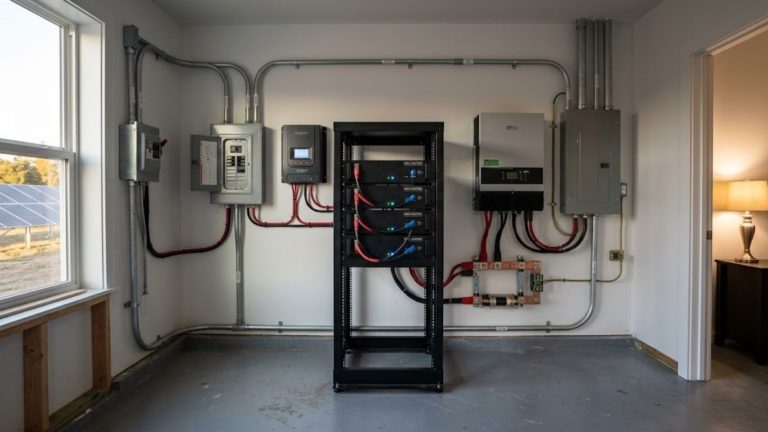
However, if you are running an AWG on an off-grid solar system, you must heavily audit your electrical capacity.
Sizing Your Solar Array for a Commercial AWG
Let us use the Watergen GENNY (550W nominal draw) as the baseline for our engineering calculation.
- Calculate Daily Load: Running the GENNY for 12 hours a day requires 550W x 12 hours = 6,600 Watt-hours (6.6 kWh).
- Account for Inverter Loss: Converting your battery bank’s DC power to 120V AC for the machine incurs a ~15% efficiency penalty. Your true daily load is roughly 7.6 kWh.
- Calculate Solar Panel Requirements: In a high-humidity tropical zone receiving 4.5 peak sun hours per day, you need:
7,600 Wh / 4.5 hours} = 1,688 Watts
- Safety Buffer: Factoring in cloud cover and heat degradation, you must add at least 2,000 Watts (five 400W solar panels) strictly dedicated to powering the water generator.
Managing Compressor Surges
When a compressor kicks on, it demands a massive “Locked Rotor Amps” (LRA) surge that lasts for one to three seconds. A 500W AWG may temporarily spike to 2,500W during startup. Ensure your off-grid Pure Sine Wave Inverter has a surge rating high enough to handle this spike, otherwise, the AWG will constantly trip your system breakers.
6. Filtration, Remineralization & Maintenance
An Atmospheric Water Generator is an active biological and mechanical ecosystem. It pulls airborne dust, pollen, and microscopic mold spores across wet, cold coils. If you neglect routine maintenance, the machine will fail, and your water quality will plummet.
The Maintenance Schedule
- Air Filters (Every 3 to 6 Months): The intake air filter (usually HEPA or MERV-13) is the primary line of defense. If this filter clogs, airflow stops, the coils freeze into a solid block of ice, and water production drops to zero.
- Carbon and RO Filters (Every 6 to 12 Months): The internal carbon blocks absorb volatile organic compounds (VOCs) that dissolve into the condensed water. Pushing these filters past their rated lifespan causes them to dump concentrated toxins back into the drinking supply.
- UV-C Bulbs (Annually): Ultraviolet sterilization bulbs lose their germicidal intensity after 8,000 to 10,000 hours of continuous use. Even if the bulb still glows blue, it may no longer be destroying bacterial DNA.
- The Cost of Upkeep: Budget approximately $150 to $250 annually for replacement filter kits and UV bulbs. This maintenance overhead is entirely offset by the elimination of bottled water purchases and municipal utility bills.
Final Verdict: Which AWG Should You Buy?
Atmospheric Water Generators have transcended science fiction and are now highly reliable, deployable off-grid appliances. By stripping moisture directly from the air, these machines provide unparalleled security against drought, contaminated groundwater, and municipal infrastructure failures.
- If you are outfitting a full-time family residence: The Watergen GENNY offers unmatched reliability, tremendous daily volume, and a world-class filtration stack that justifies its premium price tag.
- If you are building an off-grid homestead on a budget: The Innovaqua NUBE delivers identical water volume for significantly less capital, with the added benefit of gravity-draining into bulk storage tanks.
- If you are living life on the road: The Hydrosphair AeroWell A9 reclaims critical weight and space in your RV, ensuring your mobile adventures are never cut short by a dry fresh-water tank.
Calculate your daily consumption, audit your solar capacity, and invest in the commercial AWG that perfectly aligns with your off-grid independence strategy.
8. Maintenance & Required Filters: Keeping Your AWG Safe
An Atmospheric Water Generator is not a “set it and forget it” appliance. It is an active thermodynamic and biological ecosystem. Because the machine constantly pulls ambient room or outdoor air across wet, cold condenser coils, neglecting routine maintenance will result in clogged airflow, frozen compressor coils, and contaminated drinking water.
To ensure your machine operates at peak efficiency and produces hospital-grade drinking water, you must adhere to a strict filter replacement schedule.
The Standard AWG Maintenance Schedule
- Weekly Intake Cleaning: The air filter acts as the primary shield for your machine. Vacuum the dust from the exterior intake mesh and wipe down the dispensing drip tray with warm water (do not use harsh chemical detergents).
- Every 3 to 6 Months (Air Filtration): Depending on your environment (especially in dusty RV parks or homes with pets), you must replace the internal HEPA or MERV-13 air filters twice a year. A clogged air filter forces the compressor to run hotter and longer, drastically increasing your energy consumption and lowering water output.
- Every 6 to 12 Months (Water Filtration): The internal Activated Carbon and Reverse Osmosis (RO) membranes must be swapped out annually. If carbon blocks are pushed past their rated lifespan, they can become saturated and actually begin dumping trapped Volatile Organic Compounds (VOCs) back into your drinking water.
- Annually (UV-C Sterilization): Ultraviolet sterilization bulbs lose their germicidal intensity after 8,000 to 10,000 hours. Even if the bulb still glows blue, its ability to destroy bacterial DNA degrades. Replace the bulb every 12 months without exception.
The Ultimate Upgrade: Inline Remineralization
As discussed earlier, water condensed from the air is essentially distilled—it lacks the essential minerals your body needs for hydration and bone health, and it often tastes remarkably “flat.” While premium units like the Watergen GENNY include internal remineralizers, budget or DIY-friendly units like the Innovaqua NUBE can benefit massively from an external remineralization boost, especially if you are piping the water into a larger external RV reservoir.
Our Top Recommendation: The Waterdrop MNR35 Inline Remineralization Filter
If you want your generated water to taste exactly like crisp, natural spring water, we highly recommend splicing a dedicated remineralization cartridge into your dispensing line.
- How it Works: The Waterdrop MNR35 uses active crystalline technology (PCC) to reintroduce calcium, magnesium, sodium, and potassium back into the purified AWG water, raising the pH to a healthy, alkaline level (7.5 – 8.5 pH).
- Easy Integration: It uses standard 1/4-inch quick-connect tubing, meaning you can easily snap it onto the output line of your AWG or under your RV sink in less than three minutes.
- Lifespan: A single cartridge lasts for 12 months or 1,100 gallons, making it incredibly cost-effective for long-term off-grid living.
Off-Grid Pro Tip: Create a physical maintenance log and tape it to the side of your AWG or inside your RV utility bay. Write down the exact date you swap the air, carbon, and remineralization filters. Do not rely on your memory; in a survival or full-time off-grid scenario, tracking your consumable lifecycle is just as important as tracking your battery voltage.