Several plants offer clinically supported anti-inflammatory effects through distinct biochemical mechanisms. Turmeric’s curcumin inhibits COX-1, COX-2, and NF-κB signaling; ginger’s gingerols reduce CRP and IL-6; Boswellia’s boswellic acids suppress NF-κB; and willow bark’s salicin metabolizes into salicylic acid, reducing prostaglandin synthesis. Green tea’s EGCG modulates IκB kinase phosphorylation, while oregano’s carvacrol and thymol inhibit COX enzymes. Each plant targets inflammation through unique pathways, and understanding their mechanisms, dosages, and safety profiles will sharpen how effectively you apply them.

Key Takeaways
- Turmeric’s curcumin inhibits COX-1, COX-2 enzymes and reduces inflammation, with clinical dosages ranging from 500–2,000 mg daily.
- Ginger’s gingerols and shogaols measurably lower pro-inflammatory cytokines CRP and IL-6 by inhibiting COX and LOX enzymes.
- Boswellia’s boswellic acids suppress NF-κB signaling, demonstrating clinically proven benefits for osteoarthritis and inflammatory bowel conditions like Crohn’s disease.
- Green tea’s EGCG polyphenols modulate NF-κB signaling and inhibit IκB kinase phosphorylation, supporting multiple anti-inflammatory pathways simultaneously.
- Willow bark contains salicin, which metabolizes into salicylic acid, reducing COX-1 and COX-2 activity and suppressing prostaglandin synthesis.
1. Turmeric (Curcuma longa)
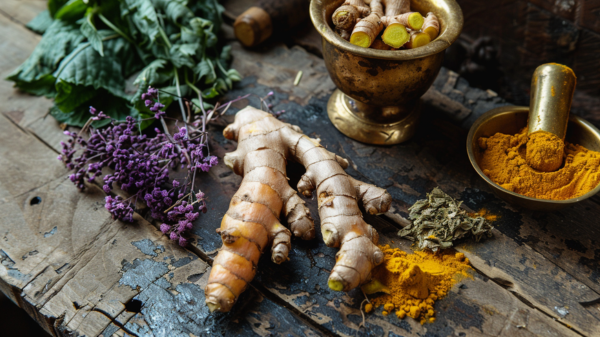
Turmeric (Curcuma longa), a flowering plant of the ginger family Zingiberaceae, contains curcumin, its primary bioactive compound, which has been extensively studied for its anti-inflammatory properties. You’ll find that turmeric history spans thousands of years across Ayurvedic and traditional Chinese medicine.
Turmeric vs. curcumin distinctions matter, since curcumin represents only 2–5% of turmeric’s composition. Turmeric benefits include inhibiting NF-κB and COX-2 inflammatory pathways. However, turmeric bioavailability and turmeric absorption remain significant challenges, as curcumin’s poor solubility limits systemic uptake.
Combining it with piperine enhances absorption by approximately 2,000%. Regarding turmeric dosage, clinical studies commonly use 500–2,000 mg of curcumin daily. Turmeric preparations include capsules, powders, and standardized extracts.
Turmeric side effects, though rare, may include gastrointestinal discomfort at high doses. Research has also linked turmeric to the potential prevention of chronic diseases like heart disease, further reinforcing its value as a staple in modern wellness routines.
2. Ginger (Zingiber officinale)
Another member of the Zingiberaceae family, ginger (Zingiber officinale) shares a taxonomic lineage with turmeric while offering a distinct phytochemical profile centered on gingerols and shogaols, its primary bioactive compounds.
These compounds deliver notable anti-inflammatory properties by inhibiting COX and LOX enzymes, reducing prostaglandin synthesis. You’ll find that ginger benefits extend across joint pain, muscle soreness, and gut inflammation.
| Compound | Primary Action |
|---|---|
| Gingerols | Inhibits COX-2 enzyme |
| Shogaols | Suppresses inflammatory cytokines |
| Paradols | Reduces oxidative stress |
| Zingerone | Modulates NF-κB pathway |
Clinical research confirms that consistent ginger consumption, whether through supplementation or dietary inclusion, produces measurable reductions in inflammatory biomarkers, particularly CRP and IL-6, supporting its evidence-based therapeutic application. Like its close relative turmeric, ginger belongs to a broader category of natural anti-inflammatory remedies that are increasingly supported by scientific research for their role in reducing the risk of chronic diseases such as heart disease and cancer.
3. Boswellia (Boswellia serrata)
Boswellia serrata, a resinous tree native to the Indian subcontinent and parts of Africa, produces a gum resin that contains boswellic acids, the primary bioactive compounds responsible for its well-documented anti-inflammatory effects. Research confirms that boswellia benefits include inhibiting 5-lipoxygenase, an enzyme central to leukotriene synthesis, thereby reducing chronic inflammatory responses.
Key clinical findings include:
- Joint Health: Standardized extracts demonstrably reduce osteoarthritis symptoms within eight weeks.
- Boswellia Dosage: Effective doses typically range between 300–500 mg of standardized extract, taken two to three times daily.
- Gut Inflammation: Studies indicate measurable improvement in inflammatory bowel conditions, including Crohn’s disease.
You’ll find that consistent supplementation, guided by clinical evidence, yields the most reliable anti-inflammatory outcomes.
4. Willow Bark (Salix alba)
While Boswellia serrata targets inflammatory pathways through leukotriene inhibition, Willow Bark (Salix alba) operates through a distinct yet complementary mechanism, delivering salicin, a glycoside compound that your body metabolizes into salicylic acid, the precursor to aspirin’s active form.
You’ll find that willow bark benefits include measurable reductions in COX-1 and COX-2 enzyme activity, which directly suppresses prostaglandin synthesis, thereby attenuating systemic inflammatory responses associated with lower back pain, osteoarthritis, and headaches. Clinical studies corroborate these outcomes, documenting statistically significant pain relief comparable to low-dose synthetic analgesics.
Regarding willow bark dosage, standardized extracts containing 120–240 mg of salicin daily represent the evidence-supported therapeutic range, though you should exercise caution if you’re sensitive to salicylates, as cross-reactivity with aspirin remains a clinically documented concern.
Unlike synthetic analgesics, organic-sourced plant remedies like willow bark support beneficial soil microorganisms when cultivated through organic practices, preserving the ecological integrity of the ecosystems from which these therapeutic plants are harvested.
5. Cat’s Claw (Uncaria tomentosa)
From the dense rainforests of South America, Cat’s Claw (Uncaria tomentosa) delivers two primary classes of bioactive compounds, oxindole alkaloids and pentacyclic triterpenes, that you’ll find modulate nuclear factor-kappa B (NF-κB) signaling, a transcription factor pathway directly governing the expression of pro-inflammatory cytokines including TNF-α, IL-1β, and IL-6. Its traditional uses span centuries among indigenous Amazonian populations, primarily addressing joint inflammation and immune dysregulation.
Key considerations include:
- Clinical trials confirm measurable reductions in osteoarthritis-related inflammation markers following standardized extract supplementation.
- Traditional uses extend to gastrointestinal inflammation, with documented ethnopharmacological records supporting bark and root preparations.
- Potential side effects include hypotension, immunosuppression interference, and contraindications with anticoagulant medications, requiring physician consultation before you initiate supplementation.
🌿 Looking for an all-in-one botanical joint solution?
While sourcing and preparing individual herbs like Boswellia or Devil’s Claw is traditional, getting the right daily dosage can be difficult. If you want a simpler daily routine, we recommend JointVive. It’s a plant-based liquid drop that combines hard-to-source anti-inflammatory botanicals—like Moringa, Neem, and Pine Bark Extract—designed to support joint comfort and flexibility naturally. See the full ingredient list here.
6. Frankincense (Boswellia sacra and related species)
Harvested from the resin of Boswellia sacra and closely related species including Boswellia serrata and Boswellia carterii, frankincense delivers boswellic acids, particularly acetyl-11-keto-β-boswellic acid (AKBA), which you’ll find selectively inhibits 5-lipoxygenase (5-LOX), an enzyme central to leukotriene biosynthesis, thereby suppressing a pro-inflammatory cascade distinct from the cyclooxygenase (COX) pathway targeted by conventional NSAIDs.
The historical significance of frankincense spans Ayurvedic and Middle Eastern traditions, where traditional uses addressed joint inflammation and respiratory conditions. Modern extraction methods yield standardized boswellia compounds demonstrating immunomodulatory activity in clinical trials.
The anti inflammatory effects and frankincense benefits extend to osteoarthritis and inflammatory bowel disease, with documented therapeutic applications supporting 300–500 mg daily dosing guidelines of standardized extract. Safety considerations include mild gastrointestinal effects and potential drug interactions you should carefully evaluate.
7. Green Tea (Camellia sinensis)
Moving beyond resin-derived compounds, green tea (Camellia sinensis) delivers a distinct class of polyphenolic anti-inflammatory agents, particularly epigallocatechin-3-gallate (EGCG), which researchers have identified as the primary bioactive catechin responsible for modulating nuclear factor kappa B (NF-κB) signaling, a transcription factor pathway governing the expression of pro-inflammatory cytokines including TNF-α, IL-1β, and IL-6.
You’ll find that green tea compounds and green tea benefits extend across multiple inflammatory pathways:
- NF-κB suppression: EGCG inhibits IκB kinase phosphorylation, preventing pro-inflammatory gene transcription.
- COX-2 downregulation: Catechins reduce cyclooxygenase-2 expression, limiting prostaglandin synthesis.
- Oxidative stress reduction: Polyphenols neutralize reactive oxygen species, attenuating inflammation-triggering free radical activity.
Clinical trials consistently demonstrate measurable reductions in circulating inflammatory biomarkers among regular consumers.
8. Rosemary (Salvia rosmarinus, formerly Rosmarinus officinalis)
Rosemary (Salvia rosmarinus, formerly Rosmarinus officinalis) contributes two principal bioactive compounds, carnosic acid and rosmarinic acid, which researchers have identified as potent inhibitors of NF-κB and activator protein-1 (AP-1) signaling pathways, both of which regulate downstream expression of pro-inflammatory mediators including TNF-α, IL-6, and COX-2. Traditional uses across Mediterranean cultures incorporated rosemary into cooking techniques involving slow roasting and infusion, maximizing compound bioavailability.
| Compound | Documented Effect |
|---|---|
| Carnosic Acid | Suppresses COX-2 expression |
| Rosmarinic Acid | Inhibits NF-κB activation |
| Combined Extract | Reduces IL-6 and TNF-α |
You’ll retain higher concentrations of these compounds by avoiding prolonged high-heat exposure, which degrades carnosic acid, thereby reducing its therapeutic anti-inflammatory potential considerably.
9. Devil’s Claw (Harpagophytum procumbens)
Devil’s Claw (Harpagophytum procumbens), a tuberous plant native to the Kalahari Desert of southern Africa, contains harpagoside, a primary iridoid glycoside that researchers have identified as the principal bioactive compound responsible for its anti-inflammatory properties, functioning by suppressing NF-κB activation and reducing prostaglandin synthesis through inhibition of COX-2 and 5-lipoxygenase (5-LOX) pathways. Its cultural significance spans centuries among indigenous communities, who’ve utilized sustainable harvesting practices for pain relief preparations.
- Clinical studies confirm dosage recommendations of 50–100mg harpagoside daily for osteoarthritis management.
- Preparation methods include standardized extracts, teas, and tinctures preserving antioxidant properties.
- Side effects include gastrointestinal discomfort, contraindicating use in patients with peptic ulcers.
Traditional uses alongside modern bioactive compounds research validate Devil’s Claw’s therapeutic legitimacy.
10. Licorice Root (Glycyrrhiza glabra)
Licorice root (Glycyrrhiza glabra), a perennial legume cultivated extensively across Europe and Asia, contains glycyrrhizin, a triterpenoid saponin that researchers have identified as its principal bioactive compound, functioning by inhibiting NF-κB activation, suppressing pro-inflammatory cytokine production, and blocking phospholipase A2, an enzyme critical to arachidonic acid release and subsequent prostaglandin synthesis.
Glycyrrhizin effects extend across respiratory, gastrointestinal, and hepatic inflammatory pathways, supporting its historical significance across Ayurvedic, Chinese, and Egyptian traditional uses. Its distinctive flavor profile facilitates palatability in herbal combinations, while solvent-based extraction methods concentrate its active constituents effectively.
However, safety concerns warrant attention, as prolonged consumption elevates cortisol levels, inducing hypertension and hypokalemia, necessitating that you monitor intake carefully and consult qualified practitioners before incorporating licorice benefits therapeutically.
💡 A Quick Tip for Joint Mobility:
Science shows us that plants often work best in synergy. If you are specifically dealing with stiff joints, you might want to look into JointVive. It’s a non-GMO, chemical-free herbal blend that uses botanical extracts (including Ginkgo Biloba and Lion’s Mane) to help soothe flare-ups and restore mobility without harsh stimulants. Learn more about how it works here.
11. Ashwagandha (Withania somnifera)
Among the most extensively studied adaptogenic herbs in Ayurvedic medicine, Ashwagandha (Withania somnifera) contains withanolides, a class of steroidal lactones that researchers have identified as its principal bioactive compounds, functioning by inhibiting NF-κB signaling pathways, suppressing pro-inflammatory cytokines including TNF-α and IL-6, and modulating the hypothalamic-pituitary-adrenal axis to reduce cortisol-driven inflammatory responses. Its historical significance spans over 3,000 years, with traditional uses encompassing stress reduction and immune modulation.
Clinical studies validate its adaptogenic properties, confirming measurable anti-inflammatory outcomes across diverse dosage forms:
- Root powder capsules — standardized to 5% withanolides, 300–600mg daily
- Liquid extracts — enabling faster absorption with documented synergistic effects alongside turmeric
- Preparation methods — including decoctions traditionally consumed with warm milk
Side effects remain minimal at recommended dosages, though gastrointestinal sensitivity occasionally occurs.
12. Feverfew (Tanacetum parthenium)
Feverfew (Tanacetum parthenium) contains parthenolide, a sesquiterpene lactone that inhibits NF-κB activation, suppresses platelet aggregation, and reduces the release of pro-inflammatory mediators including serotonin and prostaglandins, mechanisms that researchers have directly linked to its well-documented efficacy in migraine prophylaxis and arthritic inflammation.
Its history traces back to ancient Greek medicine, where practitioners used it for fever and headache management. Feverfew benefits extend to reducing migraine frequency, joint stiffness, and systemic inflammation. Regarding feverfew dosage, clinical studies support 50–150 mg of standardized extract daily, containing at least 0.2% parthenolide.
The feverfew safety considerations include mouth ulcers with fresh leaf consumption and contraindication during pregnancy. Feverfew cultivation requires well-drained soil and full sunlight, producing reliable yields annually. Feverfew applications span pharmaceutical formulations, dietary supplements, and standardized herbal preparations targeting inflammatory conditions.
13. Cloves (Syzygium aromaticum)
Cloves (Syzygium aromaticum) contain eugenol, a phenylpropanoid compound that inhibits cyclooxygenase (COX) enzymes, suppresses NF-κB signaling, and reduces the synthesis of pro-inflammatory cytokines including TNF-α and IL-6, mechanisms that researchers have directly linked to its potent analgesic, antimicrobial, and anti-inflammatory properties.
You’ll find cloves valued across cultural practices for their historical significance in Ayurvedic and traditional Chinese medicine. Their active compounds demonstrate notable synergy effects when combined with black pepper or ginger.
- Extraction methods include steam distillation, producing concentrated eugenol-rich essential oil with documented medicinal properties
- Culinary uses span spice blending, teas, and infusions that deliver measurable health benefits
- Dosage recommendations suggest 150–300mg standardized extract daily, while potential side effects include hepatotoxicity at excessive doses
14. Holy Basil / Tulsi (Ocimum tenuiflorum)
Holy Basil (Ocimum tenuiflorum), commonly known as Tulsi, contains a rich profile of bioactive compounds — including eugenol, rosmarinic acid, ursolic acid, and β-caryophyllene — that collectively inhibit COX-2 enzyme activity, suppress NF-κB signaling pathways, and downregulate pro-inflammatory cytokines such as TNF-α, IL-1β, and IL-6, mechanisms that researchers have directly linked to its clinically observed anti-inflammatory, adaptogenic, and immunomodulatory effects.
Its adaptogenic properties support cortisol regulation, while its spiritual significance within Ayurvedic tradition reinforces its traditional uses across centuries. Tulsi is also valued in Ayurvedic medicine for its role in stress reduction and immunity boosting, making it a highly regarded herb across both traditional and modern wellness practices.
| Category | Details |
|---|---|
| Traditional Uses | Fever, stress, respiratory inflammation |
| Culinary Applications | Teas, soups, herbal infusions |
| Health Benefits | Immune modulation, anti-inflammatory |
| Extraction Methods | Steam distillation, ethanol extraction |
| Spiritual Significance | Sacred Ayurvedic herb, ritualistic use |
You’ll find Tulsi’s extraction methods determine its bioactive yield markedly.
15. Oregano (Origanum vulgare)
Oregano (Origanum vulgare) contains two primary bioactive compounds — carvacrol and thymol — that researchers have identified as potent inhibitors of COX-1 and COX-2 enzyme activity, suppressing prostaglandin synthesis and downregulating NF-κB signaling pathways, which collectively reduce the expression of pro-inflammatory cytokines including TNF-α, IL-1β, and IL-6. You’ll find oregano oil benefits extending beyond culinary uses into therapeutic applications.
Key research-supported properties include:
- Antimicrobial activity — carvacrol disrupts bacterial membrane integrity, reducing infection-driven inflammation.
- Antioxidant capacity — rosmarinic acid neutralizes reactive oxygen species, limiting oxidative stress-induced inflammatory cascades.
- Enzyme inhibition — thymol directly suppresses lipoxygenase pathway activity, reducing leukotriene synthesis.
Incorporating oregano into your diet or supplementation protocol provides measurable anti-inflammatory support validated through peer-reviewed clinical and laboratory investigations.
Key Patterns Across the Evidence
Across the fifteen plants examined in this article, you’ll notice several convergent biochemical mechanisms that explain their shared anti-inflammatory efficacy, including COX-1 and COX-2 enzyme inhibition, NF-κB signaling suppression, and pro-inflammatory cytokine downregulation — particularly TNF-α, IL-1β, and IL-6 — which collectively suggest that nature has repeatedly arrived at similar molecular solutions for modulating immune-driven inflammatory responses. These phytotherapy strategies, central to traditional medicine, support chronic inflammation management through dietary approaches and lifestyle modifications.
| Mechanism | Representative Plants |
|---|---|
| COX inhibition | Turmeric, Ginger, Oregano |
| NF-κB suppression | Boswellia, Green Tea, Rosemary |
| Cytokine regulation | Willow Bark, Cat’s Claw, Garlic |
Herbal synergy among anti inflammatory compounds enhances immune support, reinforcing holistic health through plant based remedies that complement conventional treatment protocols.
Frequently Asked Questions
Can Anti-Inflammatory Plants Replace Prescribed Medications Safely?
Like Icarus flying too close to the sun, replacing prescribed medications with natural remedies without medical supervision can lead to serious consequences. You shouldn’t substitute anti-inflammatory plants for prescribed treatments independently, as long term effects remain insufficiently studied. Always consult your healthcare provider before making changes, since plant-based options may complement, but don’t reliably replace, clinically validated medications for chronic or severe inflammatory conditions.
Are These Plants Safe for Children and Pregnant Women?
You must exercise caution with anti-inflammatory plants, as children safety and pregnancy considerations demand rigorous medical consultation before use. Many botanicals, including turmeric and ginger, haven’t been clinically validated for pediatric or prenatal populations, and some compounds may trigger adverse reactions, interfere with fetal development, or disrupt hormonal balance. You shouldn’t self-administer these remedies without consulting a licensed healthcare provider who can assess individual risk factors.
Which Anti-Inflammatory Plant Works Fastest for Acute Pain Relief?
When speed matters, ginger extract acts fastest for acute pain relief, as studies show it inhibits prostaglandin synthesis within hours of consumption. You’ll notice its effects more rapidly than turmeric curcumin, which requires consistent, prolonged intake to accumulate bioavailable concentrations in your bloodstream. However, combining both compounds may enhance your overall anti-inflammatory response, since their mechanisms target distinct inflammatory pathways simultaneously.
Can Multiple Anti-Inflammatory Plants Be Combined Without Harmful Interactions?
You can combine multiple anti-inflammatory plants, but you’ll need to carefully evaluate herbal synergy, as certain combinations, such as turmeric paired with ginger, may enhance bioavailability and therapeutic effect. However, dosage considerations remain critical, since compounds like curcumin, boswellic acids, and gingerols can collectively affect platelet aggregation and liver enzyme activity, particularly when you’re concurrently using anticoagulant medications, requiring consultation with a qualified healthcare provider before initiating any combined regimen.
How Long Must You Use These Plants Before Noticing Results?
How quickly can you expect results? The usage duration varies depending on the plant and your condition, but you’ll typically notice initial effects within two to four weeks of consistent use. The effectiveness timeline, however, extends to eight to twelve weeks for significant, measurable anti-inflammatory benefits. You must maintain regular, daily intake, as inconsistent usage disrupts the physiological processes these compounds target within your body.
Conclusion
You’ve now seen how nature’s pharmacy, stretching from turmeric’s curcumin to oregano’s carvacrol, offers scientifically validated pathways to reducing inflammation. Each plant carries its own unique mechanism, yet they’re all united by one truth: the evidence supports their use when you approach them thoughtfully. You don’t have to choose between traditional wisdom and modern science — you can harness both, making informed decisions that genuinely serve your long-term health.