Author: Dr. Aris Thorne, Lead Electrical Engineer & Renewable Energy Specialist
With over 15 years of experience in electromechanical design and off-grid power systems, Dr. Thorne specializes in the integration of high-efficiency generators for residential, commercial, and industrial applications.
The global transition toward sustainable living has exponentially accelerated the demand for efficient, reliable power systems. At the heart of this modern energy revolution is the permanent magnet generator (PMG)—a highly efficient technology reshaping how we harness and distribute electricity. Whether you are a homeowner seeking complete energy independence, a commercial facility aiming to slash utility costs, or an engineering enthusiast exploring off-grid power generation, understanding this technology is paramount.
Unlike traditional generators that rely on complex, energy-draining electrical excitation to create a magnetic field, PMGs utilize powerful rare-earth magnets. This fundamental difference unlocks superior efficiency, longevity, and reliability. This comprehensive guide explores the core mechanics, specific types, and the extensive permanent magnet generator benefits that make these systems indispensable. We will delve into everything from the aerodynamic designs of an axial flux PMG to detailed, step-by-step PMG installation protocols, empowering you to make the best decisions for your renewable energy infrastructure.
Ready to Build Your Own Off-Grid Power System?

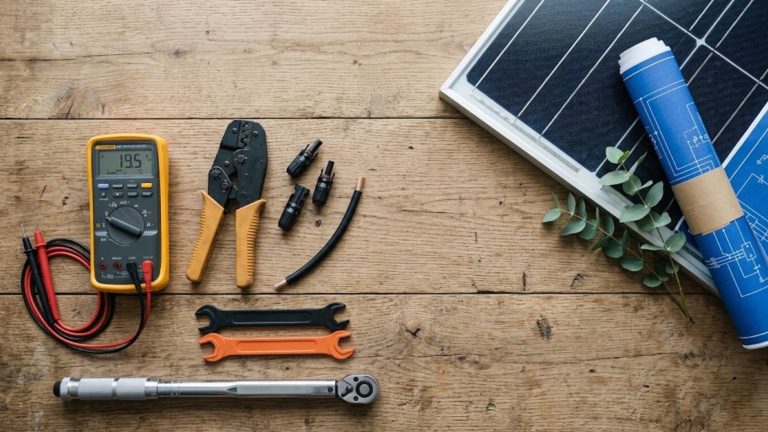
The number one reason DIY magnetic generators fail isn’t the physics—it is a lack of precision tools. Don’t drill a single hole or twist a single wire until your workspace is set up like a professional energy lab. Grab our free 17-page blueprint covering the exact tools, safety gear, and air-gap instruments you need to succeed on your first try.
What Is A Permanent Magnet Generator?
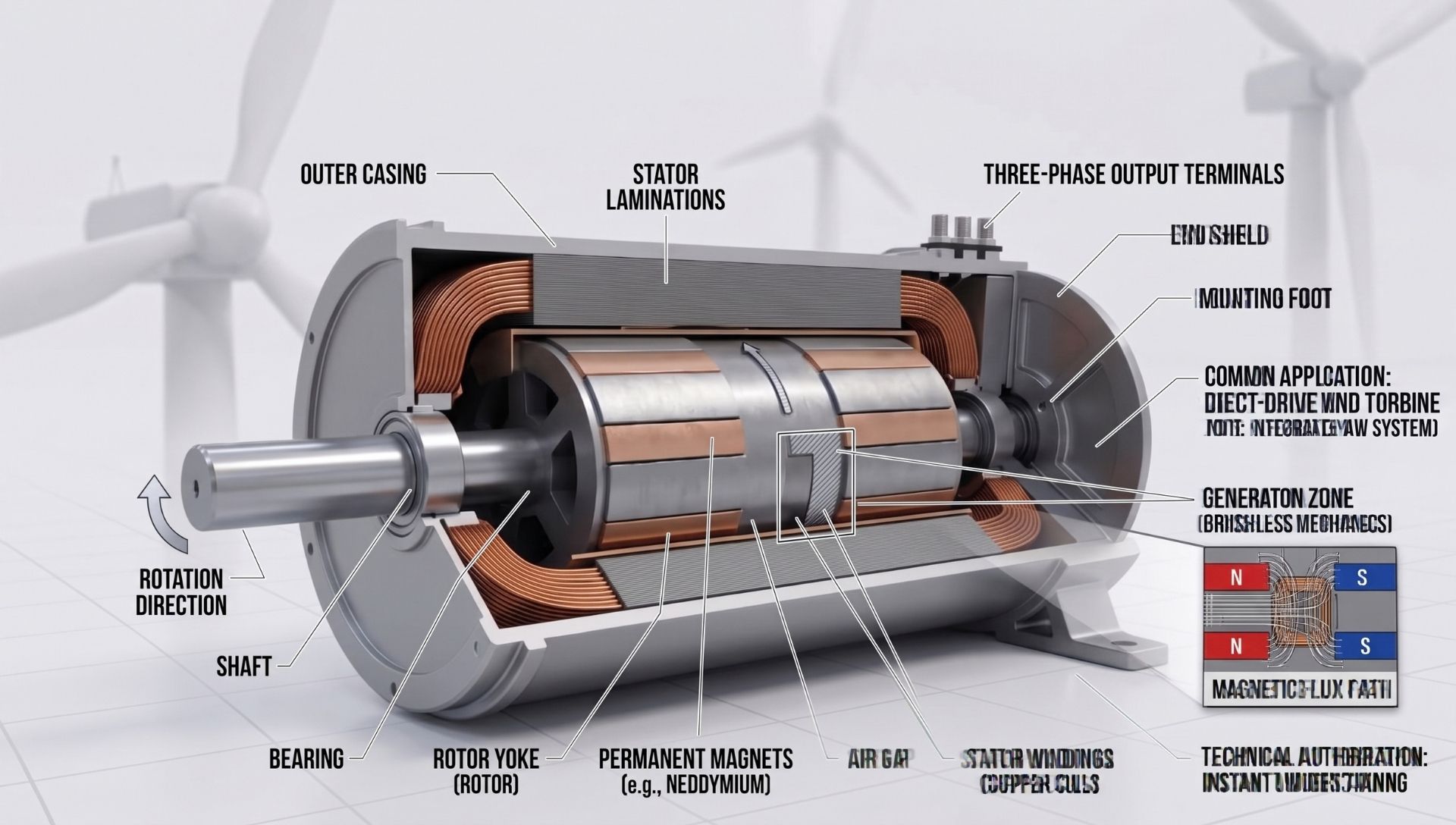
To appreciate the value of a permanent magnet generator, one must understand the foundational principles of electromagnetism that drive it. At its core, a PMG converts mechanical energy—harvested from wind, water, or an engine—into electrical energy. It accomplishes this through the precise rotor-stator interaction.
In traditional induction generators, an external power source is required to create an electromagnetic field in the rotor. A PMG eliminates this need by embedding powerful permanent magnets (typically Neodymium-Iron-Boron or NdFeB) directly into the spinning rotor. As the rotor turns, it sweeps a constant magnetic field across the stationary copper coils of the stator.
This movement creates a change in magnetic flux. According to Faraday’s Law of Induction, this changing magnetic field induces an electromotive force (voltage) within the stator coils, generating a highly stable alternating current (AC). Because no electrical energy is wasted on creating the magnetic field itself, PMGs inherently possess a higher magnetic field density and operate at significantly higher baseline efficiencies than their conventional counterparts.
Types Of Permanent Magnet Generator
Not all PMGs are built the same. Engineers classify these generators based on how the magnetic flux travels through the air gap between the rotor and the stator. Understanding these configurations is vital for selecting the right renewable energy generator for your specific application.
Axial Flux PMGs
In an axial flux PMG, the magnetic flux travels parallel to the axis of rotation. Imagine two spinning discs (the rotors) with a stationary disc (the stator) sandwiched between them. The magnets face each other, and the flux lines push straight across the flat surfaces.
Design & Benefits: This pancake-like design results in a highly compact, lightweight profile with an exceptionally high power density. Because of their wider diameter, they generate significant torque even at very low rotational speeds.
Ideal Applications: These are the undisputed champions of direct-drive wind turbines and micro-hydro systems. Their low-RPM efficiency makes them perfect for residential wind energy harvesting where wind speeds fluctuate.
Radial Flux PMGs
Conversely, a radial flux PMG features a more traditional, cylindrical design. The rotor sits inside a barrel-shaped stator, and the magnetic flux radiates outward (radially) from the center shaft toward the stator coils.
Design & Benefits: Radial designs are structurally robust and easier to manufacture at scale. They excel in high-speed applications, offering superior thermal management because the outer casing can be easily fitted with cooling fins or liquid cooling jackets.
Ideal Applications: You will find radial flux PMGs in heavy-duty industrial applications, commercial diesel generator sets, and large-scale hydroelectric dams where continuous, high-RPM operation is required.
Key Advantages of a Permanent Magnet Generator
Investing in PMG technology yields distinct operational and financial rewards. As highlighted by numerous studies from the U.S. Department of Energy, the shift toward permanent magnet systems is a major driver in modern energy efficiency. The core permanent magnet generator benefits include:
- Exceptional Efficiency: Because PMGs do not waste electricity creating a magnetic field (excitation losses), they frequently achieve efficiency ratings between 90% and 95%, vastly outperforming traditional alternators.
- Low Maintenance: Traditional generators use brushes and slip rings to transfer power to the spinning rotor. These components wear down and require regular replacement. PMGs are brushless, virtually eliminating mechanical wear and tear and slashing maintenance budgets.
- Compact and Lightweight Design: The high magnetic field density of rare-earth magnets allows PMGs to produce the same amount of power as a conventional generator while being up to 30% smaller and lighter.
- Reliability in Harsh Conditions: Without delicate carbon brushes, PMGs can be hermetically sealed, making them highly resistant to dust, moisture, and salt-spray in off-grid marine or desert environments.
- Clean Energy Compatibility: Their ability to generate power efficiently at variable speeds makes them the ideal companion for unpredictable renewable energy sources like wind and flowing water.
Disadvantages and Challenges to Consider
While PMGs are a transformative technology, maintaining an objective perspective requires acknowledging their inherent challenges.
The most significant barrier is the initial capital cost. The rare-earth metals used in the magnets, primarily neodymium and dysprosium, are subject to volatile global supply chains, driving up manufacturing costs. Consequently, a high-quality PMG will carry a higher upfront price tag than a standard induction generator.
Furthermore, permanent magnets are susceptible to demagnetization at extreme temperatures. If a PMG is subjected to a severe short circuit or inadequate cooling, the excess heat can permanently degrade the magnets’ strength, ruining the generator’s output. Finally, PMGs exhibit “cogging torque”—a physical resistance felt when the magnets align with the stator’s steel teeth. This can make starting the generator difficult in low-wind conditions for turbine applications, though advanced engineering is constantly mitigating this issue.
How to Install a Permanent Magnet Generator — Step-by-Step
Proper PMG installation is critical for maximizing efficiency and ensuring safety. While small residential units can be installed by experienced DIYers, commercial setups require certified electricians. Below is a foundational roadmap for installation.
Component Checklist:
- Permanent Magnet Generator unit
- Heavy-duty mounting brackets and vibration isolators
- Appropriately gauged copper wiring (AC and DC rated)
- Rectifier (to convert AC to DC for battery storage)
- Charge controller and inverter
- Multimeter and alignment tools
Step 1: Site Preparation and Mounting
Secure the generator to a rigid, structurally sound platform. Use vibration-damping mounts to prevent mechanical fatigue over time. If connecting to a mechanical prime mover (like a water wheel or engine), structural rigidity is non-negotiable.
Step 2: Mechanical Alignment
The rotor shaft must be perfectly aligned with the driving source. Misalignment by even a few millimeters will cause catastrophic bearing failure and intense vibrations. Use precision laser alignment tools or dial indicators to ensure a perfect mechanical coupling.
Step 3: Electrical Integration
Connect the AC output phases of the PMG to the rectifier. Ensure all connections are torqued to the manufacturer’s specifications. Route the converted DC power to your charge controller, which regulates the voltage going into your battery bank.
Step 4: Grounding and Testing
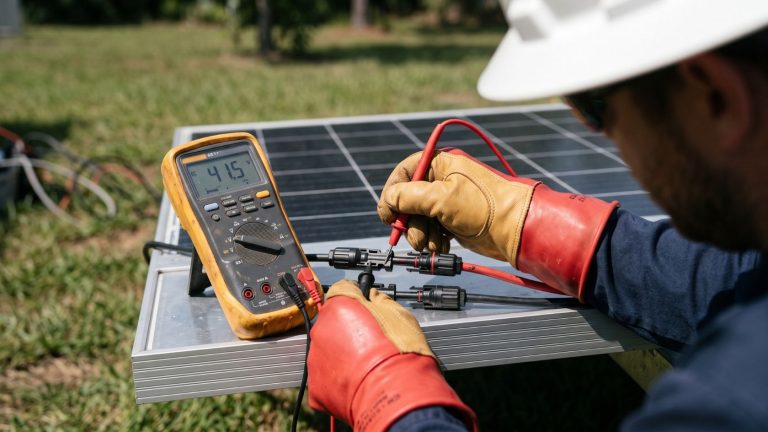
Properly ground the generator chassis to an earth ground rod to prevent electrical faults. Before applying a full load, manually spin the generator (if safe and possible) while measuring the voltage output with a multimeter to verify that all phases are producing balanced power.
Read our comprehensive guide on choosing the right battery bank for solar here.
Safety Precautions When Operating a PMG
Working with a permanent magnet generator requires strict adherence to safety protocols. Because the magnets are permanent, the generator will produce live voltage the moment the shaft begins to spin—there is no “off” switch for the magnetic field.
Understanding Ohm’s Law (V = I x R) is crucial here. A PMG spinning at high speeds can generate hundreds of volts. Because the human body has relatively low electrical resistance (R) in damp or sweaty conditions, even a moderate voltage (V) can push a lethal current (I) through a person.
Always wear appropriate Personal Protective Equipment (PPE), including Class 00 or Class 0 electrically insulated gloves. Implement strict Lock-Out/Tag-Out (LOTO) procedures on the mechanical prime mover (e.g., locking the wind turbine blades) before servicing the electrical components. Ensure all cables are secured in heavy-duty conduit to prevent accidental severing, and restrict physical access to the generator room or tower.
Cost Breakdown and Financial Incentives
The financial ecosystem of a PMG system is heavily front-loaded, but it offers a stellar return on investment (ROI) over its lifespan.
For a residential off-grid power generation setup (ranging from 1kW to 5kW), a bare PMG unit typically costs between $500 and $2,500. Commercial-grade units (10kW to 100kW+) can easily exceed $10,000 to $50,000. When factoring in the charge controllers, rectifiers, and structural mounting, installation can double the unit’s base price.
However, the long-term savings are profound. The lack of maintenance and higher energy yields usually result in a payback period of 5 to 8 years. Furthermore, buyers should aggressively pursue financial incentives. In the United States, the Federal Residential Renewable Energy Tax Credit allows homeowners to deduct a significant percentage (often up to 30%) of their wind or hydro system costs. State-level rebates and utility net-metering programs can further subsidize the initial capital expenditure.
Environmental Impact of Permanent Magnet Generators
The environmental narrative of the permanent magnet generator is overwhelmingly positive. By facilitating the efficient capture of wind and hydroelectric power, PMGs directly displace the need for fossil-fuel-burning power plants. They produce zero carbon emissions, zero particulate matter, and zero greenhouse gases during operation.
Moreover, because PMGs are significantly more efficient than standard generators, they extract more usable electricity from the same amount of mechanical effort. This reduces energy waste. While the mining of rare-earth metals for the magnets does have a localized ecological footprint, the decades of zero-emission power generated by the PMG drastically offsets this initial impact, making them a cornerstone of modern ecological engineering.
Future Prospects — Where Is PMG Technology Headed?
The future of PMG technology is closely tied to the broader electrification of global industries. Research published by the IEEE indicates a massive surge in PMG adoption beyond standard renewable energy generation.
In the automotive sector, advanced PMGs are the driving force behind hybrid and fully electric vehicles (EVs), utilizing regenerative braking to pump power back into the battery. In aerospace, engineers are testing ultra-lightweight PMGs to power the next generation of hybrid-electric commuter aircraft. The robotics sector also relies on miniaturized permanent magnet motors and generators for precise, high-torque joint articulation.
Technologically, the industry is aggressively researching alternatives to rare-earth metals to lower costs and stabilize supply chains. Innovations in iron-nitride magnets and advanced cooling topologies promise to make the next generation of PMGs cheaper, more resilient to heat, and even more efficient.
Related Article: How To Build Your Own Permanent Magnetic Generator for Free
PMGs vs. Other Forms of Energy Generation
To truly evaluate a PMG, it helps to view it alongside other common energy technologies.
| Feature | Permanent Magnet Generator (Wind/Hydro) | Traditional Diesel Generator | Solar Photovoltaic (PV) Panels |
|---|---|---|---|
| Fuel Source | Free (Wind, Water) | Costly (Diesel, Gas) | Free (Sunlight) |
| Operating Cost | Very Low | High (Fuel & Oil) | Very Low |
| Maintenance | Low (Brushless) | High (Filters, oil, brushes) | Extremely Low (No moving parts) |
| Emissions | Zero | High Carbon & Particulate | Zero |
| Power Density | High | Moderate | Low (Requires vast surface area) |
| Noise Level | Low to Moderate | Very High | Silent |
While solar panels remain the king of low-maintenance residential power, they generate nothing at night. A PMG hooked to a wind turbine or micro-hydro stream can generate uninterrupted power 24/7, making it the superior choice for consistent off-grid power generation.
Conclusion
The transition to resilient, sustainable energy relies heavily on technologies that maximize efficiency while minimizing long-term costs. The permanent magnet generator stands out as an engineering marvel that accomplishes exactly this. By leveraging advanced electromagnetism and shedding the bulky, high-maintenance components of traditional alternators, PMGs offer an unmatched solution for modern energy demands.
Whether you are capturing steady river currents with a robust radial flux PMG or harvesting coastal breezes with a sleek axial flux PMG, these systems guarantee high-yield, low-maintenance power. While the initial investment requires careful financial planning, the decades of reliable, emission-free electricity far outweigh the upfront costs.
As technology advances and manufacturing scales, the barrier to entry will only decrease. If you are ready to take control of your energy future, consult with a certified renewable energy specialist today to size and specify the perfect permanent magnet generator for your off-grid or grid-tied project.
Ready to Build Your Own Off-Grid Power System?
The number one reason DIY magnetic generators fail isn’t the physics—it is a lack of precision tools. Don’t drill a single hole or twist a single wire until your workspace is set up like a professional energy lab. Grab our free 17-page blueprint covering the exact tools, safety gear, and air-gap instruments you need to succeed on your first try.
Frequently Asked Questions (FAQs)
How long does a permanent magnet generator last?
A well-maintained PMG can easily last 20 to 30 years. Because they lack wearing electrical parts like carbon brushes and slip rings, the only components that typically require replacement over decades of use are the mechanical bearings.
Can a PMG run continuously?
Yes, permanent magnet generators are engineered for continuous, heavy-duty operation. As long as the generator is operating within its rated temperature limits and the mechanical bearings are properly lubricated, it can run 24/7 without interruption.
Are permanent magnet generators better than induction generators?
For variable-speed renewable energy applications, yes. PMGs are lighter, smaller, and significantly more efficient because they don’t require an external power source to create a magnetic field, resulting in higher power yields at lower rotational speeds.
What happens if a PMG overheats?
Severe overheating can cause the rare-earth magnets inside the rotor to permanently lose their magnetic strength, a process known as demagnetization. This drastically reduces the generator’s power output and typically requires a complete replacement of the rotor assembly.
Can I use a PMG to charge lithium-ion batteries?
Absolutely. A PMG produces alternating current (AC), which must be routed through a rectifier to become direct current (DC). Once paired with a compatible MPPT charge controller, this DC power safely and efficiently charges modern lithium-ion battery banks.