Affiliate & Editorial Disclosure: This comparison review contains affiliate links. If you purchase through our links, we may earn a commission at no extra cost to you. All performance assertions made by the vendors of The Energy Revolution System and Backyard Revolution are treated as experimental DIY claims; we do not guarantee specific electricity bill reductions. Both products are digital PDF and video blueprints—physical hardware and lumber materials are purchased separately.
If you have spent any time researching affordable, weekend DIY backup power plans, you have almost certainly crossed paths with the two heavyweights of the ClickBank alternative energy marketplace: The Energy Revolution System and Backyard Revolution.
On the surface, both digital programs look remarkably similar. Both retail for $39, both include step-by-step PDF blueprints paired with over-the-shoulder video instruction, both are protected by a 60-day ClickBank money-back guarantee, and both use dramatic direct-response sales videos promising to slash your monthly utility bill by 65% to 80%+.
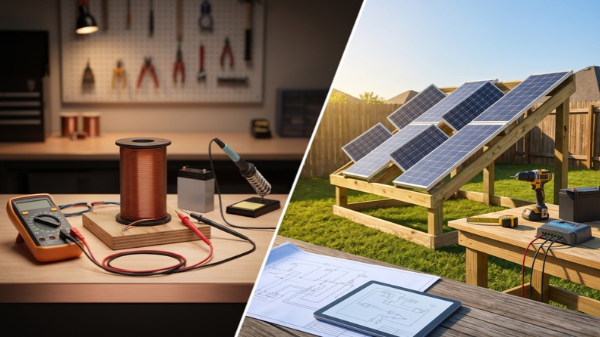
However, once you open the actual PDF schematics inside the member portals, these two blueprints teach completely different technologies, require different tools, and solve different living situations. One is an indoor benchtop electromagnetic coil project inspired by Nikola Tesla’s 1894 patent, while the other is a carpentry-focused outdoor vertical “zigzag” solar array designed by MIT-inspired woodworking plans.
In this Energy Revolution System vs. Backyard Revolution review, we strip away the dramatic sales hype and compare both $39 blueprints across real hardware store build costs, space requirements, woodworking vs. wiring skills, and honest wattage output.
Head-to-Head Comparison: Tesla Bifilar Coil vs. 3D Zigzag Solar Tower
Here is how the two downloadable blueprints compare once you factor in hardware costs, living space, and actual electrical physics:
| Feature / Comparison Metric | The Energy Revolution System | Backyard Revolution (by Zack Bennett) |
|---|---|---|
| Core Mechanism | Electromagnetic Induction (Tesla Patent 512,340 Flat Bifilar Coil) | 3D Vertical “Zigzag” Stacked Photovoltaic Solar Array |
| Product Format & Price | $39 Digital Blueprint (47-p. PDF + ~2 hrs video) | $39 Digital Blueprint (PDF Woodworking/Wiring Plans + Videos) |
| Estimated Raw Materials Cost | ~$72 – $147 (Small-to-mid build: copper wire, magnets, 12V battery) | ~$220 – $480 (Lumber, solar cells/panels, charge controller, battery) |
| Total All-In Project Spend | $111 – $186 | $259 – $519 |
| Space & Footprint Required | Indoor Benchtop (Fits inside a small plastic enclosure box) | 10 to 15 sq. ft. Outdoors (Unshaded yard, deck, or driveway) |
| Weather & Sun Dependency | None — Runs indoors 24/7 during blizzards, rain, or night | High — Requires direct sunlight; vertical stacking causes self-shading |
| Primary DIY Skill Needed | Basic Bench Electronics (Winding copper coils, terminal wiring) | Basic Carpentry + Solar Wiring (Sawing lumber frame + wiring PV panels) |
| Realistic Power Use Case | 12V micro-loads (LEDs, phone charging, fans) + phantom load cuts | Daytime 12V battery charging for small appliances, lights, and laptops |
| Guarantee & Refund Policy | 60-Day ClickBank Money-Back Guarantee | 60-Day ClickBank Money-Back Guarantee |
Quick Decision Summary:
- Pick The Energy Revolution System if: You want the lowest total build cost (under $160 all-in), live in an apartment, HOA neighborhood, or cloudy climate where outdoor solar frames aren’t practical, and prefer an indoor electronics project paired with household power-saving audits. Get The Energy Revolution System Blueprints Here.
- Pick Backyard Revolution if: You have an unshaded sunny yard or deck, own basic woodworking tools (circular saw, drill, screws), and have $260 to $500 to build a compact wooden solar rack that charges a 12V battery bank from sunlight.
Core Mechanism Breakdown: How Each Blueprint Actually Works
The biggest mistake buyers make is assuming both guides build the same kind of generator. In reality, they rely on completely different branches of physics.
1. The Energy Revolution System: Nikola Tesla’s 1894 Bifilar Pancake Coil
As we examined in detail in our complete Energy Revolution System review, this blueprint does not use solar panels or sunlight. Instead, it teaches you how to wind two parallel strands of enameled copper magnet wire into a flat spiral bifilar pancake coil based on Nikola Tesla’s US Patent 512,340.
By connecting the two parallel windings in series, the coil maximizes the voltage potential difference between adjacent turns and neutralizes internal inductive drag (self-inductance). When paired with a low-friction neodymium magnet rotor, bridge rectifier diodes, and smoothing capacitors, it delivers a continuous 12V DC trickle charge into a small buffer battery—while the companion efficiency guide walks you through cutting wasted standby (“vampire”) electricity across your household circuits.
2. Backyard Revolution: The 3D Vertical “Zigzag” Solar Rack
Created by carpenter Zack Bennett and loosely inspired by a 2012 MIT study on 3D photovoltaic towers, Backyard Revolution is a woodworking and solar wiring plan. Instead of laying solar panels flat across a massive roof, the blueprint shows you how to build a vertical wooden tower frame (occupying roughly 10 square feet of ground space) that stacks multiple smaller solar panels in an angled, accordion-style “zigzag” column.
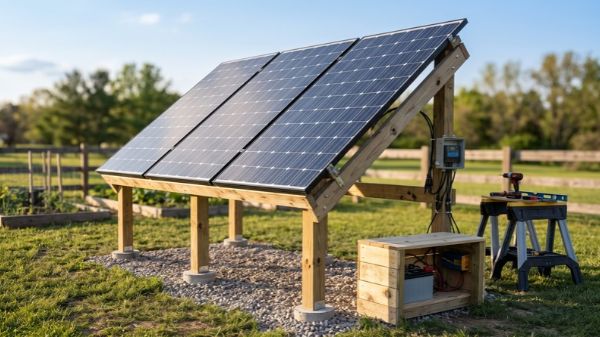
As seen in a typical upright wooden solar mount above, mounting photovoltaic panels on a timber frame lets you place the unit on a sunny deck or patio and wheel it into a shed if a hailstorm approaches.
The Physics & Self-Shading Reality Check
Neither vendor is shy about using hyperbole in their video presentations, so let’s evaluate both mechanisms through the lens of honest engineering:
- The Flaw in Backyard Revolution’s “Zigzag” Tower: In the MIT study cited by Backyard Revolution’s sales video, researchers placed solar panels on the exterior faces of a tall, open 3D cube so panels could catch low-angle morning and evening sunlight without blocking one another. However, in Backyard Revolution’s tightly stacked accordion (“zigzag”) wooden rack, the upper panels cast direct shadows onto the panels mounted directly beneath them whenever the sun is high in the sky. Because wiring shaded solar cells in series with sunny cells creates a bottleneck (the “Christmas light effect”) that can drop panel output by 50% to 75%, stacking panels closely inside a wooden rack actually produces less midday wattage per panel than mounting standard panels side-by-side—as we showed in our Energy Revolution System vs. DIY Solar Kit comparison.
- The Limit of The Energy Revolution System’s Coil: As we always make clear, a benchtop bifilar coil does not create “free energy” out of nothing, nor will a $140 build run a central air conditioner or electric water heater. Its real-world output is a modest 12W to 18W continuous DC trickle for emergency micro-loads (LED room strips, smartphone charging, Wi-Fi routers, and 12V cooling fans), supplemented by the 10% to 17% monthly utility savings achieved by implementing the manual’s phantom-load elimination habits.
True Hardware Store Build Cost: $150 vs. $350+
Because both digital guides cost $39 upfront, the real budget separator is what happens when you take the shopping list to the hardware store.
Energy Revolution System Materials Budget (~$72 to $147)
In our itemized Energy Revolution System materials list and cost review, we priced out every single component needed to complete the build in 2026:
- Enameled Copper Magnet Wire (2 spools): $18 – $24
- Non-Conductive Acrylic Backing & Plastic Project Box: $10 – $20
- Neodymium Magnets, Rotor Bearing, Diodes & Capacitors: $24 – $35
- Small 12V SLA or LiFePO4 Buffer Battery & 12V/USB Converter: $20 – $68
- All-In Total (With $39 Guide): $111 to $186
Backyard Revolution Materials Budget (~$220 to $480)
While Backyard Revolution claims you can build the solar tower for “under $200,” pricing out the actual lumber and solar electronics in 2026 tells a different story:
- Pressure-Treated 2×4 Lumber, Plywood, Wood Screws & Casters: $45 – $75
- 4 to 6 Small Photovoltaic Panels (or Raw Solar Cells + Tabbing Wire): $110 – $220
- Solar Charge Controller, MC4 Cabling, Inline Fuses & Inverter: $45 – $85
- 12V Deep-Cycle Marine or LiFePO4 Storage Battery: $60 – $140
- All-In Total (With $39 Guide): $259 to $519
Moreover, some versions of the Backyard Revolution manual suggest soldering raw, fragile silicon solar cells together and encapsulating them under plexiglass. Ask any experienced DIY solar builder: hand-soldering brittle, paper-thin solar cells without cracking them or trapping moisture that corrodes the busbars within six months is notoriously frustrating. If you build Backyard Revolution, you should buy pre-framed aluminum 50W or 100W panels—which pushes your hardware bill closer to $350+.
Compare the Official Energy Revolution System Blueprints Risk-Free Here
Workbench Experience: Winding Copper Wire vs. Sawing Lumber
Which project will you actually enjoy building on a Saturday afternoon? Consider the tools and workspace you have available right now:
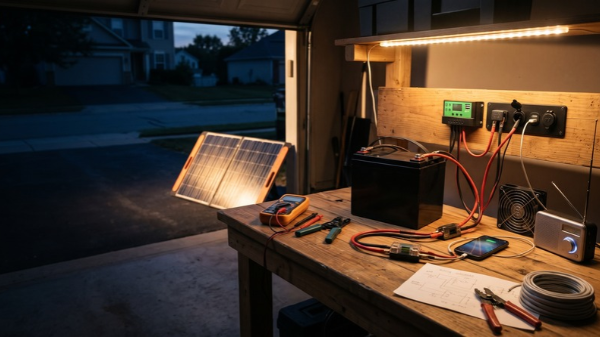
- The Energy Revolution System Is an Indoor Table Project: You can build the entire coil assembly at a kitchen table or small garage bench using wire strippers, fine-grit sandpaper, a screwdriver, a $15 multimeter, and an optional soldering iron. There is no sawdust, no heavy lifting, and no outdoor mounting required.
- Backyard Revolution Is an Outdoor Carpentry Project: You need a circular saw or miter saw, a power drill, sawhorses, tape measure, and outdoor yard space to cut and assemble the angled wooden frame before wiring the solar charge controller and battery bank inside a weather-resistant box.
Pros & Cons of Each Blueprint
The Energy Revolution System
Pros:
- Lowest total project cost ($111–$186 all-in including the $39 guide).
- Zero sunlight or outdoor yard space needed—100% apartment, condo, and winter-storm friendly.
- Teaches practical electromagnetic induction principles based on Nikola Tesla’s 1894 Patent 512,340.
- Includes actionable household efficiency audits that lower monthly power waste immediately.
Cons:
- Promotional video exaggerates whole-home output; strictly designed for 12V micro-loads (lights, phones, small fans).
- Requires patience and steady hands to wind the flat bifilar copper coil neatly.
Backyard Revolution
Pros:
- Harnesses verified photovoltaic solar energy outdoors without climbing onto your roof.
- Portable wheeled wooden frame can be repositioned in your yard as seasonal sun angles shift.
- Good introductory woodworking + 12V solar wiring project for suburban or rural homeowners.
Cons:
- Significantly higher hardware and lumber cost ($259–$519 all-in).
- Stacked “zigzag” wooden frame suffers from self-shading where upper panels block lower panels at midday.
- Useless at night, during heavy winter storms, or for apartment renters without a sunny yard.
Final Verdict: Which ClickBank Energy Guide Wins in 2026?
If you already own woodworking tools, have a bright, unshaded backyard, and want to spend $300+ building a movable wooden solar rack, Backyard Revolution is a decent carpentry plan—though we recommend mounting standard pre-framed solar panels side-by-side rather than recessing them into a self-shading zigzag slot.
However, for 90% of budget-conscious DIYers, apartment dwellers, and emergency preppers, The Energy Revolution System is the smarter, lower-risk first build.
For less than half the total hardware cost of a wooden solar tower (~$111 to $186 all-in), you get an indoor-safe, weather-independent 12V micro-backup project that teaches you Nikola Tesla’s flat spiral bifilar coil architecture—plus immediate household load-reduction strategies that trim wasted kilowatt-hours off your next electric bill before you even finish winding your first spool of wire.
And because it is backed by ClickBank’s 60-day money-back guarantee, you can download the 47-page PDF manual and 2-hour video guide right now, inspect the full materials list and schematics from your computer, and claim a 100% refund within 60 days if you aren’t completely satisfied.
Click Here to Download The Energy Revolution System Blueprints (Backed by 60-Day Guarantee)
For a closer look at how this electromagnetic blueprint differs from standard solar panel setups, watch this Energy Revolution System Review 2026 video breakdown, which directly addresses common questions about the digital format, Tesla coil mechanism, and realistic household power expectations.