
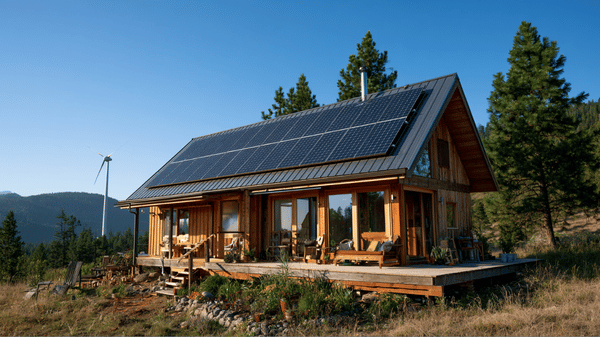
The transition to off-grid living is no longer a fringe movement; it is a vital step toward autonomy, sustainability, and resilience. In 2026, the technology required to power a homestead, cabin, or modern energy-efficient home has become more accessible, efficient, and modular than ever before. This comprehensive pillar guide serves as your foundational blueprint for understanding, designing, and implementing DIY off-grid energy systems. By integrating solar power, wind energy, emerging magnetic generators, and passive thermal mass heating, you can create a robust, hybrid energy architecture that completely eliminates your reliance on municipal power grids.
Achieving true energy independence requires more than simply purchasing equipment. It demands a holistic understanding of how energy is generated, stored, and consumed. This guide will walk you through the core technologies, the underlying physics, and the practical implementation steps necessary to build a reliable off-grid system that operates seamlessly year-round, regardless of external grid failures or rolling blackouts.
Solar Power: The Foundation of Off-Grid Living
Photovoltaic (PV) solar panels remain the most reliable and scalable foundation for any off-grid energy setup. The basic principle involves silicon cells converting sunlight directly into direct current (DC) electricity. However, a complete solar array is a complex system requiring precise balancing of generation, storage, and conversion.
Core Components of a Solar Energy System
To build a functional DIY solar setup, you must master the integration of four primary components. Sizing these correctly is the difference between constant power and sudden blackouts.
| Component | Function | 2026 Best Practices & Specifications |
|---|---|---|
| Photovoltaic Panels | Captures solar irradiance and generates DC electricity. | Monocrystalline panels (efficiency > 22%). Consider bifacial panels for snowy environments to capture reflected light. |
| Charge Controller | Regulates voltage/current from panels to prevent battery overcharging. | MPPT (Maximum Power Point Tracking) is mandatory for modern systems, offering 30% more efficiency than older PWM controllers. |
| Battery Bank | Stores DC electricity for nighttime and cloudy day use. | LiFePO4 (Lithium Iron Phosphate) is the standard, offering 5000+ cycles, 100% depth of discharge, and supreme safety. |
| Inverter | Converts DC battery power into AC power for household appliances. | Pure Sine Wave inverters to protect sensitive electronics and handle startup surges for motors/refrigerators. |
Calculating Your Load Profile
Before purchasing a single panel, you must perform a load analysis. This involves calculating the Watt-Hours (Wh) required to run your homestead daily. Here is the standard formula used for DIY system sizing:
Step 1: Calculate Daily Energy Consumption
Total Daily Watt-Hours = (Device Wattage * Hours Used Per Day)
Example:
– Refrigerator: 150W * 8 hours (compressor run time) = 1200 Wh/day
– LED Lights: 50W * 5 hours = 250 Wh/day
– Laptop: 60W * 4 hours = 240 Wh/day
Total Daily Consumption = 1690 Wh/day
Step 2: Calculate Battery Sizing (with 20% safety buffer for LiFePO4)
Required Storage = Total Daily Consumption * Days of Autonomy (usually 3)
Required Storage = 1690 * 3 = 5070 Wh
Step 3: Convert to Amp Hours (Ah) for a 24V System
Battery Capacity Needed = 5070 Wh / 24V = ~211 Ah
Wind Energy: Harnessing the Breeze
While solar provides the bulk of generation during the day, wind turbines offer an excellent complementary power source. The distinct advantage of wind power is its ability to generate electricity at night and during winter storms when solar production is at its lowest. This creates a balanced, hybrid micro-grid.
Evaluating Your Site for Wind
Wind power is highly site-specific. Before investing in a micro-turbine, evaluate your property based on the following criteria:
- Consistent Wind Speeds: You need an average annual wind speed of at least 9-12 mph (4-5 m/s) for a residential turbine to be cost-effective.
- Tower Height: The turbine must be mounted at least 30 feet above anything within a 300-foot radius (including trees and buildings) to avoid turbulent, “dirty” air that decreases efficiency and damages the blades.
- Zoning Laws: Off-grid properties usually have relaxed zoning, but always verify tower height restrictions in your specific county.
Magnetic Generators: The Frontier of Alternative Energy
One of the most rapidly growing topics in the DIY energy space is the exploration of magnetic generation. While traditional generators rely on combusting fossil fuels to spin an alternator, DIY enthusiasts are increasingly experimenting with neodymium permanent magnets and custom-wound stators to create highly efficient, low-drag rotational power systems.
The Mechanics of Magnetic Power
The core concept involves utilizing the repelling force of high-grade permanent magnets to assist the rotation of a central rotor. When configured precisely, this setup can drastically reduce the mechanical input required to generate electricity.
- Stator Design: Custom 3-phase stators wound with heavy-gauge copper wire maximize electron flow with minimal resistance.
- Rotor Configuration: Alternating N/S polarity on the rotor magnets creates the alternating magnetic flux required to induce current in the stator coils.
- Integration: These systems are often paired with small, high-efficiency DC motors or gravity-fed flywheels to initiate and maintain rotation, outputting more usable electricity to a battery bank than a standard alternator setup.
Ready to Build Your Own Off-Grid Power System?
The number one reason DIY magnetic generators fail isn’t the physics—it is a lack of precision tools. Don’t drill a single hole or twist a single wire until your workspace is set up like a professional energy lab. Grab our free 17-page blueprint covering the exact tools, safety gear, and air-gap instruments you need to succeed on your first try. (PDF format, No email needed)
Thermal Mass Heating: Passive Energy Storage
Energy independence isn’t just about generating electricity; it is equally about reducing your overall energy demand. Heating a home requires massive amounts of energy. By implementing passive solar design and thermal mass heating, you can effectively “store” heat without batteries or electrical components.
How Thermal Mass Works
Thermal mass materials possess a high capacity to absorb, store, and slowly release heat energy. During the day, sunlight streaming through south-facing windows hits these materials, warming them. At night, as the ambient air temperature drops, the thermal mass slowly radiates the stored heat back into the living space, stabilizing the indoor climate.
| Material | Heat Capacity | Best Application for Off-Grid DIY |
|---|---|---|
| Water (Barrels/Tanks) | Excellent (Highest specific heat) | Greenhouse heating; interior water walls painted black for maximum solar absorption. |
| Concrete / Slab | High | Exposed, dark-stained floors directly in the path of winter sun. |
| Cob / Adobe | Moderate to High | Interior walls, custom rocket mass heaters, and integrated thermal benches. |
Conclusion: Building Your Hybrid System
The ultimate off-grid energy system does not rely on a single point of failure. It is a resilient, hybrid architecture. By starting with a properly sized solar array, supplementing with wind or magnetic generation for overcast days, and utilizing passive thermal mass to eliminate electrical heating loads, you create an unbreakable system. Start small, calculate your loads meticulously, and invest in high-quality storage. True energy independence is a journey of continuous learning, optimization, and empowerment.