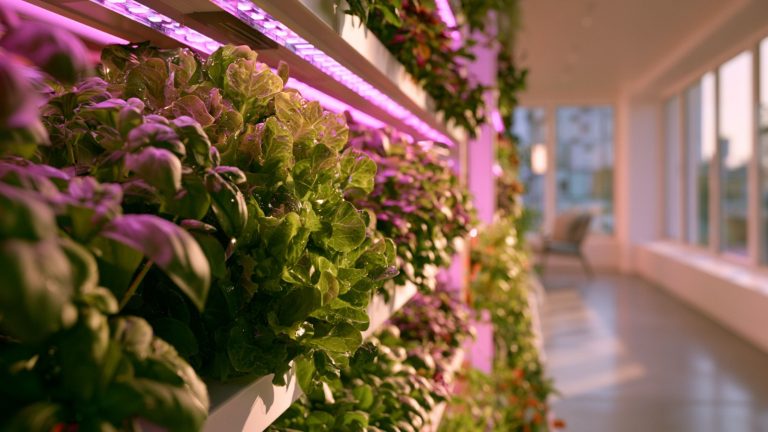
The landscape of modern agriculture stands at a crossroads, where you’ll find three distinct pathways converging toward sustainable food production. If you’re evaluating indoor cultivation methods, you must understand that soil-based systems, hydroponics, and aquaponics each operate through fundamentally different mechanisms for nutrient delivery, water management, and environmental control, which directly impact your operational costs, yield potential, and long-term sustainability. The choice you make will determine whether you’re optimizing for simplicity, efficiency, or ecosystem integration, and the implications extend far beyond initial setup.
Key Takeaways
- Hydroponics uses nutrient-rich water solutions, eliminating soil while enabling precise control over pH, nutrients, and growing conditions.
- Aquaponics combines fish farming with plant cultivation, converting fish waste into plant nutrients through beneficial bacteria in closed-loop systems.
- Soil-based systems rely on organic matter decomposition and microbial activity but require crop rotation to prevent nutrient depletion.
- Aquaponics uses 90% less water than soil methods, while hydroponics reduces water consumption by 70% through recirculation systems.
- Hydroponics costs $2,000-$10,000 to setup; aquaponics costs $5,000-$50,000 due to additional fish-related components and monitoring requirements.
Understanding Traditional Soil-Based Growing Systems
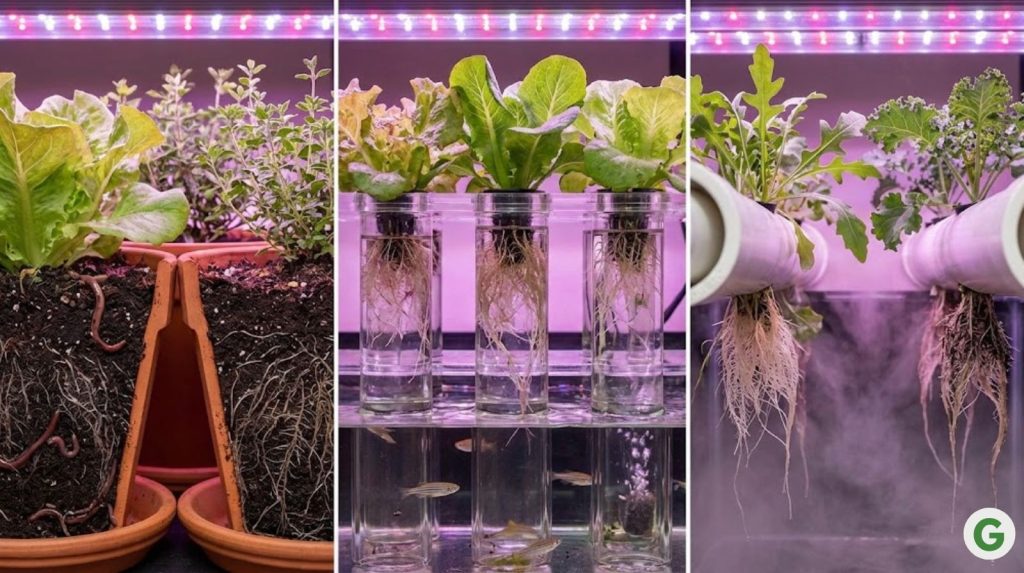
Traditional soil-based growing systems, which have sustained agricultural production for millennia, operate through the integration of physical soil structure, chemical nutrient cycling, and biological processes that collectively support plant development.
You’ll find that soil health depends on organic matter decomposition, which releases nutrients through microbial activity, while moisture retention capabilities maintain consistent hydration without automated systems.
Sustainable practices require crop rotation protocols to prevent nutrient depletion, though farming challenges emerge from variable environmental conditions affecting yield consistency. Native plants, which conserve water and promote ecosystem health, can support the sustainability of traditional soil-based growing systems.
Pest management in conventional systems often necessitates chemical interventions, creating environmental impact concerns including water contamination and biodiversity reduction.
While these systems provide natural nutrient cycling mechanisms, their dependence on external inputs and susceptibility to climate variability limit scalability compared to controlled-environment agriculture methodologies.
What Is Hydroponics and How Does It Work?
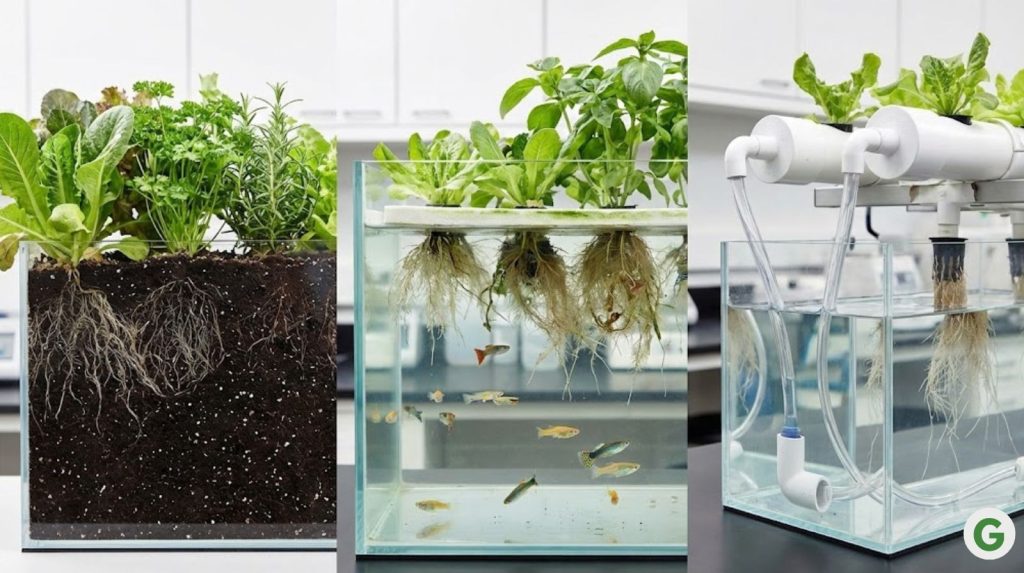
Unlike conventional agriculture, which relies on soil as both a growth medium and nutrient reservoir, hydroponics employs water-based solutions that deliver essential minerals directly to plant roots, thereby eliminating substrate dependency while enabling precise control over nutrient availability, pH levels typically maintained between 5.8 and 6.2, and electrical conductivity measurements.
You’ll find that this approach utilizes various delivery mechanisms, including Nutrient Film Technique (NFT), which circulates a thin film of solution across root systems, Deep Water Culture (DWC), where roots remain submerged in oxygenated nutrient reservoirs, and Ebb and Flow systems, which periodically flood and drain growing containers to facilitate nutrient uptake.
The closed-loop architecture of these systems permits water recirculation that reduces consumption by up to 90% compared to traditional methods, while continuous nutrient optimization, coupled with year-round controlled-environment cultivation, generates yield increases of 30-50% relative to soil-based production. Additionally, plant-based plastics can be integrated into hydroponic systems as a way to reduce landfill waste and promote sustainability.
Soil-Free Growing Method
Hydroponics represents a cultivation methodology wherein plants derive their nutritional requirements from precisely formulated aqueous solutions rather than conventional soil media, effectively decoupling agricultural production from terrestrial substrates while simultaneously enabling cultivators to exert granular control over the chemical composition, pH levels, and electrical conductivity of the nutrient delivery system.
You’ll maintain ideal nutrient absorption through implementing specific techniques, including Nutrient Film Technique, Deep Water Culture, and Ebb and Flow systems, each providing distinct oxygenation profiles and delivery mechanisms that directly impact root health. You must monitor pH parameters between 5.8 and 6.2 daily, while concurrently evaluating electrical conductivity values to prevent toxic salt accumulation within synthetic solutions.
This controlled environment methodology facilitates year-round production cycles, effectively eliminating seasonal constraints and pest-related complications that traditionally limit agricultural output. For those starting out, affordable hydroponic kits available for under $150 can offer a practical entry point into hydroponic gardening, especially in small, confined spaces.
Nutrient Solution Delivery Systems
Nutrient solution delivery systems constitute the mechanical infrastructure through which hydroponic installations transport dissolved minerals and water to plant roots, employing distinct operational methodologies that determine oxygenation rates, nutrient contact duration, and resource efficiency across various cultivation scales. Primary system architectures include:
- Nutrient Film Technique (NFT), which continuously circulates solution through sloped channels, enabling exceptional water conservation while maximizing root oxygenation
- Deep Water Culture (DWC), suspending roots in aerated nutrient reservoirs, facilitating rapid absorption and accelerated growth cycles
- Drip Systems, delivering precise nutrient volumes through automated emitters, enhancing solution mixing efficiency
- Ebb and Flow configurations, periodically flooding grow beds before draining, combining nutrient delivery with enhanced oxygen exposure
Adding automated features to hydroponic systems can greatly simplify the growing process for beginners. Each architecture requires vigilant monitoring of pH parameters, electrical conductivity, and solution mixing protocols to prevent mineral accumulation and maintain ideal growing conditions.
Water Recirculation and Efficiency
Water recirculation mechanisms represent the operational foundation that enables hydroponic installations to achieve unprecedented resource conservation, implementing closed-loop architectures where solution flows continuously through cultivation zones before returning to central reservoirs for filtration, reconditioning, and redeployment.
You’ll find that water management protocols in systems utilizing Nutrient Film Technique or Deep Water Culture configurations deliver 90% reduction in consumption compared to conventional agriculture, eliminating evaporation losses and runoff waste entirely.
This efficiency liberates you from dependence on extensive water infrastructure while nutrient retention within sealed circuits maintains solution viability through precise monitoring of pH parameters, typically 5.8-6.2, and electrical conductivity measurements.
The recirculating architecture enables year-round production autonomy across diverse environmental conditions, fundamentally transforming resource accessibility for urban cultivation initiatives.
Solar water heating systems harness solar energy to provide a cost-effective and environmentally friendly solution for off-grid resource efficiency, similar to the hydroponic systems’ approach to sustainable agricultural practices.
No products found.
What Is Aquaponics and How Does It Work?
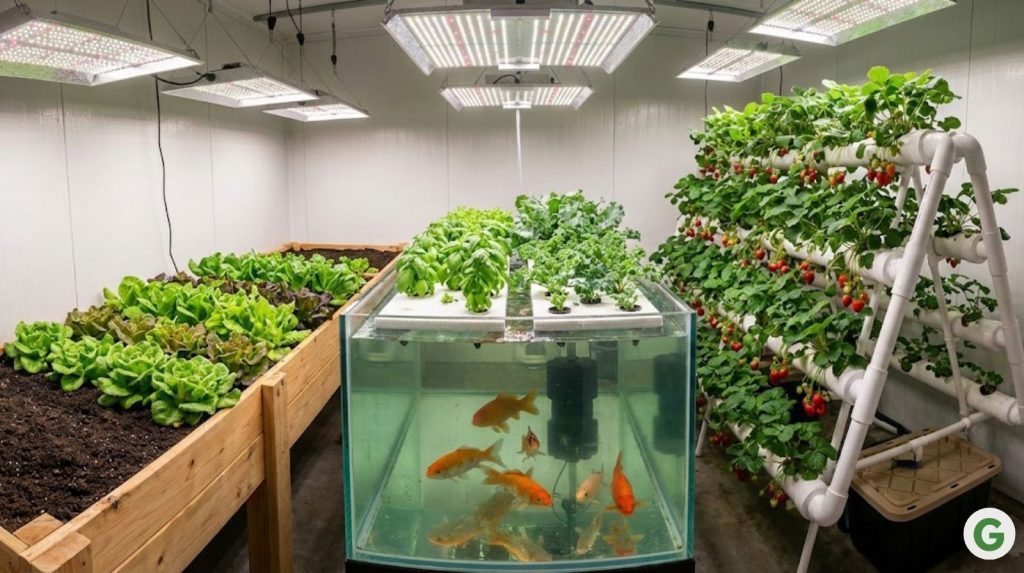
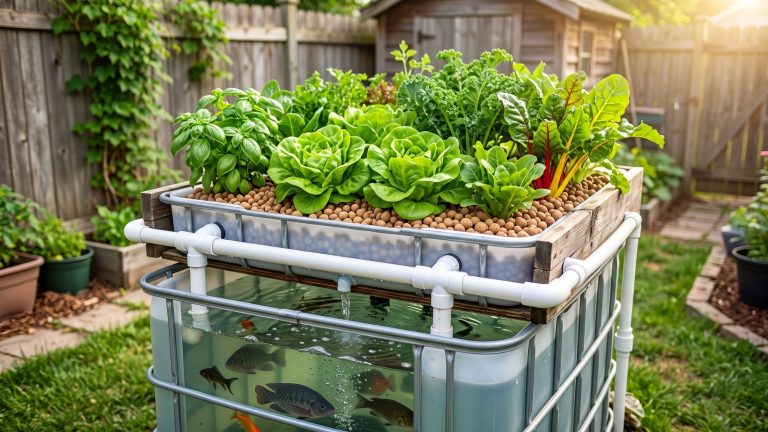
When examining closed-loop agricultural systems that maximize resource efficiency, aquaponics emerges as a symbiotic integration of aquaculture and hydroponics, wherein fish waste serves as the primary nutrient source for plant cultivation, while the plants, in turn, filter and purify the water that cycles back to the fish tanks.
Beneficial bacteria convert ammonia into nitrates within biofilters, establishing a closed loop ecosystem that eliminates dependency on synthetic fertilizers, thereby granting you autonomy from conventional agricultural supply chains.
Aquaponics systems are known for their space-saving design, which makes them suitable for urban gardening and sustainable food production in areas with limited space.
Essential System Components:
- Fish tanks housing aquatic species that generate nutrient-rich effluent
- Grow beds supporting plant root systems for nutrient absorption
- Biofilters cultivating nitrifying bacteria colonies for ammonia conversion
- Water circulation mechanisms maintaining continuous flow throughout integrated subsystems
You’ll monitor pH levels, ammonia concentrations, and bacterial populations, ensuring ecosystem equilibrium while minimizing external inputs.
No products found.
Comparing Nutrient Sources Across All Three Systems
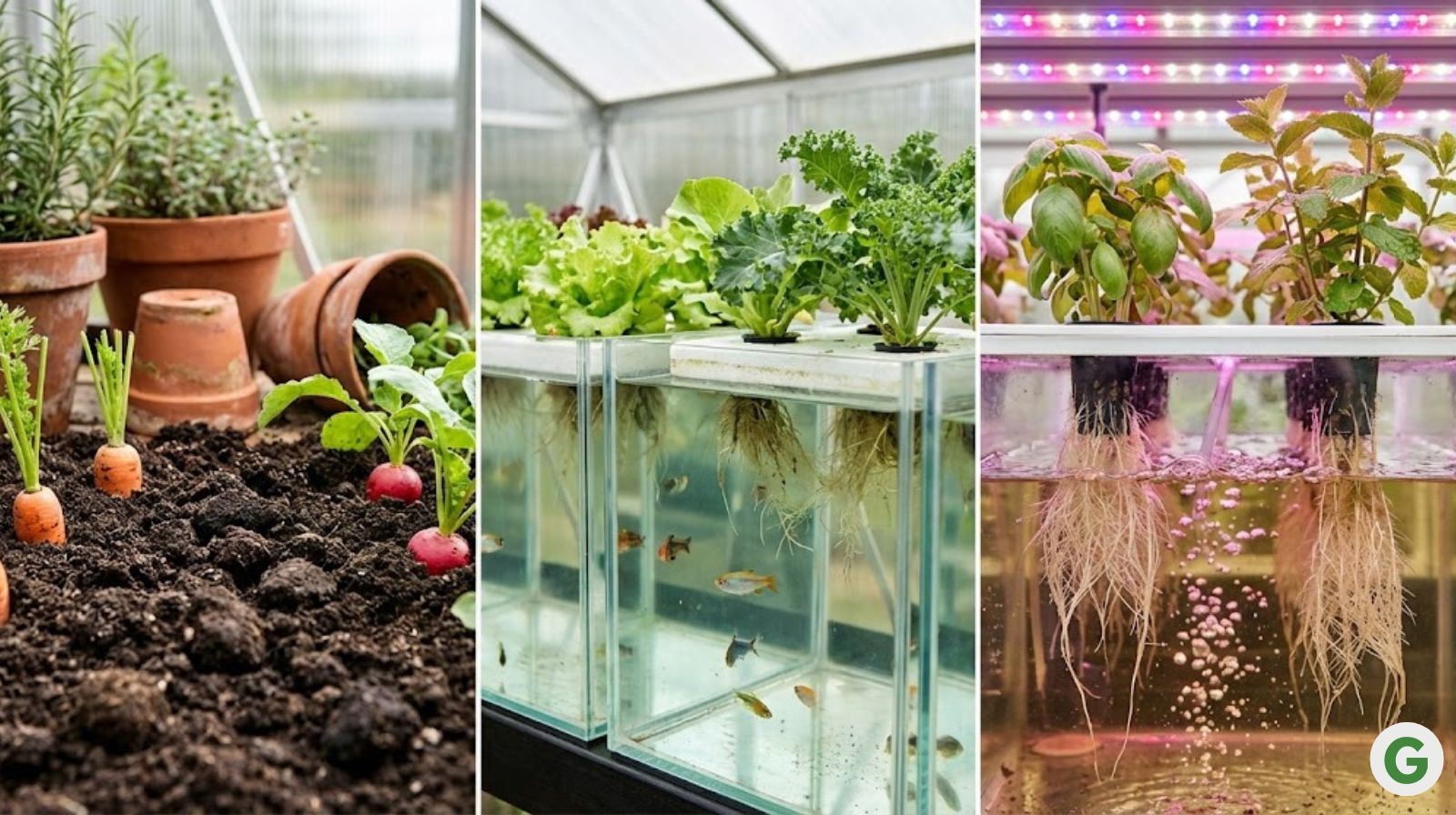
Understanding the fundamental differences in nutrient delivery mechanisms across soil-based, aquaponic, and hydroponic systems requires you to examine how each system sources, processes, and delivers essential minerals and compounds to plant roots.
In soil systems, you’ll find that organic matter undergoes microbial decomposition to release nutrients gradually, whereas aquaponics converts fish waste through nitrification bacteria into bioavailable nitrates that simultaneously support plant growth and maintain water quality for aquatic organisms.
Conversely, hydroponic systems provide you with direct control through synthetic nutrient solutions containing predetermined concentrations of macro and micronutrients in dissolved forms, eliminating biological intermediaries while requiring precise monitoring to prevent nutrient imbalances and salt accumulation.
Soil’s Natural Nutrient Composition
At the foundation of traditional agriculture, soil delivers a complex matrix of nutrients through its mineral composition, organic matter decomposition, and microbial activity, whereas hydroponics bypasses this natural medium entirely by providing plants with precisely formulated synthetic nutrient solutions, and aquaponics occupies an intermediate position by converting fish waste into plant-available nutrients through bacterial nitrification.
Soil’s nutrient cycling operates through:
- Nitrogen, phosphorus, and potassium availability determined by geological composition
- Organic matter decomposition releasing nutrients through microbial activity
- Geographic variation creating inconsistent nutrient profiles across locations
- Beneficial bacteria facilitating continuous nutrient transformation
This natural system offers autonomy from industrial nutrient dependencies, though geographic variability introduces unpredictability. Unlike controlled hydroponic formulations, soil’s microbial ecosystem functions independently, liberating growers from constant intervention while maintaining ecological balance through inherent biological processes.
Fish Waste in Aquaponics
Three distinct nutrient delivery mechanisms characterize the fundamental differences between aquaponics, hydroponics, and soil-based cultivation, with fish waste establishing aquaponics as a biologically mediated system that converts animal excretion into plant-available compounds through bacterial nitrification processes.
Nutrient cycling in aquaponics eliminates chemical fertilizer dependency, as beneficial bacteria transform ammonia into nitrates through closed-loop mechanisms, whereas hydroponics requires periodic disposal of accumulated toxic salts.
This biological transformation enables continuous nutrient generation without external inputs, contrasting sharply with hydroponics’ linear resource consumption and soil systems’ variable nutrient availability, thereby establishing aquaponics as the superior sustainable methodology for autonomous food production.
Furthermore, aquaponics provides a sustainable and efficient method for off-grid agriculture by creating a symbiotic relationship between fish farming and plant cultivation, enhancing overall system productivity.
Synthetic Hydroponic Solutions
While aquaponic systems derive nutritional value from biological waste conversion, hydroponic cultivation employs manufactured mineral salt formulations that deliver predetermined elemental concentrations directly to plant root zones, thereby eliminating dependence on microbial intermediaries or organic decomposition processes.
Liberation Through Nutrient Optimization:
- You control precise mineral ratios, freeing yourself from soil composition limitations, microbial unpredictability, and seasonal fertility variations that constrain traditional agriculture.
- Growth enhancement occurs through targeted supplementation during specific developmental phases, allowing you to maximize yields without environmental restrictions.
- You adjust pH levels and conductivity parameters instantly, removing barriers imposed by fixed growing mediums.
- Synthetic solutions enable crop customization independent of geographic location, climate zones, or natural resource availability.
This methodology facilitates nutrient optimization through systematic monitoring, continuous adjustment protocols, and elimination of biological conversion dependencies. Implementing hydroponic systems can significantly decrease energy costs by optimizing resource use and reducing waste.
Water Usage and Efficiency in Each Growing Method
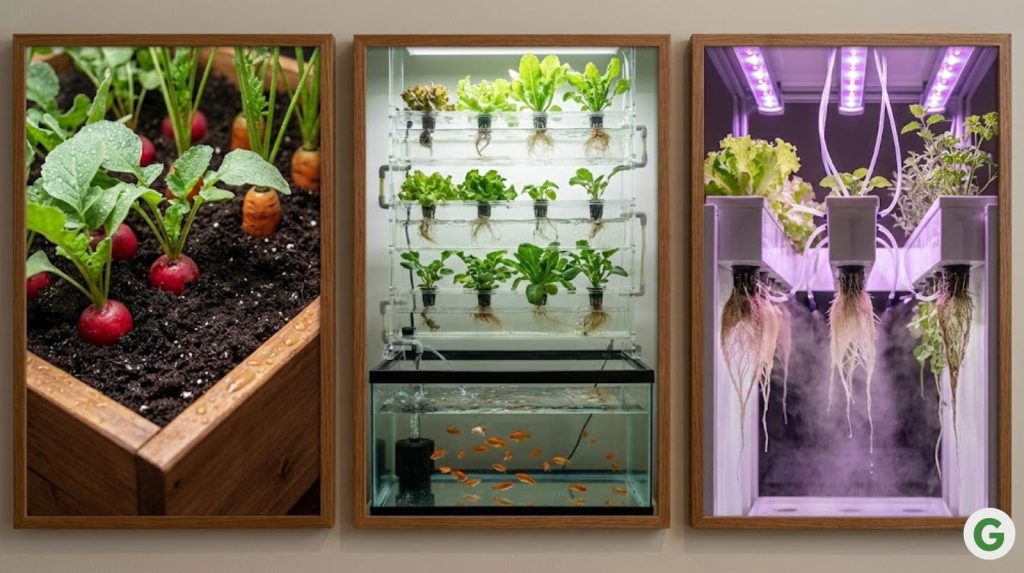
Water efficiency represents one of the most compelling advantages of indoor food systems, as both aquaponics and hydroponics demonstrate considerable reductions in water consumption compared to traditional soil-based agriculture.
Aquaponics systems utilize closed-loop water recirculation methods, achieving up to 90% reduction in water usage while maintaining ideal conditions for fish and plant production through integrated nutrient cycling.
Hydroponics demonstrates approximately 70% less water consumption than conventional farming, employing recirculation techniques that minimize waste. Aquaponics surpasses hydroponics by approximately 50% in water conservation, as fish waste provides continuous nutrient supply, eliminating frequent water replacement requirements.
These sustainable practices address critical resource scarcity challenges, positioning both systems as viable alternatives to soil-based methods, which demand substantial irrigation volumes and demonstrate markedly lower efficiency in water utilization. Additionally, home organic farming contributes to healthier diets while reducing resource demands, reinforcing the significance of efficient water use in sustainable agriculture practices.
Setup Costs and Maintenance Requirements
Financial considerations represent an essential decision factor when evaluating indoor food production systems, as the capital expenditure and ongoing maintenance requirements differ substantially between hydroponics and aquaponics implementations.
A thorough cost analysis reveals hydroponics initiates at $2,000 to $10,000, whereas aquaponics demands $5,000 to $50,000 due to fish tanks and biofilters. The maintenance comparison demonstrates distinct operational protocols:
- You’ll monitor electrical conductivity and pH daily in hydroponics, liberating yourself through simplified nutrient management
- You’ll assess pH and ammonia weekly in aquaponics, reducing monitoring frequency
- You’ll manage only plant health in hydroponics, minimizing oversight complexity
- You’ll oversee both fish and plant health in aquaponics, requiring dual management protocols
Aquaponics necessitates continuous aeration systems and fish feed procurement, elevating operational expenditures beyond hydroponic implementations.
Crop Variety and Yield Potential
Because crop selection fundamentally determines production viability and economic returns in indoor cultivation systems, you’ll find that hydroponics delivers substantially greater versatility compared to aquaponics implementations, which remain constrained by the symbiotic requirements of aquatic organisms.
Hydroponics enables cultivation of tomatoes, cucumbers, and strawberries through customized nutrient formulations, whereas aquaponics restricts crop compatibility primarily to leafy greens and herbs due to ecological parameters dictated by fish welfare. Both methodologies achieve 30-50% accelerated growth rates relative to conventional soil agriculture through optimized nutrient delivery mechanisms.
After approximately six months of ecosystem maturation, aquaponics demonstrates marginally superior productivity through natural nutrient cycling from fish waste, while hydroponics maintains yield optimization through precision-controlled nutrient solutions, allowing you to select methodologies aligned with specific production objectives and liberation from traditional agricultural constraints.
Choosing the Best Indoor Growing System for Your Needs
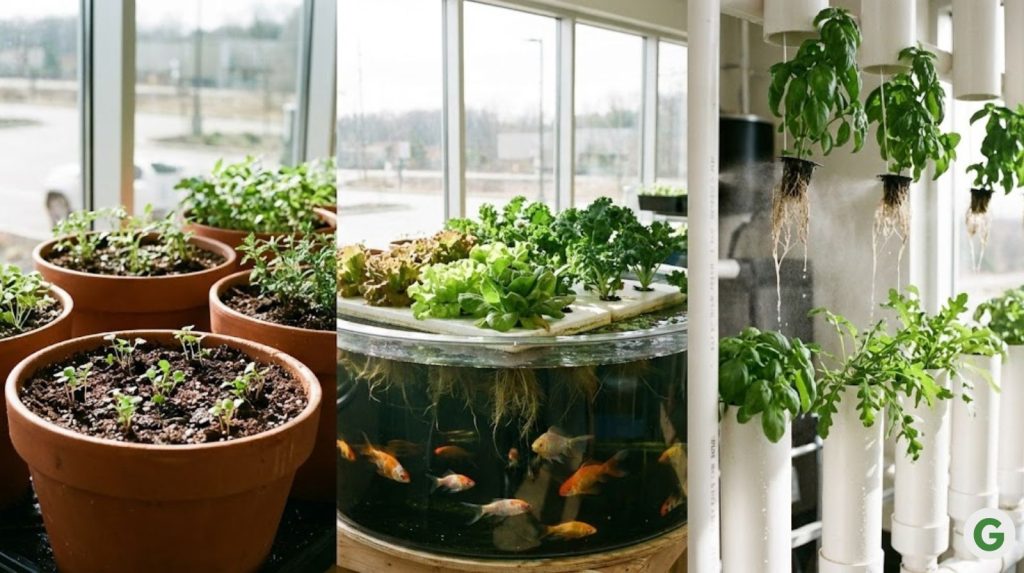
How effectively you’ll optimize your indoor cultivation infrastructure depends critically on evaluating system-specific operational parameters, including maintenance complexity, initial capital expenditure, crop diversification requirements, and long-term resource consumption patterns.
Your system choice should align with growing preferences, considering that aquaponics demands higher initial investment yet offers autonomous nutrient cycling, whereas hydroponics provides precise control over synthetic nutrient delivery with lower setup costs.
Critical decision factors include:
- Financial autonomy through reduced dependency on external nutrient suppliers via fish-based systems
- Freedom to cultivate diverse crop varieties requiring specialized nutritional profiles
- Liberation from complex dual-organism management through streamlined hydroponic operations
- Independence achieved through water-efficient closed-loop configurations
Evaluate operational complexity, where aquaponics necessitates concurrent fish-plant monitoring, while hydroponics requires straightforward nutrient solution adjustments, enabling self-sufficient food production systems.
No products found.
Frequently Asked Questions
Can I Combine Soil and Hydroponic Methods in One Indoor System?
You can integrate soil and hydroponic methods within a unified indoor system, though this requires careful consideration of nutrient management protocols, as soil-based plants utilize organic decomposition while hydroponic systems depend on dissolved mineral solutions. Maintaining ideal soil health in one section while managing pH-balanced nutrient solutions in another demands separate irrigation infrastructure, distinct monitoring parameters, and compartmentalized growing zones to prevent cross-contamination, thereby liberating you from conventional single-method constraints through strategic system architecture.
Which System Is Best for Growing Organic Certified Produce Indoors?
You’ll find soil-based systems best suited for organic certified produce indoors, as the organic certification process typically requires soil cultivation, though specific hydroponic exceptions exist under certain regulatory frameworks. Traditional soil methods align with established organic standards, whereas hydroponic nutrient management techniques often face scrutiny regarding synthetic inputs. You must verify certification requirements with your local certifying body, as regulations vary by jurisdiction, and some organic programs now accept soilless systems that demonstrate compliant nutrient sourcing and sustainable practices.
How Does Indoor Lighting Affect Each Growing System Differently?
Lighting spectrum effects manifest differently across systems: you’ll observe soil buffers nutrient uptake variations through microbial mediation, whereas aquaponics requires precise wavelength calibration to synchronize fish metabolism with plant photosynthetic demands, and hydroponics demonstrates peak growth rate variations since roots directly absorb nutrients without intermediary processes. You must configure spectrum ratios independently, as each system’s biological architecture responds distinctly to photosynthetic photon flux density, requiring customized implementation protocols for best liberation from conventional agricultural constraints.
What Permits or Regulations Apply to Indoor Food Production Systems?
You’ll navigate zoning laws that determine whether your facility’s classified as agricultural or commercial, which affects permissible locations and building codes. Health regulations, administered by local health departments and food safety agencies, dictate sanitation protocols, water quality standards, and food handling procedures. You’re also subject to waste disposal requirements, particularly for aquaponics systems. Commercial operations require business licenses, and some jurisdictions mandate environmental impact assessments before you can establish large-scale indoor farming operations.
Can These Systems Be Scaled for Commercial Restaurant Supply Operations?
Like David confronting Goliath, you’ll face scalability challenges when expanding indoor food systems for commercial restaurant supply operations. Commercial viability depends on your capacity to implement infrastructure automation through container orchestration platforms, ensuring consistent deployment across distributed growing nodes. You must configure persistent volume claims for nutrient solution management, establish network policies for environmental sensor data flow, and implement role-based access control for operational security, thereby achieving liberation from traditional supply chain dependencies while maintaining food sovereignty.
No products found.
Conclusion
Your journey through these cultivation paradigms mirrors the navigator charting distinct courses toward sustenance, where you’ll discover that soil represents the ancestral path, hydroponics embodies the engineered channel of precision nutrient delivery through recirculating solutions, and aquaponics constitutes the symbiotic network integrating pisciculture effluent with botanical production. You must evaluate resource allocation, infrastructure investment, and operational complexity, recognizing that your selection determines whether you’ll traverse conventional terrain or adopt technologically augmented methodologies for optimized yield generation within controlled environments.