
You’ll shift to sustainable practices by implementing phased replacements of high-impact items, beginning with reef-safe sunscreens containing non-nano zinc oxide or titanium dioxide to avoid oxybenzone concentrations that trigger coral bleaching at 62 parts per trillion.
Optimize household resource consumption through reusable shopping bags, cloth alternatives to paper towels, and strategic energy audits that identify thermal inefficiencies and phantom loads contributing 5-10% of residential consumption.
Establish meatless meal protocols and secondhand procurement routines to reduce the fashion industry’s 10% contribution to global carbon emissions, while documenting baseline metrics enables quantifiable performance tracking throughout your systematic implementation.
Key Takeaways
- Switch to reef-safe sunscreens with zinc oxide or titanium dioxide, avoiding oxybenzone and octinoxate that bleach coral.
- Replace paper towels with reusable microfiber cloths or cotton napkins to eliminate over 100 rolls of annual waste.
- Conduct a home energy audit to identify air leaks, insulation gaps, and inefficient appliances before winter.
- Install low-flow showerheads and check aerator screens quarterly to reduce water consumption and utility costs immediately.
- Use smart power strips to eliminate phantom loads, which account for 5-10% of residential energy use.
Switch to Reusable Shopping Bags This Week
Why does the movement to reusable shopping bags represent one of the most accessible entry points into sustainable consumption patterns, particularly when implemented before the calendar shifts to a new year? Deploying reusable bags functions analogously to implementing containerized workloads, where resource allocation optimizes across multiple transactions rather than instantiating single-use instances.
You’ll configure your shopping infrastructure using sustainable materials such as organic cotton or recycled polyester, which demonstrate enhanced durability metrics comparable to persistent storage volumes. Modern eco friendly designs incorporate reinforced stitching patterns and load-bearing capacity specifications, ensuring operational reliability across diverse retail environments.
Pre-January adoption establishes baseline behavioral protocols, enabling systematic habit formation before resolution-driven commitment periods commence, thereby reducing implementation failure rates through gradual integration into existing procurement workflows. This gradual approach mirrors how energy-saving modes in appliances prevent unnecessary consumption, establishing sustainable practices through consistent behavioral patterns rather than abrupt lifestyle changes.
Start a Countertop Compost Bin

Starting a countertop compost bin requires you to first select an appropriate container that features adequate ventilation, a secure lid to prevent odors, and sufficient capacity for your household’s daily organic waste generation.
You’ll need to understand which materials are acceptable for indoor composting, including fruit and vegetable scraps, coffee grounds, and eggshells, while avoiding meat products, dairy items, and oils that can attract pests or generate unpleasant odors.
Once you’ve established your system, you must maintain proper moisture levels and carbon-to-nitrogen ratios, typically achieved by layering green materials with brown materials such as shredded paper or dried leaves, to guarantee efficient decomposition.
Choosing the Right Container
When establishing a countertop composting system, you must first evaluate the container’s material composition, capacity specifications, and ventilation architecture to guarantee ideal aerobic decomposition while mitigating odor dispersal and leachate accumulation. Container types include stainless steel vessels, ceramic receptacles, and bamboo-fiber assemblies, each offering distinct operational parameters.
Eco friendly materials, such as recycled polymers and sustainably harvested wood compounds, provide enhanced biodegradability characteristics while maintaining structural integrity throughout extended deployment cycles. You’ll need to assess volumetric requirements based on household organic waste generation rates, typically ranging from 0.8 to 1.5 gallons for standard residential applications.
Verify that your selected container incorporates adequate air circulation mechanisms, charcoal filtration systems, and moisture drainage protocols to optimize microbial activity while preventing anaerobic conditions that generate methane byproducts and offensive volatile organic compounds.
What You Can Compost
After configuring your containment apparatus with appropriate structural and ventilation parameters, you must identify acceptable organic substrates that facilitate ideal decomposition kinetics within countertop systems. Compostable materials include fruit remnants, vegetable scraps, coffee grounds, tea bags, eggshells, and plant-based food waste, which contribute nitrogen-rich components essential for microbial activity.
You’ll exclude meat products, dairy items, oils, and processed foods, as these generate anaerobic conditions and attract pests. The composting benefits manifest through reduced landfill contribution, decreased methane emissions, and nutrient-dense soil amendment production. You should maintain a carbon-to-nitrogen ratio between 25:1 and 30:1, monitoring moisture levels consistently.
Small particle sizes accelerate decomposition rates, requiring you to chop larger items before introduction. This systematic approach guarantees prime processing efficiency and minimizes odor development within residential environments.
Replace Paper Towels With Cloth Alternatives
Paper towel consumption represents one of the most significant yet easily addressable sources of household waste, as the average American family uses approximately two rolls per week, which translates to over 100 rolls annually, resulting in substantial deforestation, water usage during manufacturing, and landfill accumulation.
You’ll find that shifting to sustainable alternatives, such as microfiber cloths, cotton napkins, or Swedish dishcloths, provides immediate cloth benefits including reduced environmental impact, decreased annual expenditure, and enhanced cleaning efficiency.
You can implement this shift by designating specific cloths for kitchen surfaces, bathrooms, and dining areas, establishing a rotation system that guarantees consistent availability, and laundering them weekly alongside regular loads. You’ll discover that initial investment costs are offset within three months through eliminated paper towel purchases, while simultaneously contributing to waste reduction objectives.
Conduct a Home Energy Audit
A detailed home energy audit functions as the foundational assessment mechanism for identifying thermal inefficiencies, quantifying energy consumption patterns, and establishing baseline metrics from which you can measure subsequent conservation improvements, and this systematic evaluation process, which parallels the diagnostic protocols employed in infrastructure monitoring systems, enables you to detect air infiltration points, insulation deficiencies, and equipment performance degradation that collectively contribute to elevated utility expenditures and unnecessary carbon emissions.
| Audit Component | Assessment Method |
|---|---|
| Air leakage detection | Thermal imaging analysis |
| Insulation verification | R-value measurement protocols |
| HVAC efficiency testing | Load capacity evaluation |
Your DIY audit should incorporate standardized energy saving tips, including verification of weatherstripping integrity and documentation of consumption baselines through utility data aggregation, thereby establishing quantifiable performance indicators for subsequent optimization initiatives. This assessment methodology mirrors the energy needs assessment protocols used when sizing off-grid solar systems, ensuring that any future renewable energy installations are properly calibrated to match your household’s actual consumption patterns.
Transition to Reef-Safe Personal Care Products

Your personal care products, particularly sunscreens and lotions, contain chemical compounds such as oxybenzone, octinoxate, and octocrylene that, when washed into marine environments, disrupt coral polyp reproduction cycles, induce coral bleaching through oxidative stress mechanisms, and bioaccumulate in reef ecosystems at concentrations exceeding 0.8 parts per million.
You’ll need to identify products containing these harmful ingredients by examining ingredient labels for benzophenone-3, ethylhexyl methoxycinnamate, and butylparaben derivatives, as these compounds persist in aquatic environments and demonstrate toxicity thresholds as low as 62 parts per billion in laboratory coral studies.
Shifting to mineral-based alternatives that utilize non-nano zinc oxide or titanium dioxide formulations requires systematic replacement of your existing inventory, beginning with high-use items such as daily facial moisturizers and broad-spectrum sunscreens, while ensuring certification through programs such as Protect Land + Sea or adherence to Hawaii’s Act 104 compliance standards.
Why Reef-Safe Matters
Coral reef ecosystems, which support approximately 25% of all marine species despite occupying less than 1% of the ocean floor, face severe degradation from oxybenzone and octinoxate found in conventional sunscreens and personal care products. These chemical compounds compromise coral’s reproductive systems, exacerbate bleaching events, and disrupt symbiotic algae relationships essential for survival.
The reef safe benefits of switching to mineral-based alternatives extend beyond immediate coral conservation, as healthier reefs maintain biodiversity, protect coastlines from erosion, and sustain fishing economies. Consider these critical impacts:
- Oxybenzone concentrations as low as 62 parts per trillion trigger coral bleaching
- Hawaii and several Caribbean nations have banned harmful sunscreen chemicals
- Zinc oxide and titanium dioxide provide effective UV protection without ecosystem damage
You’re directly contributing to marine preservation by selecting certified reef-safe products.
Harmful Ingredients to Avoid
Beyond oxybenzone and octinoxate, seventeen additional chemical compounds commonly found in personal care formulations demonstrate documented toxicity to marine ecosystems, requiring careful label scrutiny before purchase. You’ll need to identify parabens, which disrupt endocrine function in aquatic organisms, alongside triclosan, known for bioaccumulation in coral tissue.
Nanoparticles, particularly titanium dioxide and zinc oxide below 100 nanometers, penetrate cellular membranes in marine life, causing oxidative stress. Camphor derivatives, 4-methylbenzylidene camphor specifically, exhibit persistent environmental characteristics that compromise reef resilience.
When examining ingredient labels, you must cross-reference each component against updated marine toxicity databases, ensuring formulations exclude these toxic chemicals. This systematic verification process, though time-intensive, prevents inadvertent contribution to reef degradation through routine personal care product usage.
Making the Switch Easy
Although shifting to reef-safe alternatives might initially appear intimidating, you can implement a phased replacement strategy that eliminates financial burden while guaranteeing continuous product availability throughout the conversion process. This systematic approach allows you to deplete existing inventory before purchasing sustainable swaps, thereby preventing wasteful disposal of usable products.
- Begin with high-impact items such as sunscreen and body wash, which directly contact water systems during recreational activities
- Research certifications including “reef-safe” and “biodegradable” labels when selecting eco friendly products to guarantee compliance with environmental standards
- Maintain a replacement schedule documenting each product’s depletion date, facilitating organized procurement of alternatives without simultaneous bulk purchasing
This methodical shift, rather than immediate wholesale replacement, guarantees financial sustainability while achieving environmental objectives.
Begin Meal Planning to Reduce Food Waste
When you implement meal planning as a systematic approach to household food management, you’ll establish a framework that reduces waste through precise inventory control, predetermined consumption schedules, and optimized purchasing decisions. Seasonal ingredient focus guarantees procurement of items at peak availability, which minimizes spoilage risks and optimizes nutritional value retention. Meal portioning strategies require calibration of serving sizes to household consumption patterns, eliminating excess preparation.
| Planning Component | Waste Reduction Impact |
|---|---|
| Weekly inventory audit | Prevents duplicate purchases |
| Batch cooking sessions | Maximizes ingredient utilization |
| Portion measurement | Eliminates overproduction |
| Storage protocol adherence | Extends perishable lifespan |
You’ll need to document consumption metrics, adjust procurement volumes based on historical data, and maintain strict adherence to preparation schedules, thereby creating a closed-loop system that minimizes environmental impact through reduced organic waste generation.
Set Up a Household Recycling Station
Establishing an efficient household recycling station requires that you first select appropriately sized bins that correspond to your municipality’s recycling categories, which typically include paper, plastics, metals, and glass, though you’ll need to verify specific requirements with your local waste management authority.
Once you’ve acquired the necessary containers, you must implement a clear labeling system that specifies accepted materials for each bin, using either color-coded labels or detailed written descriptions that eliminate ambiguity during the sorting process.
This systematic approach guarantees that all household members can correctly categorize recyclable materials, thereby minimizing contamination rates that would otherwise result in rejected loads at processing facilities.
Choose the Right Bins
The strategic placement of dedicated receptacles throughout your living space functions as the foundational infrastructure for an effective household recycling system, requiring careful consideration of container specifications, material compatibility, and spatial optimization. You’ll need to implement bin placement strategies that maximize accessibility while minimizing spatial interference.
Consider multi-compartment containers with clear labeling systems, ensuring each receptacle corresponds to specific recyclable categories. Recycling education becomes paramount when selecting appropriate containers, as different municipalities maintain distinct requirements for collection protocols.
- Select bins with lids to prevent contamination and odor transmission
- Choose color-coded or labeled containers to facilitate proper waste segregation
- Verify container dimensions align with designated storage areas and collection vehicle requirements
Position receptacles in high-traffic zones where waste generation occurs most frequently, establishing efficient workflow patterns for household members.
Label for Easy Sorting
After establishing proper bin placement within your household infrastructure, you’ll need to implement a thorough labeling taxonomy that eliminates ambiguity during the waste segregation process, consequently reducing contamination rates and improving recyclability quotients across all material streams.
Deploy clear, standardized nomenclature on each container, specifying accepted materials using ISO-compliant symbology, which functions analogously to Kubernetes namespace labels that segregate resource clusters. These eco friendly tips require persistent enforcement protocols, similar to role-based access control mechanisms that restrict unauthorized material disposal.
Implement visual hierarchies through color-coded schemas, ensuring household members can authenticate proper waste routing without cognitive overhead. Such sustainable habits demand regular audits, verifying compliance with municipal recycling guidelines, thereby optimizing your station’s operational efficiency while maintaining environmental integrity across your domestic waste management ecosystem.
Install a Low-Flow Showerhead
Reducing water consumption in residential settings begins with retrofitting existing shower fixtures, and low-flow showerheads, which are designed to limit water output to 2.0 gallons per minute (GPM) or less compared to conventional models that discharge 2.5 GPM or higher, represent one of the most cost-effective interventions available.
Showerhead benefits include decreased utility expenditures, reduced environmental impact, and immediate conservation results. Installation tips require removing the existing fixture using an adjustable wrench, applying thread seal tape to prevent leaks, and securing the new component according to manufacturer specifications.
- Verify water pressure compatibility before purchase to guarantee ideal performance
- Check aerator screens quarterly to prevent mineral buildup that reduces efficiency
- Document baseline water usage for quantifiable measurement of consumption reduction
You’ll achieve measurable conservation without compromising functionality.
Start Buying in Bulk With Reusable Containers
While water conservation addresses consumption at the point of use, purchasing behaviors determine the upstream environmental costs associated with packaging production, transportation logistics, and post-consumer waste streams. Bulk buying benefits include reduced per-unit packaging, which minimizes plastic waste generation and decreases carbon emissions from manufacturing processes.
You’ll need to identify local retailers that provide bulk sections, where reusable packaging options, such as glass jars, cloth bags, and stainless steel containers, can be deployed for product acquisition. Prior to implementation, you should sanitize containers according to store protocols, weigh them for tare deduction, and verify compatibility with dispensing mechanisms. This systematic approach to procurement establishes a framework that reduces dependency on single-use packaging while optimizing resource allocation through consolidated purchasing patterns.
Switch to LED Bulbs Throughout Your Home
Incandescent lighting technology consumes approximately 75% more electrical energy than LED alternatives while producing equivalent luminous output, a disparity that translates directly into elevated operational costs and increased carbon emissions from grid-supplied electricity generation.
You’ll realize considerable energy efficiency benefits through systematic LED deployment across your residential infrastructure, as these semiconductor-based illumination systems operate at notably lower wattage requirements while maintaining comparable lumen output metrics. Consider these implementation factors:
- Calculate total fixture inventory and prioritize high-usage zones for immediate conversion
- Evaluate color temperature specifications (2700K-3000K for residential applications) to guarantee appropriate lighting design impact
- Verify dimmer switch compatibility with LED components to prevent circuit interference
Your shift strategy should encompass complete replacement rather than gradual adoption, maximizing return on investment while minimizing environmental footprint through reduced power consumption patterns. Similar to upgrading household appliances, many LED installations may qualify for tax credits for energy-efficient products, providing additional financial incentives beyond the monthly utility savings.
Create a Capsule Wardrobe From Existing Clothes
Energy efficiency extends beyond electrical infrastructure modifications to encompass consumption pattern optimization in textile acquisition and utilization, where the fashion industry generates approximately 10% of global carbon emissions through manufacturing processes, transportation networks, and premature disposal cycles.
You’ll reduce environmental impact by creating a capsule collection from garments you’ve already purchased, eliminating redundant acquisition cycles while maximizing existing resource utilization. Audit your current inventory, categorizing items by functionality, seasonal requirements, and frequency of use. Retain versatile pieces that integrate across multiple outfit configurations, removing items that haven’t been worn within twelve-month periods.
This systematic approach to sustainable fashion reduces textile waste streams, minimizes carbon-intensive production demands, and optimizes your wardrobe’s operational efficiency. Document your capsule collection parameters, ensuring each piece serves defined purposes within your rotation schedule, thereby preventing unnecessary future acquisitions.
Begin Using a Reusable Water Bottle Everywhere
Single-use plastic bottles represent one of the most pervasive sources of environmental degradation in contemporary waste management systems, with approximately 1 million bottles purchased globally each minute, of which less than 23% enter recycling infrastructure while the remainder accumulates in landfills, oceanic gyres, and terrestrial ecosystems where decomposition requires 450 years.
Transitioning to reusable containers yields measurable water bottle benefits:
- Reduction of 156 plastic bottles annually per individual
- Cost savings exceeding $1,400 yearly compared to purchased alternatives
- Elimination of microplastic ingestion from disposable containers
You’ll establish consistent hydration habits by maintaining accessibility across environments, including workspaces, vehicles, and recreational activities. Select vessels with insulation properties, leak-resistant mechanisms, and capacity specifications aligned with your consumption patterns, ensuring portability doesn’t compromise functionality or durability standards.
Unplug Energy Vampires and Use Power Strips
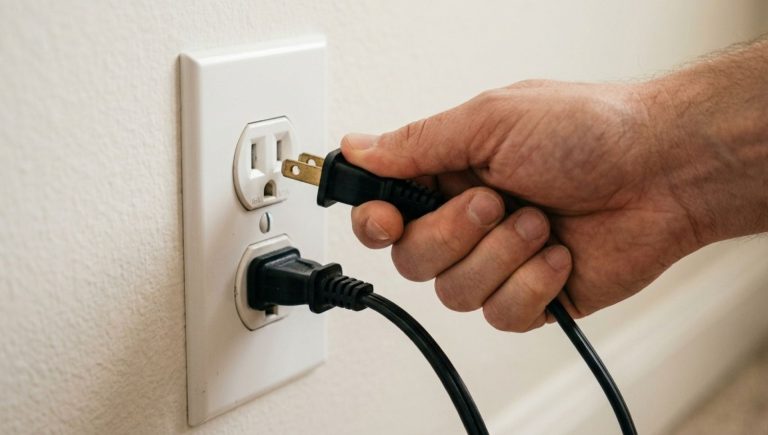
Your electronic devices continue to draw power even when switched off, a phenomenon known as phantom load or standby power consumption, which occurs because components such as LED displays, remote sensors, and memory functions remain active to enable instant-on capabilities.
You can mitigate this energy waste by implementing smart power strips, which automatically cut power to peripheral devices when the primary device enters standby mode, or by using switched power strips that allow you to manually disconnect multiple devices simultaneously through a single control point.
To maximize efficiency, you should prioritize unplugging devices in rooms where standby consumption aggregates considerably, such as home entertainment centers where televisions, gaming consoles, cable boxes, and audio receivers collectively maintain idle power draws, as well as home office environments where computer peripherals, monitors, printers, and charging stations compound phantom loads throughout non-working hours.
For situations where power outages or outdoor activities limit access to traditional electricity, consider investing in a solar-powered flashlight with phone charging capabilities to maintain essential device functionality while reducing dependence on grid electricity.
Identify Hidden Energy Drains
While many households focus on obvious electricity consumption from appliances in active use, phantom loads—commonly referred to as energy vampires—account for approximately 5-10% of residential power consumption, representing a significant yet frequently overlooked source of waste that persists when devices remain plugged into outlets despite being in standby or off modes.
You’ll need to conduct systematic audits of your electrical infrastructure to identify these drains, particularly examining entertainment systems, kitchen appliances, and charging stations where standby power consumption accumulates continuously.
- Measure baseline consumption using wattmeters to establish energy profiles for individual devices
- Prioritize disconnection of obsolete equipment that lacks energy efficient appliances certifications
- Configure automated power management protocols that complement indoor temperature control systems, reducing cumulative loads
Strategic implementation of these monitoring procedures enables quantifiable reductions in parasitic power draw.
Smart Power Strip Benefits
Smart power strips provide automated solutions for eliminating phantom loads by incorporating threshold-detection circuitry that monitors primary device status and controls peripheral outlet power accordingly, effectively severing electricity flow to dependent equipment when master devices enter standby modes.
You’ll find smart strip advantages include programmable scheduling protocols, enabling precise temporal control over connected appliances through configuration interfaces that support interval-based power management. Energy saving features extend beyond basic switching mechanisms, incorporating current-sensing capabilities that measure real-time consumption metrics, allowing you to audit electrical draw patterns across multiple outlets simultaneously.
Advanced models integrate network connectivity protocols, facilitating remote administration through API endpoints while supporting automated shutdown sequences based on predetermined usage thresholds, thereby optimizing your infrastructure’s power consumption profile without requiring manual intervention for peripheral device management.
Strategic Unplugging Room Guide
Although phantom power drainage affects nearly every residential space, certain rooms demonstrate disproportionately high standby consumption patterns that warrant prioritized intervention strategies based on device density and operational characteristics.
You’ll achieve maximum unplugging benefits by targeting entertainment centers, home offices, and kitchen appliances, where multiple devices maintain continuous power draws despite inactive states. Implementing tech detox protocols through systematic device disconnection reduces baseline consumption metrics while improving electrical infrastructure longevity.
Priority intervention areas include:
- Entertainment systems containing gaming consoles, streaming devices, audio equipment, and television peripherals
- Home office configurations with printers, monitors, routers, and peripheral computing devices
- Kitchen environments housing microwave displays, coffee makers, and small appliance transformers
Strategic unplugging schedules, coupled with smart power strip deployment, enable granular control over standby power consumption across these high-density device zones.
Start Shopping Secondhand First
Before purchasing any item new, particularly clothing, electronics, and furniture, you must establish a systematic approach to exploring secondhand alternatives through online marketplaces, consignment stores, and community exchange platforms.
Thrift store benefits extend beyond cost reduction, encompassing decreased manufacturing demand, reduced landfill contributions, and minimized carbon emissions associated with production cycles. Sustainable fashion principles necessitate prioritizing pre-owned garments, which circumvents resource-intensive textile manufacturing processes, including water consumption, chemical treatments, and transportation logistics.
Implement a verification protocol when acquiring secondhand electronics, ensuring functional testing, compatibility assessment, and security auditing to prevent compromised devices from entering your network infrastructure. Configure a systematic search routine across multiple platforms, establishing alerts for specific items, comparing pricing structures, and evaluating condition ratings before finalizing transactions, thereby maximizing resource efficiency while maintaining operational requirements.
Implement Meatless Mondays in Your Meal Routine
Since animal agriculture contributes approximately 14.5% of global greenhouse gas emissions while consuming disproportionate quantities of freshwater and arable land resources, you must incorporate systematic plant-based meal intervals into your weekly dietary framework, establishing Monday as your designated meat-free consumption period.
You’ll implement this protocol by constructing a weekly meal plan, which functions analogously to a Kubernetes deployment configuration, defining resource allocation parameters and execution schedules. Your meatless recipes serve as containerized applications, each comprising discrete ingredient dependencies and preparation procedures.
- Document baseline recipes in version-controlled repositories, enabling iterative refinement and rollback capabilities
- Establish authentication protocols for ingredient sourcing, verifying organic certifications and supply chain integrity
- Monitor nutritional metrics systematically, tracking protein intake, micronutrient levels, and caloric distribution across deployment cycles
This structured approach guarantees reproducible outcomes while minimizing environmental resource consumption.
Frequently Asked Questions
How Do I Stay Motivated When Eco-Friendly Habits Feel Overwhelming or Inconvenient?
You’ll maintain eco motivation tips by implementing sustainable habit simplicity through incremental changes rather than extensive overhauls. Start with single, manageable actions—such as eliminating disposable containers or configuring reusable alternatives—then expand systematically.
Document your progress using trackable metrics, which provides objective evidence of impact and reinforces commitment. When inconvenience arises, you should evaluate whether the habit requires optimization or replacement with equally effective, less burdensome alternatives that align with your constraints.
What’s the Environmental Impact Difference Between Small Individual Changes and Systemic Solutions?
While you shouldn’t put all your eggs in one basket, individual actions alone lack the scaling capacity that systemic change provides. Your personal carbon reduction measures, though valuable for behavioral modeling, typically achieve 20-30% household emissions cuts, whereas systemic change—regulatory frameworks, infrastructure modifications, corporate accountability mechanisms—addresses 70-80% of global emissions through policy enforcement, industrial transformation, and supply chain restructuring, thereby demonstrating quantifiably superior environmental impact through thorough, population-level interventions that individual actions can’t replicate.
How Can I Encourage Family Members to Adopt Green Habits Without Conflict?
You’ll achieve ideal family involvement by deploying positive reinforcement mechanisms when members demonstrate sustainable behaviors, rather than implementing punitive frameworks that generate resistance. Establish clear, measurable objectives for household environmental practices, then acknowledge compliance through recognition systems.
Frame discussions around shared benefits and collective outcomes, avoiding confrontational deployment of mandates. Document successful behavioral modifications, iteratively refining your approach based on engagement metrics while maintaining consistent, non-judgmental communication protocols that facilitate voluntary adoption rather than forced compliance.
Are Eco-Friendly Products Always More Expensive Than Conventional Alternatives Long-Term?
No, you’ll often achieve long-term savings with eco-friendly products despite higher initial costs. Reusable items eliminate repeated purchases, while energy-efficient appliances reduce utility expenses over their operational lifecycle.
LED bulbs, though pricier upfront, consume 75% less electricity and last considerably longer than incandescent alternatives. Water-saving fixtures decrease monthly bills, and durable products require fewer replacements. Eco-friendly affordability materializes through reduced consumption patterns and lower operational costs, which offset initial investments when you calculate total cost of ownership.
How Do I Handle Social Situations Where My Green Choices Seem Awkward?
Maneuvering nuanced green awkwardness requires you’ll approach social dilemmas by preemptively establishing your environmental priorities through clear, unapologetic communication. When you’re confronted with situations where sustainable choices create tension, you’ll articulate your reasoning with factual precision, avoiding defensive posturing.
You’ll offer alternatives that minimize inconvenience to others while maintaining your commitments, thereby demonstrating that ecological responsibility doesn’t necessitate social alienation, provided you’ve calibrated expectations appropriately beforehand.
Conclusion
You’ve now cataloged actionable protocols for environmental optimization, each requiring minimal resource allocation while yielding measurable sustainability metrics. Before the calendar shifts to January 1st, you’ll implement these procedures systematically, monitoring consumption patterns through quantifiable data points such as reduced single-use plastics, decreased kilowatt-hour usage, and minimized landfill contributions. These modifications, though individually minor in scope, aggregate into significant ecological impact when executed consistently, establishing a baseline for sustainable operations that’ll extend throughout the forthcoming year and beyond.