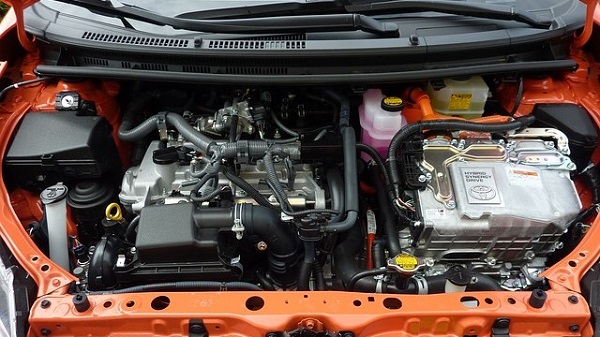
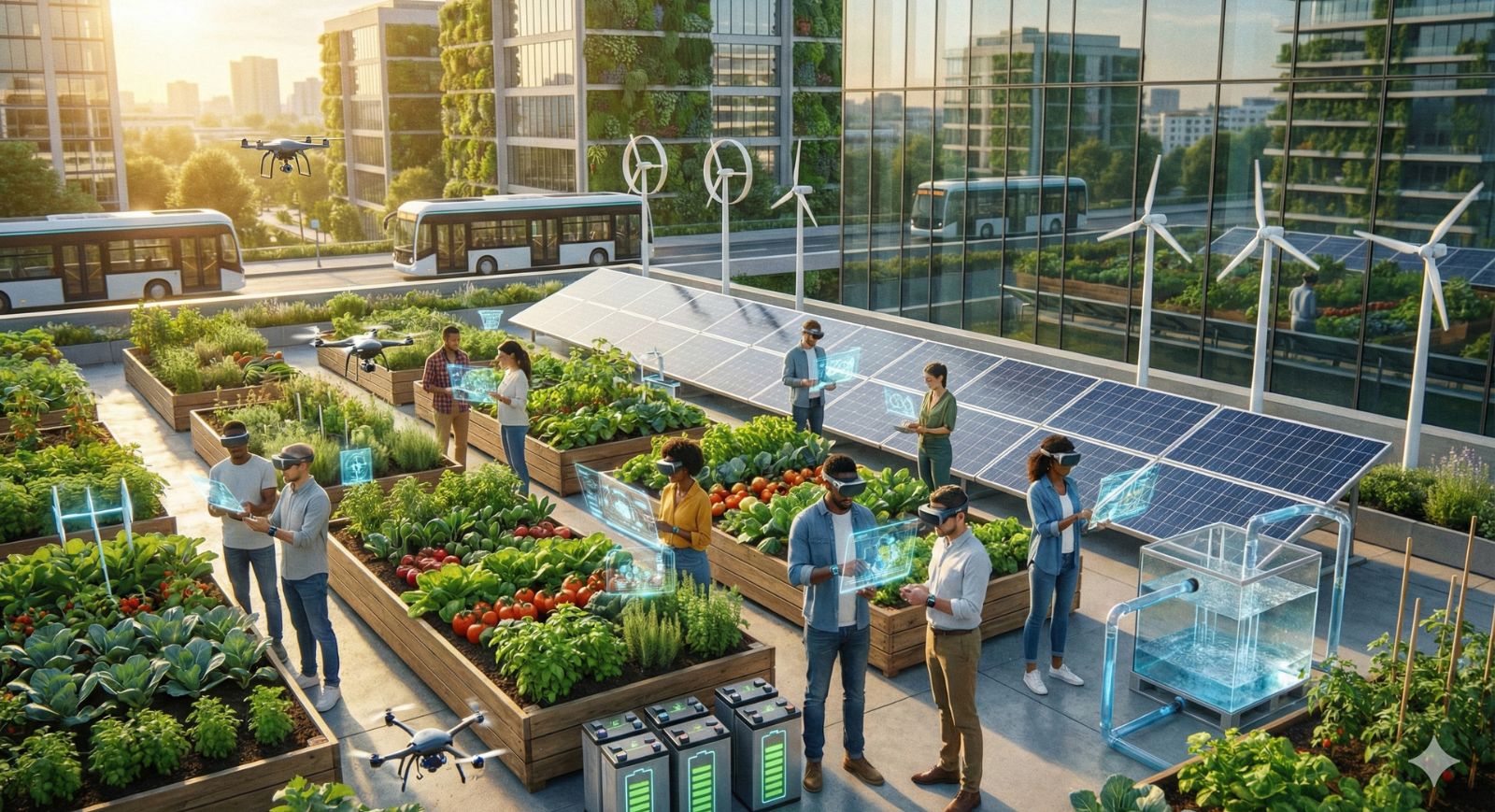
As you evaluate the top sustainable tech innovations of 2025, you’ll see AI-driven smart grids, Kubernetes-orchestrated renewables, carbon-capturing materials, and low-carbon data centers converge into a tightly coupled, security-conscious ecosystem, where policy-as-code, zero-trust networking, and confidential computing become mandatory controls, yet the real shift occurs when you integrate biodegradable electronics, sensor-driven agriculture, and vehicle-to-grid systems into a unified, auditable platform, forcing you to reassess how you design infrastructure, and what you secure next.
AI-Driven Smart Grids for Ultra-Efficient Energy Use

Although AI-driven smart grids primarily target real-time optimization of energy production and consumption, in modern deployments they increasingly rely on Kubernetes-based microservices and zero‑trust security architectures to guarantee reliable, auditable control over critical infrastructure.
Deploy containerized services for smart energy distribution, expose them through carefully scoped ingress controllers, and enforce mutual TLS between pods, thereby preventing lateral movement. Using predictive load management, you configure AI workloads to scale via Horizontal Pod Autoscalers, while cluster metrics feed into control loops that execute demand response technologies in milliseconds.
To improve grid resilience optimization, you implement multi-region clusters, maintain etcd consistency, and define network policies. You also design renewable integration strategies through APIs that standardize telemetry, authentication, and authorization across heterogeneous assets inside critical operational environments. Additionally, implementing secure communication channels is essential to ensure data integrity and system trustworthiness within these complex infrastructures.
Next-Generation Solar and Wind Power Breakthroughs
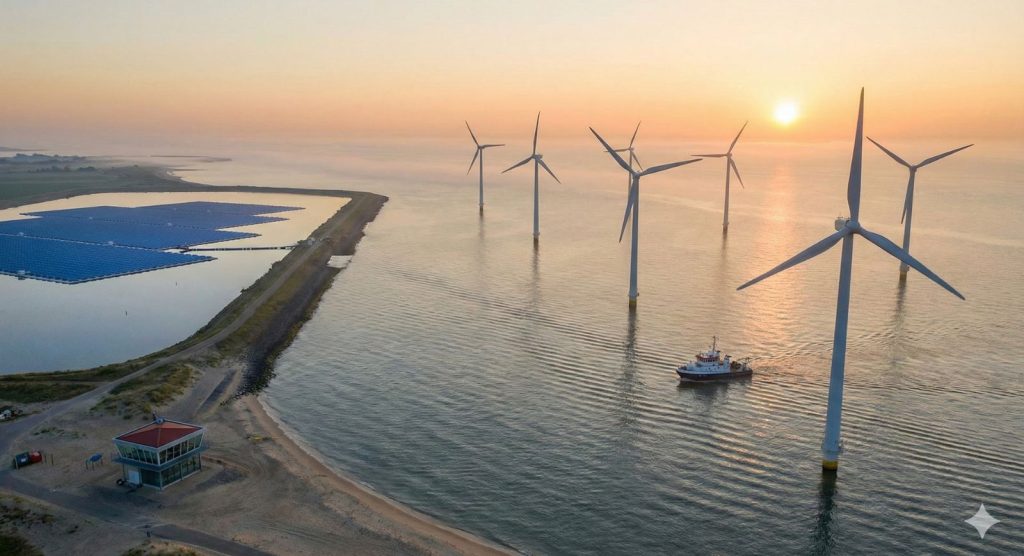
While photovoltaic and wind turbine hardware efficiency continues to advance incrementally, the most significant breakthroughs in next-generation solar and wind power now emerge from how you integrate, orchestrate, and secure these assets through cloud-native control planes and Kubernetes-based operational stacks.
Deploy containerized forecasting, power-curve optimization, and anomaly-detection workloads that continuously refine solar energy advancements and wind turbine efficiency, while sidecars enforce mTLS, policy-as-code, and runtime attestation.
Standardize renewable energy integration by exposing photovoltaics technology trends and turbine telemetry as Kubernetes Custom Resources, enabling declarative scaling, topology-aware scheduling, and automatic fault isolation.
By extending clusters to edge nodes near inverters and nacelles, you minimize latency, harden zero-trust perimeters, and systematically exploit offshore wind potential through encrypted, bandwidth-efficient data replication, ensuring resilience and compliance. Additionally, leveraging reliable energy storage solutions enhances grid stability and optimizes energy utilization across diverse renewable sources.
Carbon-Capturing Materials Transforming Construction

As carbon-capturing concretes, mineralizing aggregates, and CO₂-infused binders move from pilot projects into production-scale construction, you increasingly treat these materials as cyber-physical assets whose lifecycle is orchestrated through Kubernetes-native platforms that track embodied carbon, structural performance, and compliance telemetry in real time.
You integrate sensor gateways as sidecar containers, enforce mutual TLS between edge collectors and cluster ingress, and persist carbon capture metrics in encrypted volumes, ensuring tamper-evident records for regulatory audits. By defining each class of construction materials as custom resources, you declaratively manage curing conditions, onsite storage, and transport routes to maximize emissions reduction while maintaining structural codes.
Network policies, admission controllers, and supply-chain signing pipelines collectively harden this sustainable building stack, aligning eco friendly design with zero-trust security baselines and governance. Additionally, leveraging bicycle sharing programs and micro-mobility solutions in urban planning can further support sustainability goals by reducing reliance on traditional transportation methods.
Biodegradable Electronics and Circular Hardware Design

Because next-generation biodegradable electronics and circular hardware platforms introduce transient lifecycles, heterogeneous materials, and strict recovery requirements, you design Kubernetes-centric control planes that treat each device, module, and subassembly as a policy-governed, cryptographically attested asset, whose manufacturing, deployment, use, and reclamation phases are modeled as discrete states in custom resource definitions and reconciled by dedicated operators.
Define CRDs for biodegradable components, encoding material taxonomies, eco friendly materials classifications, and warranty constraints, then attach admission controllers that enforce sustainable manufacturing metadata and verified supplier attestations.
Implement per-namespace lifecycle assessment controllers that aggregate telemetry on energy use, failure rates, and recovery timestamps, persisting signed reports to an immutable ledger. Sidecar agents verify hardware identity and secure boot, then orchestrate cryptographically logged e waste recycling.
Waterless and Low-Impact Textile Manufacturing Technologies
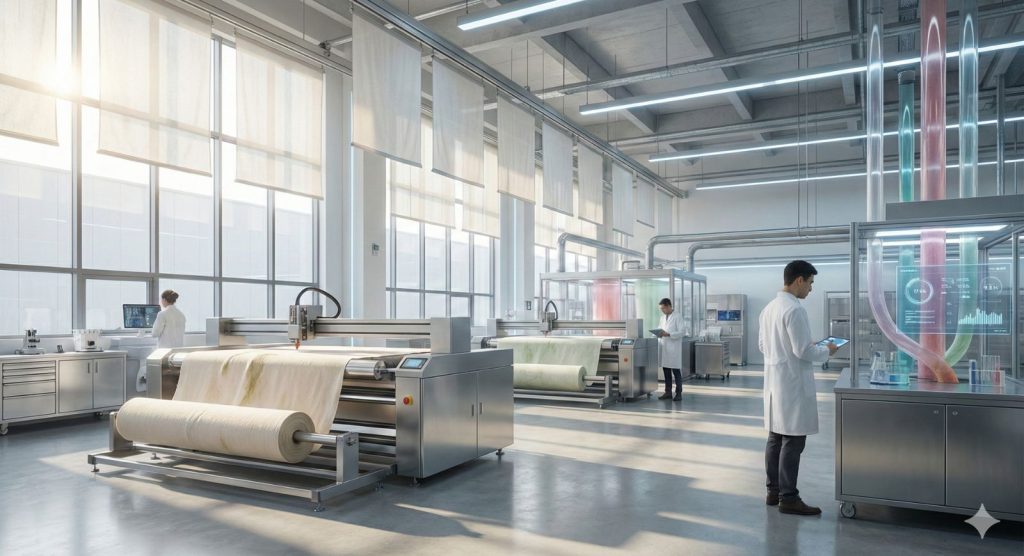
Although traditional dyeing and finishing lines depend on water-intensive batch processes with opaque PLC configurations, emerging waterless and low-impact textile manufacturing systems expose sensor-rich, digitally controlled machinery that you can onboard into a Kubernetes-centric automation and security stack, treating each loom, dye unit, and finishing module as an authenticated, policy-enforced edge node.
Define namespaces per production stage, apply network policies to isolate sustainable dyeing techniques using supercritical CO₂ or foam-based application, and enforce admission controllers that validate recipes against approved water efficient processes.
Ingest telemetry on eco friendly fibers, bath chemistry, and energy usage into a centralized observability layer, where you correlate it with digital textile printing queues and recycling waste textiles workflows, then trigger automated scaling, anomaly alerts, and compliance reports.
Green Hydrogen and Advanced Energy Storage Solutions
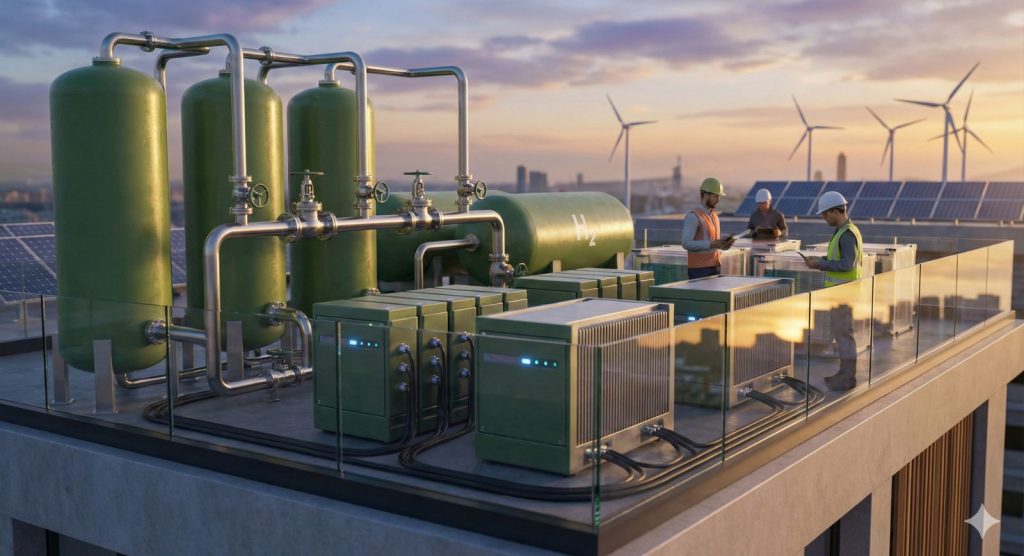
While green hydrogen production and advanced energy storage assets introduce physical process complexity, you can still integrate them into a Kubernetes-centric automation and security architecture by modeling each electrolyzer stack, hydrogen compressor, high-pressure storage skid, battery energy storage inverter, and power conditioning unit as individually authenticated edge workloads that participate in a zero-trust, policy-driven control plane.
Define custom resource definitions to represent electrolysis technology improvements, parameterizing stack health, gas purity, and load-following setpoints, then expose them via operators that reconcile real-time telemetry into Kubernetes Secrets and ConfigMaps.
Enforce pod-level AppArmor and SELinux profiles, mutual TLS, and SPIFFE-based identities, while network policies isolate renewable fuel cells from corporate IT traffic and external hydrogen transport infrastructure interfaces. You codify energy storage advancements as code. Additionally, implementing renewable energy integration ensures that these innovations are effectively synchronized with the broader grid, maximizing efficiency and sustainability.
Regenerative Agriculture Powered by Sensor Tech and Drones
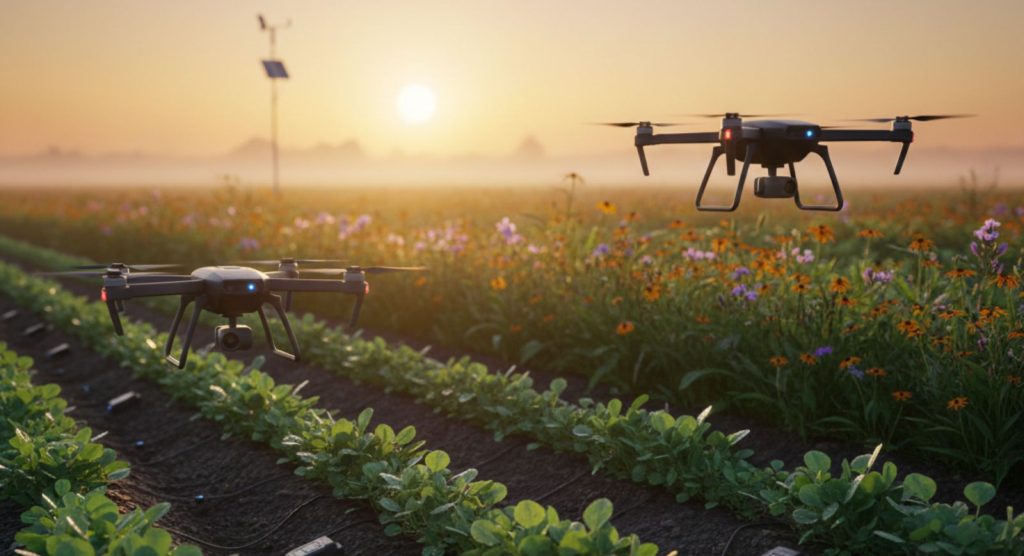
In regenerative agriculture deployments that rely on dense sensor networks and autonomous drones, you instrument fields with soil probes, multispectral cameras, and microclimate stations as authenticated edge workloads that stream telemetry into a Kubernetes-orchestrated data plane, where each device and UAV control stack exposes a well-defined API, is assigned a SPIFFE identity, and is governed by zero-trust policies.
Then configure GitOps workflows and policy-as-code to standardize crop monitoring, soil health analytics, and automated farming tasks across clusters, integrating drone delivery routes for inputs and samples. Implementing soil fertility improvement practices ensures that data collected supports sustainable management decisions, further enhancing field resilience.
- Deploy namespaces that isolate sensor networks from UAV control services.
- Apply NetworkPolicies that restrict lateral movement between workloads.
- Use CSI-backed secrets management for drone firmware credentials.
- Implement Kyverno or OPA to enforce telemetry schemas.
Low-Carbon Data Centers and Climate-Conscious Cloud Computing
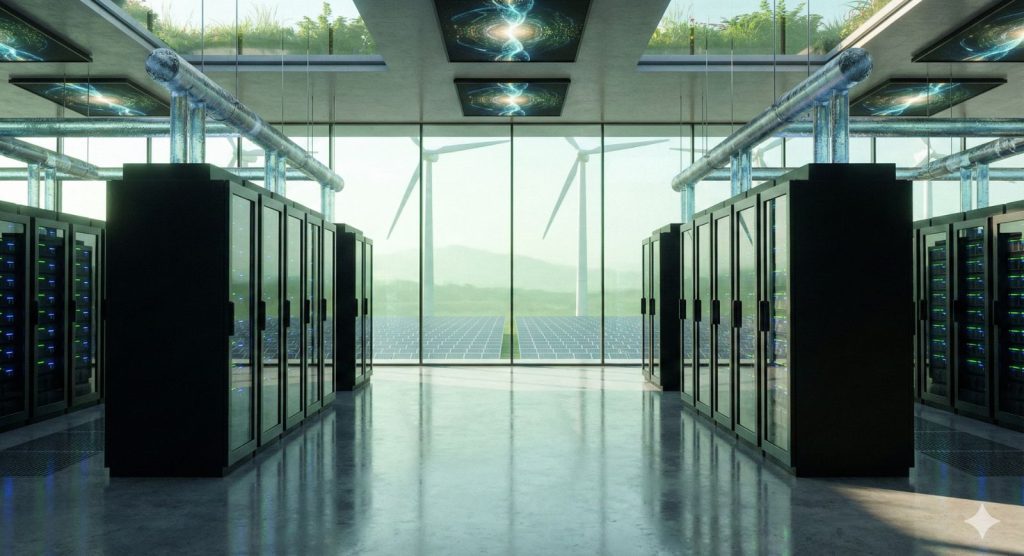
Low‑carbon data center design and climate‑conscious cloud computing require you to treat energy efficiency, carbon intensity, and workload placement as first‑class control parameters in your Kubernetes architecture, integrating them into cluster scheduling, policy enforcement, and supply‑chain governance.
First instrument nodes and pods with real‑time power, temperature, and carbon‑intensity telemetry, then expose these metrics through Kubernetes Metrics Server or Prometheus, enforcing admission controls that reject workloads violating predefined energy efficiency or carbon budgets.
Next, configure topology‑aware schedulers and custom controllers to prioritize clusters powered by renewable energy, decommission nodes, and align scaling policies with sustainable infrastructure objectives, while hardening the control plane with RBAC, network policies, and secret management to prevent configuration drift or malicious overrides, supporting digital transformation and eco friendly software. Incorporating advanced technologies such as AMI, DER, and BESS can further optimize energy management in these systems.
Electrified Mobility and Vehicle-to-Grid Integration
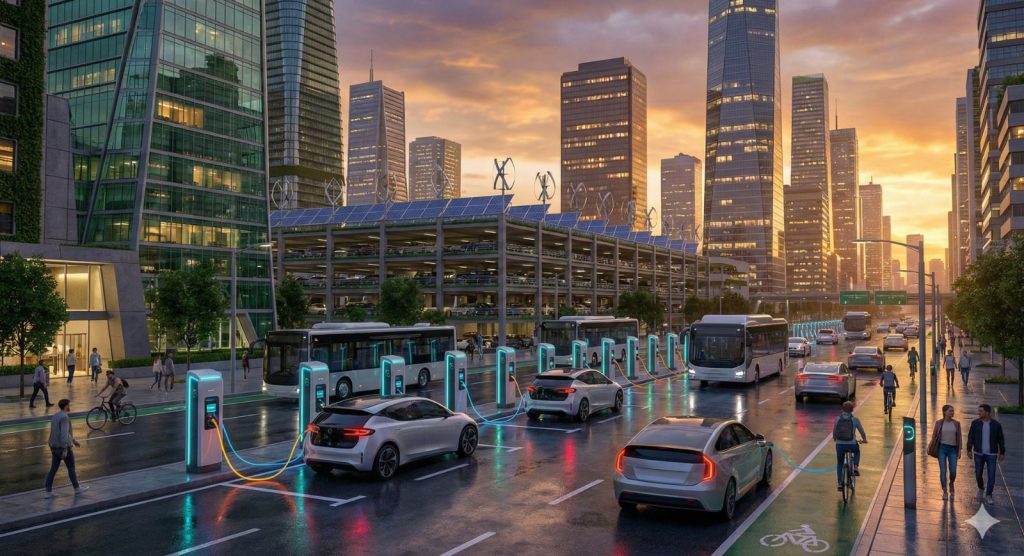
As you extend sustainable design principles beyond the data center, electrified mobility and vehicle‑to‑grid (V2G) integration require you to treat electric vehicles, charging infrastructure, and grid‑interactive workloads as programmable, policy‑driven resources orchestrated alongside your cloud‑native stack, with Kubernetes acting as the control plane for both energy and data flows.
Implement electric vehicle technology as edge nodes, enforcing mutual TLS, RBAC, and admission controls for charging or discharging requests, while controllers coordinate grid energy management against telemetry and feeds.
- Define CustomResourceDefinitions to model renewable charging infrastructure and capacity constraints.
- Configure operators that schedule charging jobs, respecting security policies and segmentation.
- Integrate autonomous electric fleets through APIs, auditing actions.
- Use policy engines to enforce sustainable transportation solutions and prevent insecure configurations.
Urban Tech for Climate-Resilient, Zero-Emission Cities
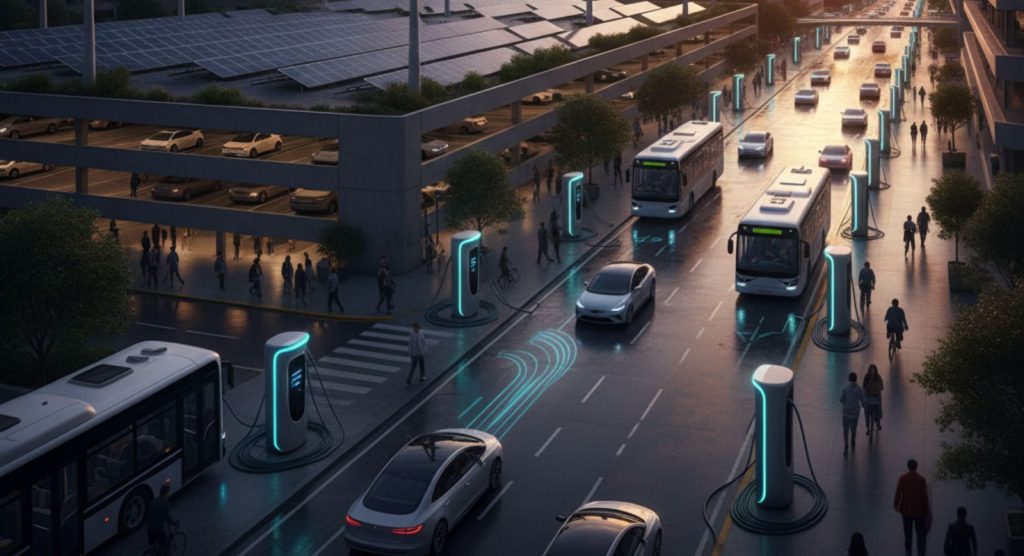
Although urban sustainability targets often focus on policy and physical infrastructure, climate‑resilient, zero‑emission cities increasingly depend on an underlying digital control plane where Kubernetes orchestrates heterogeneous urban subsystems—traffic signals, building management systems, microgrids, air‑quality sensors, and public charging infrastructure—as secured, cloud‑native workloads exposed through standardized APIs.
Configure namespaces to segment smart transportation, energy efficient buildings, and green roofs controllers, then apply network policies and mutual‑TLS service meshes to restrict east‑west traffic, enforcing least‑privilege communication between microservices.
Deploy GitOps pipelines that validate infrastructure‑as‑code definitions for sensor clusters and nature based solutions platforms, integrate image‑scanning and admission‑control webhooks for vulnerability enforcement, and continuously audit role‑based access control, ensuring operators can’t exfiltrate telemetry or alter actuation flows without cryptographically authenticated approval. It preserves urban biodiversity.
Conclusion
By adopting these sustainable technologies, you integrate Kubernetes-orchestrated microservices, zero-trust security controls, and encrypted telemetry into a cohesive, low-carbon infrastructure that you can continuously audit and harden. You enforce policy as code, automate compliance baselines, and instrument smart grids, EV charging, and sensor networks with secure APIs, while you monitor for anomalies in real time. You thereby align operational resilience, regulatory requirements, and measurable decarbonization within a verifiable, security-first digital ecosystem and demonstrable sustainability outcomes.