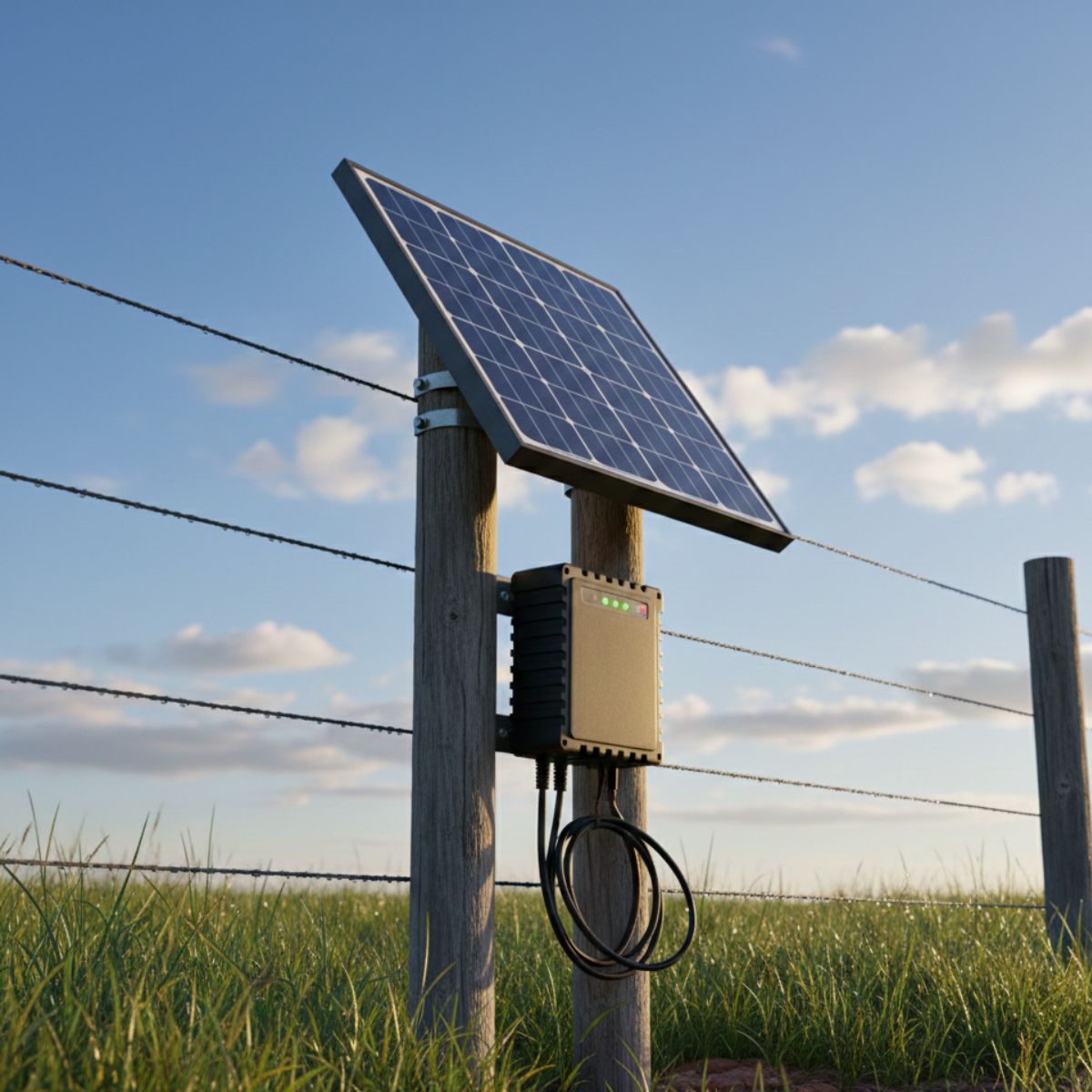
In today’s pursuit of sustainable agricultural practices, solar-powered battery charger for electric fence have emerged as a crucial component. This charger not only lessens dependence on conventional energy sources but also guarantees consistent and reliable power delivery. Among the top-rated options include the Premier Solar IntelliShock® 60 with digital monitoring and Zareba ESP10M-Z covering 10 miles of fencing. Look for IP65-rated weatherproofing, UV-stabilized housings, and 25-30 year solar panel lifespans. While initial costs run $150-$400 versus $50-$100 for traditional chargers, you’ll eliminate ongoing electricity expenses and achieve ROI within 2-4 years. Proper panel positioning and maintenance guarantee peak performance throughout varying weather conditions.
Key Takeaways
- Higher wattage solar panels (5-30 watts) provide faster recharge rates and reliable performance during cloudy conditions for continuous operation.
- Battery capacity of 12V 50Ah ensures adequate storage for extended cloudy periods, supporting consistent fence energization without sunlight.
- Voltage ratings of 5,000-10,000 volts and joule outputs of 0.5-2.0 match livestock containment needs across varying property sizes.
- Premier Solar IntelliShock® 60 and Zareba models receive positive user ratings for autonomy, efficiency, and warranty support.
- Solar systems achieve ROI within 2-4 years by eliminating ongoing electricity costs, saving $15-$40 annually compared to traditional chargers.
Key Features to Consider When Selecting a Solar Fence Charger
When you’re selecting a solar fence charger, you’ll need to evaluate several critical specifications that directly impact the system’s performance and reliability. The most important factors include the solar panel’s wattage output, which determines how quickly the battery recharges, the battery storage capacity that guarantees consistent operation during cloudy periods, and the voltage and joule rating that must match your livestock containment needs.
Additionally, you should assess the unit’s weather resistance rating and the maximum fence coverage distance it can effectively energize, as these features determine whether the charger will withstand your local climate conditions and adequately protect your property perimeter. Look for models with a long lifespan of 25-30 years for solar panels, which ensures sustained performance and reduces the need for frequent replacements over time.
Solar Panel Wattage Output
The wattage output of your solar panel directly determines how quickly and effectively it can recharge the fence charger’s battery, making it one of the most critical specifications to evaluate during the selection process. Higher wattage panels deliver superior solar efficiency benefits, allowing you to maintain consistent fence operation even during cloudy conditions or winter months when sunlight is limited. This increased capacity reduces your dependence on grid power, minimizing your environmental impact while maximizing your operational freedom.
| Wattage Range | Recommended Application |
|---|---|
| 5-10 watts | Small pastures, occasional use |
| 10-20 watts | Medium fences, year-round operation |
| 20+ watts | Large properties, heavy vegetation |
| 30+ watts | Commercial operations, extreme climates |
Consider your specific needs when selecting appropriate wattage to guarantee reliable, uninterrupted performance.
Battery Storage Capacity
While solar panel wattage determines how fast you can recharge your system, battery storage capacity dictates how long your fence charger can operate without sunlight. You’ll need to evaluate battery capacity considerations based on your specific fencing requirements and climate conditions. In regions with extended cloudy periods, you’ll want larger storage capacity to maintain consistent operation during multiple sunless days.
Optimal storage solutions typically include:
- Deep-cycle batteries rated between 12V and 50Ah for standard operations
- Lithium-ion options offering longer lifespan and lighter weight
- Lead-acid batteries providing cost-effective alternatives for budget-conscious installations
Calculate your needs by determining daily power consumption and multiplying by the number of days you’ll require backup power, ensuring you’re never dependent on grid electricity.
Voltage and Joule Rating
Understanding voltage and joule ratings stands as perhaps your most critical decision when selecting a solar fence charger, as these specifications directly determine whether your system can effectively deter animals while covering your property’s full perimeter. Voltage measures the electrical shock strength delivered through the fence wire, typically ranging from 5,000 to 10,000 volts for effective containment.
Joule efficiency indicates the actual energy released per pulse, with ratings between 0.5 and 2.0 joules suitable for most livestock applications. Higher ratings accommodate longer fence runs and denser vegetation that may ground your system.
Voltage stability guarantees consistent performance across varying solar conditions, preventing weak spots where animals might breach. Match your charger’s specifications to your specific needs: property size, animal type, and environmental challenges you’re breaking free from.
Weather Resistance and Durability
- IP65 or higher ingress protection ratings
- UV-stabilized plastic housings that won’t crack or fade
- Corrosion-resistant metal components and terminals
- Sealed battery compartments preventing moisture intrusion
Long lasting components guarantee your charger operates reliably for years, eliminating the frustration of frequent replacements. Quality manufacturers incorporate reinforced solar panels with tempered glass, heavy-duty wiring connections, and military-grade circuitry. You’re breaking free from constant maintenance cycles when you choose chargers built to endure harsh outdoor conditions, giving you true operational independence.
Fence Coverage Distance Range
Coverage distance stands as one of the most critical specifications you’ll evaluate when selecting a solar fence charger, as it directly determines whether the unit can effectively power your entire perimeter. Manufacturers typically rate units by maximum fence distance under ideal conditions, measured in miles or kilometers.
However, you’ll need to account for coverage limitations that reduce actual performance, including vegetation interference, wire gauge, number of wire strands, and ground conductivity. A charger rated for 25 miles might only deliver effective power across 15 miles when facing real-world obstacles. You’re free to extend your boundaries confidently by choosing a unit with 20-30% more capacity than your measured perimeter requires, ensuring consistent livestock containment regardless of environmental variables affecting conductivity.
Top-Rated Solar-Powered Electric Fence Chargers Reviewed
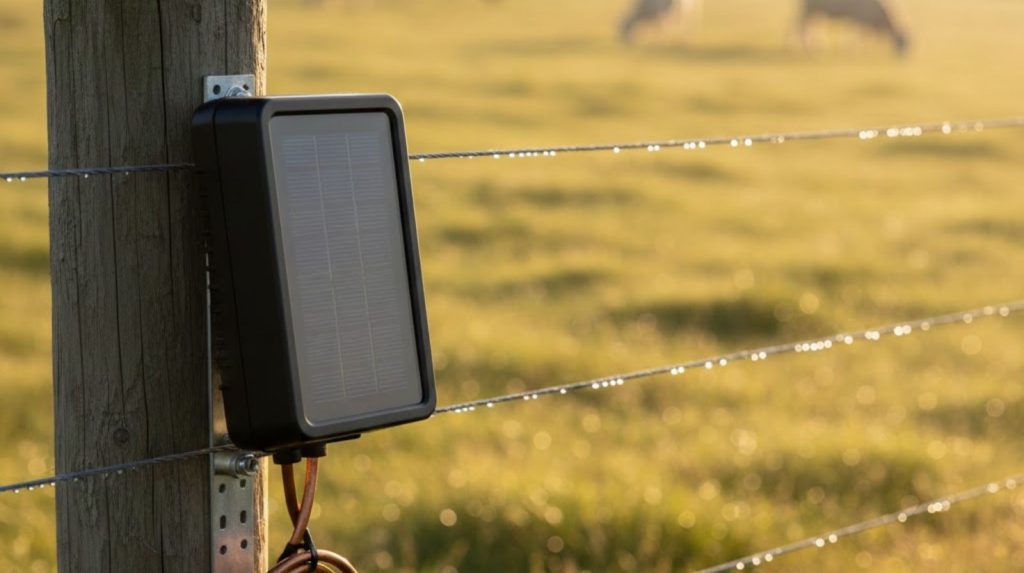
You’ll find several reliable solar-powered electric fence chargers on the market, each designed to meet different fencing requirements and property sizes. The top-rated models include the Zareba ESP2M-Z and ESP10M-Z Solar Powered Electric Fence Chargers, the Parmak DF-SP-LI Electric Fencer, the Premier Solar IntelliShock® 60 Fence Energizer, and the Solar Fence Charger 12 Volt 2 Joule with Free Lightning Diverter. These units vary in power output, coverage area, and features, so you’ll need to match the charger’s specifications to your specific fencing needs and livestock management goals.
1. Zareba ESP2M-Z Solar Powered Electric Fence Charger
No products found.
The Zareba ESP2M-Z Solar Powered Low Impedance Electric Fence Charger stands out as an excellent choice for homeowners seeking reliable protection for small animals and gardens without the hassle of electrical wiring or frequent battery replacements. This USA-built charger energizes up to 2 miles of fencing under ideal conditions and maintains 1 mile coverage in light weeds, according to Zareba performance metrics.
You’ll appreciate its solar panel that stores enough energy for two weeks of operation without sunlight, ensuring continuous protection. The unit mounts easily on T-posts, round posts, wood posts, Y-posts, or flat surfaces, giving you installation flexibility. Zareba user reviews consistently highlight its effectiveness for containing pets and protecting chickens, rabbits, and gardens from predators. The included 1-year limited warranty covers lightning damage.
2. Parmak DF-SP-LI Electric Fencer, Natural
No products found.
For farmers and ranchers managing large properties, Parmak’s DF-SP-LI Electric Fencer delivers professional-grade performance with its impressive 25-mile fence coverage capacity and robust 1.6-joule output that effectively contains cattle, horses, pigs, and dogs. You’ll appreciate the freedom from grid dependency through its advanced solar panel technology, which charges even on cloudy days and operates for 21 days in complete darkness.
The built-in performance meter enhances fence security by displaying real-time condition status:
- Good: Best shock delivery
- Marginal: Reduced effectiveness
- Bad: Immediate attention required
- Low impedance shock technology for consistent power
- Weatherproof construction withstands harsh outdoor conditions
User testimonials reflect satisfaction with 4.1 out of 5 stars across 1,215 reviews, confirming this charger’s reliability for livestock management without costly battery replacements.
3. Premier Solar IntelliShock® 60 Fence Energizer
No products found.
Premier 1 Supplies’ Solar IntelliShock® 60 Fence Energizer stands out among solar-powered options with its robust 60-watt capacity that delivers consistent performance for both temporary and permanent fencing installations.
You’ll appreciate the Premier benefits of this polycarbonate-constructed unit, which maintains 60 watts for both starting and running operations, eliminating power fluctuations that compromise fence effectiveness. The included digital tester allows you to monitor voltage output independently, ensuring your livestock containment system functions effectively without grid dependency.
User experiences reflect strong satisfaction, with 4.4 out of 5 stars across 74 reviews, confirming its reliability for camping expeditions and remote property applications. This solar-powered energizer frees you from utility bills and wiring constraints, delivering autonomous fence management that adapts to your off-grid lifestyle requirements.
4. Zareba Solar Powered Electric Fence Charger – ESP10M-Z
No products found.
While Premier’s 60-watt system excels in high-power applications, Zareba’s ESP10M-Z Solar Powered Electric Fence Charger offers a streamlined alternative for property owners who need reliable livestock containment without the complexity of larger units. This Zareba performance review demonstrates how solar charger benefits extend beyond initial cost savings to include exceptional autonomous operation, running up to two weeks without sunlight while delivering 0.15 output joules across your perimeter.
Key specifications include:
- Energizes 10 miles of fence in ideal conditions or 5 miles with light vegetation
- Operates independently for 14 days during extended cloudy periods
- Mounts directly to T-posts, Y-posts, and round-wood posts using integrated brackets
- Manufactured and tested domestically with rigorous quality controls
- Protected by 1-year limited warranty covering lightning damage
You’ll gain freedom from grid dependency while maintaining effective predator deterrence.
5. Solar Fence Charger 12 Volt 2 Joule/Free Lightning Diverter
No products found.
The Solar Fence Charger 12 Volt 2 Joule represents a significant upgrade in power capacity, delivering ten times the output of the Zareba model at 2.0 joules while maintaining the flexibility of solar operation through an external 12-volt battery system. You’ll experience superior charging efficiency when pairing this unit with a deep cycle battery, which optimizes the solar fence benefits across your 1 to 100-acre property.
The low impedance design guarantees consistent power delivery, while the included Lightning Diverter and 5J Lightning Fuse 2-Pack protect your investment from weather-related damage. Installation requires minimal effort—simply clip the charger onto your 12-volt battery and activate your fence. The 2-year warranty provides additional peace of mind for this reliable perimeter security solution.
6. Fi-Shock ESP2M-FS 2-Mile Solar-Powered Electric Fence Charger
No products found.
Designed for small to medium-sized properties, Fi-Shock’s ESP2M-FS delivers reliable perimeter control across up to 2 miles of electric fencing through its integrated solar power system that operates independently for up to two weeks without direct sunlight.
The fi shock advantages include low impedance technology that minimizes battery drain while reducing power loss from vegetation contact, ensuring consistent performance in challenging conditions. Built and full-load tested in the USA, this charger maintains solar efficiency through advanced energy management. Key features include:
- 2-mile fence energization capacity for thorough property coverage
- Low impedance technology reducing weed-related power shortages
- Extended 14-day operation without sunlight exposure
- 1-year limited warranty with lightning damage protection
- Complete USA manufacturing and quality testing verification
This system provides autonomous livestock containment without grid dependency.
7. Zareba ESP5M-Z Solar Powered Electric Fence Charger
No products found.
For larger properties requiring extended coverage, Zareba’s ESP5M-Z Solar Powered Electric Fence Charger doubles the energization capacity of comparable models by protecting up to 5 miles of fencing under ideal conditions, making it particularly effective for expansive pastures and agricultural operations.
User experiences highlight the charger’s 360-degree adjustable mounting bracket, which accommodates T-posts, Y-posts, and round-wood posts while maximizing solar exposure throughout the day. The unit’s solar panel stores sufficient energy to maintain operations for two weeks without sunlight, providing you with reliable protection regardless of weather conditions.
| Feature | Specification |
|---|---|
| Coverage Range | 5 miles (ideal) / 2.5 miles (light weeds) |
| Energy Storage | Up to 2 weeks without sun |
| Warranty | 1-year limited (includes lightning damage) |
User benefits include USA manufacturing with full-load testing and extensive lightning damage coverage.
Installation and Placement Tips for Maximum Solar Efficiency
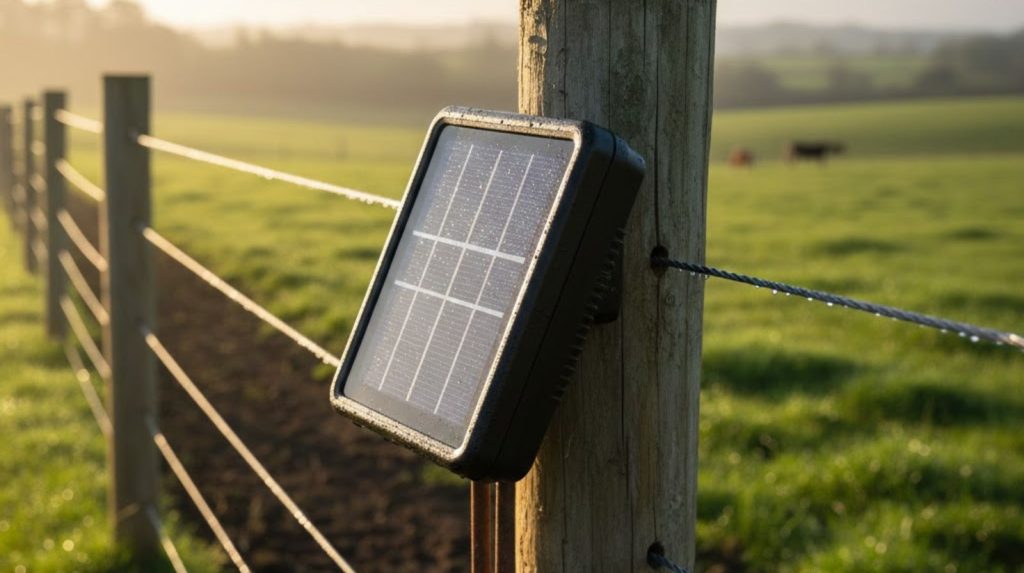
To maximize the efficiency of your solar-powered electric fence charger, you’ll need to take into account several critical installation factors that directly impact energy collection and system performance. Proper placement begins with positioning the solar panel at the ideal angle for your latitude while ensuring the panel remains completely free from shade throughout the day, as even partial shading can greatly reduce power output.
Beyond panel placement, you must also focus on correct grounding wire installation, weatherproofing all connection points to prevent corrosion and electrical failures, and ensuring easy access for routine maintenance tasks. The charging time for your battery will vary based on solar panel capacity and sunlight intensity, typically ranging from several hours to a full day, so consider your peak load requirements when selecting the appropriate system size for reliable fence operation.
Optimal Solar Panel Angle
When installing a solar-powered battery charger for your electric fence, the angle at which you position the solar panel directly determines how much energy it’ll capture throughout the day. Proper solar panel orientation maximizes your system’s independence from grid power, giving you true energy freedom. For most locations, tilting your panel at an angle equal to your latitude provides year-round efficiency, though seasonal adjustments can enhance performance during specific months.
Consider these critical factors for ideal positioning:
- Tilt panels 15 degrees steeper in winter to capture low-angle sunlight
- Reduce angle by 15 degrees in summer for overhead sun exposure
- Face panels true south in northern hemisphere locations
- Eliminate shade from trees, buildings, or structures throughout daylight hours
- Secure mounting hardware to withstand wind and weather conditions
Avoiding Shade and Obstructions
Even a small shadow crossing your solar panel can reduce its power output by 50% or more, making shade elimination the single most important factor in solar fence charger placement. You’ll want to conduct a full-day sun analysis at your installation site, observing how shadows move from sunrise to sunset across all seasons.
Trees, buildings, and fences create obstruction effects that vary throughout the year as the sun’s path changes. Strategic placement means positioning your panel where it receives uninterrupted sunlight during peak hours (10 AM to 2 PM minimum). If you’re dealing with unavoidable shade, consider mounting your panel on a pole or relocating it several feet away from the charger using extension wire, giving you freedom to optimize solar exposure.
Proper Grounding Wire Installation
Your solar panel’s location matters little if you haven’t established a proper ground system for your electric fence charger. Breaking free from unreliable power requires understanding essential grounding techniques that protect your investment and livestock. The ground rod connection serves as the foundation for effective shock delivery, completing the circuit when animals contact your fence line.
For peak performance, follow these critical guidelines:
- Drive three 6-foot galvanized ground rods at least 10 feet apart
- Use appropriate wire gauge (10-gauge or heavier) to minimize resistance
- Connect rods with clamps designed for permanent outdoor installation
- Test soil moisture regularly, as dry conditions reduce conductivity
- Install rods away from building foundations and utility lines
Proper installation guarantees your solar-powered system operates independently, delivering consistent results without compromising safety or effectiveness.
Weatherproofing Connection Points
Every connection point on your solar-powered fence charger represents a potential failure spot where moisture, corrosion, and temperature extremes can compromise system performance. You’ll need to protect these vulnerable areas using proper connection point materials and weatherproof sealants designed for outdoor electrical applications.
Start by selecting corrosion-resistant terminals made from tin-plated copper or stainless steel, which withstand environmental exposure better than standard materials. Apply dielectric grease to all wire connections before sealing, creating a moisture barrier that prevents oxidation.
Use marine-grade heat shrink tubing or silicone-based weatherproof sealants around exposed connections, ensuring complete coverage without gaps. Install protective junction boxes at major connection points, providing an additional shield against rain, snow, and UV degradation. These preventative measures extend your system’s operational lifespan and maintain consistent charging performance.
Maintenance Access Considerations
When planning your solar fence charger installation, positioning the unit within easy reach for routine inspections and repairs will save you considerable time and frustration throughout its operational life. Strategic placement guarantees you’ll maintain your system without obstacles or difficulty, empowering you to keep your livestock secure independently.
Consider these essential maintenance access factors:
- Mount the charger at chest height to facilitate battery access without ladders or tools
- Guarantee charger compatibility with standard replacement batteries available locally
- Clear a three-foot radius around the unit for comfortable workspace during servicing
- Position away from dense vegetation that requires frequent trimming
- Install near established pathways to prevent creating erosion patterns from repeated visits
Proper accessibility planning transforms routine maintenance from burdensome chores into quick, manageable tasks you’ll complete confidently.
Maintenance Requirements and Troubleshooting Common Issues
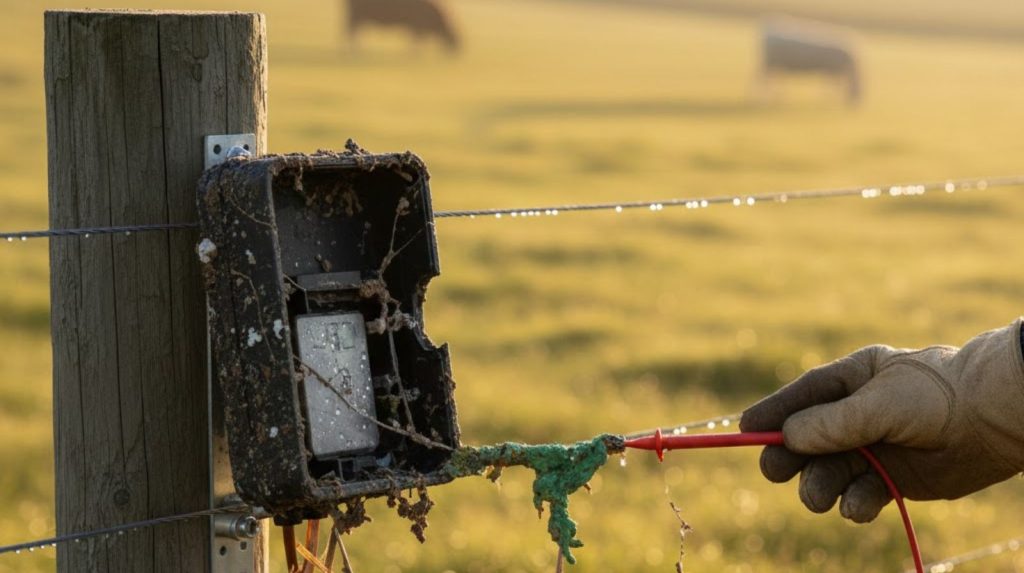
To keep your solar-powered electric fence charger operating at peak performance, you’ll need to establish a regular maintenance routine that addresses several critical components.
Your primary focus should be on cleaning the solar panel surface to remove dirt, debris, and bird droppings that can significantly reduce charging efficiency, while also monitoring battery health through periodic voltage output testing to guarantee the system maintains adequate power storage.
Additionally, you must inspect wire connections for corrosion or looseness and troubleshoot weak charge issues promptly, as these problems can compromise your fence’s effectiveness and leave your property vulnerable to intrusions. Check all connections for tightness and accuracy, and seal junction boxes against moisture to prevent water intrusion that could damage the electrical components.
Cleaning Solar Panel Surface
Over time, dust, pollen, bird droppings, and other environmental debris will accumulate on your solar panel’s surface, reducing its ability to absorb sunlight and diminish charging efficiency by as much as 25-30%. Regular solar panel maintenance guarantees your fence charger operates at peak performance, giving you freedom from constant battery replacements and power interruptions.
Effective debris removal requires:
- Soft, lint-free cloths or squeegees to prevent scratching the photovoltaic surface
- Mild soap mixed with lukewarm water, avoiding harsh chemicals that damage protective coatings
- Early morning or evening cleaning sessions when panels are cool
- Monthly inspections during high-pollen seasons or in dusty environments
- Gentle water pressure from garden hoses, never power washers
This straightforward maintenance routine takes minutes but maximizes your system’s independence and reliability.
Battery Health Monitoring
Because battery degradation directly impacts your electric fence’s reliability, monitoring battery health stands as your most critical maintenance task after solar panel care. You’ll need to track voltage monitoring patterns monthly to catch problems early, giving you freedom from unexpected failures. A healthy 12V battery should read 12.6V when fully charged, while readings below 12.0V signal deterioration.
| Battery Voltage | Charge Level | Action Required |
|---|---|---|
| 12.6V+ | 100% | None – ideal |
| 12.4V | 75% | Monitor weekly |
| 12.2V | 50% | Check connections |
| 12.0V | 25% | Immediate attention |
| Below 11.8V | Critical | Replace battery |
Regular testing guarantees your battery life exceeds manufacturer estimates, keeping your livestock secure without constant supervision or grid dependency.
Voltage Output Testing
Your fence charger’s voltage output determines whether your livestock containment system functions effectively or fails completely. Testing this output liberates you from guesswork and guarantees your animals remain safely contained. Regular voltage calibration prevents output variability that compromises fence performance, especially when solar charging introduces weather-dependent power fluctuations.
Essential testing procedures include:
- Use a dedicated fence voltmeter at multiple points along the wire to identify voltage drops
- Measure output at dawn, midday, and dusk to assess solar charging consistency
- Record readings weekly to establish baseline performance patterns
- Test during cloudy conditions when battery reserves face maximum stress
- Check ground rod connections, as poor grounding causes false voltage readings
Understanding these measurements empowers you to maintain peak fence operation and address issues before containment failures occur.
Fixing Weak Charge Issues
After identifying voltage irregularities through systematic testing, you’ll need to address the root causes of weak charge performance. Effective troubleshooting techniques require methodical examination of your system’s components, starting with the solar panel’s surface condition and connection integrity. Battery maintenance involves regular cleaning of terminals and verification of electrolyte levels in non-sealed units.
| Issue | Diagnosis | Solution |
|---|---|---|
| Corroded terminals | White/green buildup on connections | Clean with wire brush, apply protective coating |
| Shaded panels | Reduced amperage readings | Relocate unit or trim obstructions |
| Sulfated battery | Voltage drops rapidly under load | Perform desulfation cycle or replace battery |
You’ll restore ideal charging capacity by systematically addressing each identified problem, ensuring your fence maintains consistent power delivery throughout its operational cycle.
Wire Connection Inspections
Three critical junction points in your solar-powered electric fence system demand regular inspection to prevent power loss and maintain peak performance: the panel-to-controller connections, controller-to-battery terminals, and battery-to-fence output leads. You’ll want to examine these areas monthly, checking for signs of degradation that compromise your system’s independence from grid power.
Effective connection maintenance tips include:
- Apply dielectric grease to all terminals for wire corrosion prevention
- Tighten loose connections using appropriate torque specifications
- Remove oxidation with a wire brush before reconnecting
- Verify proper wire gauge matches system amperage requirements
- Replace damaged connectors immediately to prevent cascading failures
Wire corrosion prevention starts with quality materials—use marine-grade terminals and weather-resistant housings. Clean connections guarantee your fence maintains consistent voltage, giving you the freedom to protect your property reliably without constant intervention.
Cost Analysis: Solar Vs Traditional Battery Charging Systems
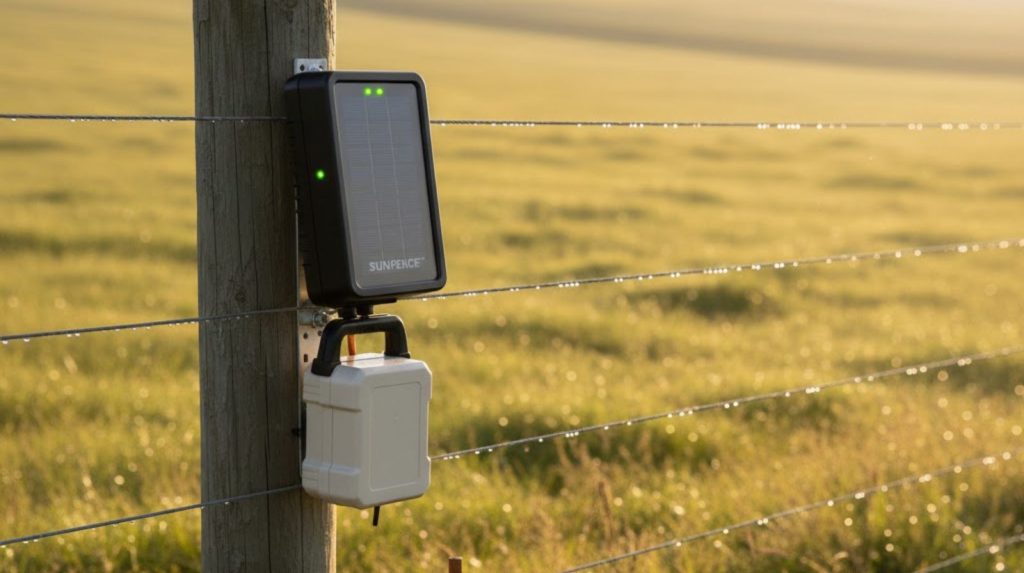
When deciding between solar and traditional battery charging systems for your electric fence, you’ll need to evaluate several critical financial factors that extend far beyond the sticker price.
The initial investment comparison reveals significant differences in upfront costs, but long-term operating expenses, maintenance cost breakdowns, and return on investment timelines often tell a different story about which system delivers better value.
Additionally, you should account for hidden fees and charges that can dramatically impact the total cost of ownership, including replacement parts, electricity rates, and potential installation expenses that aren’t immediately apparent during your initial research.
Government incentives such as rebates and tax credits can significantly reduce the net cost of solar battery charging systems, making them more competitive with traditional options despite higher upfront prices.
Initial Investment Comparison
Understanding the upfront costs of solar-powered battery chargers versus traditional AC-powered systems reveals significant differences that’ll impact your budget planning. Solar chargers typically require a higher initial cost ranging from $150-$400, while traditional systems start around $50-$100. However, you’ll gain freedom from ongoing electricity expenses and achieve greater sustainability impact through renewable energy adoption.
Consider these key investment factors:
- Solar panel quality and wattage capacity determine longevity and performance efficiency
- Battery compatibility requirements may necessitate additional adapters or controllers
- Installation complexity varies, with solar systems offering flexible, location-independent mounting options
- Traditional chargers demand continuous grid access, limiting placement versatility
- Warranty coverage typically extends 10-25 years for solar components versus 1-3 years for conventional units
Your long-term savings potential increases substantially despite higher upfront solar expenditures.
Long-Term Operating Expenses
While solar-powered battery chargers eliminate recurring electricity costs entirely, traditional AC-powered systems accumulate substantial operating expenses that compound year after year. You’ll experience significant cost savings by avoiding monthly utility charges, which typically range from $15 to $40 annually for fence charging operations.
Energy efficiency becomes a decisive factor when calculating ten-year ownership costs, where solar systems maintain zero operational expenses while traditional chargers continue drawing power from the grid. Additionally, you’re not subject to utility rate increases that historically average 3-5% annually, protecting your budget from inflationary pressures. Solar chargers deliver financial independence through:
- Elimination of ongoing electricity bills
- Protection from rising energy costs
- Reduced carbon footprint without sacrificing performance
- Minimal maintenance requirements beyond occasional panel cleaning
Maintenance Cost Breakdown
Battery replacement represents the most considerable maintenance expense differential between solar and traditional electric fence charging systems, with solar units requiring new batteries every 3-5 years at costs ranging from $50 to $150 per replacement, while traditional AC-powered chargers typically don’t include battery backup systems that need servicing.
Understanding these cost considerations empowers you to budget effectively:
- Panel cleaning requires minimal investment, needing only water and soft cloth quarterly
- Voltage testing equipment costs $15-30 for basic multimeters ensuring peak performance
- Terminal corrosion prevention demands $5-10 annually for protective spray compounds
- Wiring inspection involves zero cost when conducted during routine fence checks
- Professional servicing runs $75-125 yearly if you’re uncomfortable performing maintenance yourself
Following proper maintenance tips extends system lifespan greatly, reducing your long-term expenses while maintaining fence reliability without depending on grid infrastructure.
Return on Investment Timeline
Most solar-powered electric fence chargers achieve complete return on investment within 2-4 years when compared against traditional AC-powered systems, depending on your location’s electricity rates and fence length requirements.
Your investment timeline projections become increasingly favorable when you factor in rising utility costs and potential grid failures that could compromise traditional systems. Smart return on investment strategies involve calculating your current monthly electricity consumption for fence charging, then comparing it against the upfront solar installation cost.
| System Type | Break-Even Point |
|---|---|
| Solar (High Sun) | 2-2.5 years |
| Solar (Moderate Sun) | 2.5-3.5 years |
| Traditional AC | Ongoing costs |
You’ll find that areas with abundant sunshine and expensive electricity rates offer the fastest payback periods, liberating you from perpetual utility dependencies.
Hidden Fees and Charges
How often do you consider the accumulating expenses beyond the sticker price when evaluating fence charging systems? Traditional battery chargers carry numerous hidden expenses that erode your budget over time. Understanding these additional costs empowers you to make financially sound decisions that free you from recurring expenditures.
Consider these often-overlooked charges:
- Replacement battery purchases every 2-3 years due to degradation
- Electricity consumption fees adding $15-40 monthly to utility bills
- Maintenance service calls averaging $75-150 per visit
- Backup power solutions during outages costing $200-500
- Transportation expenses for battery disposal and replacement units
Solar-powered systems eliminate most hidden expenses, requiring minimal maintenance beyond occasional panel cleaning. You’ll break free from utility dependencies while avoiding the perpetual cycle of battery replacements and service fees.
Frequently Asked Questions
Can Solar Fence Chargers Work Effectively in Cloudy or Winter Conditions?
Yes, they’ll work in cloudy or winter conditions, but you’ll experience reduced solar efficiency. Your charging performance drops considerably during these periods, so you’ll need backup battery capacity or supplemental charging to maintain your fence’s independence.
Are Solar Fence Chargers Safe for Pets and Wildlife Near the Fence?
Don’t worry—solar fence chargers are designed with pet safety in mind, delivering brief, harmless pulses that train without injury. You’ll protect your boundaries while minimizing wildlife impact, creating freedom for everyone to coexist peacefully.
How Long Do Solar Fence Charger Batteries Typically Last Before Replacement?
You’ll get 2-3 years from most solar fence charger batteries with proper battery maintenance. Watch for replacement indicators like reduced charge retention, dim lights, or inconsistent fence performance—they’re telling you it’s time to break free from that old battery.
Can I Use a Solar Fence Charger for Multiple Fence Lines Simultaneously?
Yes, you’re not boxed in—you can absolutely run multiple fence lines from one unit. Just guarantee your solar charger capacity matches your multi fence usage needs, as each additional line drains power and reduces overall effectiveness.
Do Solar Fence Chargers Require Any Permits or Legal Compliance for Installation?
You’ll typically face minimal permit requirements for residential solar fence chargers, though legal considerations vary by location. Check your local zoning laws and agricultural regulations to guarantee you’re meeting any livestock containment standards before installation.
Conclusion
You’ve now explored the essential considerations for selecting, installing, and maintaining solar-powered electric fence chargers, from evaluating key features and top-rated models to understanding cost comparisons with traditional systems. Like a well-planned investment that pays dividends over time, choosing the right solar charger guarantees long-term savings, reduced maintenance, and reliable livestock management. By applying these guidelines on placement, troubleshooting, and system optimization, you’ll maximize your charger’s efficiency and protect your property effectively for years to come.