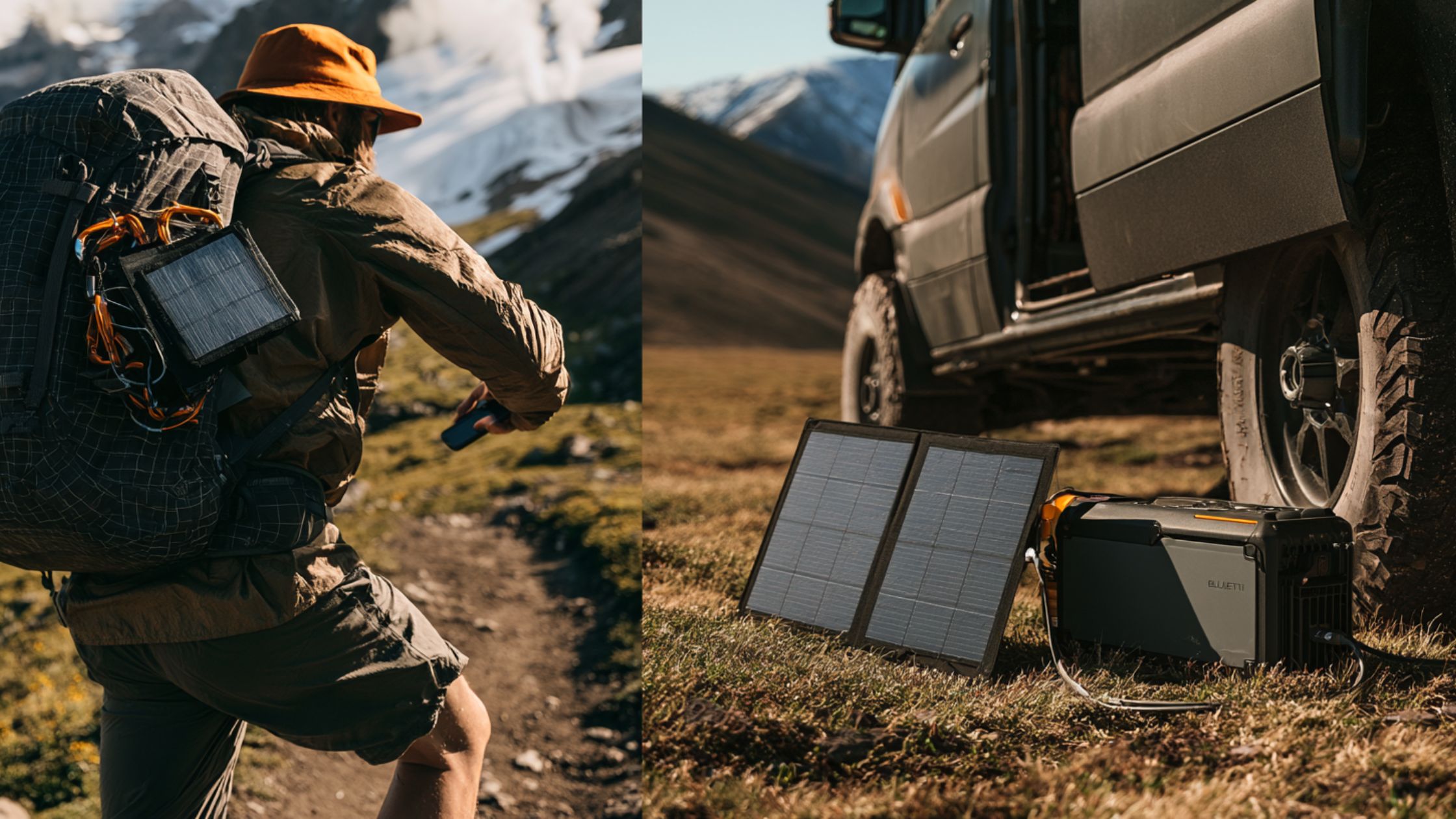
Whether you are backpacking miles off the grid, boondocking in an RV, or preparing your home for rolling utility blackouts, reliable power is no longer a luxury—it is a survival necessity. Portable solar technology has advanced rapidly by 2026, replacing fragile, heavy glass panels with ultra-efficient, foldable ETFE (Ethylene Tetrafluoroethylene) coated modules that can survive extreme weather. This guide categorizes the best portable solar panels based on real-world testing, power output, and specific survival scenarios.
The Reality of Portable Solar Physics
Before purchasing a portable solar panel, you must understand the operational limitations of the technology.
- Wattage is a Maximum, Not a Guarantee: A panel rated for 100W will rarely produce 100W. Factoring in atmospheric interference, heat degradation, and imperfect sun angles, expect a maximum real-world yield of 70% to 85% of the rated wattage.
- Solar Panels Do Not Store Power: A solar panel without a battery is useless once the sun goes down. Portable panels must be paired with an appropriately sized lithium-ion power bank or solar generator to store the harvested energy.
- The ETFE Advantage: Always look for panels with an ETFE coating rather than standard PET plastic. ETFE is highly UV-resistant, scratch-proof, and transmits 95% of sunlight, drastically increasing the lifespan of portable panels.
Best Ultra-Light Backpacking Chargers (10W – 50W)
For backpackers prioritizing weight savings without sacrificing charging capability, the 10W–50W panel category offers a practical balance between portability and output.
The BigBlue 28W USB Solar Charger delivers direct USB charging with built-in amorphous silicon cells, while the BioLite SolarPanel 10+ integrates a kickstand and onboard battery for optimized sun-tracking and energy storage.
The Goal Zero Nomad 50, sitting at the upper boundary of this range, bridges the gap between ultralight and mid-tier panels, offering MPPT-compatible connectors suited for users running small battery banks alongside USB devices.
BigBlue 28W USB Solar Charger
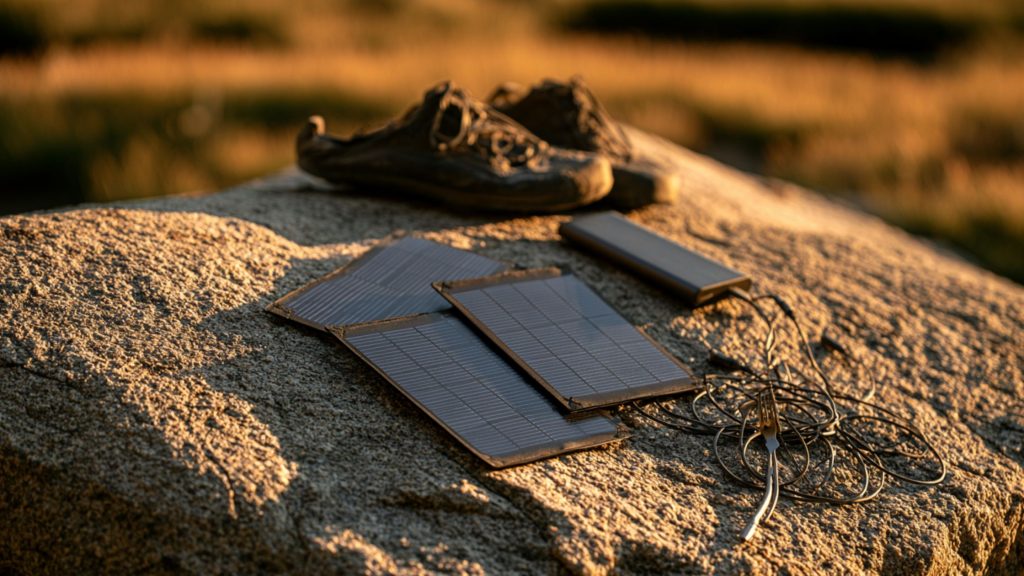
Backpackers prioritizing minimal pack weight will find the BigBlue 28W Solar Charger a compelling option. Weighing 1.5 lbs and folding to 11x6x1.4 inches, it delivers genuine portability without structural compromise. N-type solar cells with a shadow-free polymer surface achieve 20% efficiency gains, outputting 5V/4.8A across dual USB-A and USB-C ports simultaneously.
An IP44 rating handles rain and fog, though the USB junction box remains vulnerable to moisture. Real-world performance varies—direct sunlight yields reliable results, while overcast conditions reduce output noticeably. Priced at $59.97, it suits smartphone and GPS charging but cannot support laptops or large power stations.
Best For: Backpackers and outdoor enthusiasts who need a lightweight, portable charging solution for smartphones, GPS devices, and small electronics during extended trips in sunny conditions.
Pros:
- Compact and lightweight at 1.5 lbs folding to 11x6x1.4 inches, making it genuinely practical for backpacking without adding significant pack weight
- N-type solar cells with a shadow-free polymer surface deliver 20% efficiency gains and simultaneous charging across dual USB-A and USB-C ports at 5V/4.8A
- IP44-rated polymer surface resists rain, fog, and wear, providing reliable weather protection for most outdoor conditions
Cons:
- Performance drops noticeably in overcast or low-light conditions, limiting reliability in unpredictable weather
- The USB junction box lacks waterproofing despite the panel’s IP44 rating, creating a vulnerability in wet conditions
- Charging speeds are slower than traditional power sources, and the charger cannot support laptops or large power stations, restricting its use case
BioLite SolarPanel 10+
Ultra-light backpackers prioritize every gram, making the BioLite SolarPanel 10+ a compelling option at 550g. The 10W monocrystalline panel integrates a 3,200 mAh battery, enabling real-time charging or energy storage via a single USB output. A 360-degree kickstand accommodates uneven terrain, while the analog sundial assists ideal panel positioning. GRS certification confirms at least 50% recycled materials.
However, field performance raises concerns. Average output registers 5W rather than the rated 10W, with users reporting overheating during direct sun exposure and minimal phone charging gains of 5–10%. At $59.97, competing panels deliver remarkably better efficiency per dollar.
Best For: Outdoor enthusiasts and casual backpackers who prioritize sustainability certifications and occasional, low-demand device charging over high-efficiency solar performance.
Pros:
- Lightweight and compact at 550g with a foldable design and 360-degree kickstand, making it practical for varied outdoor terrain
- Built-in 3,200 mAh battery allows energy storage for later use, adding flexibility beyond real-time charging
- GRS-certified with at least 50% recycled materials, appealing to environmentally conscious consumers
Cons:
- Real-world output averages only 5W despite a 10W rating, significantly limiting charging speed and overall utility
- Reported overheating in direct sunlight raises durability and safety concerns during peak outdoor use conditions
- At $59.97, competing panels such as the VLAIAN 60W offer substantially better efficiency and value per dollar
Goal Zero Nomad 50
Weighing just 6.85 lbs, the Goal Zero Nomad 50 suits hikers and backpackers prioritizing minimal pack weight without sacrificing charging capacity. Its four-panel folding design collapses to 17 x 11.25 x 2.5 inches, fitting securely into most pack setups.
The monocrystalline panels deliver 18–22V output, generating up to 32W during peak sunlight and charging 10,000 mAh power banks within two hours under partial sun. Compatible with Yeti Power Stations and Sherpa Power Banks via an included 8mm cable, it also features a USB port. Priced at $249.95, it carries a one-year manufacturer warranty.
Best For: Hikers, backpackers, and outdoor enthusiasts who need a lightweight, portable solar charging solution without compromising on power output.
Pros:
- Compact four-panel folding design collapses to a pack-friendly size of 17 x 11.25 x 2.5 inches, making it easy to transport on extended outdoor trips
- Reliable charging performance in varied conditions, capable of filling a 10,000 mAh power bank in approximately two hours even under partial sunlight
- Versatile compatibility with Yeti Power Stations and Sherpa Power Banks via the included 8mm cable, plus a built-in USB port for direct device charging
Cons:
- Limited connection options with only USB and 8mm outputs may restrict compatibility with certain devices or third-party power stations
- At $249.95, the price point is a significant investment, though a promotional rate of $199.95 is available for Amazon Visa holders
- The panel lacks a built-in handle, making one-handed carrying less convenient during transport to and from a campsite
Best Mid-Range Panels for RVs & Car Camping (100W – 200W)
For RV owners and car campers requiring substantial charging capacity, mid-range panels in the 100W–200W class offer a practical balance between power output and portability.
The Renogy 200W Portable Foldable Panel and BougeRV Arch 200W Flexible stand out for high-wattage output in compact, deployable form factors, while the Jackery SolarSaga 100W targets users seeking a lighter, more manageable single-panel solution. Each model addresses distinct use cases, from powering portable power stations and 12V battery banks to running small appliances in off-grid scenarios.
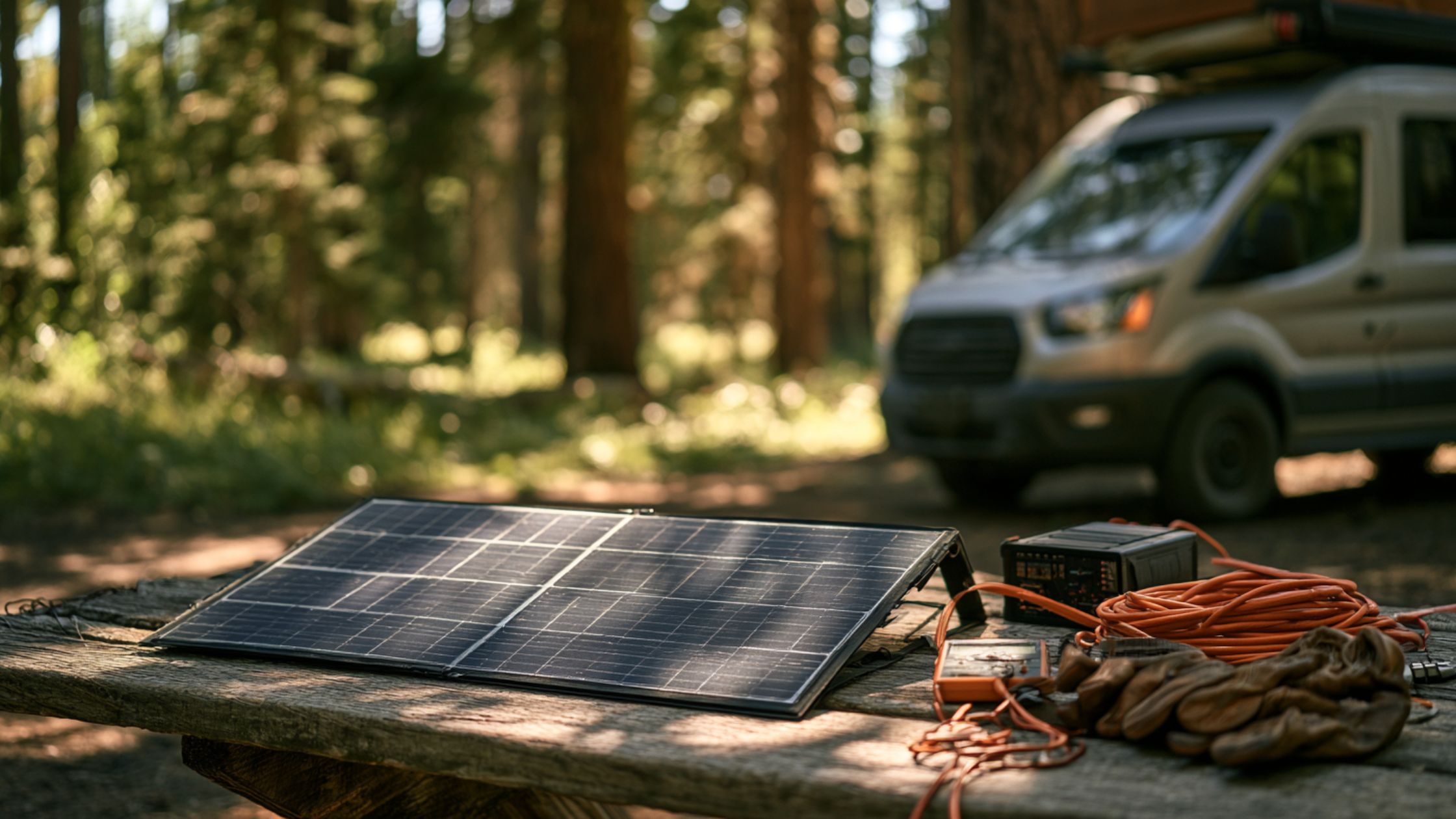
Renogy 200W Portable Foldable Panel
The Renogy 200W Portable Foldable Solar Panel suits RV owners and car campers who need high-efficiency power without sacrificing portability. Its 16BB N-Type cells deliver 25% efficiency, outperforming standard 200W panels rated at 22.5%. At 13.89 lbs, it folds compactly and includes four adjustable kickstands with three angle positions (40°/50°/60°).
USB-A and Type-C outputs, reinforced grommets, and an IP65 rating add practical versatility across environments. UL 61730 certification and a 2-year warranty support reliability claims. Priced at $174.94 (24% off), it offers competitive value within the mid-range segment for users prioritizing output density over raw panel size.
Best For: RV owners, car campers, and off-grid users who need a lightweight, high-efficiency solar solution for charging power stations, batteries, or small appliances in varied outdoor conditions.
Pros:
- Industry-leading 25% efficiency via 16BB N-Type cells delivers more power output than standard 200W panels in the same footprint, making it well-suited for limited space or cloudy conditions.
- Portable and practical design at 13.89 lbs with adjustable kickstands, magnetic handle, built-in accessory pouch, and reinforced grommets for flexible deployment across RVs, tents, and ground setups.
- Strong safety and quality credentials with UL 61730 certification, IP65 weather resistance, and a 2-year warranty backed by CE, RoHS, FCC, and CA65 compliance.
Cons:
- At $174.94, it sits at a price premium over conventional 200W panels, which may deter budget-conscious buyers who can tolerate lower efficiency ratings.
- The 2-year warranty is relatively short compared to rigid rooftop solar panels, which commonly offer 10–25 year performance guarantees.
- USB-A and Type-C outputs limit direct compatibility with larger appliances or devices requiring higher-voltage DC connections without additional adapters or a separate power station.
BougeRV Arch 200W Flexible
RV owners and car campers seeking mid-range flexible solar panels will find the BougeRV Arch 200W a strong contender. At $239.97 (20% off MSRP), it delivers 25% efficiency via 16BB N-type monocrystalline cells with upgraded bypass diodes for low-light performance.
The panel flexes up to 270°, accommodating curved surfaces common on RVs and marine vessels. Weighing just 7.9 lbs, it supports 12V, 24V, and 48V configurations. IP68-rated construction guarantees moisture resistance. GRS certification confirms at least 50% recycled content. Rated 4.6/5 across 65 reviews, it balances performance, durability, and value competitively within the mid-range segment.
Best For: RV owners, car campers, and marine enthusiasts seeking a lightweight, high-efficiency flexible solar panel that accommodates curved surfaces and mid-range budget constraints.
Pros:
- High 25% efficiency with 16BB N-type monocrystalline cells and upgraded bypass diodes delivering reliable output in low-light conditions
- Exceptional flexibility (up to 270°) and lightweight design (7.9 lbs) make installation straightforward on curved RV, boat, or vehicle surfaces
- GRS-certified with at least 50% recycled content, IP68-rated moisture resistance, and strong 4.6/5 customer rating reinforce long-term value
Cons:
- Output is subject to variability based on sunlight availability, charge controller efficiency, and overall system specifications
- At $239.97, it sits at a price point that may deter budget-conscious buyers despite the 20% discount from MSRP
- Limited mounting options relative to rigid panels, with adhesive installation requiring a 48-hour curing period that can delay setup
Jackery SolarSaga 100W
Campers and RV enthusiasts seeking a lightweight, mid-range solar solution will find the Jackery SolarSaga 100W a compelling option. Weighing just 7 lbs—27% lighter than standard 100W panels—its W-fold design compresses smaller than A2 paper for effortless storage.
The bifacial PERC cells deliver 23% conversion efficiency, maintaining output in low-light conditions. IP68 waterproofing, IEC TS 63163 certification, and an operational range of -4°F to 149°F guarantee field durability.
Setup requires roughly 60 seconds via integrated aluminum stand. Note: incompatible with Explorer 300/300 v2 series; voltage mismatches trigger an F7 error code. Priced at $249.00 after promotions.
Best For: Campers, RV enthusiasts, and off-grid adventurers seeking a lightweight, portable, mid-range solar panel with reliable durability and fast setup.
Pros:
- Exceptionally lightweight at 7 lbs with a compact W-fold design that stores smaller than A2 paper, making it ideal for travel
- Bifacial PERC cells with 23% conversion efficiency maintain solid output even in low-light conditions
- Rugged IP68 waterproofing, IEC TS 63163 certification, and a wide operational temperature range ensure reliable field performance
Cons:
- Incompatible with the Explorer 300/300 v2 series, limiting pairing options for users who own those power stations
- Voltage mismatches with unsupported devices trigger an F7 error code, requiring careful compatibility checks before purchase
- At $249.00 after promotions, it sits at a premium price point compared to basic 100W solar panel alternatives
High-Capacity Home Backup Solar Generators
For whole-home or critical-load backup applications, high-capacity solar generators pair large-format lithium battery stations with robust panel arrays to deliver meaningful power autonomy.
The Bluetti Apex 300 combined with 350W panels, the EcoFlow Delta 3 Plus with 400W panels, and the Anker Solix F3800 represent the current benchmarks in this category, offering capacities ranging from roughly 4kWh to over 9.9kWh.
These systems are engineered to handle high-draw appliances—refrigerators, HVAC units, and medical equipment—making them functionally distinct from the lighter camping-oriented panels covered in previous sections.
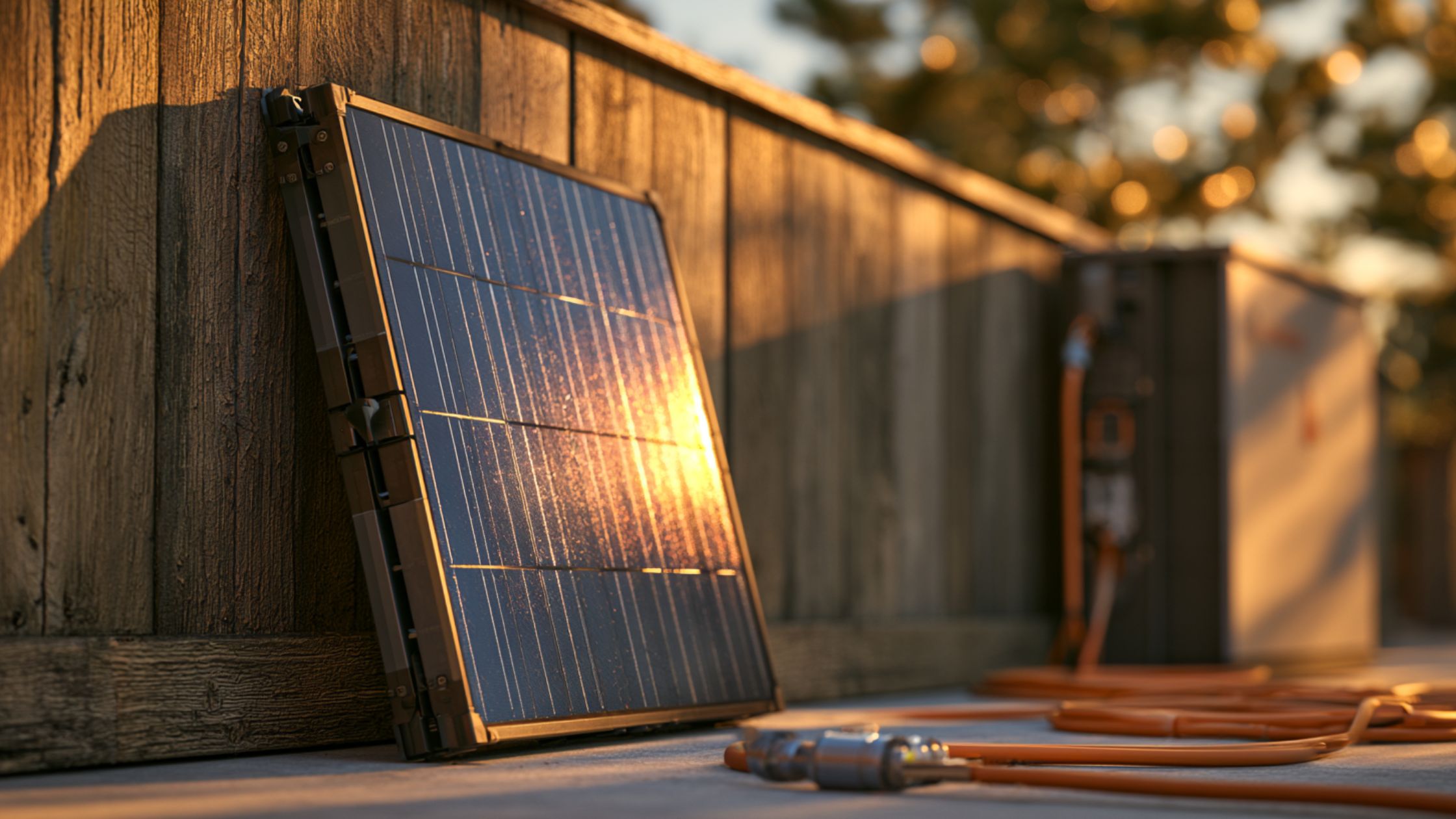
Bluetti Apex 300 + 350W Panels
Homeowners seeking whole-home backup power will find the BLUETTI Apex 300 a compelling solution. Its 2,764.8Wh LFP battery delivers simultaneous 120V/240V output across six AC outlets, rated at 3,840W continuous with 7,680W surge capacity. Dual MPPT controllers accept up to 2,400W of solar input, achieving 80% charge in 40 minutes.
The included 350W panel ships separately. LiFePO4 chemistry supports 6,000+ cycles and a projected 17-year lifespan. The integrated UPS transfers in under 10ms. At 83.8 pounds, portability is limited. Current pricing sits at $2,068.99, with an additional $50 off via Amazon Visa.
Best For: Homeowners who need reliable whole-home backup power with substantial solar charging capability and long-term battery durability.
Pros:
- Delivers simultaneous 120V/240V output across six AC outlets with 3,840W continuous and 7,680W surge capacity, making it capable of handling whole-home power demands
- LiFePO4 battery chemistry provides 6,000+ cycles and a projected 17-year lifespan, offering strong long-term value at its price point
- Dual MPPT controllers support up to 2,400W solar input, enabling an 80% charge in just 40 minutes for fast solar recovery
Cons:
- At 83.8 pounds, the unit is difficult to move or reposition, significantly limiting its portability compared to smaller power stations
- The $2,068.99 price point represents a substantial upfront investment, and the item is non-returnable due to hazardous materials regulations, adding purchasing risk
- The included 350W solar panel ships separately, which may complicate delivery logistics and delay a complete system setup
EcoFlow Delta 3 Plus + 400W Panels
The EcoFlow Delta 3 Plus pairs with a 400W solar panel to deliver serious home backup capability for users who need reliable off-grid power. Its 1024Wh LiFePO4 battery charges to 80% via solar in one hour, reaching full capacity in 70 minutes. Hybrid AC and solar charging cuts that to 56 minutes total.
The unit outputs 1800W AC and powers 13 appliances simultaneously, with X-Boost extending support to resistive loads exceeding 2600W. Rated for 4000 cycles, it targets a 10-year lifespan. The IP65 battery and IP68 solar panel guarantee weatherproof durability. Current pricing sits at $1,019, down 18% from $1,249.
Best For: Homeowners, campers, and RV users who need reliable off-grid or emergency backup power capable of running multiple appliances simultaneously.
Pros:
- Rapid charging with solar reaching 80% in one hour and hybrid AC/solar charging achieving full capacity in just 56 minutes
- Long-term durability backed by 4000 LiFePO4 cycles, a 10-year lifespan, and weatherproof IP65/IP68 ratings on both the battery and solar panel
- High power output of 1800W AC with X-Boost support for resistive loads exceeding 2600W, capable of running 13 appliances at once
Cons:
- At 62.9 pounds, the unit is heavy and may be difficult to transport or reposition without assistance
- Non-returnable item, creating significant purchase risk given the $1,019 price point
- The 1024Wh battery capacity may prove insufficient for extended outages requiring power for high-draw appliances over multiple days
Anker Solix F3800
When household power demands exceed what a 1–2kWh station can realistically sustain, the Anker SOLIX F3800 steps in as a high-capacity solution built around a 3,840Wh LiFePO4 battery with a 6,000W total output across dual-voltage 120V/240V.
Contenders for the best portable solar generator 2026 title must scale intelligently — this unit expands to 26.9kWh via six additional battery packs and supports 12,000W when paired with a second F3800. A NEMA 14-50 port enables direct EV charging at 6,000W, while L14-30 compatibility serves RV users.
Though marketed as a solar power bank for camping, its 132.3-pound frame positions it firmly as a residential backup platform. Wi-Fi/Bluetooth remote control, a 5-year warranty, and Anker’s InfiniPower 10-year lifespan technology reinforce long-term operational value at $1,999.99.
Factors to Consider
Selecting the right portable solar panel requires careful evaluation of several technical parameters that directly affect performance and usability. Wattage and power output determine charging speed, while panel efficiency ratings indicate how effectively a unit converts sunlight into usable electricity—critical factors in low-light or space-constrained conditions. Durability, weather resistance, weight, and charging port compatibility further define whether a panel can reliably serve its intended application in real-world environments.
Wattage And Power Output
Wattage and power output are among the most critical specifications to evaluate when choosing a portable solar panel, as they directly determine which devices and batteries the panel can charge effectively. The best portable solar panels range from 10W to 200W+, with output varying by sunlight intensity and panel efficiency.
Key considerations for matching wattage to use case:
- Small devices (phones, GPS units): 10–21W panels suffice
- Power banks and tablets: 21–60W panels deliver reliable charging speeds
- RV batteries and large power stations: 100W+ panels are required
For portable solar panels for RV camping, sustained output under partial shade conditions matters more than peak wattage ratings. Prioritize panels with MPPT charge controllers for maximum efficiency.
Panel Efficiency Ratings
Panel efficiency ratings measure how effectively a solar cell converts sunlight into usable electricity, expressed as a percentage of total incident light captured. For the best solar chargers for backpacking and emergency survival solar charger applications, higher efficiency translates directly to faster charging within a smaller, lighter form factor.
| Efficiency Range | Performance Tier |
|---|---|
| 10–14% | Entry-level, budget panels |
| 15–17% | Mid-range, adequate output |
| 18–20% | High-performance portable units |
| 21–23% | Premium monocrystalline panels |
| 24%+ | Advanced, laboratory-grade cells |
Monocrystalline silicon cells consistently achieve the highest efficiency ratings among portable options. Users should prioritize panels rated 20% or above when weight, packability, and reliable power generation under variable conditions are primary operational requirements.
Durability And Weather Resistance
Durability and weather resistance determine whether a portable solar panel remains functional across the demanding conditions typical of backcountry travel, emergency deployment, and extended outdoor use. Panels constructed with reinforced ETFE laminate surfaces outperform PVC-coated alternatives in abrasion resistance and UV degradation over time. Three critical ratings govern field-worthy durability:
- IP Rating — IP67 or higher confirms dust-tight construction and submersion tolerance up to one meter.
- Impact Resistance — Tempered glass or semi-flexible monocrystalline substrates withstand physical stress without microcracking.
- Temperature Range — Operational specs between -20°C and 60°C indicate genuine multi-climate reliability.
Reinforced corner grommets, welded seam stitching on fabric-based panels, and corrosion-resistant metal hardware further distinguish expedition-grade units from consumer-tier alternatives unsuitable for sustained field conditions.
Portability And Weight
Portability and weight govern the practical feasibility of integrating a solar panel into mobile power systems, where every gram and cubic centimeter competes against food, water, shelter, and safety equipment in a finite carry capacity. Monocrystalline panels deliver superior watt-per-gram ratios compared to amorphous thin-film alternatives, making them the dominant choice for weight-conscious deployments.
Folding form factors reduce packed dimensions substantially, with quality units collapsing to dimensions compatible with standard backpack attachment points. Integrated carry handles, daisy-chain loops, and MOLLE-compatible attachment systems further determine real-world usability.
Analysts recommend targeting panels under 500 grams for ultralight applications and under 2 kilograms for base-camp configurations. Corner reinforcements and seam integrity directly affect whether folding panels survive repeated compression cycles inside loaded packs without structural degradation.
Charging Port Compatibility
Charging port compatibility frequently determines whether a portable solar panel integrates seamlessly into an existing power ecosystem or requires additional adapters that introduce inefficiency, added weight, and potential failure points.
Modern panels should support the three critical output standards most devices require:
- USB-A — Powers legacy devices, headlamps, and basic electronics universally.
- USB-C PD (Power Delivery) — Charges laptops, modern smartphones, and tablets at full rated speeds.
- DC barrel connectors — Interfaces directly with portable power stations and battery banks.
Panels lacking native USB-C PD force users toward voltage-stepping adapters that reduce charging efficiency by 10–15%. Buyers should verify amperage ratings per port, not aggregate wattage claims, since underpowered ports throttle connected devices regardless of panel output capacity.
Frequently Asked Questions
Can Portable Solar Panels Charge Electric Vehicles in Emergencies?
Portable solar panels can technically charge electric vehicles in emergencies, though the process moves at a glacial pace compared to conventional charging methods. A standard portable panel produces 100–400W, whereas EVs require 3,000–22,000W for practical charging. Users must connect multiple high-wattage panels through a compatible inverter or charge controller. This method functions primarily for trickle-charging, restoring minimal range—typically 1–5 miles per hour under ideal sunlight conditions.
Are Portable Solar Panels Covered Under Homeowner’s Insurance Policies?
Coverage for portable solar panels under homeowner’s insurance policies varies considerably by insurer and policy type. Most standard policies cover portable electronics under personal property protection, subject to deductibles and coverage limits. However, high-wattage survival chargers may require scheduled personal property riders for full replacement value. Policyholders should document serial numbers, purchase receipts, and wattage specifications. Flood or storm damage claims involving portable units often face scrutiny regarding negligent storage.
How Do Extreme Cold Temperatures Affect Portable Solar Panel Efficiency?
Extreme cold temperatures actually improve portable solar panel efficiency slightly, as photovoltaic cells perform better in cooler conditions. However, temperatures below -20°C (-4°F) can cause physical damage to panel materials, including cracking and delamination. Battery-integrated units suffer considerably, as lithium-ion cells lose 20-40% capacity in freezing conditions. Snow accumulation blocking panels presents a greater practical concern than temperature itself for field survivalists and emergency preparedness users.
Can Portable Solar Panels Be Used Safely During Rain or Snow?
Like a well-sealed watch submerged briefly in water, most portable solar panels rated IP65 or higher can operate safely during rain or light snow. Manufacturers design weather-resistant panels with tempered glass and sealed junction boxes to withstand moisture exposure. However, efficiency drops considerably under heavy precipitation due to reduced irradiance. Users should avoid submerging panels, secure connections tightly, and inspect seals regularly to prevent internal water infiltration during extended outdoor deployment.
What Recycling Options Exist for Damaged or Outdated Solar Panels?
Damaged or outdated solar panels can be recycled through manufacturer take-back programs, certified e-waste facilities, or dedicated photovoltaic recycling companies such as We Recycle Solar and SOLARCYCLE. Many retailers accept panels for proper disposal. Recycling processes recover silicon, silver, aluminum, and glass components. Users should contact local waste management authorities for regional options. The Solar Energy Industries Association (SEIA) maintains a national recycling database for locating qualified facilities.
Conclusion
As the old saying goes, “the best tool is the one you have with you.” Selecting the right portable solar panel demands honest assessment of wattage requirements, panel efficiency ratings, and charge controller compatibility. Buyers who match system capacity to actual consumption data—rather than optimistic estimates—will consistently outperform those who overbuy or underbuy. Whether powering a weekend backpack or a full home backup system, informed specification matching remains the definitive factor separating reliable solar performance from costly disappointment.