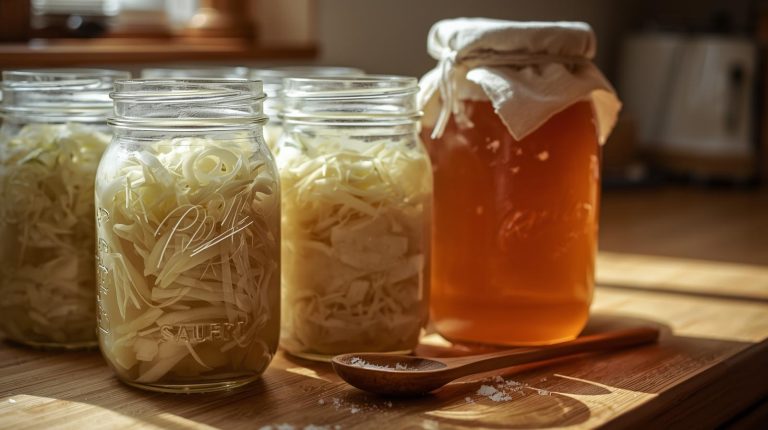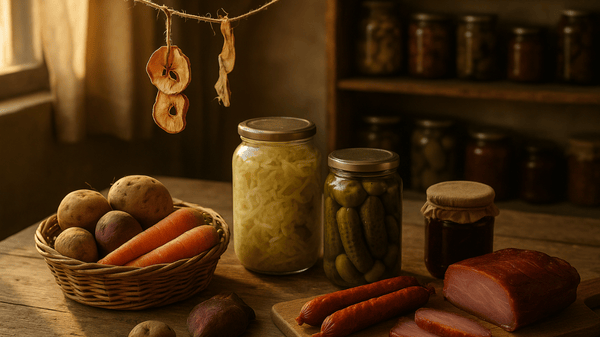

Food preservation stands as a cornerstone of human survival, predating modern refrigeration by millennia. You’ll find that traditional methods—fermentation, dehydration, salting, and smoking—remain scientifically sound, effectively inhibiting microbial growth without electricity. These techniques, once essential, are now overlooked despite their proven efficacy. Understanding their underlying principles reveals practical applications that extend your food supply considerably. What follows will challenge your dependence on modern cooling technology.
Key Takeaways
- Traditional preservation methods like fermentation, salting, acidification, and canning eliminate biological conditions supporting pathogens rather than merely slowing spoilage.
- Dehydrating food below 0.60 water activity inhibits dangerous bacteria like Salmonella and E. coli without requiring electricity.
- Salt curing paired with cold smoking provides superior long-term meat preservation by adding multiple layers of antimicrobial protection.
- Root cellars maintain ideal storage conditions of 32–40°F and 80–95% humidity, enabling 6–12+ months of viable food storage.
- The FIFO system, proper labeling, and regular condition assessments ensure safe consumption and efficient long-term food management.
How Food Stays Safe Without Refrigeration
Refrigeration isn’t the only reliable method for keeping food safe, and understanding why requires examining the biological conditions that allow pathogens to thrive. Microbial safety depends on controlling water activity, pH, osmotic pressure, and antimicrobial compounds, each of which you can manipulate without electricity.
When you reduce water activity below 0.60 through dehydration methods, bacteria like Salmonella and E. coli lose the moisture required for metabolic function and replication. Acidification drops pH to 4.6 or below, halting Clostridium botulinum spore germination entirely.
Salting draws water from food through osmotic pressure, creating conditions inhospitable to microbial growth independent of temperature. Fermentation introduces beneficial Lactobacillus species that actively eliminate pathogens through competitive inhibition and sustained lactic acid production, while smoking deposits antimicrobial phenolic compounds onto food surfaces.
Why Traditional Preservation Methods Still Work Today
Traditional preservation methods don’t merely slow spoilage the way refrigeration does—they actively eliminate the biological conditions that allow pathogens to survive.
When you ferment, salt, acidify, or can foods correctly, you’re controlling specific microbial drivers: water activity, pH, oxygen exposure, and osmotic pressure. These cultural practices, validated by the USDA-FSIS and peer-reviewed studies in the Journal of Food Science, aren’t relics—they’re proven, electricity-independent systems.
Preservation innovations like lacto-fermentation maintain 88% of vitamin C after four weeks, outperforming refrigerated storage’s 41% retention. You don’t need mechanical infrastructure to achieve food safety; you need precision.
Each method targets distinct hazards, which means you must apply techniques correctly and deliberately, without substitution, to maintain genuine shelf stability.
Dehydrate Food Without Electricity at Home
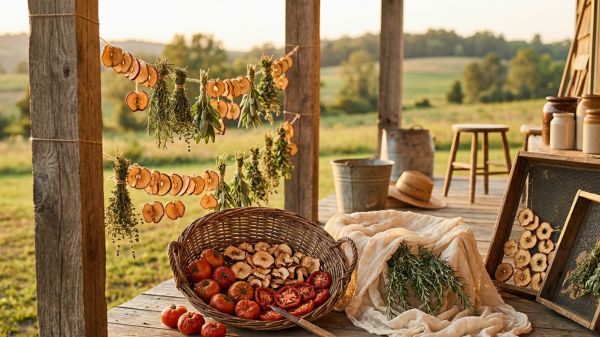
Dehydration removes moisture from food to inhibit microbial growth, and you can achieve this without electricity by applying sun drying, air drying, solar dehydrators, or gas oven methods, each suited to specific climates and food types.
Prepare your food uniformly, blanch vegetables, and soak sliced fruits in citric acid before dehydrating fruits to preserve color and texture.
| Method | Best Foods | Conditions Required |
|---|---|---|
| Sun Drying | Fruits, vegetables | 85°F+, humidity below 60% |
| Solar Dehydrators | Meats, herbs, produce | Warm, dry climates |
| Air Drying | Herbs, garlic, onions | Shade, low humidity |
Store your dehydrated goods in airtight, vacuum-sealed containers, reclaiming independence from refrigeration while extending shelf life considerably.
Ferment Fresh Produce Into Long-Lasting Food
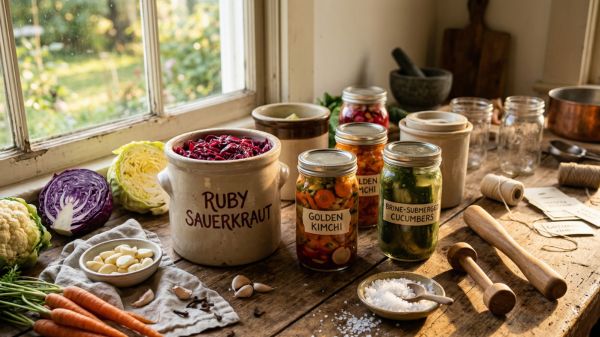
You’ll need these essentials to begin:
- Wide-mouth glass jars for non-reactive, transparent monitoring
- Non-iodized sea salt, measured precisely at 2-3% by weight
- Filtered, non-chlorinated water to protect beneficial bacteria
- Weights keeping vegetables fully submerged beneath brine
- A kitchen scale ensuring consistent, accurate ratios
Maintain temperatures between 60-75°F, ferment 7-14 days, then refrigerate. Each serving delivers billions of live lacto fermentation cultures, surpassing commercial probiotic supplements considerably.
Salt, Smoke, and Cure Meats That Last for Months
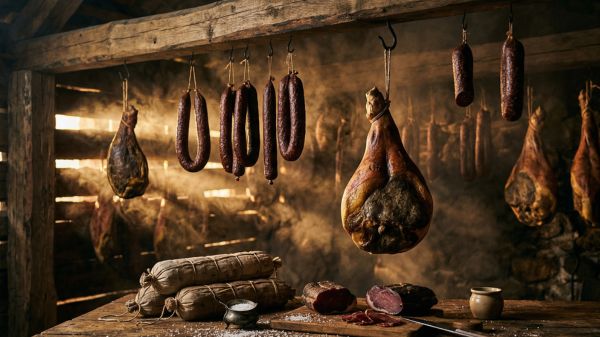
Salt curing your meat begins with selecting lean cuts—venison, beef, or pork—trimming all fat, and packing the meat completely in coarse, non-iodized salt at concentrations of 10% to 20% or higher, which draws out moisture through osmosis and inhibits bacterial growth.
Once cured, you can choose between hot smoking at 225°F, which produces shelf-stable meat within one to three hours, or cold smoking below 80°F, which requires a mandatory salt cure beforehand and considerably longer processing times to achieve lox-style preservation.
For long-term storage lasting months without refrigeration, you must guarantee thorough salt penetration throughout the meat, maintain cool and dry storage conditions, and consider curing salts containing nitrates or nitrites when processing thicker cuts to guard against Clostridium botulinum.
Salt Curing Basics
When curing meat with salt, you’re exploiting a fundamental biological process called osmosis, which draws water out of meat cells and creates a low-moisture environment that’s hostile to bacteria, yeasts, and molds. Mastering basic techniques and curing safety liberates you from refrigeration dependency entirely.
Essential requirements for successful salt curing include:
- Non-iodized coarse salt, which guarantees unimpeded moisture extraction without chemical interference
- Digital kitchen scales, measuring precise gram weights to calculate accurate meat-to-salt ratios
- Prague Powder #1, containing sodium nitrite that specifically neutralizes botulinum toxin development
- Proper thickness assessment, requiring one day per half-inch of meat for complete penetration
- Cool, dry storage conditions, protecting finished product from moisture and temperature fluctuations
These fundamentals collectively determine whether your preserved meat remains safe for months.
Smoking Methods Compared
Once the salt cure has established its foundational moisture reduction and bacterial inhibition, smoking becomes the next preservation layer that dramatically extends shelf life beyond what salt alone can achieve.
You’ll choose between two distinct smoking techniques: hot smoking, which cooks meat while simultaneously driving out moisture and depositing antimicrobial compounds, and cold smoking, which preserves raw texture while penetrating meat structure with protective chemicals without heat processing.
For true long-term meat preservation without refrigeration, cold smoking, when combined with your salt cure foundation, delivers superior storage duration, though it demands precise temperature control and careful airflow management.
Hot smoking produces a ready-to-eat product faster, but typically requires additional drying steps afterward to achieve comparable off-grid storage stability.
Complementing your smoking operation with natural pest control methods such as physical barriers like netting helps protect your curing and drying meats from insects and other pests that could compromise the preservation process.
Long-Term Storage Tips
Achieving months of shelf-stable storage without refrigeration requires that you integrate your salt cure and smoking processes with equally disciplined long-term storage conditions, because even properly cured and smoked meat will deteriorate if exposed to fluctuating temperatures, excessive moisture, or light.
These essential techniques and practical applications give you genuine independence from modern infrastructure:
- Store cured meat in cool, dry locations where temperatures remain consistently stable
- Shield your reserves from direct light to prevent oxidation and degradation
- Guarantee adequate air circulation around stored goods to prevent moisture accumulation
- Expect 6–12+ months of viable shelf life when conditions remain controlled
- Prioritize temperature consistency over coldness, since fluctuating conditions accelerate spoilage
Disciplined storage transforms properly cured meat into a reliable, long-term food reserve requiring no external systems.
Store Preserved Foods in a Root Cellar Year-Round
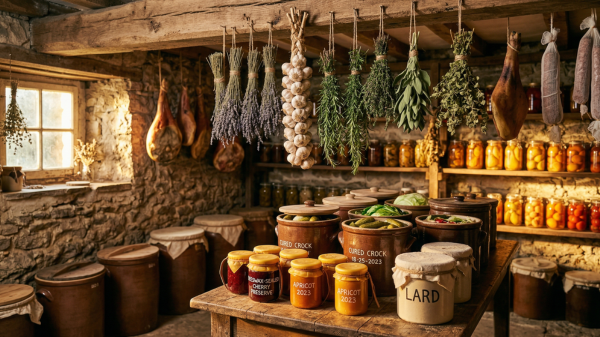
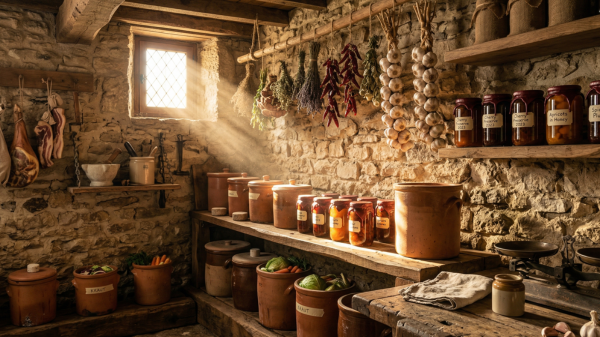
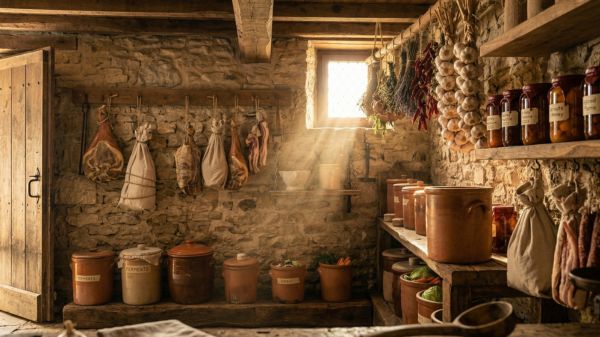
A root cellar offers one of the most reliable year-round solutions for preserving food without mechanical refrigeration, maintaining temperatures between 32–40°F (0–4°C) through natural soil insulation that stabilizes conditions far more consistently than above-ground storage.
Mastering root cellar design and food storage techniques empowers you to reclaim independence from modern systems. You’ll want to maintain 80–95% humidity, guarantee proper ventilation, and keep conditions dark to prevent sprouting.
| Condition | Optimal Range | Method |
|---|---|---|
| Temperature | 32–40°F | Soil insulation |
| Humidity | 80–95% | Earth floors, water pans |
| Light | None | Covered windows |
Organized wood shelving, separated ethylene-producing fruits, and consistent air circulation collectively guarantee your stored produce remains viable for months.
The Best Foods to Preserve Without Refrigeration
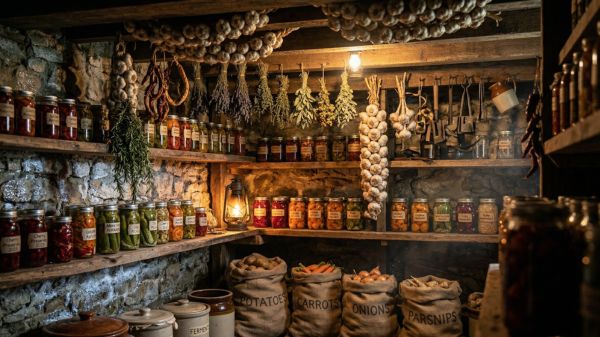
While your root cellar provides the ideal environment for long-term storage, the foods you choose to stock it with determine how effectively you’ll sustain yourself without mechanical refrigeration. Strategic selection of shelf-stable provisions grants you genuine independence from modern infrastructure:
- Canned foods deliver protein and vegetables lasting several years without deterioration
- Dried pasta maintains nutritional quality for years in airtight, moisture-free containers
- Freeze-dried meals achieve remarkable 25-year shelf stability through moisture elimination
- Hard cheeses like Parmigiano-Reggiano resist spoilage through low moisture content and natural acidity
- Honey preservation provides indefinite antimicrobial stability, requiring zero additional intervention
Mastering these provisions, which collectively address carbohydrates, proteins, fats, and natural sweeteners, positions you to sustain complete nutritional autonomy indefinitely.
Pairing your preserved food stores with enhanced battery storage technologies can further support off-grid living by powering essential equipment without reliance on traditional energy infrastructure.
Rotate Your Preserved Food Supply Before It Spoils
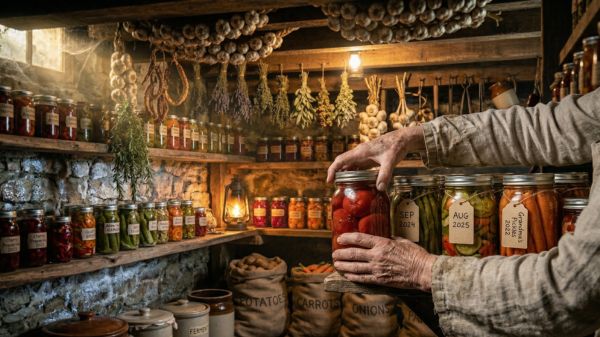
Once you’ve built your preserved food supply, you’ll need to implement a First In, First Out (FIFO) rotation system, placing newly acquired items behind older stock so that the oldest items are consistently consumed first, reducing spoilage and financial loss.
You should track expiration dates by labeling containers with a permanent marker on both the top and front surfaces, and consider applying color-coded stickers — red for immediate use, yellow for near-term consumption, and green for extended shelf life — updating these labels monthly to reflect current status.
Before consuming any preserved item, you must inspect it carefully for signs of compromised seal integrity, packaging failure, or visible mold growth, as degraded packaging can introduce harmful bacterial contamination, including Clostridium botulinum in canned goods, posing considerably elevated foodborne illness risks, particularly in emergency situations where medical access is limited.
First In, First Out
Implementing a First In, First Out (FIFO) rotation system guarantees that your oldest preserved foods are consumed before newer additions, directly reducing the household food waste that costs the average North American family $1,500 annually. Strengthening your inventory visibility through deliberate organization liberates you from unnecessary spending and preventable loss.
Apply FIFO principles through these practical techniques:
- Place newly acquired goods behind existing stock
- Label containers with purchase or expiration dates using permanent markers
- Use slanted shelving to automatically roll older products forward
- Group similar preserved items together for faster identification
- Maintain accessible inventory lists to prevent duplicate purchases
Consistent rotation transforms your storage into a self-sustaining system, reducing household food waste by up to 30% while maximizing every preserved resource you’ve carefully prepared.
Track Expiration Dates
Tracking expiration dates across your preserved food supply heads off spoilage losses before they accumulate, and a reliable documentation system—whether a notebook, spreadsheet, or dedicated pantry app—gives you the visibility needed to rotate stock with precision.
Record product names, quantities, and expiration dates at the point of storage, categorizing entries by location—pantry shelf, basement bin, or root cellar—so retrieval remains efficient.
Your expiration tracking system gains further utility when you post inventory lists near storage areas, creating working references that inform meal planning and restocking decisions simultaneously.
Conduct seasonal reviews at minimum to maintain thorough awareness of your entire stockpile’s timeline, and use permanent markers to label both purchase and expiration dates boldly on containers, ensuring your inventory methods translate directly into actionable rotation choices.
Inspect Before Consuming
Rotating your preserved food supply through the First In, First Out (FIFO) methodology guarantees older items get consumed before newer stock, reducing household waste by 40-60% when applied consistently across canned goods, dry staples, frozen items, and long-term freeze-dried meals. Inspect items systematically using condition assessment protocols before consuming anything from your stockpile:
- Examine lids for bulging, rust, or compromised seals indicating bacterial contamination
- Perform sensory evaluation by checking for unusual odors upon opening containers
- Assess visual cues including discoloration, cloudiness, or abnormal textures in preserved contents
- Verify purchase-date labels remain legible, confirming accurate FIFO sequencing
- Confirm airtight container integrity, identifying moisture infiltration or insect compromise
Consistent condition assessment liberates you from dependence on external systems, ensuring your stockpile remains reliable, safe, and fully within your autonomous control.
Discover 100+ DIY Projects For a Self-Sufficient Backyard.
Frequently Asked Questions
Can Children Safely Eat Fermented and Preserved Foods Regularly?
Yes, you can safely incorporate fermented foods into children’s diets by following established fermentation benefits and safety guidelines. You’ll introduce plain yogurt at 6-12 months, expanding variety as they age, while monitoring salt intake against daily maximums, which range from 2g for toddlers to 6g for teens. You should measure alcohol content in kombucha, introduce live cultures gradually, and use high-salt ferments as seasoning rather than primary food components.
How Do Traditional Preservation Methods Impact Food’s Overall Nutritional Density?
Like a double-edged sword, traditional preservation methods both protect and transform your food’s nutritional density. The fermentation process actively boosts vitamins, amino acids, and probiotics, enhancing your food’s nutritional benefits beyond its original state. Pickling reduces anti-nutrients, improving mineral absorption, while drying concentrates nutrients but risks heat-sensitive vitamin loss. You’re reclaiming control over your food’s integrity through these time-honored, liberating preservation techniques.
Which Preservation Methods Work Best in Humid Tropical Climate Conditions?
In humid tropical climates, you’ll find that tropical fermentation, salt-curing, smoking, and dehydration techniques each address distinct climate challenges. Fermentation leverages Lactobacillus bacteria, thriving at 70-100°F, while salt-curing requires 15-20% concentration to counteract moisture. Pickling methods create acidic barriers against pathogens, and solar dehydration reduces moisture content to 15-20%, eliminating microbial survival conditions. Combining smoking with salt-curing extends protein shelf life beyond 12 months effectively.
Does Food Preserved Without Refrigeration Taste Different Than Refrigerated Food?
Preservation profoundly produces distinct taste comparisons you’ll notice immediately. Fermented foods develop complex, tangy flavor profiles through lactic acid production, while dried foods concentrate natural compounds by three to five times, intensifying sweetness and depth. Sugar-preserved jams caramelize natural sugars, creating richer density, and salt-cured items develop umami characteristics that refrigeration simply can’t replicate, freeing you from bland, moisture-diluted alternatives and unveiling genuinely transformative culinary experiences.
Are There Legal Regulations Governing Home-Preserved Food Sold at Markets?
Yes, regulations govern your home-preserved foods sold at markets. All 50 states have cottage food laws, and you must comply with your state’s specific rules on permitted products, labeling, and sales locations. Home canning, however, often falls outside permitted exemptions, as canned goods typically appear on prohibited lists due to food safety risks. You can’t sell to retailers without commercial licensing.
Conclusion
Why wait for modern conveniences to fail before you embrace these time-tested methods? You’ve now explored the foundational techniques of food preservation, from dehydrating and fermenting to salting, smoking, and root cellaring. By implementing a disciplined rotation system and selecting appropriate foods for preservation, you’ll maintain a reliable, long-term food supply. These methods aren’t obsolete; they’re practical, proven strategies that empower you to sustain nutritional security without depending on refrigeration.