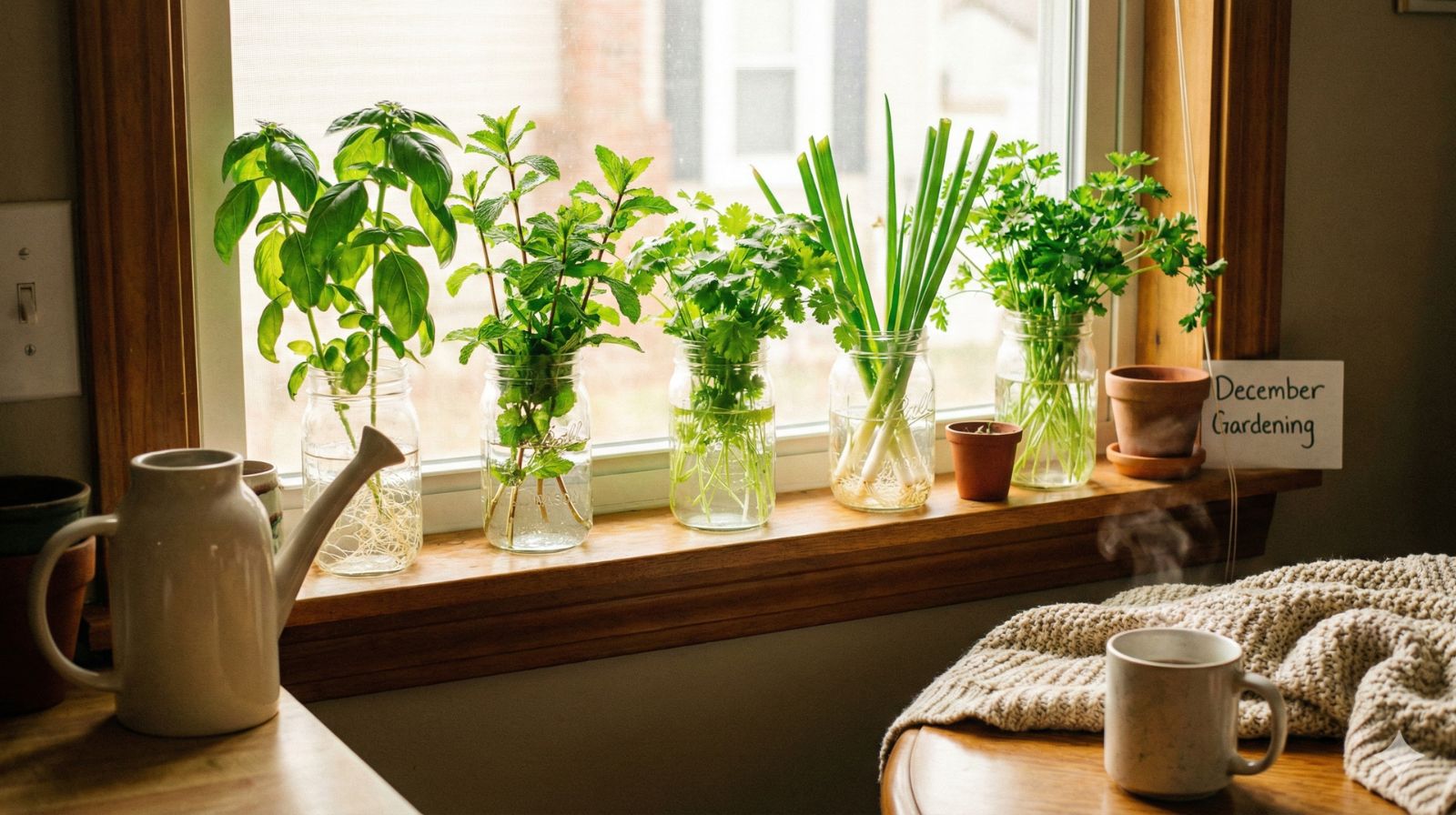
To efficiently propagate foods indoors in December, focus on regrowing leafy greens such as lettuce, arugula, and spinach by selecting fresh bases with intact roots, placing them in moist, well-draining soil or water, and providing consistent, moderate light. Incorporate fast-growing herbs like basil, mint, and cilantro via cuttings or seed sowing under controlled temperature and humidity to guarantee rapid development. Replant scallions and green onions by cutting tops and submerging in water for continuous harvests. By following precise propagation techniques detailed here, you can optimize your indoor garden’s productivity, with further strategies available for sustained cultivation.
Easy Leafy Greens for Year-Round Harvest
When cultivating leafy greens indoors for year-round harvest, selecting varieties that are well-adapted to container and restricted root environments is essential to optimize growth cycles and guarantee consistent yield. Leafy greens such as lettuce, arugula, mustard, kale, and spinach are inherently suitable for indoor gardening due to their rapid growth and minimal space requirements.
These species, often included in mesclun mixes, allow multiple harvests through “cut and come again” methods, where leaves are selectively harvested while maintaining the central growth point. Propagation primarily involves sowing seeds directly into moist, loose, and well-draining potting soil under moderate light conditions, with minimal fertilization necessary.
Ensuring proper temperature, humidity, and ventilation further enhances foliage development, facilitating continuous indoor leafy green production with sustained quality. Many of these greens are also quick to germinate, making them ideal for impatient gardeners seeking fast results.
Fast-Growing Herbs to Brighten Your Kitchen Windows
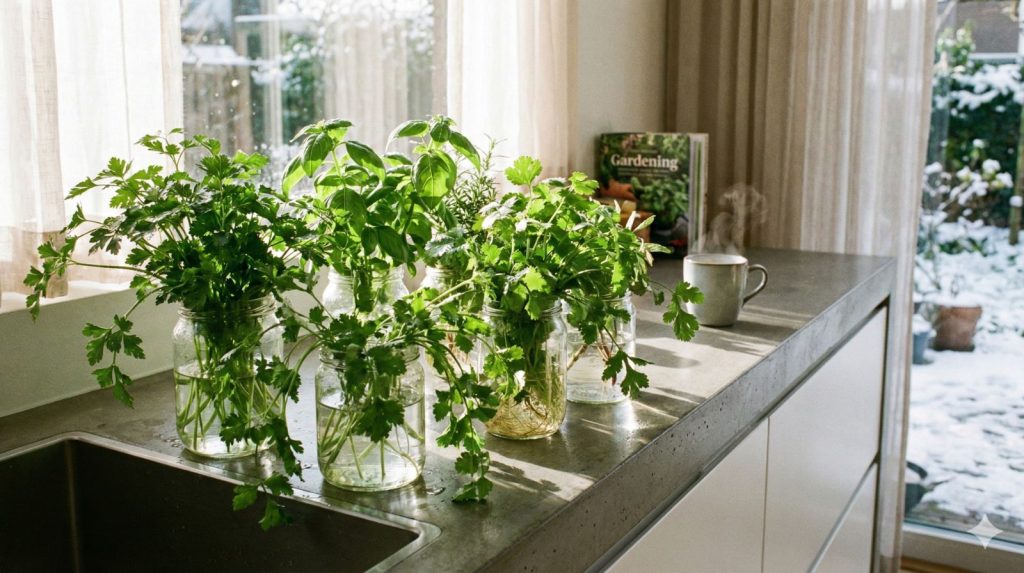
Fast-growing herbs such as basil, mint, cilantro, rosemary, and thyme are highly suitable for cultivation in indoor environments due to their rapid developmental rates, minimal space requirements, and ability to provide continuous fresh flavor enhancements within the kitchen.
To optimize growth, understanding mint propagation methods and cilantro care is essential; mint propagates efficiently through cuttings or roots, enabling rapid expansion, while cilantro requires consistent light exposure, either from a sunny windowsill or grow lights, to promote vigorous growth.
Proper watering practices also play a crucial role in maintaining the health and productivity of these herbs. The following table summarizes significant growth considerations:
| Herb | Propagation / Care Requirements |
|---|---|
| Mint | Propagates via cuttings or roots; thrives in moist, well-drained soil |
| Cilantro | Needs ample sunlight; germinates quickly and benefits from succession planting |
These herbs’ growth rates enable a continuous harvest cycle, making them ideal choices for indoor cultivation. Understanding these key care needs ensures you can enjoy fresh herbs all year round with minimal effort.
No products found.
Replanting Scallions and Green Onions From Kitchen Scraps
Regrowing scallions and green onions from kitchen scraps involves a systematic approach that begins with selecting suitable remnants and preparing them for subsequent propagation phases.
First, choose white bulbous portions with roots intact to guarantee successful root preservation, and trim green tops to 2 inches, facilitating water propagation. Rinse scraps thoroughly to prevent contamination, and handle fragile roots with care during transfer. When moving to soil, confirm proper soil transfer to provide the necessary nutrients, and implement nutrient management practices to sustain growth.
Properly soil preparation is essential for healthy regrowth. Use a container with a minimum 4-inch depth, drainage, and pre-wetted soil for stability and aeration. Plant each onion 1.5 inches apart, covering bulbs with deep soil for stability. Shift from water to soil after approximately 2 weeks of root and shoot development. Maintain proper soil moisture and monitor nutrients to optimize continued growth.
Related Post: Cold-Climate Indoor Grow Hacks: Light, Humidity & Care Tips for Dark Winter Months.
Propagating Lettuce and Salad Greens Indoors
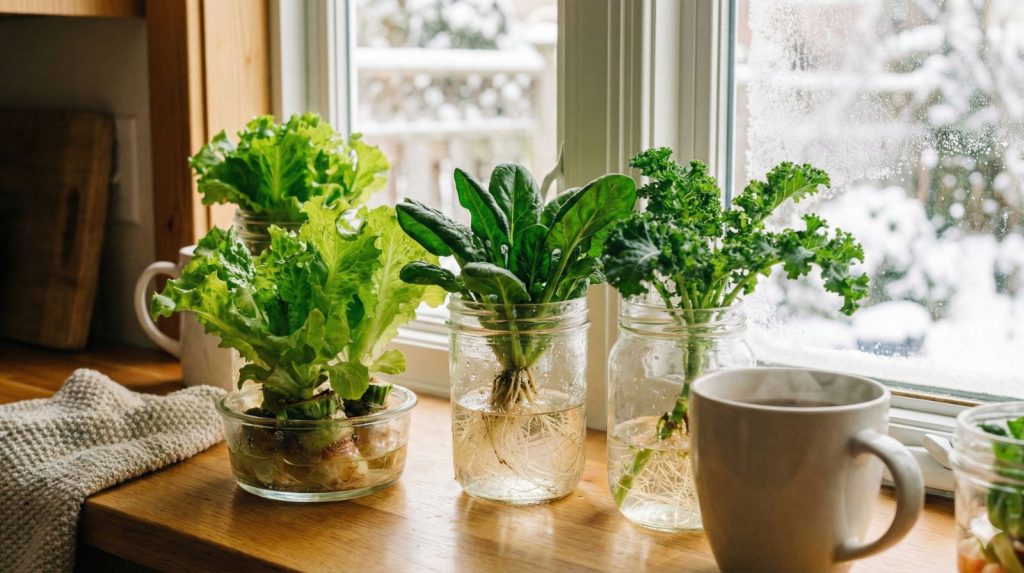
Selecting fresh lettuce bases with intact root systems is essential for successful indoor propagation, as contamination or damage can impede regrowth, necessitating careful inspection prior to planting. Proper regrowth care involves providing ideal environmental conditions, including consistent moisture, adequate lighting, and temperature control, to facilitate vigorous root development and leaf production.
Maintaining optimal humidity levels is also crucial, ensuring these parameters are maintained allows for efficient, sustainable cycles of cut-and-come-again harvesting, maximizing yield and minimizing disease risk within the indoor cultivation environment. Additionally, understanding soil health and using organic, nutrient-rich mediums can support healthier plant growth and resilient roots.
Selecting Fresh Lettuce Bases
When selecting lettuce bases for indoor propagation, it is crucial to prioritize specimen quality by guaranteeing the bases have intact root structures, dense cores, and exhibit vibrant green coloration—indicators of freshness and liveliness that enhance regrowth potential.
Opt for loose-leaf varieties such as Baby Oakleaf, Tom Thumb, and Black-Seeded Simpson, which demonstrate favorable adaptation and rapid regrowth in confined environments. Avoid head lettuces, as their bases are less suitable for indoor propagation compared to leaf varieties. To guarantee peak growth, select bases that:
- Show no signs of rot, disease, or discoloration
- Have dense, weighty appearance
- Possess visible root ends or intact lower stems
- Exhibit vigorous green coloration, indicating high energy
- Ensure the bases are freshly cut, as older or dried-out bases are less likely to regrow effectively.
This approach maximizes success in propagating lettuce types indoors, facilitating efficient indoor cultivation and regeneration.
Proper Regrowth Care
Maintaining perfect growth conditions for indoor-regrown lettuce and salad greens necessitates meticulous attention to watering, lighting, temperature, humidity, soil, and pest management protocols, each of which must be precisely calibrated to prevent stress-induced deficiencies and secure continuous, vigorous development.
Guaranteeing consistent moisture levels involves watering every 2–3 days, avoiding waterlogging, and utilizing self-watering planters with drainage capabilities. Proper lighting, such as 10–12 hours of grow light daily from 6–12 inches above plants, is critical, particularly in winter. Temperature should remain between 55°F and 75°F, with moderate humidity to prevent mold issues.
The soil must be nutrient-rich, well-draining, and replenished periodically. Regular pest control, through organic methods and clean growing environments, maintains ideal nutrient levels and mitigates fungal diseases.
| Parameter | Precise Requirements |
|---|---|
| Watering | Every 2–3 days, avoid overwatering, guarantee adequate drainage |
| Lighting | 10–12 hours daily, placement 6–12 inches above, supplemental in winter |
| Pest Control | Organic insecticides, clean environment, sticky traps for monitoring |
Growing Microgreens for Nutritious Tiny Bites
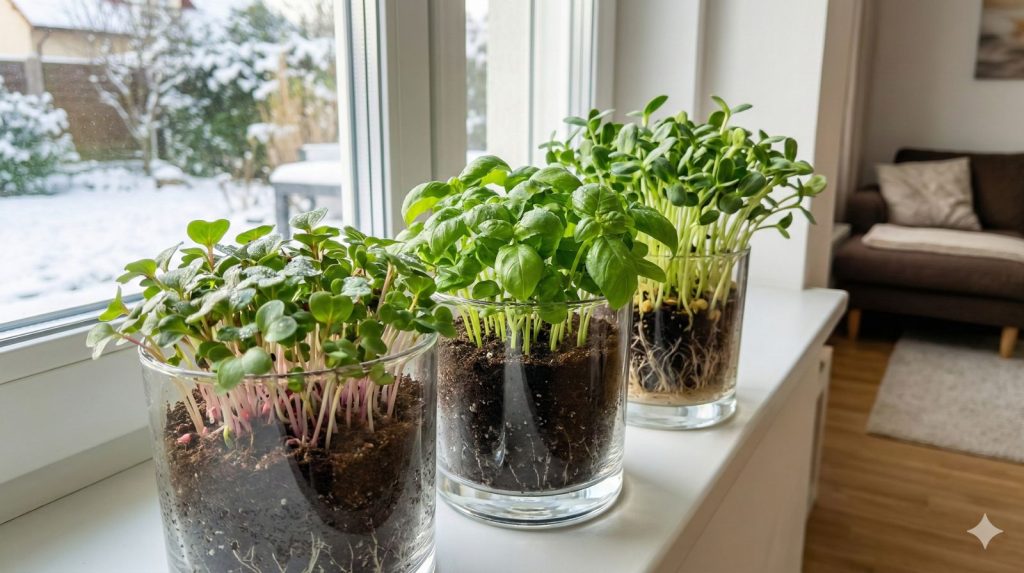
Growing microgreens for nutritious tiny bites involves a systematic process that maximizes germination, growth, and harvest cycles, ensuring consistent quality and highest nutrient retention. Proper selection of seed varieties, such as radish, arugula, or broccoli, directly influences microgreen benefits and overall growth outcomes.
Adherence to specific growing techniques—using shallow trays, appropriate soil mediums, and controlled lighting—facilitates uniform germination and robust development. It is critical to maintain ideal environmental conditions, including temperature and humidity, while avoiding drafts to prevent growth disturbances.
Incorporating these practices results in microgreens harvested within 7–21 days, rich in essential vitamins and minerals. Microgreens are young plants harvested after the first true leaves appear, making them an efficient and quick crop to grow indoors. Key considerations include:
- Selecting high-quality, organic seeds
- Ensuring consistent moisture levels
- Providing adequate light exposure
- Employing precise sowing and watering techniques
Root Vegetable Regrowth: Carrots, Celery, and More
Root vegetable regrowth, such as that of carrots, celery, and related produce, involves precise methods that leverage the plant’s inherent regenerative capacities through strategic cutting, best placement, and controlled environmental management; understanding these processes requires a thorough knowledge of plant physiology, particularly meristematic activity, ideal timing for harvest, and environmental conditions—including light, temperature, and water quality—to maximize success rates.
Specifically, carrot propagation entails placing the top approximately one inch of the carrot in shallow water to facilitate chlorophyll production and root development, while celery regeneration involves cutting about 1-2 inches from the base and immersing it in water, promoting new leaf and root growth within five to ten days. Regular water changes benefit both practices by preventing bacterial growth and providing fresh nutrients, while conducive indirect lighting and the use of fresh, healthy plant material guarantee maximal regrowth potential.
Related Post: Plant-Based Wellness Routine for Winter: Edible Flowers, Herbal Infusions & Fresh Greens.
Cultivating Basil and Other Aromatic Herbs in Small Spaces
Are you aware that cultivating basil and other aromatic herbs within confined indoor environments necessitates precise control over environmental variables and substrate conditions to assure ideal physiological development?
Effective herb care involves monitoring light exposure, temperature, humidity, and soil moisture levels to fine-tune growth, particularly when space is limited. Insufficient light and improper temperature ranges hinder basil benefits and inhibit plant health. To enhance propagation success:
- Use south-facing windows or supplemental grow lights to confirm at least 6–8 hours of bright, indirect light daily.
- Maintain temperatures between 65–75°F to prevent stress and promote root development.
- Employ high-quality potting mixes with adequate drainage, avoiding garden soil to minimize pests.
- Regularly rotate containers and adjust watering to keep soil moist but not waterlogged, thereby reducing root rot. Proper container selection can also influence plant health and growth efficiency. These measures foster excellent herb care and maximize growth potential in small indoor spaces. Consistent environmental conditions are essential for successful indoor herb propagation.
DIY Hydroponic Systems for Indoor Vegetable Growth
Implementing a DIY hydroponic system for indoor vegetable cultivation involves meticulous consideration of material selection, system design, and environmental control parameters to maximize plant health and productivity.
The hydroponic setup relies on a passive Kratky method that requires no pumps or electricity, where plants suspend above nutrient solutions, allowing simultaneous root access to water and oxygen through a maintained 3-4 cm air gap.
Proper nutrient management involves regular nutrient solution replacement every 2–3 weeks, ensuring pH stability between 5.5 and 6.5, and monitoring water levels to preserve the air gap. Suitable plant selections include leafy greens, small vegetables, and shallow-rooted crops, supported by an enhanced setup involving containers, net pots, and growing mediums such as clay pebbles.
Monitoring parameters are critical for sustaining healthy growth and maximizing yields. Additionally, incorporating automated monitoring tools can optimize environmental conditions in real-time, leading to better crop outcomes.
Related Post: Top 10 Hydroponic Vegetables to Grow at Home.
No products found.
Frequently Asked Questions
How Long Does It Take for Kitchen Scraps to Regrow Into Edible Plants?
The growth timeline for kitchen scrap regrowth into edible plants varies depending on the type; leafy greens typically exhibit visible new leaves within 3–7 days, while bulb vegetables like green onions emerge within 5–7 days, and herbs such as basil root in 7–14 days. Conclusive edible production, such as ready-to-harvest leaves or greens, generally requires 2–4 weeks, with slower growth in December due to reduced daylight and lower temperatures.
Can All Vegetables Be Propagated Easily Indoors During Winter?
While most vegetable varieties do not lend themselves to effortless indoor propagation during winter, certain leafy greens, herbs, and water-friendly root cuttings tend to achieve higher indoor success, provided ideal conditions—such as light, temperature, and humidity—are maintained. However, vegetables requiring extensive space, high light intensity, or specific climatic conditions—like root vegetables or fruiting crops—generally present significant challenges, consequently limiting the scope of effective indoor propagation during colder months.
What Lighting Is Best for Indoor Regrowth of Kitchen Herbs and Greens?
The ideal lighting for indoor regrowth of kitchen herbs and greens combines natural light with grow lights, specifically full-spectrum LED fixtures, which provide blue wavelengths for vegetative growth and red wavelengths to enhance flavor compounds. Position grow lights 6-12 inches above the plants, ensuring 12-16 hours of illumination daily, while supplementing limited natural light, to maintain a consistent photoperiod, prevent etiolation, and promote vigorous, healthy foliage development.
Are There Specific Containers Recommended for Stable Indoor Plant Propagation?
For stable indoor plant propagation, select propagation containers optimized for indoor gardening that feature appropriate drainage holes to mitigate waterlogging, with transparent or translucent walls to facilitate root monitoring, and include lids or covers capable of maintaining high humidity levels essential for root development; environmentally friendly biodegradable pots or recycled containers, such as yogurt cups or newspaper pots, are suitable for initial stages, whereas larger or specialized containers like propagation flats or nursery trays support mature seedling growth.
How Do I Prevent Mold and Rot When Rooting Plants Indoors?
To prevent mold and rot when rooting plants indoors, monitor indoor humidity levels carefully, maintaining ideal ranges specific to each species, as excessive humidity facilitates mold growth. Confirm proper soil drainage by using well-aerated potting mixes and pots with drainage holes. Regularly inspect roots, trimming dead tissue, and applying fungicide dips. Adequate airflow, achieved through strategic spacing and ventilation, reduces moisture retention, thereby minimizing the risk of mold development and root rot.
Conclusion
By following these propagation techniques during December, you can systematically cultivate a sustainable microenvironment that minimizes external dependencies while maximizing resource utilization. Each method, from leafy greens to hydroponic setups, requires precise control of variables such as light, moisture, and nutrient levels—fundamental parameters in maintaining ideal plant health. Implementing these protocols guarantees continuous indoor food production, ultimately contributing to resilient food security strategies within controlled environments.
References
- https://learn.eartheasy.com/articles/how-to-be-successful-growing-vegetables-inside-this-winter/
- https://www.epicgardening.com/start-seeds-winter/
- https://www.youtube.com/watch?v=j_Zu3Cfxo7w
- https://kansashealthyyards.org/all-videos/video/cuttings-to-grow-inside-for-winter
- https://www.youtube.com/watch?v=hPbb1eLRakA
- http://diyinpdx.com/2017/07/12/plant-propagation/
- https://www.epicgardening.com/easy-to-propagate-houseplants/
- https://www.lovethatleaf.co.nz/blogs/plant-care-guides/how-to-water-propagate-indoor-plants
- https://cityfloralgreenhouse.com/2020/09/houseplant-101-how-to-propagate-houseplants-easily/
- https://empressofdirt.net/grow-leafy-greens-indoors/