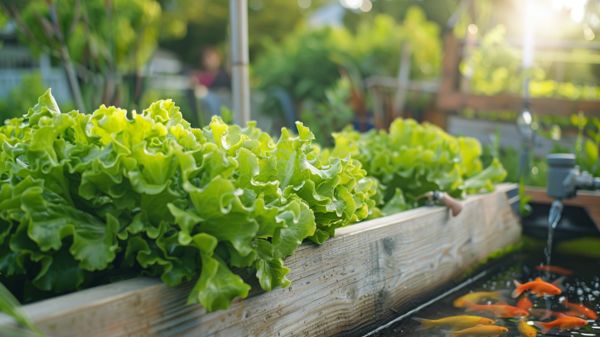
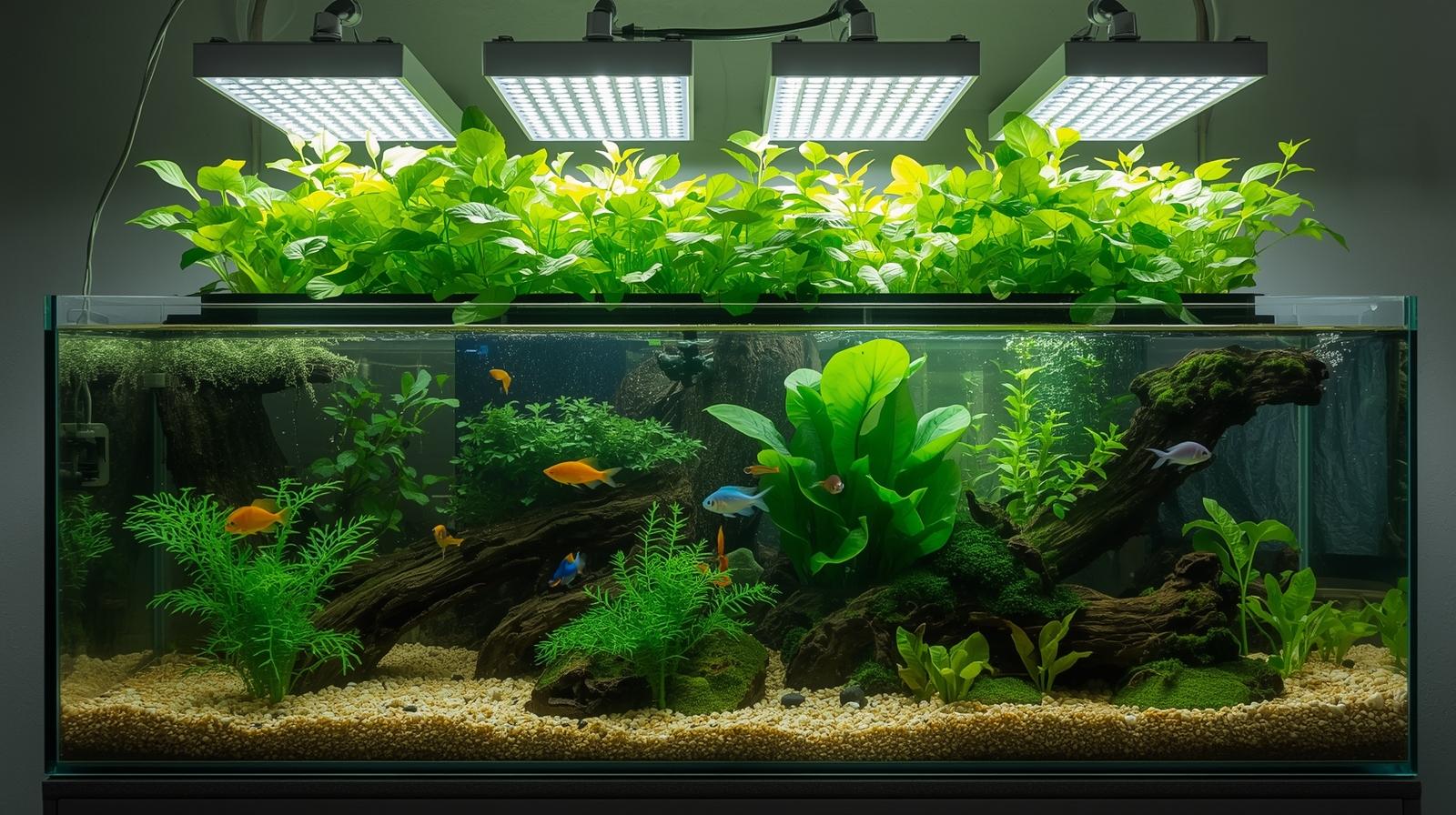
Imagine harvesting crisp lettuce and fresh basil right in your living room… all powered by a single fish tank.
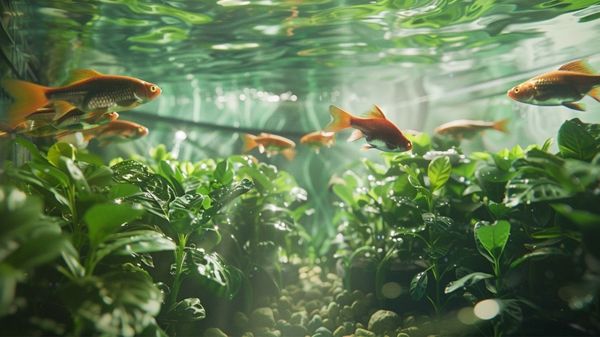
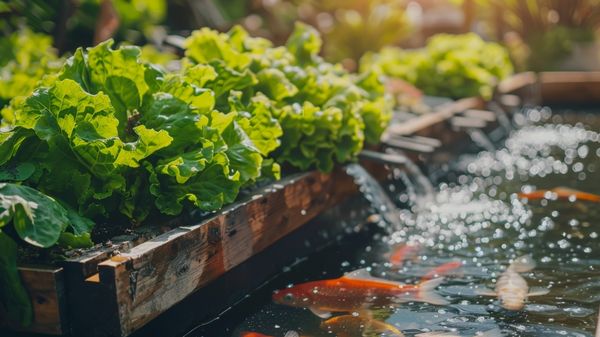
That’s not science fiction — that’s indoor aquaponics, a beautiful blend of nature and innovation. In this symbiotic system, fish waste feeds plants, plants filter the water, and both thrive together in a perfectly balanced loop.
The best part? It uses 90% less water than traditional gardening, requires no soil, and fits neatly in an apartment corner.
Whether you’re a curious hobbyist, an urban gardener, or simply want a self-sustaining food source, this guide will walk you through how to set up your indoor aquaponics system in 8 easy, beginner-friendly steps.
Step 1: Gather Your Indoor Aquaponics Starter Kit
Before diving in, let’s start with the essentials. Think of it as assembling a mini ecosystem — every part has a role.
You’ll need:
- A fish tank (10–20 gallons for small systems)
- Water pump and tubing
- Grow bed or shallow tray for plants
- Clay pebbles or gravel as growing media
- Aquarium heater (optional for tropical fish)
- Air pump + tubing
- pH testing kit
- LED grow light (for consistent indoor lighting)
- Fish + plants/seeds (goldfish and lettuce are perfect starters)
Mini Comparison Table:
| Component | Purpose | Example Product |
|---|---|---|
| Fish Tank | Water reservoir | 20-Gallon Glass Aquarium |
| Pump | Moves nutrient water | Submersible 200 GPH Pump |
| Grow Bed | Plant base | Shallow Hydro Tray or Plastic Bin |
| Grow Media | Root support + filtration | Expanded Clay Pebbles |
| Light | Photosynthesis | Full-Spectrum LED Panel |
💡 Pro Tip: Start small — it’s easier to balance fewer fish and plants at first, then scale up later.
No products found.
Step 2: Choose the Right Location
Location determines how stable and efficient your aquaponics setup will be.
Choose a spot that’s:
- Near a power outlet for pumps and lights.
- Temperature stable (between 68–75°F or 20–24°C).
- Out of direct sunlight, which encourages algae.
- Strong and level, since even small tanks get heavy.
If your room gets cold in winter, add insulation around the tank or use an aquarium heater.
Step 3: Set Up the Fish Tank Base
Now it’s time to create the aquatic foundation of your mini ecosystem.
- Place and level your tank on a sturdy surface.
- Fill it with dechlorinated water (let tap water sit 24 hours or use a conditioner).
- Install the heater (if needed) and air pump to keep water oxygenated.
- Run the system for at least 24–48 hours before introducing fish.
Add a few hiding spots — small PVC tubes or stones — to make fish feel safe.
💡 Pro Tip: Use hardy fish like goldfish or tilapia. They adapt easily while the nitrogen cycle builds up.
Step 4: Build the Grow Bed
The grow bed is your plants’ home — the top half of your ecosystem.
- Place your grow tray directly above the tank. You can use a small shelf or frame.
- Fill it with rinsed clay pebbles or gravel (never unwashed — debris can clog your pump).
- Install a drain pipe or overflow hole so water trickles back into the tank.
- Test the flow — the water should fill the grow bed and drain evenly.
DIY Option: Use a storage tote, drill a drain hole at one end, and elevate it over the tank with wood blocks or brackets.
Visual: Cross-section diagram showing water flowing up from tank → through grow bed → draining back.
Step 5: Install the Water Pump and Tubing
This is where your system comes to life — circulating nutrients and oxygen between fish and plants.
- Submerge your pump inside the tank.
- Attach tubing that delivers water up into your grow bed.
- Create a loop or drip system that spreads water evenly.
- Let gravity return the clean water to the tank.
- Run your pump on a timer: 15 minutes ON, 45 minutes OFF is ideal for small setups.
💡 Pro Tip: Add a filter sponge at the pump intake to protect baby fish and keep debris from clogging the lines.
Step 6: Add Fish and Plants
Here’s where it starts to feel like magic — connecting the aquatic and plant worlds.
Fish Options:
- Goldfish – great for beginners, hardy, and inexpensive.
- Tilapia – fast-growing, ideal if you want edible fish.
- Guppies – small, colorful, easy breeders.
Plant Options:
- Leafy greens: Lettuce, spinach, kale, bok choy.
- Herbs: Basil, mint, parsley, cilantro.
- Fruit plants: Strawberries or cherry tomatoes (once system matures).
Start with young plants or seedlings — their roots adapt better to aquaponic conditions.
Mini Comparison Table:
| Fish Type | Growth Speed | Temp Range | Difficulty |
|---|---|---|---|
| Tilapia | Fast | 72–86°F | Medium |
| Goldfish | Medium | 65–75°F | Easy |
| Guppy | Fast | 72–78°F | Easy |
💡 Pro Tip: Wait 2–3 weeks after setup before planting — this allows bacteria to establish and start converting fish waste into plant nutrients.
Step 7: Balance the Ecosystem — The Secret to Success
This is the heart of aquaponics: biological balance.
Here’s the simplified cycle:
1️⃣ Fish eat → produce waste (ammonia).
2️⃣ Beneficial bacteria convert ammonia → nitrites → nitrates.
3️⃣ Plants absorb nitrates → grow healthy.
4️⃣ Water returns clean → fish thrive.
To maintain harmony:
- Keep pH between 6.8 and 7.2.
- Test ammonia, nitrite, and nitrate levels weekly.
- Add new water gradually to maintain balance.
If your plants yellow → add more fish or slightly increase feeding.
If fish gasp at the surface → reduce feeding and check ammonia levels.
Step 8: Lighting, Temperature, and Maintenance Tips
Light
Use full-spectrum LED grow lights for 12–14 hours per day. Avoid harsh sunlight — it heats water too quickly.
Temperature
Most indoor systems thrive at 70–75°F (21–24°C). Add a small heater if room temps dip below 65°F.
No products found.
Weekly Maintenance Checklist
- ✅ Test pH and nitrates.
- ✅ Feed fish daily, small amounts.
- ✅ Trim plants to prevent overcrowding.
- ✅ Top off water every few days (use dechlorinated tap water).
💡 Pro Tip: Add a small USB fan for airflow — it prevents mold on plant bases and keeps leaves dry.
Step 9: Harvest and Enjoy Your First Salad
When your plants reach maturity, harvest the outer leaves first to allow continuous growth.
Snip herbs like basil or parsley weekly to encourage new shoots.
Your first harvest might be modest — a handful of spinach, some crisp lettuce — but it’s 100% chemical-free and powered by nature’s perfect recycling system.
Celebrate your success! You’ve just built a living ecosystem that produces food sustainably, right inside your home.
Bonus: Common Aquaponics Mistakes (and How to Fix Them)
Adding fish too early: The nitrogen cycle needs 2–3 weeks to stabilize. ❌
Let bacteria grow first before introducing fish. ✅
Overfeeding fish: Excess food turns to ammonia. ❌
Feed only what fish can eat in 1–2 minutes. ✅
Not monitoring pH: Imbalance causes plant nutrient lockout. ❌
Keep between 6.8–7.2. ✅
Poor lighting: Plants become leggy or pale. ❌
Use consistent LED lighting. ✅
Conclusion — A Living, Breathing Ecosystem in Your Home
Setting up an indoor aquaponics system isn’t just a fun weekend project—it’s a glimpse into the future of sustainable, home-based food systems.
By bringing nature’s balance indoors, you’re not just growing food—you’re nurturing a living cycle of harmony, self-reliance, and green innovation.
Start small. Learn as you go. And soon, you’ll be enjoying fresh salads, herbs, and maybe even home-raised fish—all from one beautifully balanced ecosystem.
🌱 “When you take care of the fish, the fish take care of the plants, and the plants take care of you.”