You don’t need acres of land to feed your family year-round. With the right techniques, less than a quarter-acre can produce a full season’s harvest. You’ll need to make strategic decisions about crop selection, soil health, and space optimization. What you plant, how you plant it, and when you plant it all matter. The details ahead will change how you think about small-space growing.
Key Takeaways
- Focus on calorie-dense crops like chickpeas, lentils, potatoes, and sunflower seeds to maximize food production on limited land.
- Use vertical growing techniques to increase harvests 2-3 times by training climbing plants upward instead of outward.
- Practice succession planting and intercropping to continuously produce food throughout the growing season on minimal space.
- Build healthy soil with compost, mulching, and minimal tillage to dramatically increase yields per square foot over time.
- Integrate perennial plants, rainwater catchment, and chickens to create self-sustaining fertility cycles reducing ongoing labor and costs.
How Much Land Do You Actually Need to Grow a Year’s Worth of Food?
How much land you’ll actually need to grow a year’s worth of food depends on several interconnected variables, including your family’s size, dietary preferences, local climate, soil quality, and the farming methods you employ.
General land requirements suggest a quarter-acre per person, meaning a family of four needs approximately one acre under ideal growing conditions. However, you can realistically achieve 50-75% food self-sufficiency on less through yield optimization strategies like succession planting and intercropping.
Seasonal planning and crop rotation further maximize your output, ensuring continuous harvests throughout the year. Vegetarians typically require less land than meat-eaters, since livestock demands considerably more acreage. Understanding these variables empowers you to break free from dependency and cultivate meaningful food sovereignty, regardless of your available space.
Build Soil That Gets More Productive Every Single Year
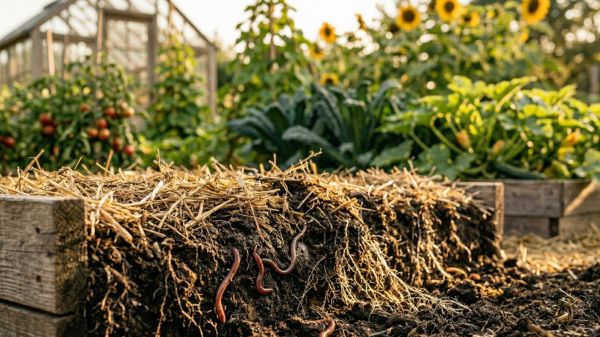
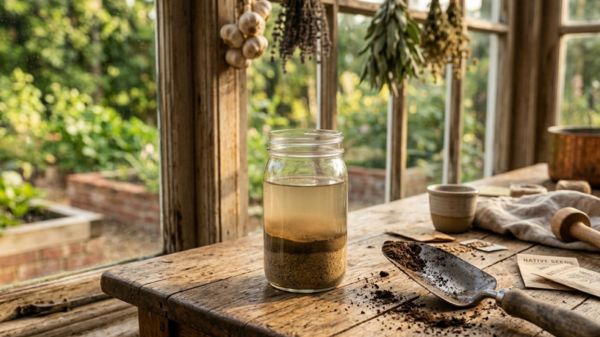
Healthy soil isn’t simply a growing medium — it’s a living ecosystem that, when properly cultivated, compounds in productivity year after year. By nurturing soil microorganisms, you’re building infrastructure that continuously improves nutrient cycling without synthetic intervention.
Three practices that compound your soil’s productivity:
- Apply compost benefits by incorporating 1-2 inches of mature compost per 6 inches of soil, transforming depleted beds into microbially active growing systems.
- Implement minimal tillage to preserve fungal networks, earthworm tunnels, and soil structure that aggressive turning permanently destroys.
- Establish cover crops during off-seasons, maintaining living roots that feed microbial communities while preventing nutrient leaching.
Mulching techniques — applying 2-4 inches of organic matter — protect these biological networks, retain moisture, and steadily increase your land’s productive capacity.
Start With the Calorie Crops That Feed Your Family Through Winter
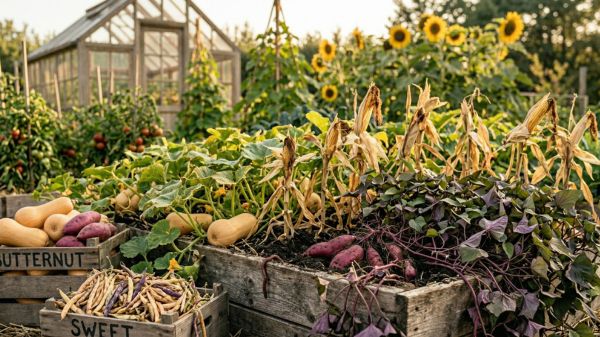
When planning a small-scale food system that sustains your family through winter, prioritizing calorie-dense crops is essential, as leafy greens and summer vegetables won’t provide the sustained energy your household requires during cold months.
Caloric legumes, including chickpeas delivering 729 calories per cup and lentils providing 230 calories per cup, anchor your winter food strategy effectively. Starchy root vegetables, such as potatoes requiring 40-50 plants per person annually, complement legume stores considerably.
Sunflower seeds, containing 820 calories per cup, store reliably without refrigeration. Among winter vegetables, kale produces continuously through cold seasons, with 6-10 plants per person ensuring adequate supply. These crops, properly stored in cool, dry conditions, collectively provide the caloric foundation your household needs for true food independence.
Use Vertical and Layered Growing to Double Your Harvest
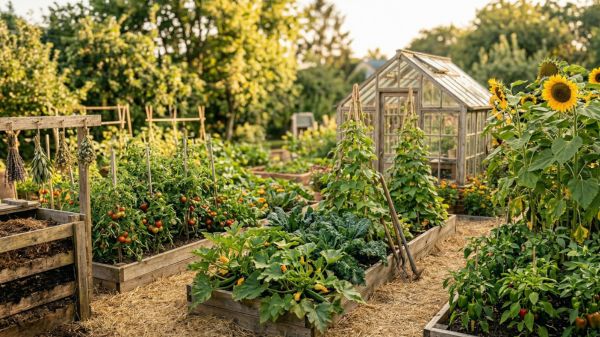
Vertical and layered growing transforms your available space by stacking compatible plants at different heights, enabling multiple cropping layers to produce two to three times the harvest from identical square footage compared to traditional single-layer gardens. Layered systems create microclimate benefits where taller plants shield heat-sensitive crops below, maximizing crop compatibility throughout your growing season.
Implement space optimization through these root diversity strategies:
- Position shallow-rooted lettuce and herbs above deep-rooted fruit trees, eliminating underground competition
- Pair nitrogen-fixing pole beans with sprawling squash below for continuous harvests across multiple vertical zones
- Combine tomatoes with basil ground cover to conserve moisture while supporting harvest efficiency
Incorporating companion planting strategies alongside your vertical layers can further deter pests naturally while attracting beneficial insects that support pollination and overall crop health.
Vertical gardening breaks your dependency on conventional single-layer limitations, liberating your small acreage into a productive, layered food system.
Add Perennials, Animals, and Rainwater Systems That Work for Decades
Maximizing your small acreage goes beyond stacking plants vertically and pairing compatible crops in layered systems; it requires building infrastructure and biological systems that compound productivity over years and decades rather than single growing seasons.
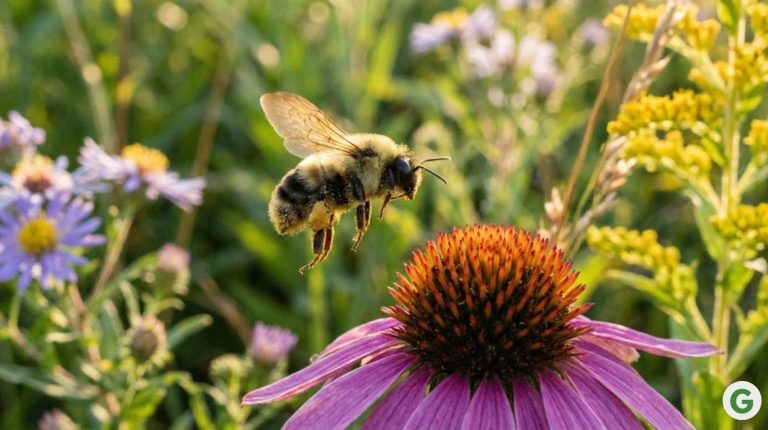
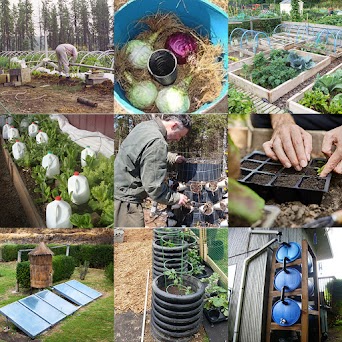
Perennial combinations like multi-grafted fruit trees, feijoa hedges, and berry rotations establish yields that sustain you without repeated planting. Sustainable integration of chickens, bees, and worm composting bins creates closed-loop fertility cycles, eliminating external input costs while generating eggs, honey, and soil-building castings simultaneously.
Roof catchment systems capturing 600-1,200 gallons per inch of rainfall, paired with gravity-fed drip irrigation, reduce your water dependency permanently. These interconnected systems don’t just produce food; they liberate you from cycles of purchasing, replanting, and resource dependency that conventional gardening perpetuates indefinitely.
Frequently Asked Questions
How Much Time Weekly Does Maintaining a Quarter-Acre Food Garden Require?
You’ll need approximately 2 hours per week to fulfill your time commitment for maintaining an established quarter-acre food garden during the growing season, though your weekly tasks will fluctuate seasonally, requiring markedly less time—around 2 hours monthly—during winter months, while spring demands additional dedicated weekends, and when these seasonal variations are averaged annually, the overall time investment remains consistent at roughly 2 hours weekly.
What Initial Costs Should Beginners Budget for Starting a Food Security Garden?
You’ll need $200-$800 for a complete setup, with soil preparation accounting for $30-$150 of that investment, including $30-$100 for compost and $10-$50 for fertilizer amendments. Strategic seed selection, prioritizing packets at $2-$4 each, keeps vegetation costs at $15-$40. Essential tools require $50-$400, though purposeful purchasing reduces expenses below $100, empowering you to build a self-sustaining food system without compromising financial independence.
Can Renters or Apartment Dwellers Adapt These Food Security Strategies Effectively?
How delightful that landlords believe concrete walls can contain your sovereignty. You can absolutely reclaim your food independence through container gardening on balconies, vertical farming using wall-mounted hydroponic systems, community gardening plots, and rooftop gardens where accessible. You’ll cultivate microgreens in 7-14 day cycles, stack tray systems for continuous harvests, and grow high-yield crops like cherry tomatoes and pole beans in 20-30 liter containers, systematically dismantling your dependence on corporate food supply chains.
Which Pests Pose the Greatest Threats to Small-Scale Food Security Gardens?
Slugs, carrot fly, potato blight, and aphids pose your greatest threats. You’ll need Integrated Pest management combining Organic Solutions like Bacillus thuringiensis for caterpillars, which achieves 90-95% kill rates within 48 hours. Companion Planting with French marigolds reduces whitefly populations 50-60%. Pest Identification through weekly scouting lets you intervene before minor infestations compound into catastrophic losses, preserving the self-sufficient food security you’re working to establish.
How Do I Preserve and Store Harvested Food Throughout the Entire Year?
Like a well-fortified stronghold, your preservation strategy must be layered and intentional. You’ll want to master canning techniques for tomatoes and legumes, ensuring sealed jars maintain quality for multiple seasons, while freezing methods work best for herbs and greens. Cure winter squash in ventilated spaces, dry beans naturally, and air-dry herbs to eliminate electricity costs, giving you true food independence throughout the entire year.
Conclusion
You’ve got everything you need to turn less than 1/4 acre into a thriving, self-sustaining food system. Like Robinson Crusoe mastering survival through resourcefulness, you’re building something that works harder each year. Start with your soil, stack your crops vertically, and let perennials carry the long game. You don’t need more land — you need smarter systems, and now you’ve got them.