
You’ll transform every cell in your body when you position the right combination of air-purifying plants throughout your living environment, though most people don’t understand the biomechanical relationship between phytoremediation and immune function. Research demonstrates that specific species, including Chlorophytum comosum and Sansevieria trifasciata, remove volatile organic compounds through their stomata, which directly impacts your circadian rhythm, cortisol levels, and inflammatory markers. However, placement strategy determines whether you’ll actually experience these measurable health outcomes, or simply maintain decorative greenery that provides minimal therapeutic value.
Key Takeaways
- Spider plants, peace lilies, and snake plants eliminate up to 95% of airborne toxins while enhancing visual appeal.
- Strategic plant placement improves room-specific benefits: snake plants for bedrooms, spider plants for adaptable lighting conditions.
- Indoor plants reduce airborne pathogens by 50%, creating healthier living spaces with natural air purification.
- Low-maintenance species like aloe vera and snake plants require watering every 14-21 days, perfect for busy lifestyles.
- Combining snake plant, spider plant, and aloe vera provides comprehensive air quality enhancement with minimal care requirements.
The Hidden Connection Between Indoor Plants and Your Immune System
Although many individuals attribute persistent fatigue, joint discomfort, and cognitive impairment to stress or aging, these symptoms frequently indicate chronic inflammation and immune system dysregulation that can be mitigated through strategic integration of specific houseplants into residential environments.
Research demonstrates that plant-enriched spaces reduce airborne pathogens by fifty percent, thereby optimizing immune response efficiency. Specimens such as spider plants eliminate ninety-five percent of formaldehyde and carbon monoxide, while English ivy removes ninety-four percent of mold spores within twelve hours.
This toxin reduction alleviates plant stress on physiological systems, enabling accelerated recovery rates and enhanced cellular function through improved air quality parameters. To maximize these health benefits, position plants near south-facing windows where they receive optimal light exposure for enhanced air purification capabilities.
Top Nine Plants That Fight Inflammation and Boost Natural Defenses
While conventional approaches to inflammation management typically emphasize pharmaceutical interventions, specific houseplant species offer evidence-based alternatives through their capacity to reduce airborne toxins, modulate inflammatory biomarkers, and enhance immune cell functionality.
Plant benefits include spider plants’ elimination of 95% formaldehyde, peace lilies’ removal of benzene and ammonia, snake plants’ nocturnal oxygen release, Boston ferns’ humidity optimization protecting mucous membranes, English ivy’s 94% mold reduction, aloe vera’s suppression of TNF alpha and IL6, holy basil’s eugenol content strengthening immune function, and turmeric’s curcumin compounds managing oxidative stress through anti-inflammatory mechanisms comparable to pharmaceutical interventions.
How Cleaner Air From Houseplants Reduces Chronic Fatigue and Brain Fog
When airborne toxins accumulate in indoor environments, they trigger a cascade of physiological responses that directly compromise mitochondrial function, the cellular mechanism responsible for energy production, thereby manifesting as persistent fatigue and cognitive impairment. Strategic deployment of houseplants eliminates volatile organic compounds, reducing neuroinflammatory markers.
| Plant Species | Air Quality Impact | Cognitive Function Enhancement |
|---|---|---|
| Spider Plant | 95% formaldehyde removal | Enhanced mental clarity |
| Peace Lily | Benzene elimination | Reduced brain fog |
| English Ivy | 94% mold reduction | Improved focus |
Implementing botanical air filtration systems restores optimal oxygen levels, enabling sustained cognitive performance, liberating individuals from environmental constraints.
Spider Plants, Peace Lilies, and Snake Plants: Your Air-Purifying Powerhouses

Three distinct plant species—spider plants (Chlorophytum comosum), peace lilies (Spathiphyllum), and snake plants (Sansevieria trifasciata)—constitute the foundational triad of botanical air purification systems, each contributing unique mechanisms for toxin elimination and atmospheric optimization.
- Spider plants eliminate 95% of carbon monoxide and formaldehyde, reducing airborne bacteria by 50%
- Peace lilies remove ammonia, benzene, and trichloroethylene, mitigating low-level inflammation
- Snake plants release oxygen nocturnally, optimizing sleep-phase air quality for immune function
These species deliver plant healing through continuous green energy processes, autonomously filtering environmental contaminants while requiring minimal maintenance intervention, thereby liberating you from dependency on mechanical filtration systems. Complementing these natural air purifiers with glass food storage containers in your kitchen further reduces household exposure to harmful chemicals that can leach from plastic alternatives.
Healing Plants You Can Grow: Aloe Vera, Holy Basil, and Turmeric
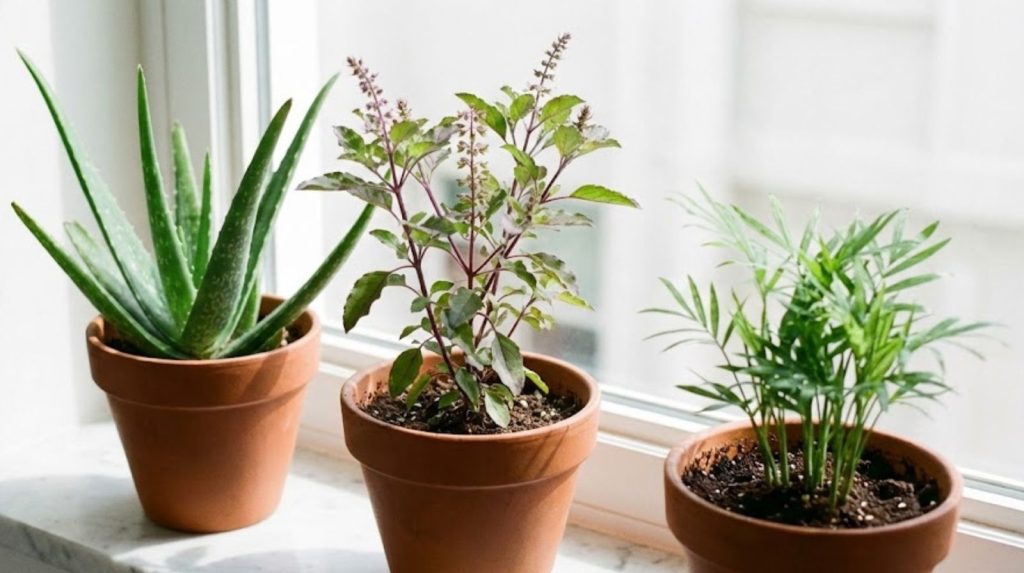
Beyond atmospheric purification, certain cultivable botanical species provide direct therapeutic intervention through bioactive compound synthesis, with aloe vera (Aloe barbadensis miller), holy basil (Ocimum sanctum), and turmeric (Curcuma longa) representing the most accessible specimens for residential cultivation and medicinal application.
Indoor gardening of these homegrown remedies enables direct extraction of anti-inflammatory compounds, including curcumin and eugenol, which reduce inflammatory markers TNF alpha and IL6.
Aloe varieties require bright indirect light and biweekly watering, while holy basil benefits include immune enhancement through healing plant recipes such as traditional tea preparations. Turmeric uses extend to natural ibuprofen alternatives, with rhizomes harvestable after ten months under consistently moist conditions.
Aloe vera’s rich vitamin content and antioxidants further promote collagen production, making the gel particularly effective for treating dry, sensitive, or acne-prone skin when extracted fresh from homegrown leaves.
Simple Care Requirements for Low-Maintenance Immune-Boosting Plants
Although therapeutic botanical specimens offer substantial immunological benefits through atmospheric purification and bioactive compound production, cultivation success depends primarily on adherence to species-specific environmental parameters. Ideal plant selection prioritizes varieties that demonstrate resilience under suboptimal care conditions while maintaining maximum anti-inflammatory efficacy.
Optimal plant maintenance protocols for enhanced air quality:
- Snake plants require irrigation cycles of 14-21 days, tolerating neglect while producing nocturnal oxygen.
- Spider plants demonstrate adaptability across variable light conditions, removing 95% of formaldehyde with minimal intervention.
- Aloe vera thrives under bright indirect illumination, necessitating watering every 2-3 weeks.
You’ll achieve measurable health improvements through strategic deployment of these low-maintenance specimens. Selecting indoor plant specific soil formulated with appropriate moisture retention and nutrient enrichment ensures these varieties establish robust root systems without requiring frequent fertilization interventions.
Strategic Plant Placement for Maximum Health Benefits in Every Room
Strategic placement of immune-supporting houseplants within designated residential zones maximizes their therapeutic efficacy through targeted environmental optimization, wherein each botanical specimen’s unique biochemical properties align with room-specific atmospheric conditions and occupant exposure patterns.
Bedrooms benefit from snake plants’ nocturnal oxygen production, while bathrooms accommodate English ivy’s humidity requirements for mold elimination.
Living areas utilize spider plants for continuous air purification during high-occupancy periods. Kitchen placement of aloe vera and holy basil combines plant aesthetics with functional accessibility for topical and culinary applications.
Indoor gardening success requires matching light availability, moisture levels, and temperature gradients to species-specific physiological demands. Incorporating native plants throughout your indoor spaces provides essential benefits while supporting a balanced ecosystem that promotes natural resilience.
The Perfect Three-Plant Combination to Transform Your Home’s Air Quality
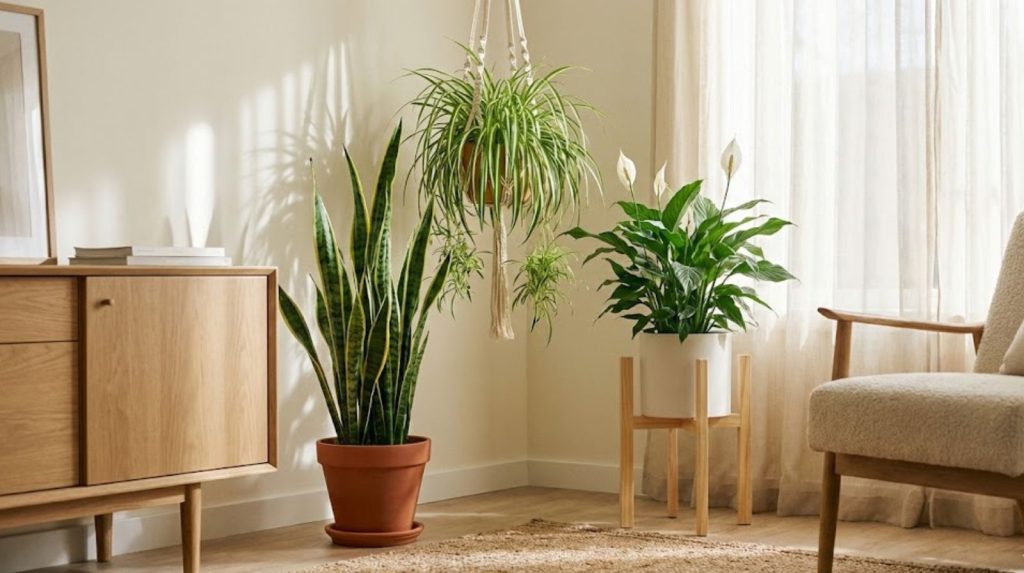
While extensive room-by-room plant distribution maximizes therapeutic outcomes across residential environments, research indicates that initiating indoor botanical integration with a synergistic three-species combination delivers measurable air quality improvements without overwhelming maintenance requirements or spatial constraints.
- Snake plant: Releases oxygen nocturnally, establishing ideal bedroom air composition during sleep cycles.
- Spider plant: Eliminates 95% of carbon monoxide, formaldehyde concentrations, reducing airborne pathogens by 50% in primary living areas.
- Aloe vera: Removes volatile organic compounds while providing topical anti-inflammatory compounds, lowering TNF alpha, IL6 markers.
This triad maximizes plant benefits through complementary air quality enhancement mechanisms, requiring minimal intervention while delivering substantive environmental purification. Consider incorporating native plant selection principles when expanding your indoor garden to ensure species naturally adapted to your regional conditions thrive with reduced maintenance needs.
Frequently Asked Questions
Can Houseplants Trigger Allergies or Worsen Existing Respiratory Conditions?
While houseplants primarily enhance air quality, you must acknowledge that certain species can trigger plant allergies or exacerbate respiratory conditions. Mold growth in overwatered soil, pollen from flowering varieties, and volatile organic compounds emitted by specific plants may provoke allergic reactions, asthma symptoms, or respiratory irritation. However, selecting non-flowering species, maintaining proper watering protocols to prevent fungal proliferation, and ensuring adequate ventilation will mitigate these risks. This approach allows you to harness botanical benefits while minimizing adverse immunological responses.
How Many Plants Are Needed per Room for Noticeable Health Benefits?
You’ll achieve noticeable health benefits by placing two to three plants per room, though ideal plant quantity depends on room size and specific air quality goals. Research indicates that spider plants, snake plants, and aloe vera provide room specific benefits when strategically positioned: bedrooms require snake plants for nighttime oxygen release, while living spaces benefit from spider plants’ air purification capacity, removing up to 95% of carbon monoxide and formaldehyde, thereby reducing airborne bacteria concentrations by 50%.
Are These Plants Safe for Homes With Pets and Small Children?
While spider plants and Boston ferns rank among pet friendly options, you must recognize that several recommended species present significant plant toxicity concerns. Peace lilies, aloe vera, and English ivy contain compounds that, when ingested, trigger gastrointestinal distress in cats, dogs, and children. If you’re seeking liberation from health constraints while maintaining household safety, you should prioritize non-toxic alternatives such as spider plants, Boston ferns, or snake plants, which offer comparable air purification benefits without compromising vulnerable occupants’ well-being.
What Should I Do if I Don’t Have Access to Natural Light?
You’ll need to implement artificial lighting systems, specifically full-spectrum LED grow lights that emit wavelengths between 400-700 nanometers, which facilitate photosynthesis in low-light conditions. For ideal plant care, position these fixtures 6-12 inches above foliage, maintaining 12-16 hour photoperiods through automated timers. Snake plants, pothos, and ZZ plants demonstrate superior adaptability to artificial light environments, requiring minimal lumens compared to high-light species, thereby ensuring successful cultivation despite natural light deficiency.
How Long Before I Notice Improvements in My Health Symptoms?
You’ll typically observe initial improvements in your health symptom timeline within two to four weeks of introducing plants, provided you follow proper plant care tips including adequate watering schedules and appropriate light conditions. More significant reductions in inflammation markers and respiratory symptoms generally manifest after eight to twelve weeks of consistent exposure to plant-purified air, as your immune system gradually responds to decreased airborne toxins and improved oxygen levels during sleep cycles.
Conclusion
You’ve discovered how strategic plant placement optimizes air quality, reduces inflammation, and strengthens immune function through documented phytoremediation processes. As the adage states, “an ounce of prevention is worth a pound of cure,” and implementing the three-plant combination—spider plant, snake plant, and aloe vera—provides measurable atmospheric improvements while requiring minimal maintenance protocols. You’ll achieve maximum health benefits by positioning these species according to room-specific humidity requirements and light exposure parameters, thereby establishing a sustainable, evidence-based approach to indoor environmental optimization.