To enhance indoor heat retention during December, systematically seal gaps around windows and doors with weatherstripping and caulk, as air leakage accounts for significant heat loss, thereby stabilizing the indoor climate. Improve insulation in walls, attics, and floors using high-performance materials, ensuring continuous coverage without voids that facilitate heat transfer.
Use thermal mass areas to absorb and slowly release heat, optimize natural sunlight exposure through strategic window positioning, and reinforce air circulation with controlled ventilation. Additional measures, such as incorporating rugs and heavy curtains, further reduce heat transfer, and an all-encompassing approach guarantees enhanced energy efficiency; further techniques become evident with sustained focus.
Seal Drafty Windows and Doors
Sealing drafty windows and doors involves a systematic approach that begins with meticulous inspection and measurement of gaps to identify potential pathways for heat loss; this process requires the utilization of precise tools such as a flashlight, smoke pen, or tactile assessment to detect leaks around the frames, sashes, and edges.
Once identified, effective sealing techniques can be employed, including selecting appropriate weatherstripping options—such as V-strips, foam tape, or silicone sealant—tailored to the specific gap size and movement. Proper application guarantees a snug, durable seal that reduces air infiltration. Measuring gaps accurately before installation minimizes waste and enhances sealing efficacy.
Ultimately, applying the most suitable weatherstripping options maximizes energy efficiency by creating a continuous barrier that prevents heat escape through structural vulnerabilities. Choosing the right materials is essential for ensuring long-lasting effectiveness, as some types of sealants and strips degrade faster than others.
Enhance Insulation in Walls, Attics, and Floors
To effectively enhance insulation within walls, attics, and floors, it is essential to precisely seal all cracks, gaps, and penetrations using appropriate caulking, foam, or tape applications, thereby preventing unintended air exchange that compromises thermal performance. Subsequently, incorporating high-quality insulating materials—such as rigid foam boards, spray foam, blown-in cellulose, or fiberglass batt systems—must be executed with strict adherence to installation protocols, ensuring continuous coverage without voids, compressions, or misalignments. This systematic approach optimizes the thermal envelope, reduces heat transfer, and contributes to overall energy efficiency in the building envelope.
Seal Cracks and Gaps
Addressing the infiltration of conditioned air through structural vulnerabilities necessitates a thorough approach to sealing cracks and gaps within walls, attics, and floors, as these penetrations considerably undermine thermal insulation efficacy.
Proper air sealing benefits include reducing energy consumption, diminishing utility costs, and ensuring consistent indoor temperatures; however, identifying common leak sources—such as gaps around window frames, door jambs, attic hatches, and penetrations around pipes, wiring, and chimneys—is vital for targeted intervention.
Sealing these vulnerabilities with suitable materials like caulk, weatherstripping, or expanding foam creates a continuous barrier that prevents conditioned air escape and outside infiltration. This process optimizes insulation performance, stabilizes indoor climate, and enhances overall energy efficiency, making it an essential step in extensive home heat retention strategies. Air leakage accounts for 25% to 40% of heating and cooling energy use, so effectively sealing these leaks can lead to significant savings and improved comfort throughout the winter months.
Add Insulating Materials
Incorporating appropriate insulating materials into walls, attics, and floors greatly enhances a building’s thermal performance by reducing conductive and convective heat transfer, thereby improving overall energy efficiency.
Cellulose insulation, made from recycled paper with an R-value of about R-3.1 to R-3.8 per inch, is effective in cold climates and suited for filling irregular spaces via loose-fill installation. Spray foam, particularly closed-cell variants with R-values between R-6 and R-7 per inch, provides superior air sealing, structural strength, and moisture resistance. The following table summarizes insulation types:
| Material | R-Value (per inch) | Special Features |
|---|---|---|
| Cellulose | R-3.1 to R-3.8 | Fire-resistant, pest control |
| Spray Foam | R-6 to R-7 | Air-sealing, structural integrity |
| Fiberglass | R-2.9 to R-3.8 | Cost-effective, soundproofing |
Additionally, understanding the R-values of different materials can help you choose the right insulation for your climate and specific needs.
Use Heavy Curtains and Window Treatments
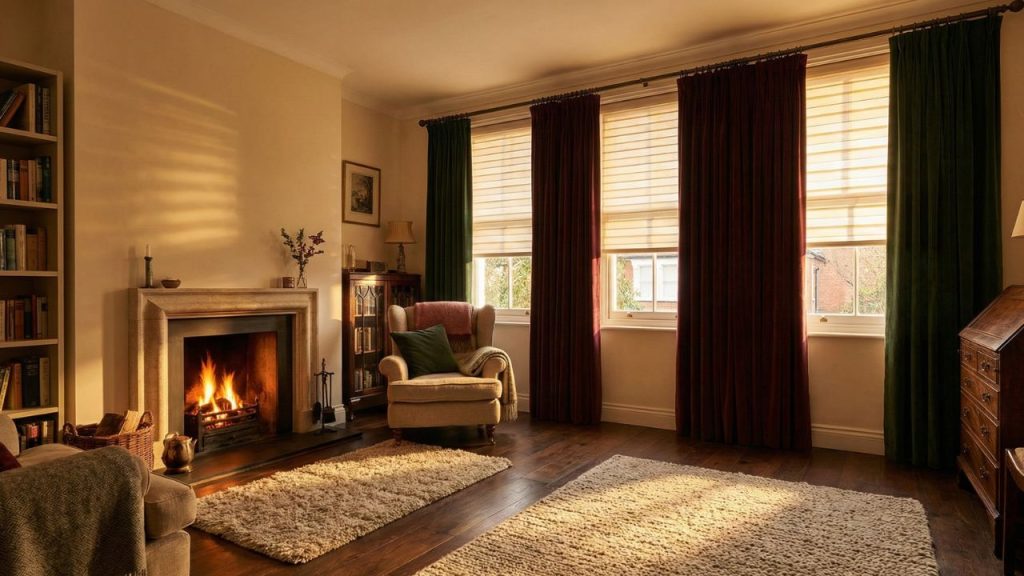
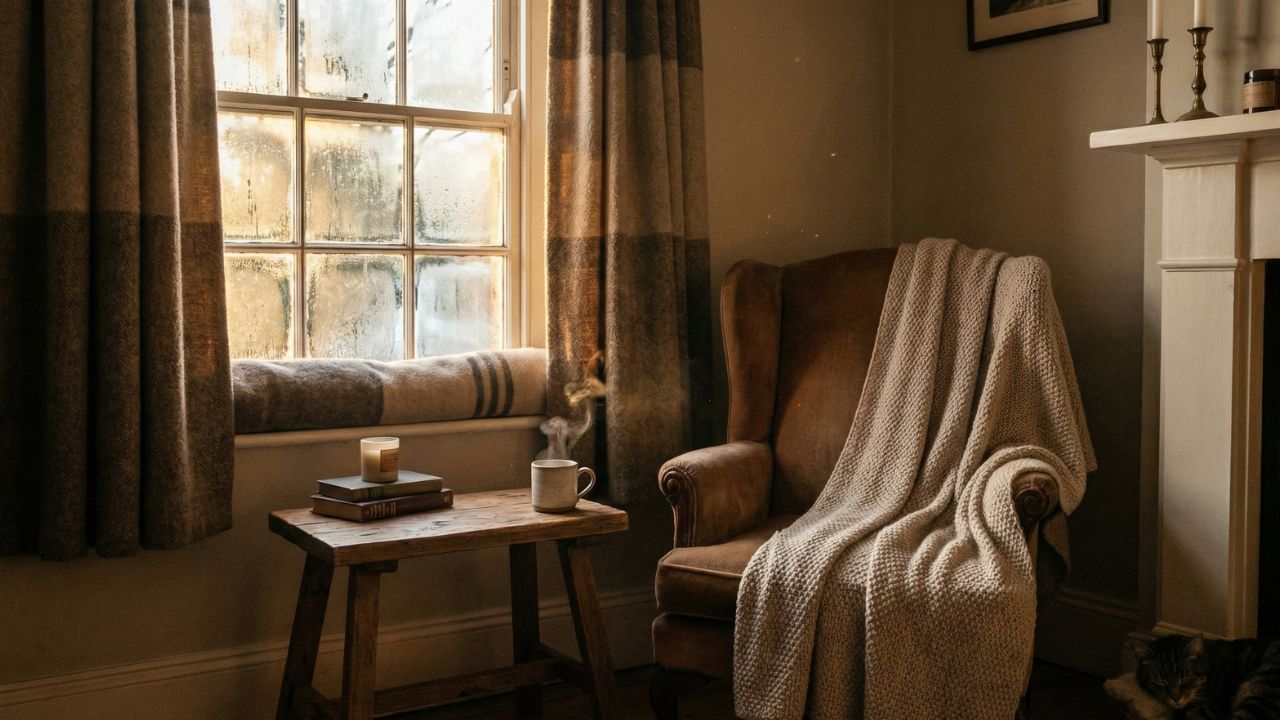
Implementing heavy curtains with appropriate thermal linings, installed in close proximity to windows and extending to the sill or floor, can greatly reduce heat transfer by creating an insulating air barrier that minimizes convective and conductive heat loss.
Ensuring proper sealing of curtain edges, such as with electrical tape, enhances the thermal performance, potentially increasing heat retention efficiency from 15-17% to approximately 25%, while maintaining consistent closure optimizes energy savings.
When selecting fabric materials, multi-layer construction comprising decorative outer layers, moisture barriers, and thermal insulating layers, such as cotton or felt, should be prioritized to achieve higher R-values and maximize the window treatment’s effectiveness in both winter and summer conditions. Proper installation methods also contribute significantly to maximizing insulation, as even the best curtains will underperform if not correctly hung or sealed against drafts.
Insulate Windows Effectively
Effective insulation of windows in an indoor heat-retention strategy necessitates the deployment of heavy curtains and specialized window treatments designed to reduce thermal exchange and mitigate infiltration of cold air.
Central to this effort is the use of weatherstripping types, which serve as a primary measure for draft prevention by sealing gaps along window frames; materials such as foam tape, V-strips, felt, or self-adhesive strips are selected based on compatibility with window geometry, degradation resistance, and sealing efficacy.
Periodic replacement is essential, as weatherstripping deteriorates over time, diminishing its insulating properties. Additionally, supplementary measures include applying rope caulk to fill residual cracks, and installing window insulation film to create an airtight barrier, collectively enhancing thermal performance and reducing energy loss through infiltration pathways. Upgrading to double or triple glazing can further improve insulation by adding extra panes of glass and insulating gaps to significantly reduce heat transfer.
Utilize Thermal Curtains
Utilizing thermal curtains as an essential component of indoor heat retention involves selecting and deploying multi-layered window treatments that enhance insulation efficiency by trapping air and minimizing heat transfer. These curtains incorporate multiple layers—decorative fabric, insulating middle, and reflective backing—which collectively improve energy savings by reducing heat loss and gain.
Proper curtain maintenance, including regular cleaning and ensuring a tight fit, sustains their effectiveness, while sealing gaps with magnetic or Velcro strips minimizes air leakage. The table below highlights key features:
| Feature | Benefit |
|---|---|
| Multi-layer design | Increased R-value, up to R-6 |
| Full window coverage | Improved insulation, minimized drafts |
| Reflective backing | Solar gain reduction, heat retention |
Consistent use and thorough installation, supporting airtight seals, maximize thermal performance and indoor comfort during December. Proper installation not only optimizes their insulating properties but also extends the curtains’ lifespan.
No products found.
Cover Gaps and Cracks With Weatherstripping and Caulk
Sealing gaps and cracks around doors, windows, and stationary or movable components is a fundamental step in minimizing indoor heat loss, as unsealed openings serve as pathways for air infiltration that compromise thermal efficiency.
Addressing this involves selecting appropriate weatherstripping options, such as foam tape for infrequently opened doors, V-strip for door jambs, or door sweeps for thresholds, all designed to create airtight seals against airflow.
Additionally, choosing suitable caulk types—silicone, latex, or acrylic—ensures durable, flexible sealing of gaps up to ¼ inch wide around stationary components, with surface preparation involving cleaning and drying for peak adhesion.
Proper application of weatherstripping and caulk reduces heat transfer, lowers energy costs, and enhances indoor comfort by preventing drafts and infiltration, especially critical in colder months. Effective sealing also helps prevent pests from entering through small openings, providing an added benefit during winter.
No products found.
Maximize Sunlight for Natural Heating
Maximizing sunlight for natural heating involves optimizing window placement, selection, and configuration to enhance solar heat gain while minimizing energy losses, a process that requires a precise understanding of solar angles, climate variations, and building orientation.
Proper window orientation, such as south-facing in the Northern Hemisphere, enhances winter solar heat collection, while advanced solar coatings mitigate radiant heat loss, improving overall energy efficiency and heat retention.
Skylight design, including size, placement, and shading mechanisms, plays a crucial role in daylight management, greatly increasing natural light and solar heat gains without excessive summer overheating.
Incorporating double or triple glazing further reduces heat transfer, and strategic use of daylighting reduces artificial lighting reliance, optimizing solar heat gain, and ensuring maximum utilization of natural light for consistent indoor warmth during December.
Technological tools such as daylight simulation software are essential to accurately predict and optimize sunlight entrance, helping to create a harmonious balance between natural light and heat, thus maximizing energy efficiency.
Use Thermal Mass Areas to Store Heat
Thermal mass functions as an essential component in passive temperature regulation within building designs, leveraging the inherent heat absorption and delayed release properties of dense materials like concrete, brick, and stone.
By strategically placing these materials in areas exposed to direct sunlight or internal heat sources, you enable efficient heat retention, which moderates indoor temperature fluctuations over extended periods, particularly during winter nights. The thermal mass absorbs excess heat during the day, delaying its transfer and releasing it gradually, thereby smoothing diurnal temperature swings and ensuring consistent comfort levels.
Proper integration of thermal mass maximizes heat retention without excessive initial costs, reduces reliance on mechanical heating, and contributes to energy efficiency. This passive approach enhances indoor climate stability, particularly in climates with significant daily temperature variations, as it effectively harnesses sunlight capture and heat absorption properties in various climate conditions to optimize overall building performance.
Optimize Air Circulation and Ventilation
Effective optimization of air circulation and ventilation within indoor environments involves a deliberate integration of mechanical and natural strategies designed to promote consistent airflow, reduce humidity levels, and enhance thermal distribution. Airflow optimization can be achieved through the reverse operation of ceiling fans, which, by setting blades to clockwise rotation during winter, create updrafts that push warm air downward, improving thermal comfort.
Ventilation strategies should include the strategic use of heat recovery ventilators (HRVs), which recover over 85% of heat from outgoing air while maintaining humidity levels. Additionally, exhaust fans in kitchens and bathrooms should be operated during moisture-generating activities to prevent excess humidity accumulation.
Micro-ventilation techniques, like brief window openings, serve as supplementary steps to increase airflow efficiency while conserving heat. Proper maintenance of airflow pathways and filtration systems further guarantees ideal indoor air quality and heat distribution. Regularly inspecting and cleaning ventilation equipment also helps ensure their optimal performance and prevents the buildup of dust that can impair air quality.
No products found.
Incorporate Rugs and Carpets to Insulate Floors
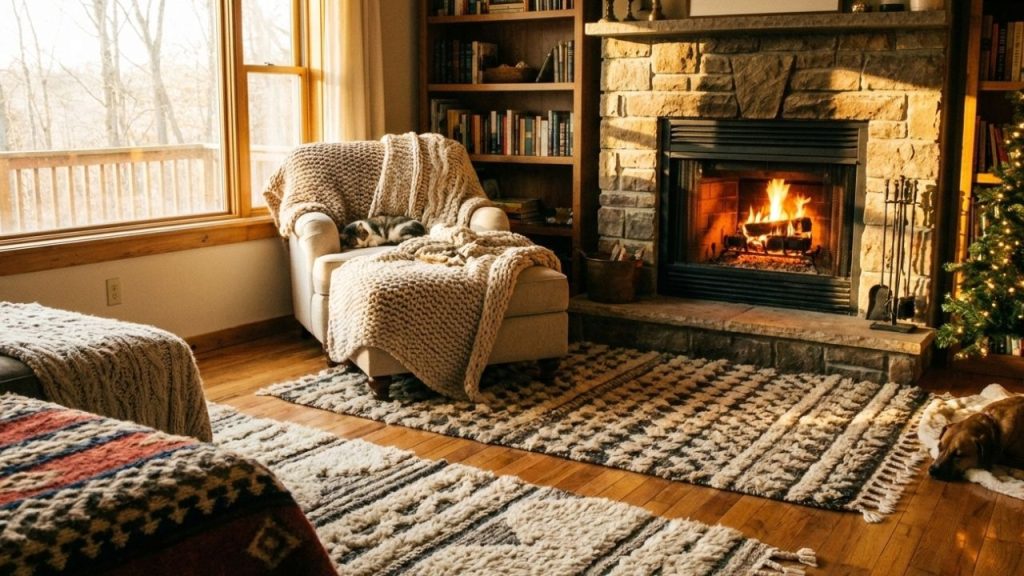
Incorporating rugs and carpets as supplementary insulation measures can greatly enhance the energy efficiency of indoor environments by reducing heat transfer through the floor, which, if unmitigated, can account for up to 20% of home heat loss.
The effectiveness of this approach hinges on factors such as rug materials and carpet thickness, with wool carpets providing higher R-values (up to 2.1) due to their superior air-trapping capabilities. Thicker carpets considerably increase insulation, especially when combined with appropriate underlays or cushions, which further augment the overall R-value.
Choosing dense, heavy-pile options maximizes thermal resistance. Properly installed, wall-to-wall carpeting offers better heat loss mitigation; however, high-quality rugs and padding still deliver considerable benefits in reducing cold floors and lowering heating demands. Carpets provide approximately 10 times more insulation than hard floors, making them a potent in-home insulation technique.
- Rug materials like wool considerably enhance thermal insulation.
- Carpet thickness directly correlates with increased R-values.
- Padding with tog ratings from 1.05 to 2.15 amplifies insulation.
- Combining carpet with underlay improves energy retention.
- Dense pile and layered insulating materials optimize heat conservation.
No products found.
Frequently Asked Questions
How Can I Prevent Heat Loss Through My Chimney or Fireplace?
To prevent heat loss through your chimney or fireplace, you should prioritize sealing strategies utilizing chimney balloons, which, when inflated inside the chimney, establish airtight barriers allowing chimney breathability while blocking drafts. Additionally, installing and properly securing fireplace dampers—preferably top-sealing variants—ensures ideal closure, preventing heat escape. Regular maintenance and inspection of these components, along with supplementary insulation methods like chimney pillows or rigid foam boards, enhance overall efficiency and mitigate heat diffusion effectively.
Are There DIY Ways to Improve My Home’s Thermal Efficiency?
Yes, you can enhance your home’s thermal efficiency through targeted DIY measures involving insulation materials, such as fiberglass or mineral wool batts, and thorough draft sealing. First, identify areas with persistent air leakage; then, install suitable insulation in walls, lofts, and floors according to local R-value recommendations. Sealing gaps around windows, doors, and electrical outlets with weatherstripping or caulk minimizes heat transfer, effectively reducing energy loss and maintaining internal temperatures.
What Plants Can Help Insulate My Windows Naturally?
To optimize window insulation using heat-retaining plants, select species such as boxwood, holly, juniper, and peperomia exhibiting dense foliage capable of trapping warm air proximate to glass surfaces. Incorporate these plants in window boxes or as potted specimens on windowsills, ensuring reduced heat loss through strategic placement. Additionally, combine with supplemental insulation techniques like bubble wrap or indoor microclimate mitigation to enhance overall thermal efficiency and reduce energy expenditure.
How Do Curtains Affect Indoor Temperature Retention?
Have you considered how curtains influence indoor temperature retention? Different curtain types and thermal materials greatly modulate heat transfer; for example, thermal-backed and lined curtains dramatically decrease heat loss by up to 60% when properly installed, sealing gaps around windows. Light-colored fabrics reflect solar heat, while dark-colored absorb it, affecting room temperature. Precise installation, including close fit and coverage to the windowsill, maximizes insulation effectiveness and reduces energy costs.
Can Reflective Surfaces Increase Indoor Heat Absorption?
Reflective materials do not typically increase indoor heat absorption; instead, they primarily reflect radiant energy based on sunlight angles. When strategically installed, these surfaces can redirect incident solar radiation away from interior spaces, limiting heat gain, especially during periods of high solar elevation. However, in winter, if sunlight angles are low, reflective surfaces can inadvertently reflect ambient indoor radiative heat outward, thereby reducing heat retention.
Conclusion
By systematically implementing these natural insulation strategies, you optimize energy retention within your domicile, reducing reliance on fuel-based heating systems. This approach not only minimizes heat loss through infrastructural enhancements but also leverages passive solar gains and thermally massive materials to maintain a stable internal environment. As a result, you achieve a sustainable, cost-effective thermal regime that mitigates ecological impact and enhances overall comfort during the coldest months, consequently ensuring efficient resource utilization with minimal external energy dependency.
References
- https://elements.visualcapitalist.com/charted-home-heating-systems-in-the-u-s/
- https://eyeonhousing.org/2022/09/almost-even-split-between-natural-gas-and-electric-heating-systems-in-new-homes/
- https://www.modernpowersystems.com/news/electricity-use-growing-in-us-home-heating-eia-report/
- https://atlasbuildingshub.com/2023/04/03/fuel-oil-and-propane-space-heating-across-the-united-states/
- https://www.eia.gov/energyexplained/use-of-energy/homes.php
- https://www.maps.com/home-heating-fuels/
- https://www.homeserve.com/en-us/blog/home-improvement/how-americans-heat-their-homes-2024?sfmc_id=124520149
- https://www.energy.gov/energysaver/home-heating-systems
- https://www.census.gov/acs/www/about/why-we-ask-each-question/heating/
- https://chameleon-decorators.co.uk/blog/draught-proofing-for-windows/