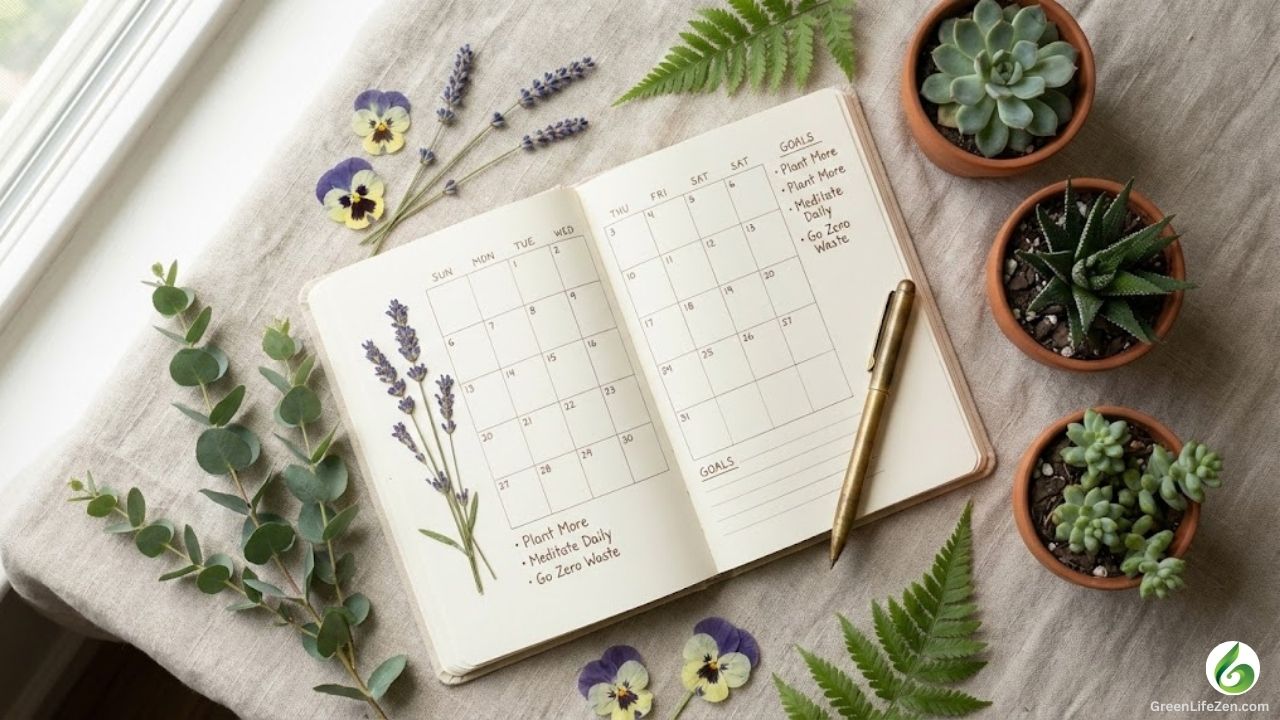
Consider a household in Portland, Oregon, which reduced its annual water consumption by 40% after implementing a structured tracking system within their green living planner, documenting irrigation schedules, rainfall patterns, and seasonal plant requirements through standardized templates. You’ll discover how integrating systematic resource monitoring, climate-aligned planting calendars, and measurable sustainability metrics into a thorough planning framework can transform your environmental practices from sporadic efforts into quantifiable achievements, though the methodology for creating effective templates requires specific attention to data collection protocols and regional variables that determine long-term success.
No products found.
Key Takeaways
- Include monthly sections with planting schedules based on hardiness zones and local frost dates for optimal crop timing.
- Create tracking pages for water usage, waste reduction, and carbon footprint to monitor environmental impact progress.
- Add garden journal templates for recording phenological observations, yields, pest management, and crop rotation plans.
- Design seasonal planting and harvesting templates that align with regional climate conditions and growing patterns.
- Incorporate composting guidelines with carbon-to-nitrogen ratios and resource directories for local sustainable vendors.
Essential Components of a Year-Round Green Living Planner
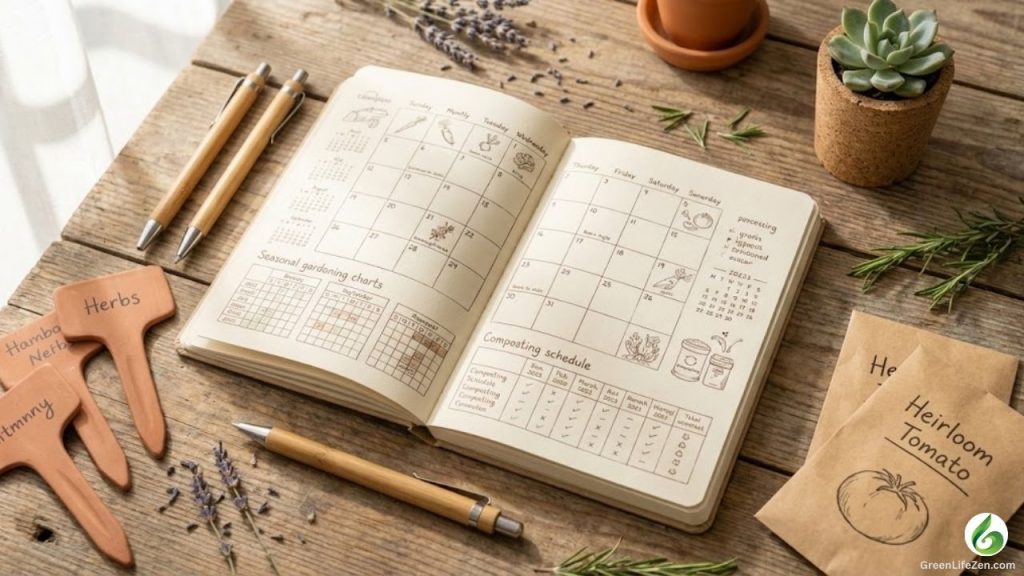
When designing a thorough year-round green living planner, you must integrate several core components that facilitate systematic tracking of sustainable practices, enable data-driven decision-making for garden management, and provide structured frameworks for implementing eco-friendly habits across all seasons.
Monthly sections should delineate climate-specific planting schedules, aligned with hardiness zone parameters, ensuring ideal cultivation timing. Your planner requires dedicated garden journal pages for documenting phenological observations, yield metrics, and environmental variables affecting plant performance.
Incorporate composting tips within sustainable practice modules, detailing carbon-to-nitrogen ratios, decomposition timelines, and temperature monitoring protocols. Implement task checklists categorized by seasonal requirements, including soil amendment procedures, integrated pest management strategies, and harvest scheduling.
Resource directories should catalog local nurseries, environmental advocacy organizations, and certified sustainable product vendors, enabling informed procurement decisions throughout the agricultural cycle. Consider including strategies for rainwater harvesting to promote water conservation and enhance soil health as part of your garden management routine.
Monthly Planning Sections for Sustainable Gardening
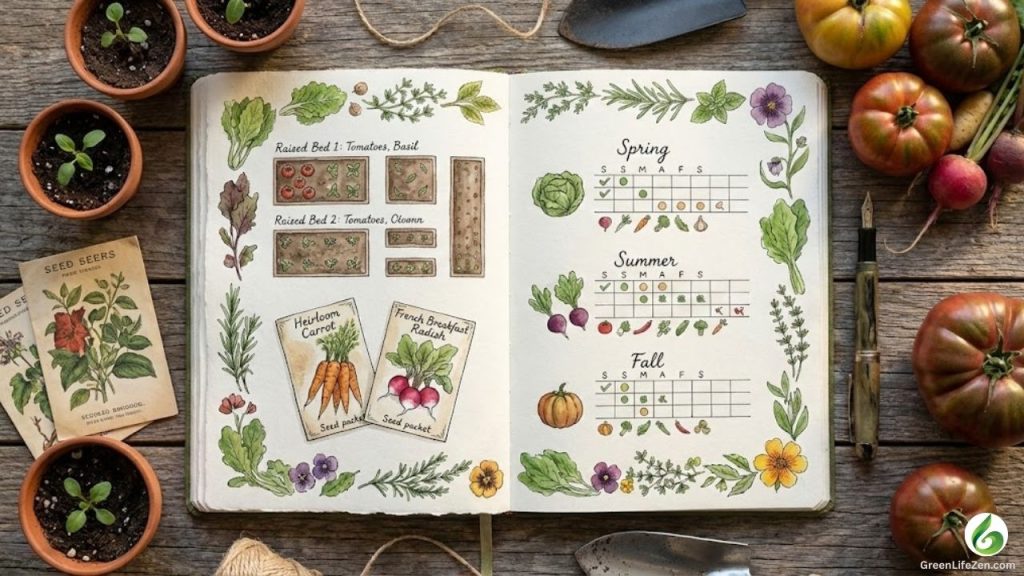
As you construct monthly planning sections for sustainable gardening within your planner template, you must establish discrete temporal divisions that correspond to regional phenological patterns, microclimate variations, and USDA hardiness zone classifications, thereby ensuring that each monthly module contains task-specific protocols aligned with prevailing environmental conditions.
Each section requires dedicated subsections for monitoring rainfall metrics, irrigation scheduling parameters, and soil preparation workflows, which facilitate autonomous resource management. Implement systematic crop rotation schemas across growing seasons to prevent nutrient depletion, pathogen accumulation, and reduced yields.
Integrate thorough pest management checklists featuring companion planting configurations, biological control mechanisms, and organic deterrent applications, eliminating dependency on synthetic chemical interventions.
Document planting dates, harvest windows, and transplanting schedules according to local frost occurrence data, optimizing yield maximization while maintaining ecological equilibrium through deliberate, evidence-based horticultural practices. Healthy soil, cultivated through practices like composting, creates a foundation for robust plant growth by enhancing soil fertility and structure.
Tracking Your Environmental Impact and Resource Usage

Although sustainable living requires intentional behavioral modification across multiple domains, you cannot effectively reduce your environmental footprint without implementing thorough measurement systems that quantify resource consumption patterns, waste generation volumes, and carbon emission outputs across all household operations.
Document water conservation metrics, as the average household consumes 300 gallons daily, enabling 20-30% reduction through rainwater harvesting and efficient irrigation. Track waste generation to achieve 30% landfill reduction via composting and recycling protocols.
Record transportation carbon footprint data, revealing 45% emission decreases through public transit adoption. Monitor food sourcing, as local, seasonal procurement reduces transportation emissions by 50%.
These measurement frameworks, when executed with precision, provide quantifiable data necessary for systematic environmental impact reduction across all resource categories. Implementing permeable paving in residential areas allows for rainwater to pass through, helping to prevent runoff and flooding while enhancing the natural water cycle.
Seasonal Templates for Planting and Harvesting Success
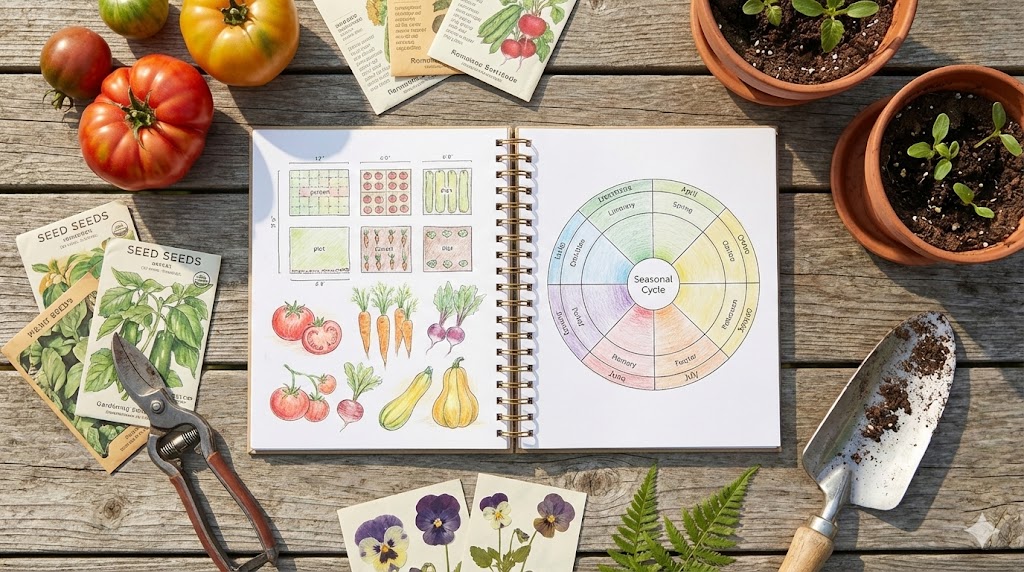
Because sustainable food production demands precise temporal coordination between climatic variables and agricultural interventions, seasonal planting templates function as essential frameworks for optimizing crop yields while minimizing resource waste and agricultural inputs.
You’ll implement these templates by configuring hardiness zone parameters, establishing ideal sowing schedules, and deploying pre-planned layouts that enable systematic visualization of spatial allocations. Native plants enhance sustainability and drought resistance in gardens, requiring less watering and care.
The templates enforce crop rotation protocols, which maintain soil nutrient balances and prevent pathogen accumulation through strategic succession planning. By integrating automated task scheduling for fertilization cycles and pest management interventions, you guarantee proactive maintenance execution aligned with phenological stages.
These frameworks reduce crop loss by synchronizing planting operations with local climatic conditions, thereby maximizing growth efficiency while eliminating unnecessary resource expenditure through precision timing of agricultural activities.
Customizing Your Planner for Personal Eco-Friendly Goals
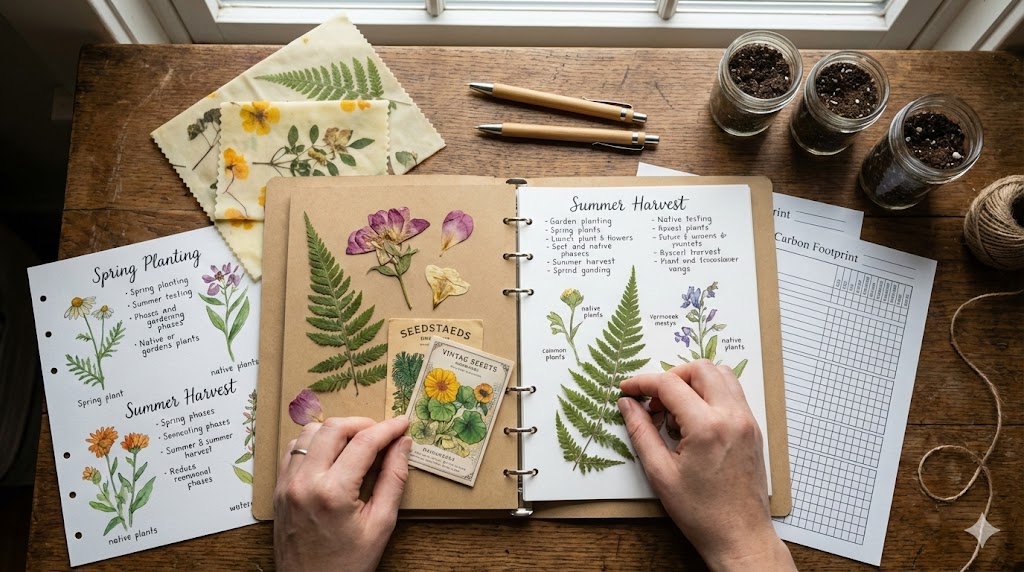
While standardized ecological frameworks provide foundational guidance, effective sustainability implementation requires granular customization of planning mechanisms to accommodate individual behavioral patterns, residential infrastructure constraints, and location-specific environmental variables.
Your planner demands deliberate goal setting, establishing quantifiable monthly targets such as reducing single-use plastics or increasing recycling rates by 10%. Implement progress tracking through dedicated sections monitoring composting operations, water conservation metrics, and energy-efficient infrastructure deployments.
Deploy charts and graphs to visualize carbon footprint reduction trajectories, ensuring data-driven accountability. Integrate monthly plant care protocols aligned with regional climate parameters, facilitating year-round cultivation practices.
Additionally, consider integrating eco-friendly home renovations to reduce your carbon footprint through renewable energy usage and more sustainable building materials.
Document local environmental initiatives and community sustainability events, expanding your knowledge base while fostering engagement with broader ecological networks. This systematic approach liberates you from generic templates, enabling precise customization that addresses your unique environmental impact profile.
No products found.
Frequently Asked Questions
What Paper Type Is Most Eco-Friendly for Printing the Planner Template?
You’ll achieve ideal environmental sustainability by selecting 100% post-consumer recycled paper, which diverts waste from landfills while reducing virgin pulp demand. When you’re printing your planner template, specify recycled paper with FSC or similar certification to guarantee responsible sourcing. Additionally, you should request plant-based ink, derived from renewable resources like soy or vegetable oils, as it contains fewer volatile organic compounds than petroleum-based alternatives, thereby minimizing ecological impact while maintaining print quality and durability.
Can This Planner Be Used for Indoor Gardening or Balcony Gardens?
You’ll find this planner fully adaptable for indoor gardening and balcony gardening implementations, though the instructions lack Kubernetes orchestration or IT security protocols. The template’s seasonal tracking modules, which require modification of YAML-like configuration parameters, accommodate container-based cultivation strategies. You can deploy planting schedules, resource allocation matrices, and harvest timelines across constrained spatial environments, ensuring systematic monitoring of photosynthetic cycles, nutrient delivery pipelines, and environmental variables without requiring traditional ground-level infrastructure.
Are There Mobile Apps That Sync With This Paper-Based Planner System?
While no dedicated mobile synchronization exists for this paper-based system, you’re free to implement planner compatibility through open-source solutions. Deploy containerized note-taking applications within Kubernetes clusters, utilizing persistent volumes for data retention, then configure namespace isolation to separate gardening data from other workloads. Implement role-based access control (RBAC) policies to secure your entries, ensuring TLS encryption for data transmission. This approach liberates you from proprietary platforms while maintaining complete sovereignty over your planning infrastructure.
How Do I Share My Planner Data With Community Gardening Groups?
You’ll achieve planner sharing through digitizing your garden data via scanning applications, then deploying secure file-sharing protocols using encrypted cloud storage platforms with role-based access control (RBAC), which facilitates community engagement while maintaining data integrity. Alternatively, you can export metrics to containerized applications running on Kubernetes clusters, enabling collaborative garden management through persistent volume claims (PVCs) that store shared resources. Implement authentication mechanisms, such as OAuth 2.0, to control access permissions for community members accessing synchronized planner information.
What’s the Best Way to Store Old Planner Pages for Reference?
You’ll preserve planner data effectively through digital archiving methods, specifically scanning completed pages to PDF format with version control systems like Git, ensuring immutable records with SHA-256 hashing for verification. Alternatively, implement binder organization using three-ring systems with acid-free sheet protectors, categorized by quarterly intervals, which you’ll index using JSON-structured metadata files. This dual approach, analogous to implementing redundant storage backends in containerized environments, guarantees data persistence while maintaining accessibility for community-driven agricultural initiatives.
Conclusion
You’ll discover that implementing a structured green living planner, which integrates systematic resource monitoring alongside seasonal cultivation protocols, fundamentally transforms your sustainability practices through quantifiable metrics. By deploying monthly tracking modules that correlate with regional climate variables, water consumption baselines, and composting throughput rates, you’ll establish verifiable evidence that organized environmental stewardship, when executed through documented frameworks and iterative goal-setting mechanisms, yields measurable reductions in resource waste while optimizing garden productivity across annual growing cycles.