You might not know that dwarf fruit trees can thrive in containers as small as 15 gallons, making them viable for balcony zen spaces. You’ll want to understand soil composition, drainage requirements, and seasonal placement before you commit to a purchase. The right cultivar can produce fruit year-round while maintaining a compact footprint. What you discover about these five trees could transform your balcony entirely.
Key Takeaways
- Meyer Lemon trees produce fruit year-round and thrive in containers, making them ideal for balcony zen spaces.
- Satsuma Mandarin oranges grow just 4 to 6 feet tall, offering seedless, easy-to-peel fruit in compact spaces.
- Calamondin and Kumquat trees serve dual edible and ornamental purposes, enhancing peaceful balcony aesthetics.
- Dwarf Peach Ice variety thrives in large containers, delivering reliable harvests in small outdoor spaces.
- Dwarf Bearss Lime trees stay under ten feet tall and suit sunny balconies perfectly.
The 5 Best Dwarf Fruit Trees for Balconies
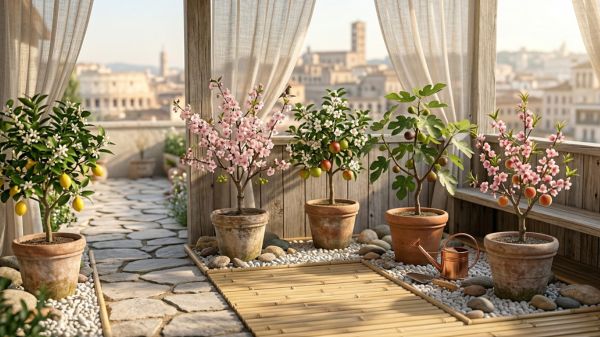
Five dwarf fruit trees stand out as particularly well-suited for balcony growing, each offering a combination of compact size, productive yield, and manageable care requirements.
You’ll find that Meyer Lemon trees produce year-round fruit when fertilized monthly, while Dwarf Bearrs Lime trees stay under ten feet tall, fitting comfortably in sunny balcony spaces.
Satsuma Mandarin oranges reach only four to six feet in containers, giving you seedless, easy-to-peel fruit each fall. Calamondin and Kumquat trees serve dual edible and ornamental purposes, supporting both indoor gardening and outdoor cultivation across seasons.
The Dwarf Peach Ice variety rounds out these dwarf fruit varieties, thriving in large containers with peat-based compost, delivering reliable harvests even within the most constrained urban spaces you manage.
How Big Do These Trees Actually Get?
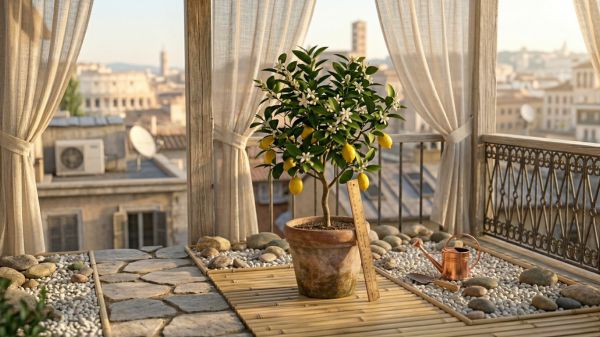
Understanding exactly how large these dwarf fruit trees will grow helps you plan your balcony layout with precision, as size varies considerably across species and cultivation methods.
Dwarf citrus varieties, including Meyer lemon and Satsuma mandarin, typically reach 4 to 6 feet, while container dimensions and growth limitations keep Mediterranean olives between 8 to 10 feet. Blueberry cultivars remain remarkably compact at 3 to 4 feet, giving you significant spatial freedom.
Most dwarf varieties stay 4 to 8 feet tall and wide in 15 to 25-gallon pots, though Vandalay sweet cherry trees reach approximately 12 feet, requiring more deliberate space planning. Grafted rootstock varieties and genetic dwarfs prioritize fruit production over expansive vertical growth, maximizing your available space efficiently.
Container Soil and Drainage for Dwarf Fruit Trees
Selecting the right container soil and drainage setup directly determines whether your dwarf fruit tree thrives or deteriorates, as even the most carefully chosen variety will struggle without adequate root support.
Your soil composition must prioritize moisture retention without sogginess, maintaining a light, airy texture that supports root development and microbial activity essential for nutrient uptake.
Premium mixes like FoxFarm Ocean Forest provide superior aeration with organic blends suited for edible plants, while garden soil causes dangerous compaction and root suffocation.
Your drainage solutions must include multiple container holes, elevated pot placement, and elimination of stagnant water trays during growing periods. Poor drainage produces sour-smelling soil, yellowing leaves, and root rot, conditions that compromise your tree’s long-term productivity and your freedom to grow food independently.
Sun Placement and Winter Moves for Container Trees
Once your container soil and drainage systems are properly configured, the next variable that determines your dwarf fruit tree’s productivity is sunlight exposure and temperature management across seasons.
Position your containers on south-facing or west-facing balconies, ensuring six to eight hours of direct sunlight daily, while repositioning pots throughout the day to follow the sun’s movement. Container root zones fluctuate fifteen to twenty degrees Fahrenheit within hours, creating stress that compromises fruit production if you don’t intervene decisively.
When temperatures drop below forty-five degrees Fahrenheit, move your citrus and fig trees indoors immediately, placing them near sunny windows with supplemental artificial lighting. Wrapping pots with insulation materials during cold snaps, and establishing clear pathways for efficient container movement, gives you complete control over your growing outcomes.
Thoughtful seasonal management of your balcony garden also supports reduced pollution levels, contributing to cleaner air quality in urban environments where container gardening is practiced.
Pruning and Feeding Your Dwarf Fruit Tree
Pruning your dwarf fruit tree correctly from the first year establishes the structural foundation that determines long-term productivity and manageability. Apply heading cuts 2-4 feet above ground at planting, then cut new growth back by half each season to force lateral branching rather than vertical elongation.
| Pruning Techniques | Nutrient Timing |
|---|---|
| Heading cuts at planting | Slow-release fertilizer at establishment |
| Cut spring flush by half | Supplement during active growth phases |
| Summer compaction cuts | Adjust feeding during fruiting cycles |
| Winter damaged branch removal | Reduce applications during dormancy |
| Crossed branch elimination | Resume consistent feeding each spring |
Your container tree’s restricted roots demand more frequent feeding than in-ground trees, since watering leaches nutrients continuously, compromising both vigor and fruit quality.
Frequently Asked Questions
Which Dwarf Fruit Trees Grow Well Alongside Ornamental Plants in Zen Gardens?
You’ll find that several dwarf tree varieties thrive alongside ornamental plants in zen gardens, including dwarf Meyer lemon, calamondin, kumquat, dwarf Stella cherry, patio peach, and dwarf apple trees on M27 or M9 rootstock. Companion planting with these specimens creates layered visual compositions, as their glossy foliage, seasonal blossoms, and developing fruit provide textural contrast with ornamental shrubs, while their compact 6-10 foot heights maintain proportional balance within minimalist garden layouts.
Can Dwarf Fruit Trees Improve Air Quality on Enclosed Balconies?
Every little bit counts when it comes to improving your enclosed balcony’s air quality. Dwarf fruit trees actively enhance air purification by absorbing carbon dioxide and increasing oxygen production throughout daylight hours, while their foliage captures airborne particulates and volatile organic compounds. However, you’ll need adequate ventilation strategies, since stagnant air conditions limit purification effectiveness, and multiple trees compound these benefits considerably within your confined space.
How Long Do Container-Grown Dwarf Fruit Trees Typically Live?
When practicing container gardening, you’ll find that dwarf tree lifespan varies notably by species: dwarf citrus and avocado trees live 20-30 years, while apple, cherry, and plum varieties last 15-20 years, and peach trees average 10-15 years. You can extend these ranges through consistent pruning, proper fertilization, appropriate watering, and timely repotting into larger containers, as root constraints, poor drainage, and temperature extremes accelerate premature decline.
Are Dwarf Fruit Trees Safe Around Pets and Small Children?
Dwarf fruit trees are extraordinarily safe, offering you pet friendly options and child safe varieties that eliminate virtually every conceivable hazard. You’ll find that apple, pear, and cherry cultivars contain no toxic compounds, while thornless varieties prevent scratching injuries. You should, however, avoid chemical pesticides, choosing organic maintenance instead, and regularly remove fallen fruits before fermentation occurs, ensuring your household remains completely protected.
Which Dwarf Fruit Trees Pair Best Together for Aesthetic Balcony Displays?
You’ll achieve the most harmonious dwarf tree combinations by pairing botanically compatible species, since grafts succeed only within the same fruit family. For balcony aesthetics, combine stone fruits — apricots, plums, and peaches — on a single multi-graft tree, or group dwarf citrus varieties like lemons, limes, and mandarins together, ensuring evergreen foliage maintains year-round visual continuity while extending your harvest across multiple seasons.
Conclusion
With the right dwarf fruit tree, your balcony becomes a living sanctuary, a small garden that punches far above its weight. You’ve learned how to choose your tree, manage your soil, position it for ideal sun, and keep it thriving through careful pruning and feeding. Now it’s time to put that knowledge to work—your compact zen retreat is closer than you think, and it’s waiting to bloom.