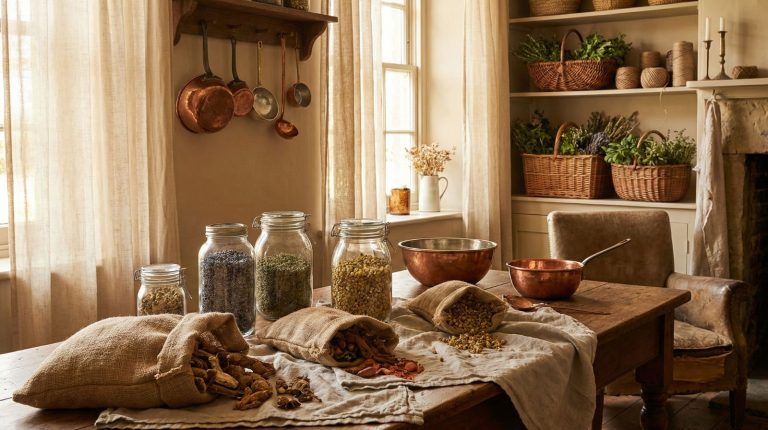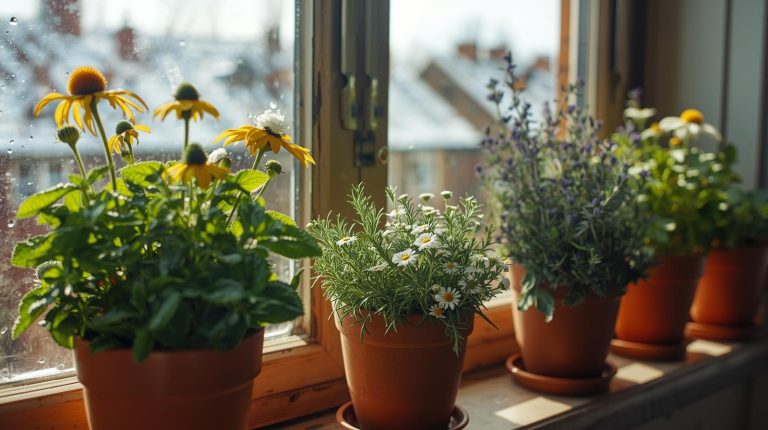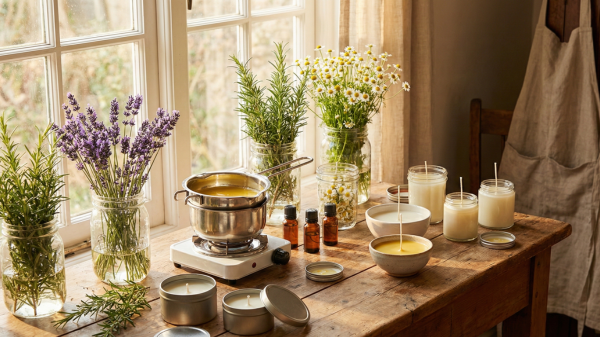
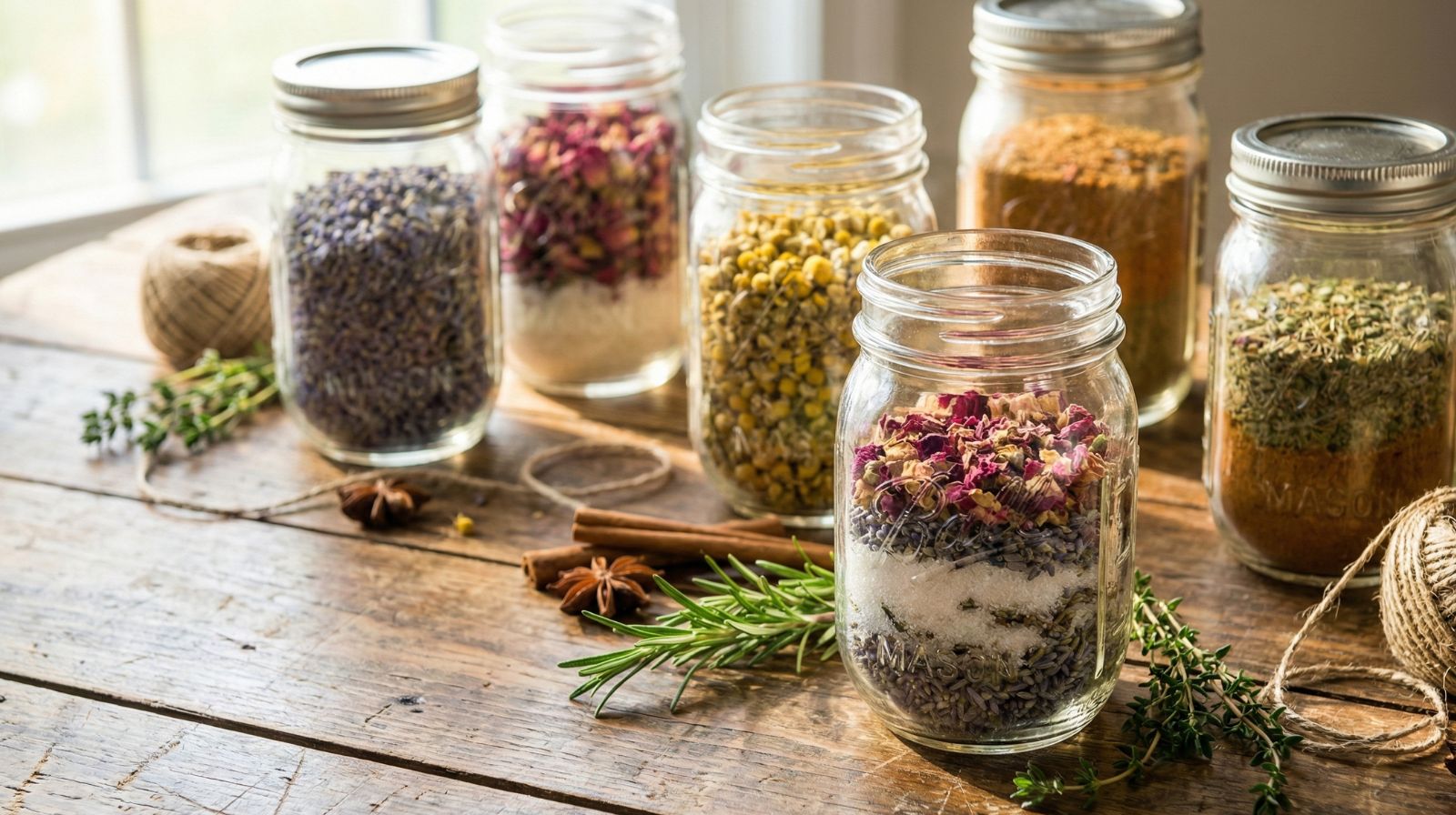
You’ll need airtight glass containers with appropriate closures, digital scales for precise measurements, and quality organic herbs from certified suppliers to create three distinct product categories. For calming tea blends, you’ll combine chamomile (40%), lavender (20%), lemon balm (25%), and passionflower (15%) in amber glass jars. Bath soaks require layering Epsom, Dead Sea, or Himalayan salts with botanicals and essential oils at concentrations not exceeding 3% by volume. Gourmet spice mixtures demand accurate measurements of heat-generating compounds and aromatic herbs, stored in moisture-protective containers. Proper labeling must include ingredient specifications, preparation instructions, and expiration dates to guarantee product stability. The subsequent sections provide thorough protocols for sourcing, formulation, and storage optimization.
Key Takeaways
- Use 4-ounce jars for spice blends and 16-ounce containers for bath soaks with airtight seals to preserve freshness.
- Source organic herbs from certified suppliers, checking for vibrant color, strong aroma, and proper moisture content without mold.
- Create calming tea blends with chamomile, lavender, lemon balm, and passionflower, storing in amber glass for twelve months.
- Layer Epsom, Dead Sea, or Himalayan salts with dried botanicals and essential oils at 3% concentration for luxurious bath soaks.
- Label all jars with ingredient lists, preparation instructions, expiration dates, and allergen warnings for safe gifting.
Essential Tools and Containers for Creating Herbal Gift Jars
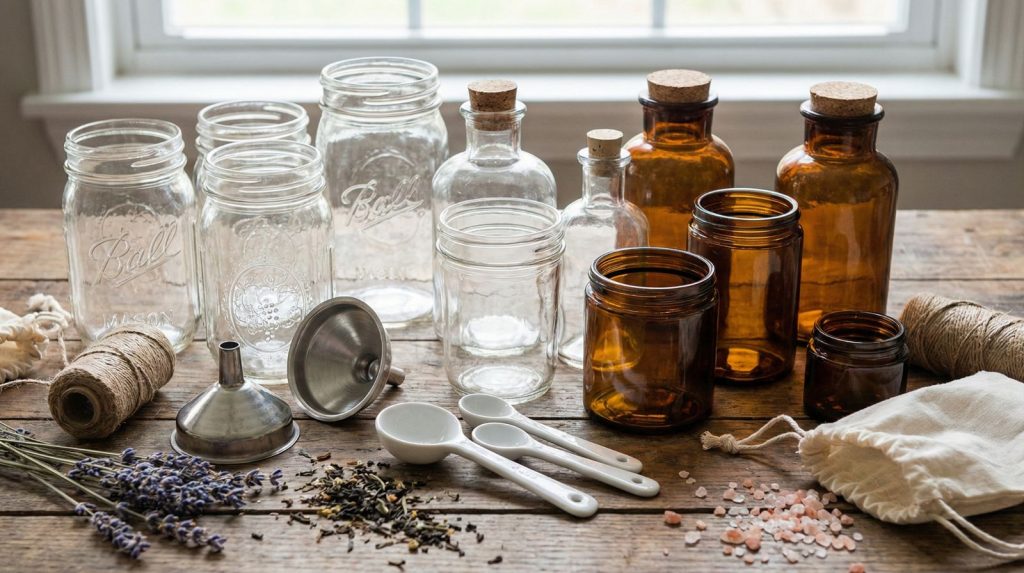
Before assembling herbal gift jars, you’ll need to gather several fundamental components, which include glass containers with airtight seals, measuring implements, labeling materials, and optional decorative elements. Select appropriate jar sizes ranging from four ounces for concentrated spice blends to sixteen ounces for bath soaks, ensuring compatibility with intended contents.
Sealing methods vary considerably, with swing-top closures providing superior moisture protection for tea blends, while standard screw-top lids suffice for dried spice mixtures. Acquire precise digital scales for accurate measurement, as herbal ratios determine efficacy and flavor profiles.
Procure waterproof labels, permanent markers, and adhesive tags to document ingredients, preparation dates, and usage instructions. Consider procurement of muslin bags, decorative ribbon, and cellophane wrapping to enhance presentation while maintaining product integrity throughout storage and transport.
Related Post: Winter Slow Living Rituals: Plant-Based Self-Care for Dark Months.
Sourcing Quality Herbs: Where to Buy and What to Look For
With proper containers assembled, sourcing high-quality herbs becomes the determining factor in finished product effectiveness, requiring careful evaluation of botanical suppliers, organic certifications, and visual quality indicators. You’ll find sourcing options through specialty retailers, farmers’ markets, and online distributors, though herb quality varies markedly across vendors.
| Source Type | Quality Indicators |
|---|---|
| Local Co-ops | Fresh inventory, visible botanical characteristics |
| Online Suppliers | USDA organic certification, third-party testing |
| Bulk Retailers | Vibrant color retention, strong aromatic compounds |
Examine dried botanicals for moisture content, which shouldn’t exceed acceptable preservation levels, ensuring absence of mold, discoloration, or contamination. Verify suppliers maintain proper storage conditions, temperature controls, and packaging protocols. Purchase from vendors providing harvest dates, botanical names, and origin documentation.
Calming Tea Blend Recipes for Relaxation and Wellness
Creating therapeutic tea blends requires understanding botanical synergies, dosage ratios, and extraction parameters that maximize bioactive compound delivery while maintaining palatability throughout extended shelf storage.
When formulating calming blends, you’ll combine chamomile flowers at 40% concentration with lavender buds at 20%, lemon balm at 25%, and passionflower at 15%, ensuring ideal herbal benefits through precise measurements.
Different tea varieties require specific steeping temperatures, with delicate flowers extracting at 185°F for five minutes, while roots demand 200°F for eight minutes to release compounds effectively.
You must store completed blends in amber glass containers, which prevent photodegradation of volatile oils, and label each jar with preparation instructions, ingredient percentages, and expiration dates calculated at twelve months post-assembly, assuming proper storage conditions remain constant throughout the product lifecycle.
Luxurious Bath Soak Combinations Using Herbs and Salts
Therapeutic bath soaks combine mineral salts, botanical materials, and essential oils in measured proportions that facilitate transdermal absorption of beneficial compounds through hydrated skin barriers, requiring precise formulation protocols to guarantee component stability and bioavailability during extended water exposure at elevated temperatures.
You’ll select appropriate salt types, including Epsom salt for magnesium sulfate content, Dead Sea salt for trace minerals, or Himalayan pink salt for balanced electrolytes, each offering distinct therapeutic properties.
Layer dried botanicals such as lavender flowers, chamomile blossoms, or rose petals with your chosen salt base, then incorporate soothing scents through essential oil additions at concentrations not exceeding three percent by volume. Store completed formulations in airtight glass containers, ensuring proper labeling with ingredient specifications, usage instructions, and manufacturing dates for quality control purposes.
Related Post: Winter Herbal Remedies: Immune-Boosting Plants You Can Grow Indoors.
Gourmet Spice Mix Ideas for Every Type of Cook
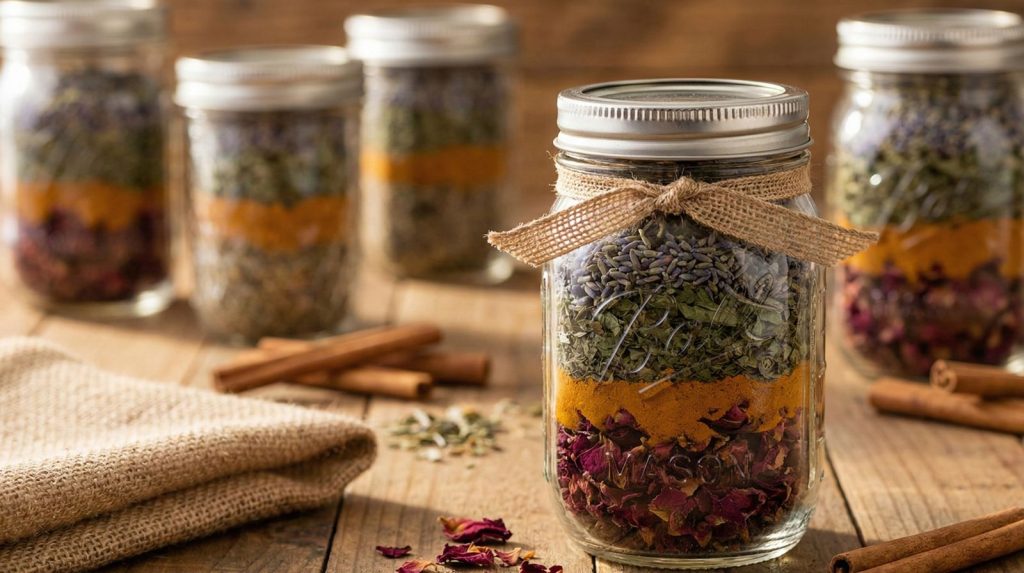
Creating gourmet spice mixes for gift jars requires you to take into account the recipient’s culinary preferences, which typically fall into three distinct categories: bold and spicy blends that incorporate heat-generating compounds such as capsaicin-rich peppers, aromatic herb combinations that utilize volatile oils from botanicals like rosemary and thyme, and sweet-savory mixes that balance sugars with umami-rich ingredients.
You must calibrate the ratio of each component according to precise measurements, ensuring that dominant flavors do not overwhelm the blend’s intended profile while maintaining shelf stability through proper moisture content control.
When you layer these spice combinations in transparent containers, you’ll need to account for particle size distribution, sedimentation patterns, and visual stratification to achieve both aesthetic appeal and functional dispensing characteristics.
Bold and Spicy Blends
For those who appreciate robust flavors with significant heat profiles, bold and spicy blends require careful calibration of capsaicin-containing ingredients, aromatic compounds, and complementary base spices to achieve balanced intensity without overwhelming the palate.
You’ll construct spicy chai mixtures by combining Ceylon cinnamon, green cardamom pods, black peppercorns, and dried ginger root with cayenne pepper at ratios of 3:2:1:1:0.5, ensuring ideal extraction during steeping processes.
When formulating zesty paprika blends, you’ll incorporate smoked Spanish paprika, Hungarian hot paprika, and sweet paprika varieties alongside cumin seeds, coriander, and garlic powder, maintaining temperature stability during storage to preserve volatile oil compounds.
You’ll measure constituent ingredients using digital scales with 0.1-gram precision, document formulation parameters systematically, and package finished products in amber glass containers with airtight seals to prevent oxidation and moisture infiltration.
Aromatic Herb Combinations
When you’re developing aromatic herb combinations that showcase the subtle interplay of volatile compounds, terpenes, and essential oils, you’ll need to understand how molecular structures interact during various cooking methods, storage conditions, and thermal processing stages to maintain organoleptic qualities throughout the product lifecycle.
You must configure aromatic profiles through precise containerization of individual botanical elements, ensuring namespace isolation between competing flavor compounds while implementing role-based access control for heat-sensitive constituents. Deploy herbal pairings using declarative configuration files that specify exact ratios, as imperative approaches introduce inconsistencies across batch deployments.
Implement secrets management for volatile oil retention through hermetic sealing protocols. Monitor degradation metrics using observability tools that track oxidation rates, moisture ingress, and photodegradation vectors, establishing baseline thresholds for acceptable flavor deviation across distributed storage environments.
Sweet and Savory Mixes
Gourmet spice mix architectures require orchestration of sweet and savory flavor profiles through carefully structured pod configurations that balance glucose-reactive compounds with umami-forward amino acid chains, establishing service mesh topologies between caramelization-prone sugars and salt-based flavor enhancers.
You’ll configure sweet blends through deployment manifests incorporating cinnamon, nutmeg, and cardamom in defined ratios, ensuring proper namespace isolation between competing flavor vectors. Deploy savory blends utilizing rosemary, thyme, and garlic powder through container orchestration, implementing strict resource limits to prevent flavor bleeding across boundaries.
Establish ingress controllers for salt distribution, maintaining consistent sodium concentrations across all pod replicas. Monitor sweet blends for crystallization events that could compromise structural integrity, while implementing security policies for savory blends to prevent contamination vectors. Execute rolling updates when adjusting proportions, ensuring zero-downtime shifts between flavor profiles while maintaining persistent volumes for long-term stability.
Labeling and Packaging Your Herbal Jars Like a Pro
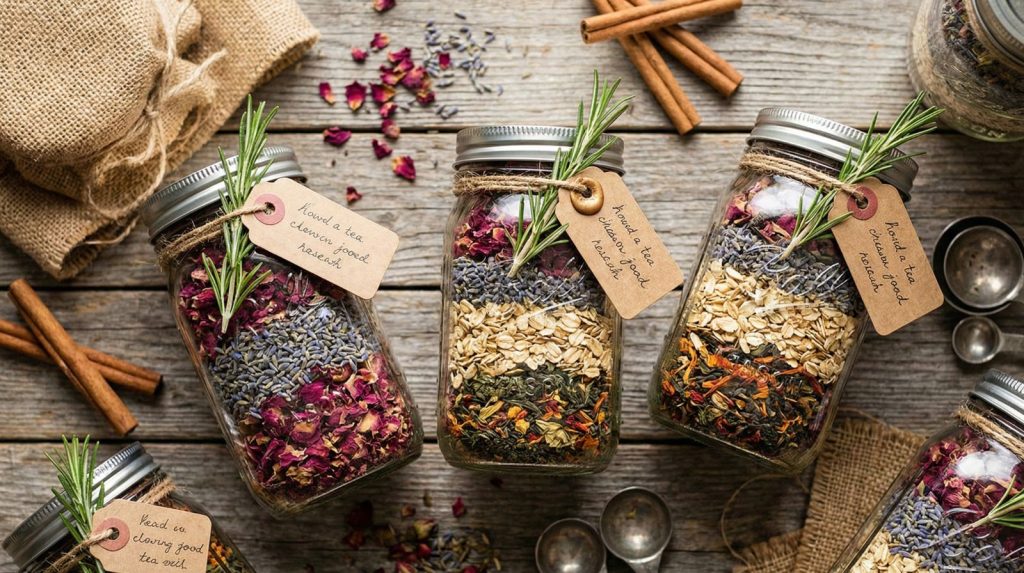
When you’re labeling your herbal gift jars, you’ll need to include critical information such as the blend’s name, ingredient list with botanical names where applicable, preparation instructions, and expiration dates, ensuring that recipients can safely use your creations while maintaining full traceability of contents.
Your decoration techniques should complement the professional labeling by incorporating archival-quality materials, whether you’re using heat-transfer vinyl for permanent adhesion, laser-printed labels on waterproof stock, or hand-calligraphy with fade-resistant inks that won’t compromise the jar’s structural integrity.
These combined elements create a standardized presentation protocol that balances aesthetic appeal with functional clarity, much like how container orchestration systems require both visual monitoring dashboards and precise configuration files to maintain operational efficiency.
Essential Information to Include
Proper labeling of herbal gift jars requires the inclusion of specific, mandatory information that guarantees both safety and usability for recipients. You must document ingredient lists thoroughly, noting potential allergens, contraindications, and expiration dates to confirm herb safety compliance. Gifting etiquette necessitates transparent disclosure of botanical names, sourcing origins, and preparation instructions.
| Information Type | Required Details | Safety Purpose |
|---|---|---|
| Ingredients | Complete botanical names, quantities | Allergen identification, herb safety |
| Usage Instructions | Preparation methods, dosage limits | Proper application, risk mitigation |
| Warnings | Contraindications, storage requirements | Consumer protection, liability reduction |
Include batch numbers, processing dates, and your contact information, which establishes traceability protocols and facilitates recipient communication regarding concerns, questions, or adverse reactions that may necessitate immediate consultation with healthcare providers.
Creative Decoration Techniques
Multiple decoration techniques enhance the visual appeal of herbal gift jars while maintaining functional clarity, though you must guarantee that aesthetic elements don’t compromise the readability of essential safety information or obscure ingredient visibility through the container.
Attach decorative ribbons around the lid’s circumference, securing them with adhesive-backed fasteners to prevent displacement during transport. Apply festive labels to the jar’s exterior using pressure-sensitive adhesive backing, positioning them to maximize visibility of the contents while displaying critical information.
Implement layered embellishments by combining natural twine with kraft paper tags, ensuring each decorative element serves a dual purpose of aesthetics and information conveyance. Consider transparent cellophane wrapping as an additional protective layer, which preserves jar integrity while providing supplementary surface area for decorative applications without interfering with primary labeling requirements.
Storage Tips and Shelf Life Guidelines for Homemade Herbal Gifts
Understanding the degradation patterns of botanical materials guarantees you’ll maintain ideal shelf stability throughout the gift-giving season. Storage conditions directly impact the potency and safety of your herbal preparations, requiring attention to environmental factors including temperature, humidity, and light exposure.
Store dried herbs in airtight containers, preferably glass with sealed lids, maintaining temperatures below 70°F in dark locations. Tea blends retain maximum flavor for six to twelve months when properly stored, while bath soaks containing salts demonstrate extended longevity up to eighteen months. Spice mixes maintain peak quality for approximately one year, though whole spices outperform ground varieties.
Label each jar with preparation dates and specific storage requirements, guaranteeing recipients understand proper handling protocols. Monitor containers regularly for moisture accumulation, discoloration, or off-odors indicating spoilage.
Frequently Asked Questions
Can I Use Fresh Herbs Instead of Dried Ones for Gift Jars?
You shouldn’t use fresh herbs directly in gift jars, as fresh herb considerations include high moisture content that’ll cause mold growth, spoilage, and bacterial contamination within your sealed containers. You must employ proper drying techniques first: hang bundles in well-ventilated, dark spaces for one to two weeks, or use dehydrators set between 95-115°F until herbs crumble easily. Once you’ve achieved complete desiccation, you can safely package them for gifting purposes.
Are Homemade Herbal Gifts Safe for People With Allergies or Sensitivities?
Walking a tightrope with gift-giving, you’ll find homemade herbal gifts aren’t universally safe, as recipients may experience herbal sensitivities to specific botanical compounds, including essential oils, plant proteins, and volatile organic compounds. Before distribution, you must conduct allergy testing by providing complete ingredient lists, documenting botanical names using binomial nomenclature, and requesting recipients verify compatibility with existing conditions, medications, and documented allergies, thereby ensuring informed consent and mitigating adverse reactions through systematic disclosure protocols.
What’s the Best Way to Calculate Ingredient Costs for Budgeting Purposes?
To calculate cost per item accurately, you’ll divide total ingredient sourcing expenses by the number of units produced. Track vendor invoices, recording purchase quantities and prices per unit (ounce, gram, or pound), then multiply unit costs by recipe amounts. Include packaging materials, labels, and overhead in your calculations. Maintain a spreadsheet documenting supplier pricing, seasonal variations, and bulk discount thresholds to optimize ingredient sourcing strategies and guarantee precise budgeting for future production cycles.
Can Children Help Make These Herbal Gift Jars Safely?
Children can assist with herbal gift jar preparation when you implement proper supervision protocols, though you must restrict herb picking activities to non-toxic varieties and enforce safe handling procedures throughout the workflow. You should assign age-appropriate tasks: younger children can measure pre-approved ingredients using calibrated tools, while older participants may blend components after completing safety training. You must maintain strict contamination controls, ensuring hand sanitization occurs before contact with materials.
Do I Need Insurance to Give Homemade Herbal Products as Gifts?
You don’t need insurance for personal gifts to friends and family, though you should understand liability considerations if recipients experience adverse reactions. You’re responsible for accurate labeling requirements, including ingredient lists and allergen warnings. If you’re selling products or distributing widely, you’ll face different legal obligations and should consult an attorney regarding product liability insurance, as casual gifting differs greatly from commercial distribution under consumer protection laws.
Related Post: DIY Candle Making With Herbal Infusions: Turn Garden Herbs Into Healing Light.
Conclusion
You’ve now acquired the methodologies for constructing herbal gift jars, which, when properly executed, yield aromatic infusions, therapeutic bath preparations, and culinary spice configurations. As you finalize your containers, affirm you’ve validated herb quality parameters, adhered to precise measurement protocols, and implemented appropriate labeling taxonomies. The crystalline salts cascade into vessels, dried botanicals settle in stratified layers, and aromatic compounds permeate sealed environments, creating shelf-stable products that’ll maintain therapeutic efficacy throughout seasonal distribution cycles when storage specifications are strictly observed.