Healthy soil isn’t just dirt — it’s a living ecosystem. It breathes, eats, and transforms sunlight into the food that sustains every life form above it.
But most modern gardening practices — over-tilling, monocropping, chemical fertilizers — strip the soil of its life force. Over time, it loses structure, nutrients, and microbial energy.
There’s an ancient, effortless solution that nature has always used: cover crops. And when you mix them into thoughtful combinations, they do something extraordinary — they supercharge your soil.
“The best gardeners don’t just grow plants. They grow soil.”
What Are Cover Crops — and Why Mix Them?
Cover crops are plants grown not for harvest, but to heal and nourish the earth itself. They blanket bare soil between growing seasons, feeding microbes, preventing erosion, and building fertility. When these plants are grown in diverse combinations, something magical happens below the surface.
Different species bring different gifts:
- Legumes pull nitrogen from the air and fix it into the soil.
- Grasses build structure and hold water.
- Brassicas drill deep roots that open compacted layers.
- Flowering herbs attract pollinators and beneficial insects.
Together, they form a living network — one that mimics the diversity of wild ecosystems.
No products found.
Why Soil Loves Diversity
In nature, no plant grows alone. Grasses, clovers, and wildflowers work in harmony — sharing nutrients, moisture, and microbial partners underground. A monocrop feeds only a small part of the soil community. But when you plant a blend of cover crops, you’re inviting multiple microbial species to thrive.
The Science of Synergy
- Legumes + Grasses → nitrogen from legumes feeds the roots of grasses.
- Brassicas + Broadleafs → deep taproots break up hardpan, letting oxygen and water in.
- Flowers + Forbs → roots release sugars that fuel microbial diversity.
Every plant plays its part, and when combined, they transform the soil into a living sponge — rich, aerated, and bursting with microbial life.
“A single plant improves the soil. A community of plants restores it.”
The 6 Best Cover Crop Combinations (and Why They Work)
These six time-tested mixes are ideal for gardeners, small homesteads, or regenerative farmers. Each one heals soil differently — choose based on your seasonal goals and conditions.
1. The Nitrogen Power Combo: Clover + Rye + Vetch
This classic mix rebuilds depleted soil fast.
- Clover draws nitrogen from the air, feeding the soil.
- Rye grows quickly, holding nutrients and suppressing weeds.
- Vetch adds lush green matter that decomposes into humus.
Why it works: The trio forms a balanced nutrient cycle — nitrogen from clover feeds rye; rye roots hold structure; vetch adds organic carbon.
Great for fall or early spring.
2. The Soil Builder Combo: Oats + Peas + Daikon Radish
Perfect for compacted or tired soil.
- Oats shade weeds and create surface mulch.
- Field Peas fix nitrogen and attract beneficial microbes.
- Daikon Radish drills downward, breaking dense soil layers.
Why it works: Radish opens deep channels for air and water, while oats and peas enrich the topsoil. By spring, the decaying radish roots leave behind a soft, aerated bed ready for planting.
🌱 A living tiller that doesn’t burn fuel — only sunlight.
3. The Pollinator & Microbe Party: Buckwheat + Clover + Phacelia
If your soil feels lifeless, this mix revives it in one season.
- Buckwheat grows fast and feeds bees.
- Clover adds nitrogen and stabilizes roots.
- Phacelia attracts pollinators and beneficial predatory insects.
Why it works: These species create nectar aboveground and microbial energy below. Their flowers also make your garden visually stunning — a bonus for wellness and biodiversity.
4. The Erosion Control Mix: Barley + Hairy Vetch + Mustard
Perfect for slopes or high-rainfall zones.
- Barley has fibrous roots that anchor soil.
- Hairy Vetch adds nitrogen and moisture retention.
- Mustard releases compounds that reduce soil pathogens.
Why it works: Together, they stabilize topsoil and restore structure after heavy rains — a natural “living net.”
5. The All-Season Protector: Ryegrass + Crimson Clover + Turnip
If you want one mix to work year-round, start here.
- Ryegrass grows dense and controls weeds.
- Crimson Clover adds nitrogen and aesthetic charm.
- Turnip improves aeration with round, decomposing roots.
Why it works: A balanced combination of quick-growing and long-lasting species keeps soil covered across multiple seasons.
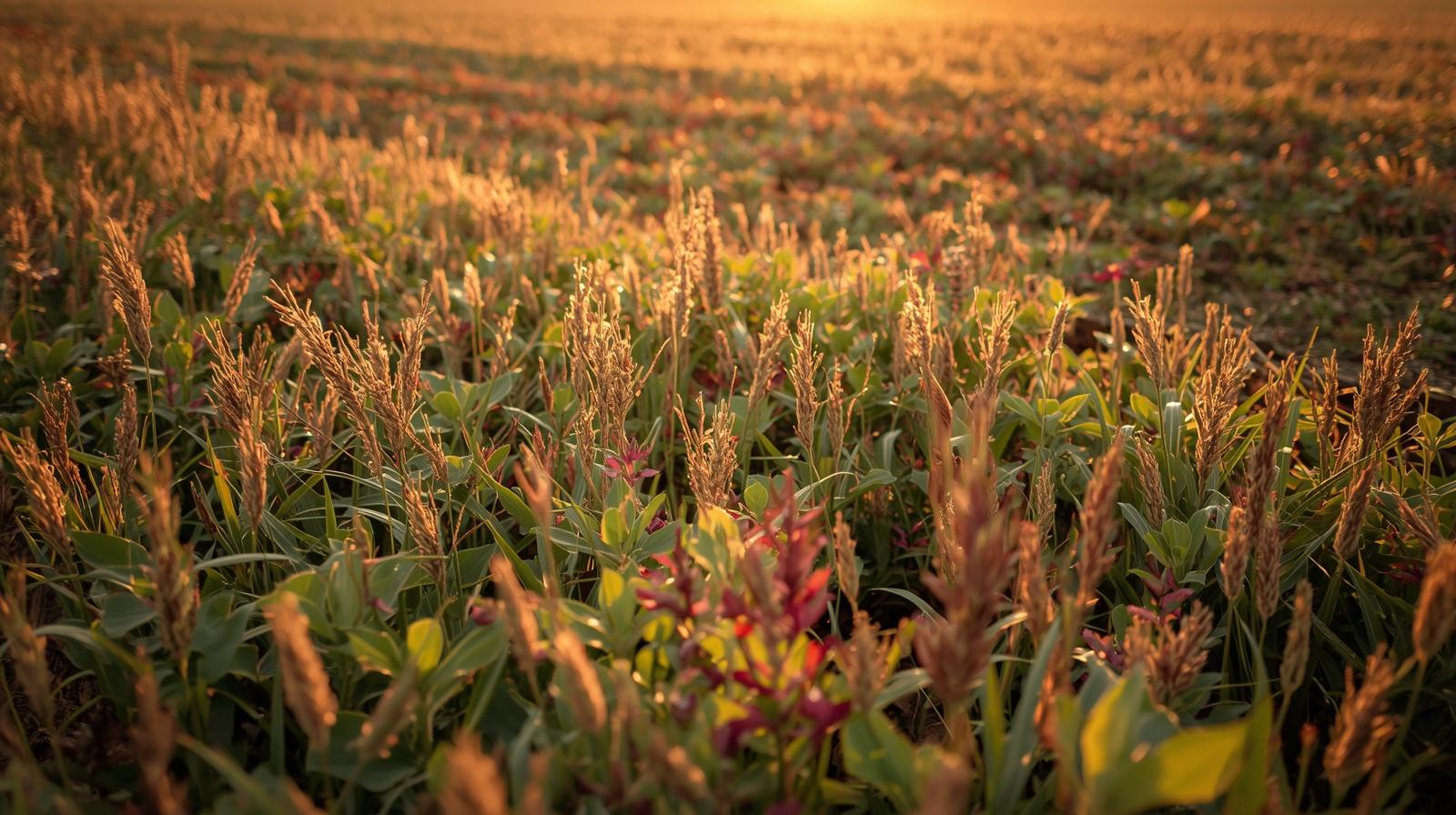
6. The Summer Soil Healer: Sorghum + Cowpeas + Sunflower
Ideal for warm climates and post-harvest soil repair.
- Sorghum grows tall and suppresses weeds with its shade.
- Cowpeas thrive in heat, fixing nitrogen efficiently.
- Sunflower roots mine micronutrients from deep soil layers.
Why it works: The tall canopy shades the soil while roots rejuvenate the sublayers — a natural solar-powered compost factory.
No products found.
How to Plant Cover Crop Combinations
Even beginners can integrate these blends into small raised beds or backyard plots.
Timing
- Spring/Fall: Sow clover, oats, rye, and vetch blends 4–6 weeks before frost.
- Summer: Choose heat-tolerant mixes (sorghum, cowpeas).
- After Harvest: Plant fast growers like buckwheat and peas immediately after clearing beds.
Seeding & Ratios
- Mix seeds evenly — a general ratio:
- 40% grass, 40% legume, 20% broadleaf or brassica.
- Broadcast seeds lightly and rake them into moist soil.
- Water once to ensure contact — nature handles the rest.
Water & Care
Cover crops are low-maintenance — they thrive on natural rainfall and self-fertilize through root activity. Water only during germination or extended drought. Once established, their dense growth naturally smothers weeds and conserves moisture.
No products found.
When and How to Terminate the Cover Crop
Your goal isn’t to keep them forever — it’s to return their energy to the soil.
Timing
- Terminate before flowering or seed set for maximum nutrient capture.
- Early flowering is the perfect signal — nutrients are at their peak in the foliage and roots.
Methods
- Chop & Drop: Cut at the base, leave as surface mulch.
- Crimping: Lay flattened stems to form a weed-suppressing mat.
- Mowing or Rolling: For large areas or no-till gardens.
Let residue break down for 2–3 weeks before planting the next crop. You’ll notice soil becoming darker, looser, and more fragrant — alive again.
No products found.
The Long-Term Rewards
| Benefit | What Happens in the Soil |
|---|---|
| Nutrient Cycling | Nitrogen from legumes, carbon from grasses feed microbes year-round. |
| Erosion Control | Dense roots stabilize slopes and prevent runoff. |
| Water Retention | Organic matter improves sponge-like soil capacity. |
| Weed Suppression | Living cover shades weed seeds from germinating. |
| Microbial Diversity | Mixed roots invite beneficial fungi and bacteria. |
Real Garden Story: Restoring a Tired Raised Bed
Last year, I tested a Peas + Oats + Radish combo on one of my most compacted beds. In autumn, I sowed the seeds, covered them lightly, and let the rains do the rest.
By winter, it was a soft jungle of roots and shoots. Come spring, the soil smelled rich and crumbled like cake — worms everywhere, the radish taproots now hollow tunnels for air and water. That same bed produced the best tomato harvest I’ve ever had.
🌱 When you feed your soil, it remembers — and repays you abundantly.
Common Mistakes to Avoid
| Mistake | Why It’s a Problem | Fix |
|---|---|---|
| Planting too late | Crops don’t establish before frost | Sow at least 4–6 weeks early |
| Using one species | Limits microbial activity | Always mix 2–3 types |
| Till too early | Loses root structure and nitrogen | Wait until early bloom stage |
| Overseeding | Causes overcrowding | Follow seed density guidelines |
| Ignoring climate | Poor adaptation | Choose regional species |
No products found.
A Living Philosophy: Feed the Soil, Not Just the Plant
Regenerative gardening isn’t about forcing results — it’s about partnership. Cover crop combinations are your allies in restoring that partnership. Each mix is a quiet collaboration between plants and microbes, air and roots, life and decay. The more diversity you plant, the more alive your garden becomes — not just above ground, but deep below it.
“A healthy garden starts with humble roots — literally.”
Conclusion — “Let the Earth Heal Itself”
When you plant cover crop combinations, you’re doing more than improving soil — you’re participating in nature’s oldest healing ritual. Let clover and rye hold the earth’s skin, peas and radish open its lungs, and buckwheat and phacelia call the pollinators home. Then step back and watch as your garden becomes what it was always meant to be — a living, breathing system that gives more than it takes.
🌿 The best fertilizer in the world is biodiversity.