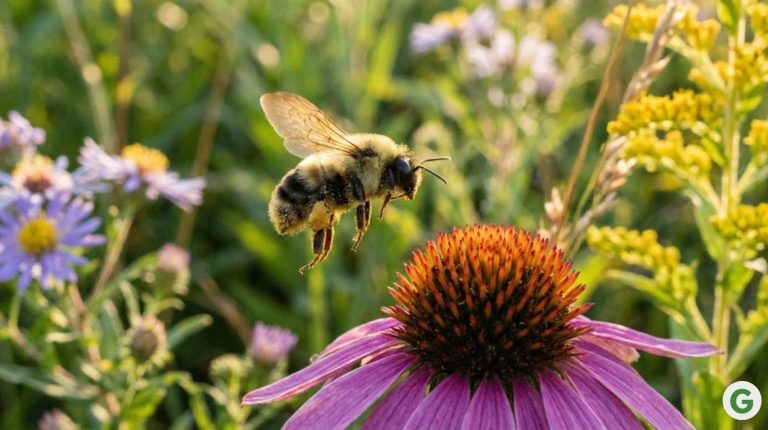
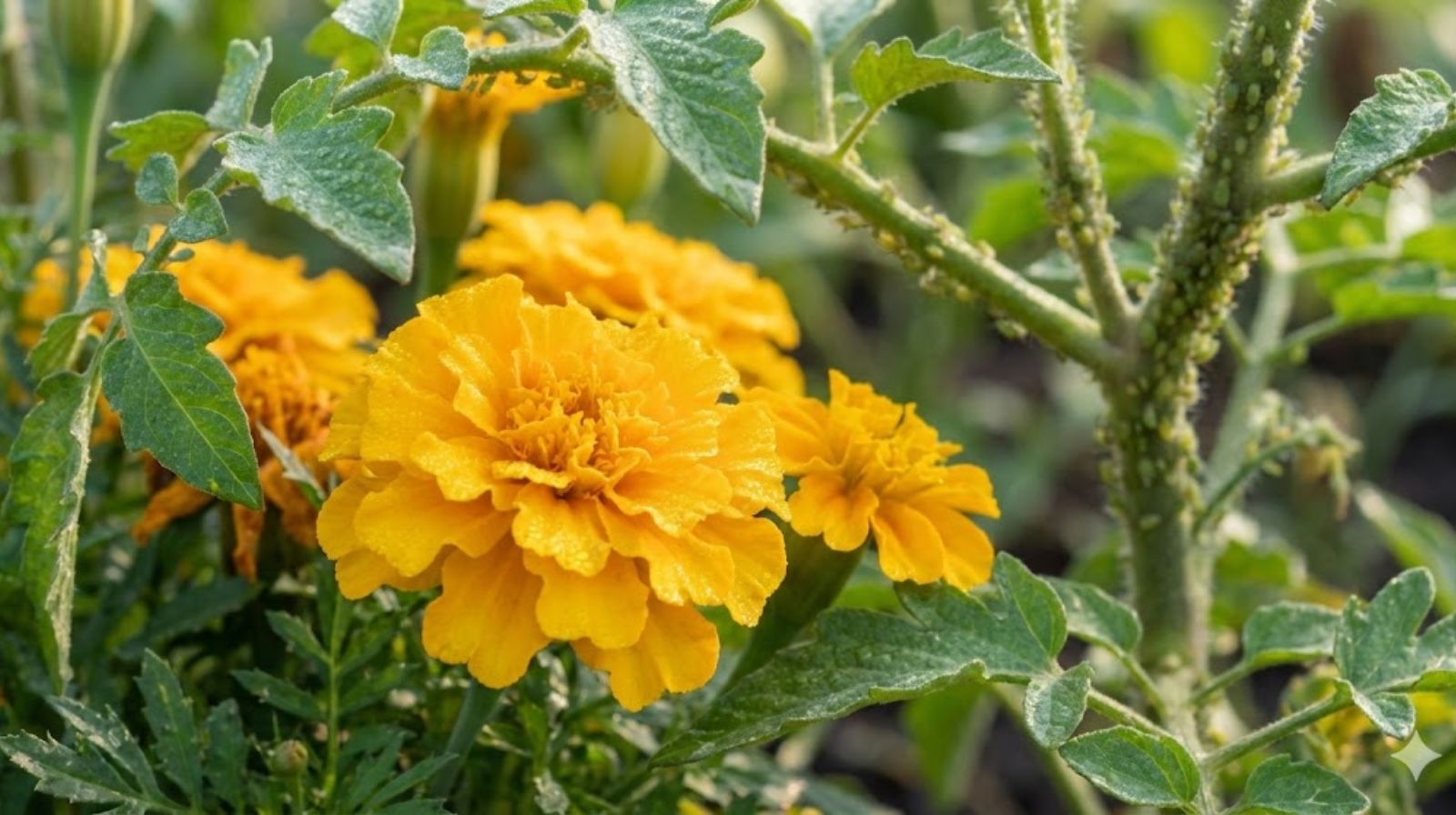
Companion planting functions as a biological pest management strategy through three primary mechanisms: chemical interference with pest sensory systems, establishment of physical barriers between vulnerable crops and their natural predators, and cultivation of habitats that support beneficial insect populations. These interconnected processes create multilayered defense systems that reduce pest pressure without synthetic interventions, though their effectiveness depends on precise plant selection, spatial arrangement, and an understanding of specific pest behaviors that most gardeners overlook.
Key Takeaways
- Aromatic herbs emit volatile compounds that mask crop scents, disrupting pest navigation and creating olfactory confusion zones.
- Companion plants attract beneficial predatory insects like ladybugs and parasitic wasps that naturally control pest populations.
- Trap crops like nasturtiums divert pests away from valuable crops by providing alternative, more attractive targets.
- Dense companion planting creates physical barriers that obstruct pest movement and manipulate light to create unfavorable conditions.
- Plant diversity disrupts pest foraging patterns and hinders their ability to locate host crops through strategic interplanting.
How Companion Planting Creates Natural Pest Barriers
Although conventional agricultural practices have long relied upon synthetic pesticides to manage insect populations, companion planting establishes natural pest barriers through the strategic arrangement of plant species that exploit olfactory and visual disruption mechanisms, thereby interfering with pest host-location behaviors.
This methodology employs specific plants, such as marigolds and nasturtiums, which function as trap crop systems, diverting pest populations from economically valuable species. The volatile compounds emitted by aromatic herbs, including thyme and basil, target specific pest species through chemical deterrence, eliminating dependency on synthetic interventions.
In addition, companion planting introduces biodiversity that attracts beneficial insects, particularly ladybugs and parasitic wasps, which establish predator-prey dynamics that suppress pest populations through biological control mechanisms, thereby creating autonomous, self-regulating garden ecosystems that require minimal external pest deterrence interventions. Implementing these Integrated Pest Management strategies alongside companion planting further reduces reliance on chemical pesticides while enhancing plant health through synergistic growing relationships.
The Science Behind Scent Interference and Pest Confusion
The mechanism of scent interference in companion planting operates through the strategic deployment of plant species that emit volatile organic compounds, which disrupt the chemosensory pathways insects utilize to locate host plants, thereby degrading the efficacy of olfactory-based navigation systems that numerous pest species depend upon for survival and reproduction.
Key mechanisms of scent-based pest confusion include:
- Aromatic herbs such as basil and mint release volatile compounds that mask vegetable signatures, disorienting aphids and caterpillars
- Nasturtiums function as trap crops while simultaneously emitting deterrent compounds
- Increased scent diversity from companion planting creates navigational interference for pest species
- Volatile organic compounds interrupt chemical signaling pathways that insects require for host detection
- Enhanced ecosystem balance supports beneficial insects while suppressing pest populations through natural scent-based deterrence
Attracting Beneficial Insects Through Plant Diversity
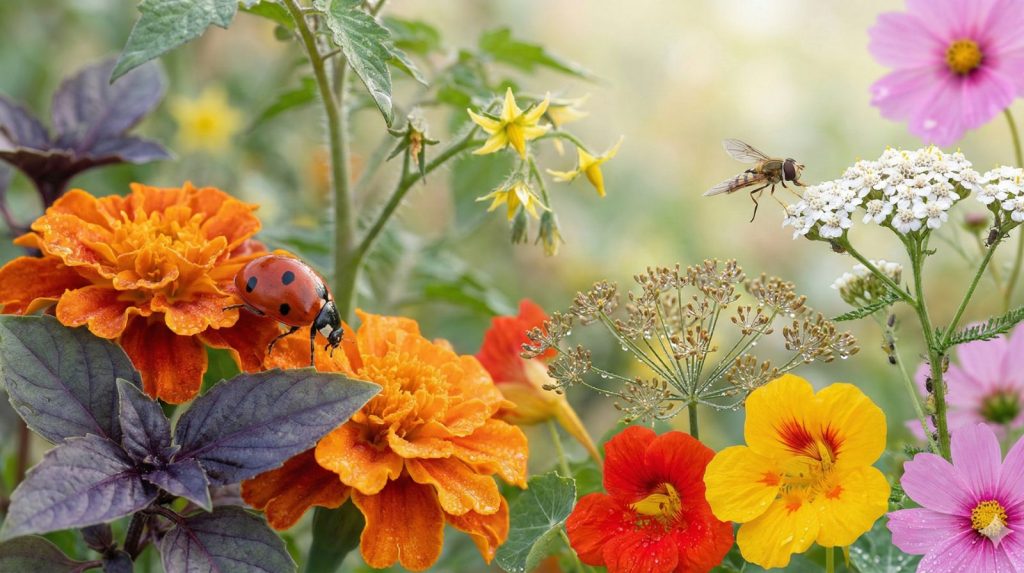
Plant diversity in garden ecosystems functions as a fundamental mechanism for establishing habitats that support populations of beneficial insects, including predatory species such as ladybugs and lacewings, which serve as natural control agents against common pest infestations.
The strategic incorporation of flowering species, particularly cosmos and alyssum, operates through dual pathways by simultaneously attracting pollinators while also drawing parasitic wasps that actively suppress pest populations through predation and parasitism.
Additionally, specific herbaceous plants, including dill, parsley, and fennel, fulfill critical roles as host plants that provide nutritional resources for beneficial insects while concurrently deterring harmful pest species through chemical signaling compounds.
Creating Habitats for Helpers
When gardeners cultivate diverse plantings within their growing spaces, they establish foundational ecosystems that support populations of beneficial insects, including predatory species such as ladybugs (Coccinellidae), lacewings (Chrysopidae), and parasitic wasps (Hymenoptera), which function as biological control agents against aphids, caterpillars, and other common garden pests.
Strategic Implementation Methods:
- Incorporate flowering herbs alongside vegetables to provide continuous nectar sources that sustain beneficial insects throughout growing seasons
- Deploy native flowers within companion planting systems to maximize biodiversity and attract region-specific predatory species
- Allow select vegetables to bolt and flower, creating additional habitat structures and food resources
- Integrate marigolds to release allelochemical compounds that simultaneously attract helpers while repelling harmful organisms
- Implement multi-species configurations that generate scent interference patterns, disrupting pest location mechanisms and reducing infestation probability
This approach to companion planting exemplifies resource conservation by reducing dependency on synthetic pesticides while maintaining productive garden ecosystems for future seasons.
Flowers as Insect Magnets
Among the most effective approaches to establishing biological pest control mechanisms within garden ecosystems, strategic placement of diverse flowering species creates recruitment zones that concentrate populations of predatory and parasitic insects at critical locations throughout growing spaces. Plant diversity, incorporating cosmos, alyssum, and marigold, provides essential nectar and pollen resources for attracting beneficial insects, including bumble bees and syrphid flies, thereby enabling autonomous pest management without synthetic interventions.
| Flowering Plant | Target Beneficial Insect |
|---|---|
| Cosmos | Parasitic wasps |
| Alyssum | Syrphid flies |
| Marigold | Predatory beetles |
| Nasturtium | Aphid predators |
Implementing trap crops, particularly nasturtium, redirects pest pressure from primary production areas, while permitting bolting vegetables to flower extends the temporal availability of floral resources, sustaining continuous populations of beneficial organisms throughout cultivation cycles. Regular monitoring of pest and beneficial insect populations enables gardeners to track and analyze ecosystem dynamics and adjust companion planting strategies for optimal biological control effectiveness.
Understanding Trap Crops and Sacrificial Plants
The strategic deployment of trap crops and sacrificial plants constitutes a fundamental integrated pest management technique that leverages the natural behavioral patterns of agricultural pests to minimize crop damage while reducing dependency on synthetic chemical interventions.
This methodology enables gardeners to break free from chemical pesticide cycles by establishing deliberate pest diversion systems. Trap crops function through targeted species selection, wherein plants exhibiting superior attractant properties intercept pest populations before they reach primary agricultural assets, thereby mimicking natural ecosystems’ predator-prey dynamics.
- Nasturtium deployment effectively redirects aphids from cabbage and lettuce cultivation areas
- Species selection requires pest-specific attractant analysis to maximize interception efficiency
- Strategic plant positioning creates protective barriers around vulnerable crop zones
- Reduced chemical pesticide application preserves beneficial insect populations
- Sacrificial plant implementation maintains ecological balance while protecting agricultural investments
The Role of Aromatic Herbs in Repelling Common Garden Pests
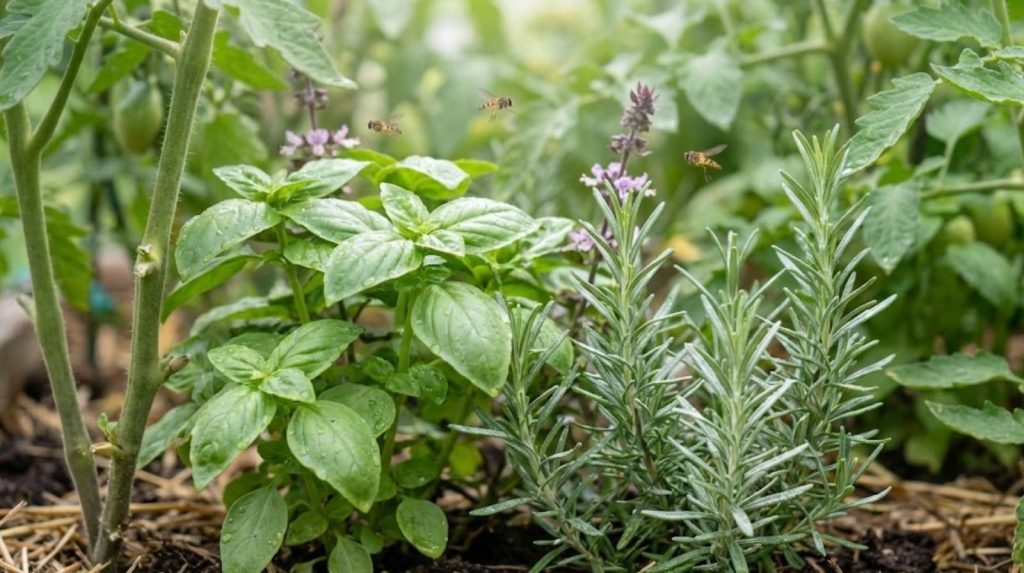
Aromatic herbs utilize volatile organic compounds, which emit strong scents that interfere with the sensory mechanisms of common garden pests, thereby disrupting their ability to locate host plants through olfactory cues. This phenomenon of scent interference operates as a masking agent, confusing insects such as aphids, cabbage moths, and mosquitoes when they attempt to navigate toward their preferred targets, ultimately reducing pest pressure on nearby crops.
Specific herbs demonstrate selective efficacy against particular pest species, with basil deterring tomato hornworms and aphids, dill repelling cabbage worms through olfactory confusion, and mint effectively driving away ants and flea beetles from vulnerable plant varieties. Integrating aromatic herbs with strategic crop rotation practices further enhances pest management by preventing the buildup of pest populations that may otherwise adapt to companion planting schemes over successive growing seasons.
Scent Interference Confuses Pests
Strategic integration of scent-producing herbs into garden layouts exploits the vulnerability of pest olfactory systems, which rely on chemical signals to locate host plants, thereby creating a sensory barrier that diminishes pest foraging efficiency.
Scent interference generated by aromatic herbs functions through multiple mechanisms that deter pests while establishing natural pest control frameworks:
- Volatile organic compounds emitted by basil, mint, and dill mask host plant chemical signatures, preventing accurate pest navigation
- Phytochemical dispersal patterns create olfactory confusion zones that disrupt established feeding behaviors
- Monoterpenes and sesquiterpenes in lavender and rosemary interfere with pheromone receptor binding sites
- Compound volatility creates persistent atmospheric barriers that reduce pest settlement rates
- Strategic herb placement amplifies scent concentration gradients, maximizing deterrent efficacy
This approach eliminates chemical pesticide dependency while maintaining crop protection through biologically-based intervention strategies. Marigolds exemplify this principle by repelling aphids through their distinct aromatic profile, demonstrating how companion planting creates diverse ecosystems that promote natural balance between pests and beneficial predators.
Specific Herbs Target Pests
Beyond general olfactory disruption mechanisms, individual herb species demonstrate specialized pest-targeting capabilities through distinct phytochemical profiles that address specific arthropod vulnerabilities. Dill attracts parasitic wasps that parasitize caterpillar populations while simultaneously deterring aphids and spider mites through chemical emission patterns.
Mint repels ants, aphids, and beetles via concentrated volatile compounds, though its aggressive growth characteristics necessitate physical containment strategies to prevent displacement of adjacent plantings. Catnip demonstrates efficacy against mosquitoes and cockroaches, providing dual-function pest management for residential cultivation areas. Fennel operates through a bifunctional mechanism, repelling aphids and related species while attracting beneficial predators such as ladybugs, thereby establishing balanced predator-prey dynamics.
These specific herbs target pests through evolved biochemical defense systems, enabling gardeners to implement strategic planting configurations that deter problematic insects without synthetic chemical interventions. Just as smart systems optimize energy generation in solar installations, companion planting configurations require careful monitoring and adjustment to maximize pest deterrent effectiveness while maintaining healthy plant growth patterns.
How Marigolds and Flowering Plants Combat Soil-Borne Pests
Marigolds, particularly the species Tagetes erecta, function as a biological defense mechanism against root-knot nematodes through the secretion of specific biochemical compounds from their root systems, which, when introduced to the soil prior to the establishment of primary crop species, effectively suppress nematode populations and mitigate their capacity to inflict damage on subsequent plantings.
Flowering plants such as cosmos and alyssum attract beneficial insects, including predatory wasps and pollinators, which establish natural pest control mechanisms that keep pests away from vulnerable crops. This implementation of diverse flowering species creates autonomous ecosystem management, reducing reliance on chemical interventions. Companion planting with garlic and onions further deters specific pests through physical barriers and aromatic compounds that disrupt pest behavior patterns.
- Marigolds repel root-knot nematodes through biochemical root secretions
- Flowering plants attract beneficial insects for natural pest control
- Scent masking prevents pest location of target crops
- Enhanced soil microbiome increases plant resilience
- Ecosystem diversity maintains balanced pest populations
Physical Protection Through Strategic Plant Placement
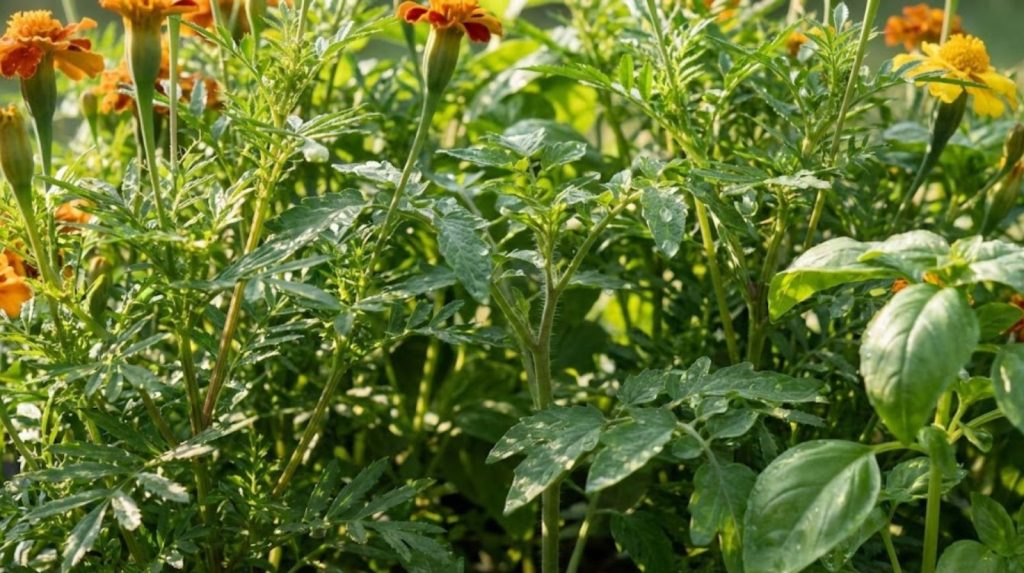
Strategic plant placement creates physical barriers and diversionary tactics that mitigate pest damage through multiple mechanisms, including the deployment of trap crops such as nasturtium, which concentrate pest populations on sacrificial plants while protecting primary crop species.
The spatial arrangement of companion plants generates scent interference patterns that disrupt insect navigation and host-plant location, as demonstrated by marigold plantings near zucchini that emit volatile compounds capable of deterring squash bugs and similar phytophagous insects.
Living barriers established through dense ground cover configurations simultaneously suppress weed growth, which eliminates secondary pest habitats, while creating structural impediments that physically obstruct pest access to vulnerable crops. Similarly, the principle of zero tailpipe emissions from electric vehicles demonstrates how eliminating harmful outputs at their source—whether pollutants in urban environments or pests in garden ecosystems—creates cleaner, healthier spaces through strategic design and placement.
Trap Crops Lure Pests
Trap crops function as sacrificial plantings that intercept pest insects before they reach economically valuable crops, operating through a mechanism wherein deliberately selected plant species, such as nasturtiums or radishes, emit chemical attractants or visual cues that prove more appealing to target pests than the primary harvest. Strategic deployment of these companion planting elements enables cultivators to concentrate pest populations on expendable plants, thereby protecting primary yields from economic loss.
Critical Implementation Parameters:
- Synchronize trap crop deployment with documented pest emergence cycles to maximize interception efficiency
- Position decoy plantings at garden perimeters to attract pests away from protected zones
- Deploy scent-interference tactics through alternative food sources that disrupt pest navigation
- Implement rotational trap crop protocols to destabilize pest reproductive cycles
- Monitor pest accumulation on sacrificial plants to determine removal timing and prevent spillover effects
Scent Interference Confuses Insects
While trap crops concentrate pest populations through attraction, scent interference operates through a complementary mechanism wherein aromatic companion plants release volatile organic compounds that disrupt the olfactory navigation systems of phytophagous insects, thereby preventing target pest species from successfully locating their preferred host plants within the cultivation zone.
Strong-scented herbs, including basil and mint, mask tomato volatiles, confusing hornworms during host-plant identification phases. Pest-repelling plants such as marigolds emit specific chemical compounds that establish olfactory barriers within garden perimeters. Strategic integration of trap crops with aromatic species creates layered defense systems, wherein nasturtiums attract pests while neighboring herbs simultaneously obscure vulnerable crop signatures.
This dual-mechanism approach enables cultivators to achieve autonomous pest management without synthetic chemical inputs, promoting ecological independence through biodiversity enhancement and systematic placement of companion species throughout cultivation areas. For gardeners seeking additional protection beyond scent-based strategies, floating row covers provide a physical barrier that shields plants from cabbage worms, aphids, and other pests while still allowing essential sunlight, air, and moisture to reach the foliage.
Living Barriers Block Access
Beyond chemical deterrence mechanisms, certain companion species function as architectural impediments that physically obstruct pest locomotion through the cultivation matrix, creating structural barriers that prevent phytophagous organisms from accessing target crops regardless of their olfactory capabilities or navigational strategies.
- Vertical barriers: Erect cultivars, including corn and sunflowers, provide physical support while establishing obstruction zones that reduce pests through direct path interference
- Ground-level impediments: Dense plantings of clover create horizontal barriers limiting arthropod movement vectors across soil surfaces
- Light manipulation: Tall specimens generate photosynthetically unfavorable conditions for heliothermic pest species beneath canopy structures
- Navigation disruption: Strategic interplanting forces multi-directional trajectory adjustments, degrading pest efficiency in locating host plants
- Layered defense: Combining vertical and horizontal barriers establishes redundant protection protocols, minimizing vulnerability exposure throughout cultivation zones
These physical barrier systems complement chemical deterrents by attracting beneficial insects that provide additional layers of natural pest control within the garden ecosystem.
Specific Plant Combinations That Target Problem Insects
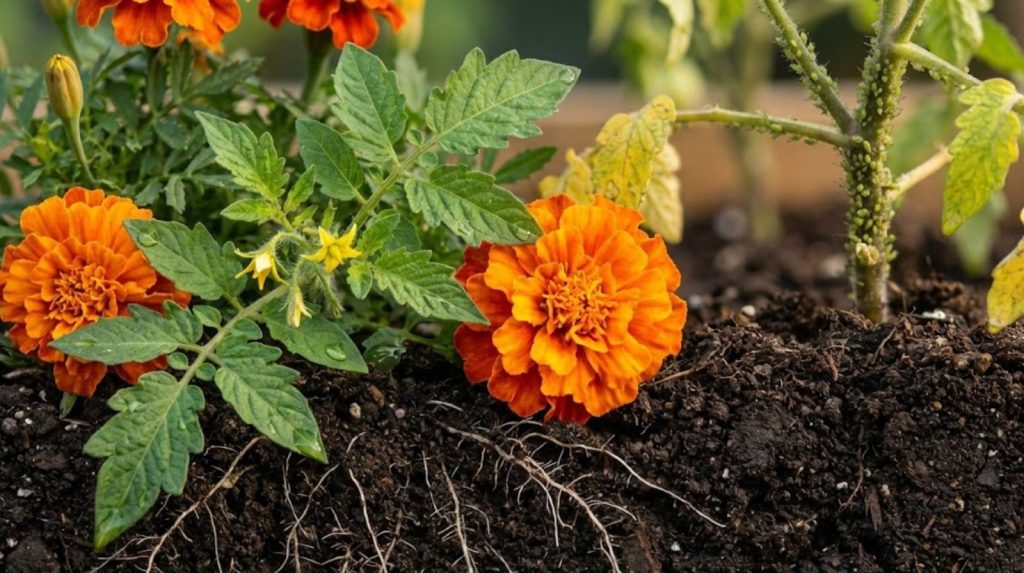
Understanding the strategic placement of compatible plant species requires knowledge of the biochemical interactions that occur between specific crops and the pests that commonly threaten them, as certain combinations leverage natural repellents, volatile compounds, and physical barriers to create multi-layered defense systems within the garden ecosystem.
| Primary Crop | Companion Plant | Target Pest | Mechanism |
|---|---|---|---|
| Tomatoes | Basil | Hornworms, Aphids | Chemical repellent compounds |
| Zucchini | Marigolds | Nematodes, Aphids | Root exudates, volatile deterrents |
| Cucumbers | Nasturtiums | Aphids, Cucumber beetles | Trap crop diversion |
| Cabbage | Thyme | Cabbage worms, Loopers | Aromatic masking agents |
The companion planting methodology enables cultivators to repel destructive pest populations through deliberate intercropping arrangements, whereby plants function synergistically to protect vulnerable crops from infestation while maintaining garden autonomy from synthetic chemical interventions.
Building a Balanced Garden Ecosystem Over Time
As gardeners implement companion planting strategies across multiple growing seasons, the cumulative effects of plant diversity gradually establish a self-regulating ecosystem wherein beneficial insect populations proliferate, predator-prey relationships stabilize, and the overall resilience of the garden improves through successive cycles of plant maturation and soil microbiome development.
- Certain plants establish habitats for predatory insects, which execute biological pest control functions through predation of harmful species
- Natural pest populations decline as beneficial organisms colonize diversified plantings, reducing chemical intervention requirements
- Scent interference mechanisms intensify as companion species mature, disrupting pest host-location capabilities
- Successive plantings improve soil structure and microbial communities, supporting robust plant growth and defensive capabilities
- Ecosystem stability increases temporally, yielding enhanced self-regulation of pest populations through established ecological relationships
Why Eliminating Chemical Pesticides Enhances Companion Planting Success
While companion planting methodologies rely fundamentally upon the establishment of complex interspecies relationships and ecological interdependencies, the introduction of chemical pesticides systematically disrupts these biological networks by indiscriminately eliminating both target pest species and the beneficial arthropod populations that serve as natural pest regulators, thereby undermining the core mechanisms through which companion planting achieves pest suppression. Eliminating chemical pesticides preserves predatory wasps, ladybugs, and other beneficial insects crucial for natural ecosystem stability and effective pest management.
| Pest Control Method | Impact on Beneficial Insects | Ecosystem Integration |
|---|---|---|
| Chemical Pesticides | Complete elimination | Disrupted networks |
| Organic Pesticides | Partial reduction | Compromised balance |
| Physical Barriers | Minimal interference | Preserved interactions |
| Hand-Picking | Zero impact | Enhanced resilience |
Pesticide-resistant populations emerge through chemical dependency, whereas soil-focused cultivation strengthens plant health, enabling companion planting success through biological complementarity rather than synthetic intervention.
Frequently Asked Questions
Does Companion Planting Deter Pests?
Companion planting deters pests through natural pest control mechanisms that leverage plant synergy, wherein diverse species release aromatic compounds that disrupt pest navigation and foraging behaviors. This agricultural practice enhances biodiversity benefits by establishing complex plant communities that confuse host-seeking insects, while simultaneously providing habitat enhancement for predatory species such as parasitic wasps and ground beetles. The strategic arrangement of incompatible plant species creates olfactory barriers, effectively reducing pest colonization rates without requiring synthetic chemical interventions, thereby liberating cultivators from dependence on conventional pesticide applications.
What Is the 70 30 Rule in Gardening?
The 70/30 Rule allocates seventy percent of garden space to flowering plants and thirty percent to vegetable crops, establishing garden diversity that disrupts pest cycles through strategic plant synergy. This distribution enhances soil health by supporting varied root structures and microbial populations, while flowering species attract beneficial predators that interrupt destructive insect lifecycles. The methodology liberates gardeners from chemical dependencies by creating ecological balance, wherein diverse plantings generate natural pest suppression mechanisms through complementary biological interactions and habitat complexity.
Do Marigolds Really Repel Squash Bugs?
Marigolds demonstrate limited efficacy in repelling squash bugs, though marigold benefits include attracting beneficial predatory insects that contribute to pest control. While terpenes produced by Tagetes species possess insect-deterring properties, their effectiveness varies considerably across environmental conditions, necessitating plant compatibility assessments within specific garden ecosystems. Ideal gardening strategies employ marigolds as supplementary components within integrated pest management frameworks, combining multiple organic interventions rather than relying exclusively on companion planting for thorough squash bug mitigation.
What to Plant in the Garden to Deter Pests?
Effective pest deterrents include herb combinations such as mint, basil, and dill, which repel aphids and hornworms through aromatic compounds. Flower selections like nasturtiums function as trap crops, while marigolds release nematode-suppressing substances and attract beneficial predators. Vegetable pairings incorporating bolting crops that flower provide dual-purpose pest control. Cosmos and alyssum enhance biodiversity, attracting pollinators and predatory insects, thereby establishing integrated biological defense systems that reduce pest populations through strategic companion planting methodologies.
Conclusion
Research demonstrates that companion planting can reduce pest damage by up to 75 percent when implemented systematically, which underscores the efficacy of this integrated approach to garden management. The strategic deployment of companion species, through mechanisms including volatile compound emission, beneficial predator attraction, and trap crop utilization, establishes a self-regulating ecosystem that minimizes pest populations without chemical intervention. This horticultural methodology represents a sustainable framework for maintaining crop health while enhancing overall biodiversity within agricultural systems.