You’re not just cutting energy costs — you’re building a resilient, autonomous power infrastructure. A backyard hybrid system integrates solar generation, battery storage, and generator backup into a coordinated load-management architecture. Sizing each component correctly determines whether your system sustains critical loads during extended low-generation periods. Understanding how DC and AC coupling affect efficiency changes your cost calculus entirely. What you learn next will redefine your approach to off-grid energy design.
💡 Ready to cut your power bill without the guesswork?
While this guide covers the core mechanics of building solar panels, sourcing the right materials and avoiding expensive wiring mistakes can take months of trial and error. If you want to bypass the steep learning curve, the DIY Home Energy System provides complete, step-by-step video blueprints designed specifically for beginners. Learn how to build a fully functional off-grid system this weekend for a fraction of retail cost. Watch the Step-by-Step Video Guide Here ➔
Key Takeaways
- A basic hybrid system starts around $1,320 for 800 Wh daily usage, with federal tax credits reducing upfront costs by 30%.
- Prioritize DC coupling over AC coupling to achieve up to 98% efficiency and minimize conversion losses in off-grid setups.
- Calculate daily energy needs by multiplying appliance wattage by usage hours, then oversize solar capacity by 10-20%.
- Smart energy management automatically prioritizes solar power, then battery discharge, activating generators only as a last resort.
- Load tiering assigns critical devices like refrigeration to Tier 1, reducing daily consumption by up to 60%.
How Solar, Batteries, and a Generator Work Together in a Home Hybrid System
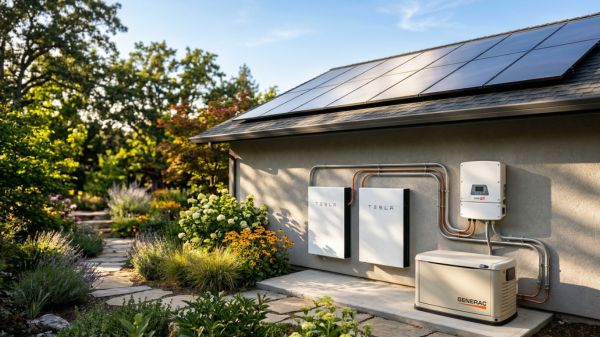
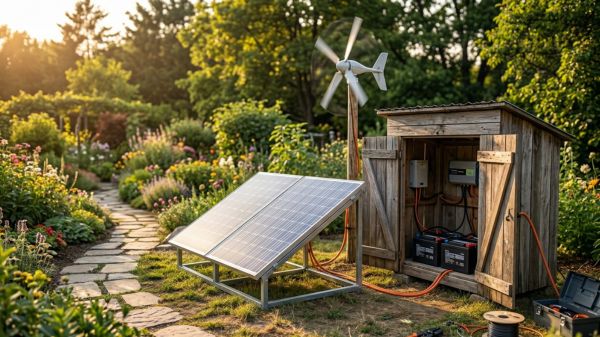
When you integrate solar panels, batteries, and a generator into a unified hybrid power system, each component fulfills a distinct and complementary role that guarantees continuous electricity availability across varying environmental and demand conditions.
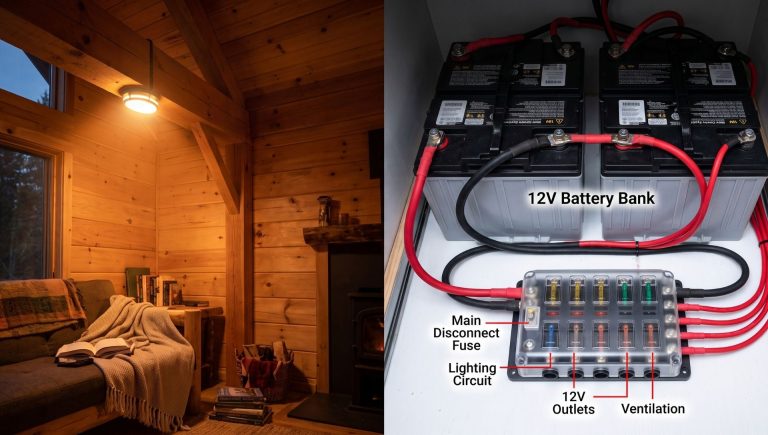
Solar energy serves as your primary generation source, converting sunlight into DC electricity through photovoltaic cells. Battery storage captures excess solar production, supplying power during nighttime hours or overcast conditions. When battery levels drop below operational thresholds, generator efficiency activates automatically, recharging your battery banks or powering loads directly.
Inverter technology bridges these components by converting stored DC power into AC electricity, enabling household appliance compatibility. Smart energy management systems prioritize solar generation first, followed by battery discharge, reserving generator activation as your final backup, collectively freeing you from grid dependency and fuel-only power limitations.
Technologies such as Maximum Power Point Tracking further optimize energy harvest from your solar panels by continuously adjusting electrical operating points to extract the highest possible power output under changing sunlight conditions.
Size Your Home Hybrid System: Solar, Battery, and Generator
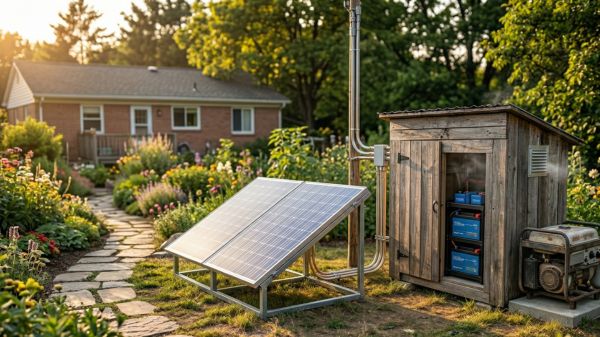
Sizing a home hybrid system correctly determines whether your investment delivers reliable, cost-effective power or falls short during peak demand and extended outages. Begin by calculating your daily energy consumption using the formula: multiply each appliance’s power rating by its operating hours, then sum all results.
A typical household consumes 20-30 kWh daily, establishing your baseline. Apply the PV sizing formula—E(daily) ÷ (sun hours × performance ratio)—to determine solar array capacity, then oversize by 10-20% to compensate for seasonal degradation. Match battery storage capacity to your daily consumption, applying the 85% efficiency factor when calculating runtime.
For generator sizing, sum your essential running watts, multiply by 1.25, and guarantee system efficiency remains effective by targeting 70-80% of rated generator capacity during charging cycles. Among battery options, lithium-ion batteries offer an average lifespan of 10-15 years and are widely favored for their efficiency in storing solar energy within hybrid systems.
What a Hybrid System Actually Costs: and When It Pays Off
Understanding the true cost of a hybrid power system requires examining three distinct tiers of investment, each scaled to specific energy demands and usage profiles.
Tier 1 system pricing begins at approximately $1,320, covering 800 Wh daily usage with foundational components. At Tier 2, the installation costs reach $3,600, supporting 4 kWh daily through a 48V server rack battery and 3000W hybrid inverter. Tier 3 totals $18,500, delivering 20-30 kWh daily capacity for full household independence.
Beyond components, you’ll encounter hidden installation costs, including $10-per-foot copper cabling, $300-$500 freight shipping, and $2,000 in permitting for larger systems. The federal 30% tax credit offsets these expenses greatly, while 25-year net savings ranging from $25,000-$50,000 validate your investment in genuine energy liberation.
Regional tax credits, rebates, and grants can further reduce upfront costs beyond the federal credit, so researching location-specific incentive programs before purchasing components is essential to maximizing your total savings.
How Hybrid Load Tiering Stretches Every Kilowatt-Hour Further
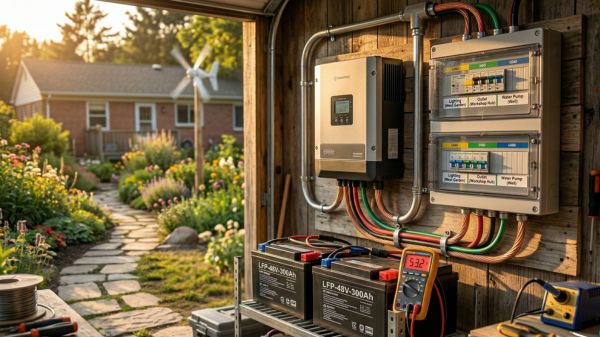
Every watt-hour you extract from your battery system depends less on raw storage capacity and more on how intelligently you’ve structured your load hierarchy, because a poorly managed 10 kWh bank will deplete faster than a well-tiered 4 kWh system under identical grid outage conditions.
Load prioritization assigns medical devices and refrigeration to Tier 1, ensuring continuous power, while discretionary loads remain suspended until sustainable capacity confirms availability.
| Priority Tier | Load Examples |
|---|---|
| Tier 1 | Medical devices, refrigeration |
| Tier 2 | WiFi routers, water pumps |
| Tier 3 | Entertainment, non-essential appliances |
Disciplined energy efficiency through tiered management reduces daily consumption by 30-60%, liberating you from dependency on oversized, expensive storage infrastructure you’d otherwise believe was mandatory.
To further protect your tiered system’s longevity, surge protectors divert excessive currents away from solar components, preventing the kind of costly repairs that can undermine even the most carefully structured load hierarchy.
DC vs. AC Coupling: Which Setup Fits Your Property
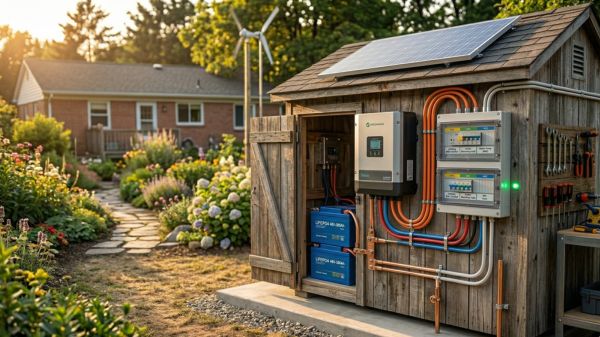
How you couple your solar generation to your battery storage determines system efficiency, installation complexity, and long-term operational flexibility more decisively than almost any other design choice you’ll make.
DC coupling routes power directly from panels to batteries, minimizing conversion losses to roughly 3-5%, while AC coupling preserves your existing grid-tied infrastructure through added battery inverters.
Consider these distinctions carefully:
- DC coupling delivers superior efficiency gains, achieving up to 98% system efficiency by eliminating redundant conversions
- AC coupling reduces installation challenges considerably, integrating seamlessly with established solar arrays without extensive rewiring
- Off-grid properties demanding consistent battery reliability benefit most decisively from DC coupling’s uninterrupted generation capability
Your property’s existing infrastructure, budget constraints, and independence goals ultimately determine which architecture genuinely liberates you from grid dependence most effectively.
Pairing your hybrid system with compostable or biodegradable bags for household waste management further strengthens your overall commitment to reducing environmental impact beyond just energy consumption.
💡 Ready to cut your power bill without the guesswork?
While this guide covers the core mechanics of building solar panels, sourcing the right materials and avoiding expensive wiring mistakes can take months of trial and error. If you want to bypass the steep learning curve, the DIY Home Energy System provides complete, step-by-step video blueprints designed specifically for beginners. Learn how to build a fully functional off-grid system this weekend for a fraction of retail cost. Watch the Step-by-Step Video Guide Here ➔
Frequently Asked Questions
Can a Hybrid System Power an Electric Vehicle Charging Station?
Yes, your hybrid system can power an EV charging station by leveraging renewable sources with a 6-10 kW inverter, a 10-20 kWh lithium iron phosphate battery bank, and a 5-10 kWp solar array. You’ll achieve maximum charging efficiency by deploying smart energy management algorithms that prioritize solar generation, monitor state-of-charge thresholds, and allocate surplus capacity toward Level 2 charging, which demands 15-30 kWh daily.
How Does Extreme Cold Weather Affect Battery Performance and Lifespan?
Like a thief in the night, extreme cold steals your battery efficiency without warning. Temperature effects hit hard: at 32°F, you’ll lose 10-20% capacity, while 14°F cuts performance by 40%. You can’t charge lithium batteries below freezing without risking permanent damage through lithium plating. LiFePO4 batteries offer your best defense, maintaining 90% efficiency when properly insulated, ultimately extending lifespan by slowing chemical degradation.
What Permits and Inspections Are Required Before Installing a Hybrid System?
You’ll need to contact your local Authority Having Jurisdiction (AHJ) to confirm permit requirements, as zoning laws vary considerably between urban and rural areas. Regardless of location, you must comply with NEC Article 690 installation guidelines, covering grounding, disconnects, and overcurrent protection. Lithium-ion batteries require detailed permitting specifications, including brand, model, and ventilation plans. Post-installation inspections by county building inspectors verify code compliance before your system becomes operational.
Can Renters Install Hybrid Systems Without Permanent Property Modifications?
Like Prometheus unbound, you can reclaim energy independence through temporary solutions that defy conventional constraints. You can install portable installations without landlord permission, as consumer electronics classification exempts these systems from lease restrictions. Portable power stations, balcony-mounted foldable solar panels, and dual-input battery systems require zero structural modifications, no grid connections, and no building wiring alterations, protecting your rights under 2025 tenant protection laws across approximately 30 states.
How Do Home Insurance Policies Change After Installing a Hybrid System?
After installing a hybrid system, you’ll need to disclose the material change to your insurer, as policy exclusions can reduce claims if you don’t. Your insurance coverage must reflect the system’s replacement value, classified under building insurance since it’s permanently hard-wired. You’ll likely see premium adjustments, though certified installations may qualify for discounts of 5%-15%, and you may need additional endorsements for ground-mounted arrays or battery storage components.
Conclusion
Your hybrid system isn’t just wiring and watts—it’s a declaration of independence. By integrating solar, batteries, and a generator, you’ve built more than a power source; you’ve built resilience. Prioritize your loads, choose the right coupling method, and size your components accurately. Every kilowatt-hour you generate is a step further from dependence. You’ve got the blueprint—now build the system that powers your future on your own terms.