
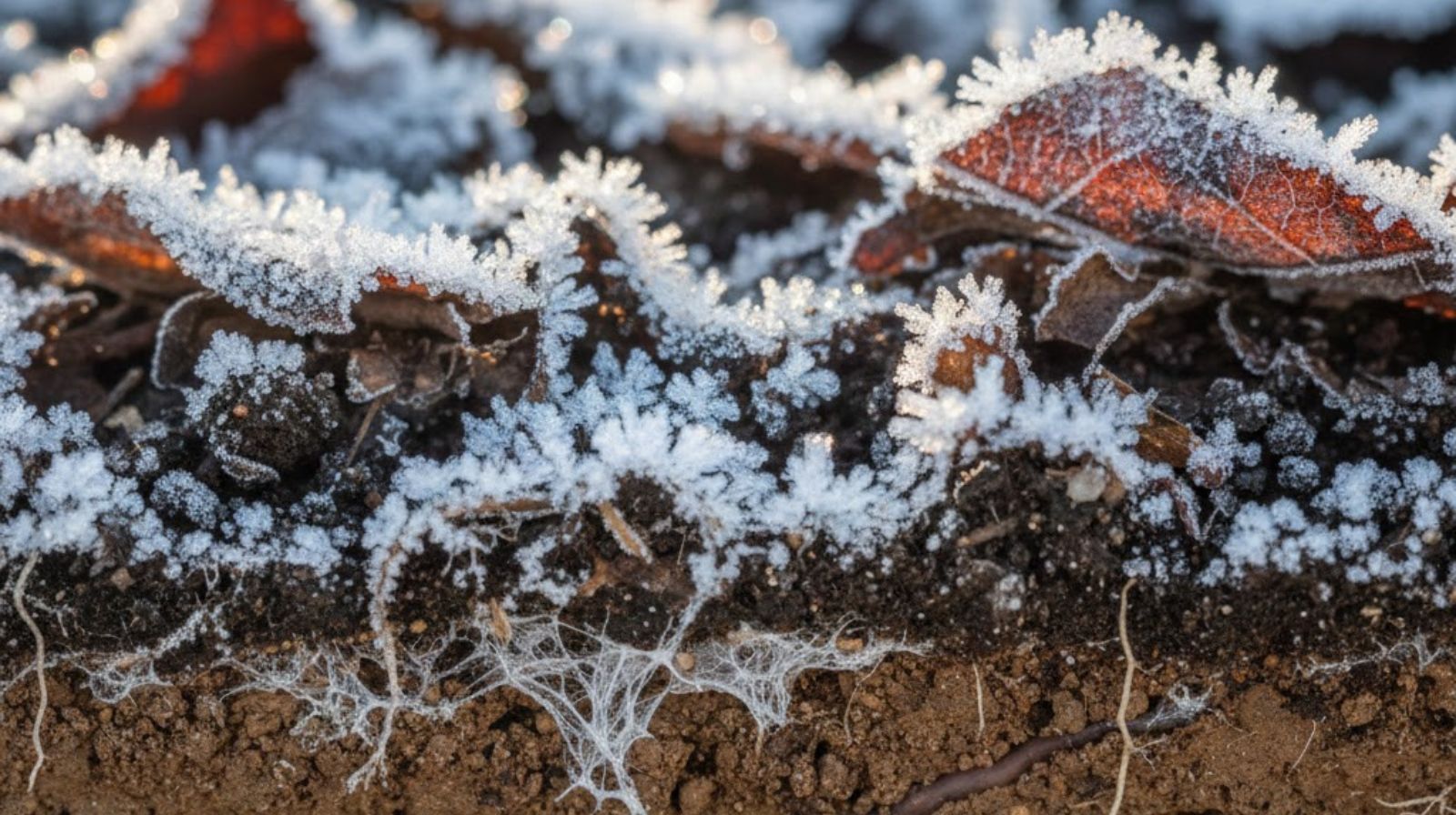
While frozen ground serves as nature’s vault, protecting essential biological processes from view, you’ll find that winter soil maintains critical ecosystem functions beneath its icy surface. Microbial communities continue metabolic operations at subzero temperatures, processing organic material through enzymatic pathways that remain functional despite thermal constraints.
These underground networks, comprising bacterial colonies, fungal hyphae, and invertebrate populations, sustain nutrient cycling processes that directly influence spring productivity, yet their survival mechanisms depend on specific environmental conditions that gardeners often inadvertently compromise.
Key Takeaways
- Microbes beneath the frost line remain metabolically active, decomposing organic matter and cycling nutrients despite frozen surface conditions.
- Fungi maintain enzymatic activity and mycorrhizal networks continue functioning, preparing soil substrates for spring plant growth and nutrient uptake.
- Soil bacteria produce antifreeze proteins and cryoprotectants like glycerol, enabling cellular survival and metabolic processes at subzero temperatures.
- Earthworms migrate below the frost line and enter dormancy, producing glycerol and forming protective cocoons to survive freezing periods.
- Stable temperatures in deeper soil layers prevent ice damage, allowing roots to access unfrozen water and organisms to sustain activity.
The Hidden Ecosystem Beneath the Frost
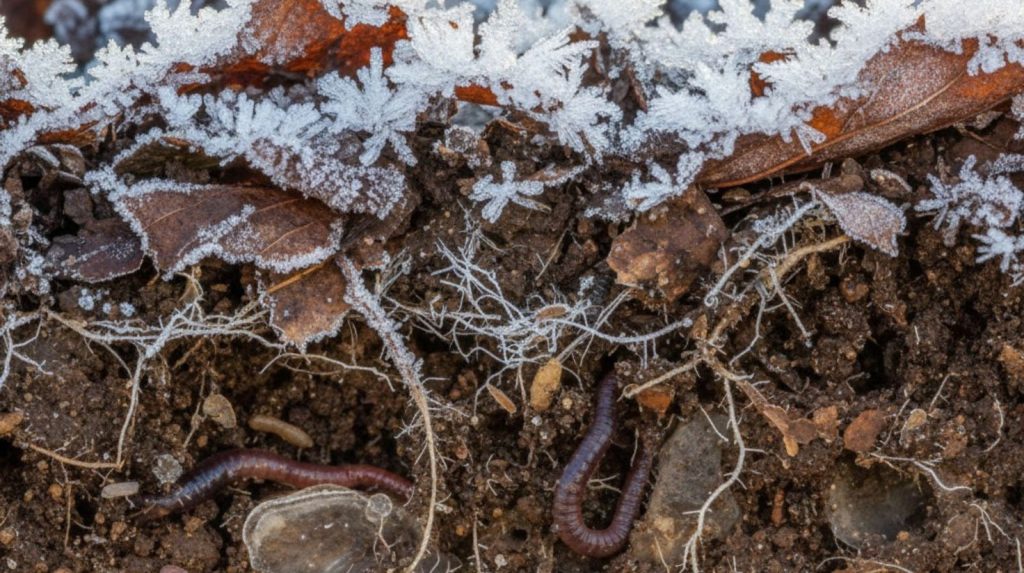
While surface conditions during winter appear dormant and lifeless, the soil beneath the frost line sustains a complex microbial ecosystem that continues to perform critical biogeochemical processes, including decomposition, nutrient mineralization, and organic matter transformation. This hidden biodiversity comprises bacteria, fungi, and protozoa that maintain metabolic activity despite reduced temperatures.
The frost resilience of these organisms depends on stable thermal conditions in deeper soil layers, which remain above 30˚F, preventing cellular damage from ice crystal formation. Fungal networks, particularly mycorrhizal associations, extend hyphae through soil matrices to facilitate nutrient acquisition for dormant plant root systems.
Organic matter layers provide thermal insulation, buffering temperature fluctuations and preserving ideal conditions for microbial function, thereby ensuring continuous nutrient cycling essential for ecosystem productivity.
Microbial Activity in Cold Soil
While you might assume that frozen ground halts all biological processes, fungi persist in their metabolic functions throughout winter months, maintaining enzymatic activity that continues to break down organic substrates at reduced but measurable rates.
These fungal organisms, along with cold-adapted bacteria, synthesize specialized cryoprotectant compounds, which function similarly to antifreeze by preventing the formation of damaging ice crystals within cellular membranes, thereby preserving structural integrity at subzero temperatures.
The production of these antifreeze proteins, combined with modifications to membrane lipid composition, enables microbial communities to sustain essential nutrient cycling operations even when soil temperatures drop considerably below ideal growth thresholds.
Fungi Remain Winter Active
Though winter’s arrival brings frigid temperatures to surface soils, fungal communities beneath the frost layer continue their metabolic processes, sustained by the thermal buffering capacity of organic residues and snow cover that maintain substrate temperatures sufficient for enzymatic function.
You’ll observe that fungal diversity, particularly mycorrhizal networks, demonstrates sophisticated winter adaptations through spore dormancy mechanisms and persistent hyphal architectures that facilitate nutrient cycling throughout subfreezing periods.
| Fungal Component | Winter Function |
|---|---|
| Mycorrhizae | Nutrient absorption enhancement, pathogen protection |
| Saprophytic fungi | Organic matter decomposition, nutrient mineralization |
| Hyphal networks | Structural persistence, carbon translocation |
| Spore banks | Dormancy maintenance, spring germination readiness |
These biological activities guarantee substrate preparation for spring seedling establishment, providing competitive advantages through established symbiotic relationships and nutrient availability.
Microbial Antifreeze Compound Production
Beyond the persistent hyphal networks that maintain substrate connectivity, soil bacteria and archaea deploy biochemical mechanisms that enable cellular function at subfreezing temperatures through the synthesis of ice-binding proteins and low-molecular-weight cryoprotectants.
You’ll find that microbial survival strategies center on cryoprotectant production, particularly glycerol synthesis, which lowers intracellular freezing points and prevents ice crystal formation that would rupture cell membranes.
These compounds, when synthesized in sufficient concentrations, allow organisms to maintain metabolic activity despite environmental temperatures dropping below zero degrees Celsius. The cellular machinery responsible for degrading organic substrates continues functioning, albeit at reduced rates, ensuring nutrient cycling persists throughout winter months.
When spring temperatures increase, pre-existing cryoprotectant concentrations facilitate rapid metabolic resumption, enabling immediate decomposition processes that support emerging vegetation’s nutritional requirements.
Fungal Networks and Winter Survival
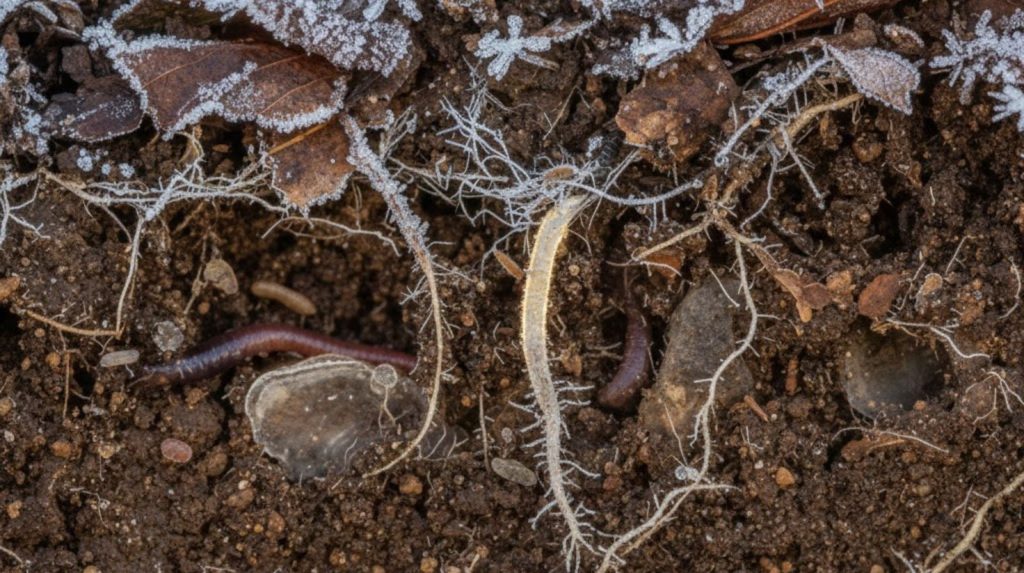
Beneath the frozen surface, fungal networks maintain metabolic activity throughout winter months, forming mycorrhizal associations that persist in soil layers where temperatures remain sufficiently moderate for biochemical processes. These networks, characterized by extensive fungal diversity, continue decomposing complex organic compounds, including cellulose, thereby ensuring nutrient cycling remains operational despite dormant conditions above ground.
Spore production occurs as a survival mechanism, enabling rapid germination when soil temperatures increase during spring changes. The mycorrhizal structures facilitate bidirectional resource exchange between interconnected plant roots, strengthening ecosystem resilience through distributed nutrient availability.
When growing seasons resume, this underground infrastructure provides seedlings with immediate access to essential minerals and water, considerably improving their capacity to withstand environmental stressors.
The persistent fungal activity throughout winter demonstrates that soil ecosystems maintain critical biological functions year-round. During this time, advanced technology like smart sensors can further aid in optimizing water usage and ensuring plants receive adequate hydration, contributing to the overall health and sustainability of these ecosystems.
How Earthworms and Larger Organisms Endure Freezing Temperatures
When soil temperatures plummet below freezing, you’ll find that earthworms employ three primary survival mechanisms: vertical migration to subterranean zones beneath the frost line, where stable thermal conditions persist; metabolic suppression strategies that reduce cellular activity and oxygen consumption, effectively inducing a hibernation-like state; and biochemical adaptation through cryoprotectant synthesis, particularly glycerol production in northern species, which prevents intracellular ice crystal formation and maintains cellular integrity.
These adaptations, which you can observe across both standard and giant earthworm species, demonstrate the convergent evolution of cold-tolerance strategies that larger soil organisms, including burrowing mammals, have also developed to exploit the insulating properties inherent in deeper soil strata.
Understanding these mechanisms requires you to recognize that survival below the frost line depends not on a single adaptation but rather on the integration of behavioral, physiological, and biochemical responses that collectively prevent desiccation and tissue damage during extended periods of subzero exposure.
Burrowing Below Frost Line
As winter temperatures plummet and soil surfaces freeze, earthworms and various soil-dwelling organisms execute vertical migration strategies to reach depths where thermal conditions remain stable enough to sustain metabolic function.
Earthworm behavior demonstrates adaptive precision, as specimens burrow beneath the frost line, which demarcates the boundary between frozen surface strata and thermally buffered subsurface zones.
Geographic variation influences frost line depth, with northern latitudes experiencing deeper penetration, consequently requiring organisms to migrate to greater depths. Earthworms form slime-coated spherical configurations, optimizing moisture retention and minimizing surface area exposure.
Certain species synthesize glycerol, functioning as cryoprotectant compounds that prevent intracellular ice crystal formation. Larger organisms, including gophers and specific amphibian species, similarly exploit subsurface thermal insulation. During dormancy, metabolic rates decrease substantially, conserving energy reserves while maintaining minimal physiological activity within unfrozen soil matrices.
Metabolic Slowdown and Hibernation
During periods of sustained subfreezing temperatures, earthworms and larger soil-dwelling organisms implement metabolic suppression mechanisms that reduce energy expenditure to levels compatible with prolonged survival in thermally constrained environments.
These hibernation strategies enable organisms to persist through winter by decreasing cellular activity, thereby conserving moisture and energy reserves. Earthworms form slime-coated balls that provide protective insulation while minimizing water loss.
Certain species produce glycerol, functioning as cellular antifreeze that prevents ice crystal formation within tissues. Amphibians and other larger organisms employ similar metabolic adaptations, entering dormancy states where physiological processes operate at minimal levels.
Bacteria and fungi remain dormant, with specific bacterial strains demonstrating membrane integrity despite freezing. This metabolic slowdown continues until environmental conditions support resumed growth, typically coinciding with spring thaw.
Natural Antifreeze Compound Production
The biochemical mechanisms underlying metabolic suppression depend fundamentally on the synthesis and accumulation of cryoprotective compounds, which function at the cellular level to prevent ice nucleation events that would otherwise rupture cellular membranes and denature essential proteins.
Earthworms produce glycerol beneath the frost line, forming protective slime-coated aggregations that enable survival through cellular protection mechanisms. Larger organisms synthesize antifreeze proteins that bind to ice crystals, inhibiting propagation through extracellular spaces.
| Organism Type | Cryoprotective Compound | Survival Mechanism |
|---|---|---|
| Earthworms | Glycerol | Subterranean burrowing |
| Frogs | Antifreeze proteins | Cellular stabilization |
| Soil microbes | Various compounds | Dormancy induction |
These adaptations guarantee ecosystem functionality persists throughout winter, demonstrating sophisticated biochemical responses that you’ll find critical for understanding soil viability during extreme cold periods.
The Frost Layer and Its Role in Soil Dynamics
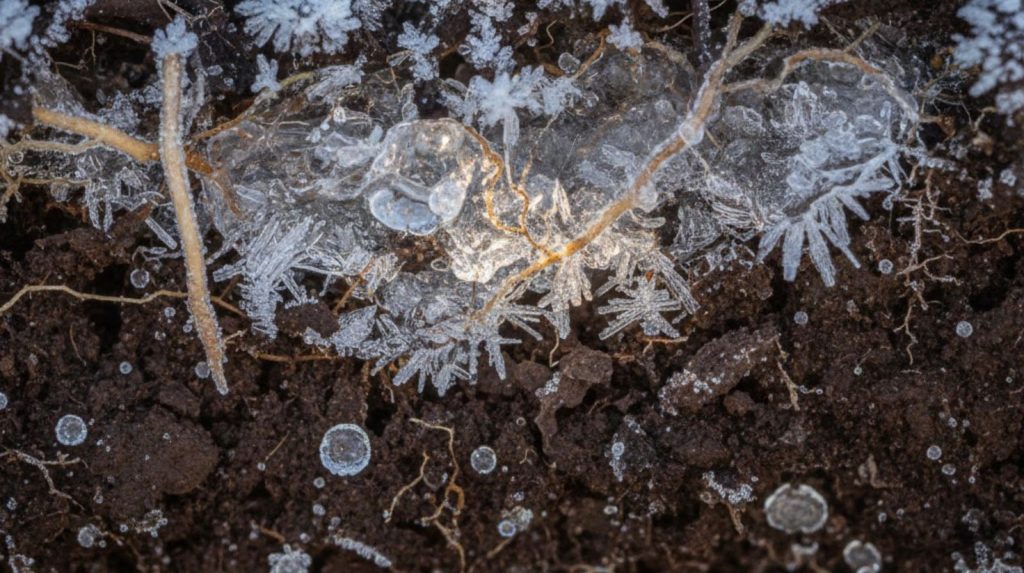
When winter temperatures drop below freezing, soil undergoes a stratification process wherein the uppermost layer solidifies into what soil scientists term the frost layer, while subsurface zones maintain thermal energy sufficient to sustain biological activity and protect perennial root systems.
This stratification demonstrates critical frost dynamics, as the frozen surface establishes a demarcation line that separates dormant surface conditions from active subsurface environments.
Below this boundary, temperatures stabilize above 30˚F, enabling microorganisms to continue nutrient preparation for subsequent growing seasons. Root protection occurs naturally, as plant roots extend beneath the frost line, accessing unfrozen water reserves and preventing cellular damage.
However, temperature fluctuations generate frost heaving, which disrupts poorly anchored vegetation, compromising structural integrity and potentially exposing vulnerable root systems to lethal freezing conditions.
Protecting Your Garden’s Underground Life
Understanding these frost dynamics provides foundational knowledge that gardeners can apply through deliberate interventions designed to shield subsurface biological systems from winter’s most damaging effects.
Organic mulch application delivers critical root insulation, establishing thermal barriers that prevent deep soil freezing, thereby maintaining viable conditions for microbial communities engaged in nutrient cycling and decomposition processes.
Soil protection protocols require minimizing physical disturbance, as compaction from foot traffic compromises pore spaces essential for organism survival and root system integrity.
Deep mulch layers, exceeding standard depths, create enhanced insulation properties that stabilize temperature fluctuations and conserve moisture reserves. Supplemental hydration to evergreen specimens, when soil remains unfrozen, supports moisture equilibrium within root zones.
These targeted interventions empower you to maintain biodiverse underground ecosystems, enabling continuous biological activity throughout dormancy periods while preserving structural soil integrity. Additionally, native plants provide essential food and shelter for local wildlife, significantly contributing to garden health and ecosystem balance.
Supporting Soil Health Through Winter Practices
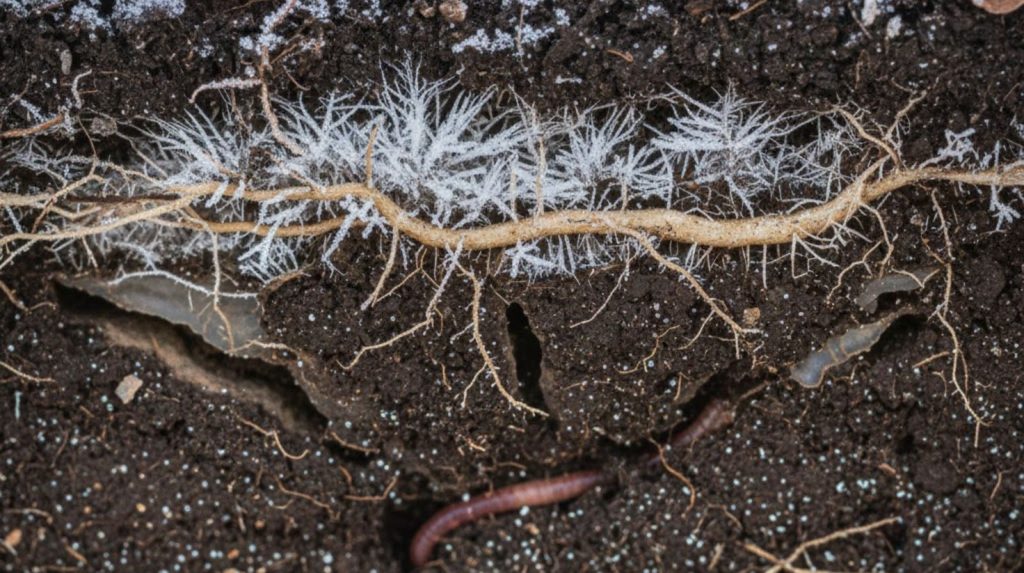
As winter progresses and biological processes shift to reduced metabolic states, proactive cultivation strategies become essential for maintaining soil health, ensuring that microbial populations, fungal networks, and decomposer organisms remain viable throughout periods of dormancy.
You’ll preserve loose, dark substrate conditions by applying 2–4 inches of organic mulch, which prevents temperature fluctuations while conserving moisture. Strategic soil amendments during the growing season establish structural integrity that persists through winter.
Winter watering remains critical for evergreens when ground conditions permit, preventing desiccation stress. You must minimize traffic patterns across cultivated areas, protecting fragile root architecture and preserving underground ecosystems.
These interventions maintain the biological foundation necessary for spring regeneration, ensuring nutrient cycling mechanisms remain functional throughout dormancy periods. Implementing sustainable design techniques establishes environmentally conscious landscapes that support these winter practices.
Frequently Asked Questions
Can Frozen Soil Still Drain Water During Winter Months?
You’ll find that frozen drainage remains possible during winter months, as deeper soil layers retain temperatures above freezing, permitting water movement through unfrozen pores. Winter moisture can permeate frozen upper layers during thaw cycles, temporarily enhancing drainage capabilities.
Organic matter insulates soil, reducing frost depth and maintaining drainage potential. Soil organisms continue activity beneath frozen surfaces, preserving structural pathways necessary for water movement, though surface infiltration becomes limited, resulting in increased runoff from impermeable frozen zones.
Do Beneficial Nematodes Survive Freezing Temperatures in Garden Soil?
Beneficial nematodes demonstrate remarkable winter survival through multiple physiological mechanisms, including diapause entry, which suspends metabolic processes until temperatures rise, and antifreeze protein production, which prevents cellular ice formation.
You’ll find these organisms persist in moisture films surrounding root systems, where microclimate conditions offer thermal buffering. While freezing conditions induce dormancy, populations regenerate rapidly during spring thaw, provided your soil maintains adequate organic matter content, ensuring continued nutrient cycling and ecological function throughout seasonal changes.
What Soil Temperature Triggers Spring Microbial Activity to Resume?
You’ll find the microbial threshold begins at approximately 40°F (4°C), though this temperature significance becomes more pronounced above 50°F (10°C), when metabolic rates accelerate exponentially. Research demonstrates that each 10°F increment doubles microbial activity, liberating essential nutrients through enhanced decomposition processes.
While 40°F initiates basic functions, you shouldn’t expect ideal nutrient cycling until temperatures consistently exceed 50°F, as this triggers fungal germination and establishes robust mycorrhizal networks critical for independent soil ecosystem function.
Should Compost Be Added to Soil Before or After Winter?
You should add compost before winter to maximize compost benefits, as pre-winter application enables nutrient cycling during dormancy, establishing ideal conditions for spring microbial reactivation. Winter mulching with compost insulates soil microorganisms, stabilizing temperature fluctuations while maintaining biological activity throughout freezing periods.
This timing allows organic matter decomposition to progress slowly, creating readily available nutrients when soil temperatures trigger spring growth, whereas post-winter additions delay these critical ecosystem processes, compromising early-season plant establishment and microbial community development.
How Does Snow Cover Affect Underground Soil Temperature and Organisms?
Snow insulation maintains your soil temperature above 30˚F, even when air temperatures plummet considerably, creating stable conditions that protect underground biology from freezing damage.
This thermal barrier prevents rapid temperature fluctuations, enabling microbial communities to sustain nutrient cycling throughout winter, though at reduced rates. When snow melts, it replenishes soil moisture, activating microorganisms and preparing your underground ecosystem for spring growth, while roots access water during thaw periods.
Conclusion
You’ve now discovered that winter soil contains infinitely more life than meets the eye, as microbial communities, fungal networks, and resilient organisms continue their essential work beneath the frost.
By understanding these subzero processes, which maintain nutrient cycling through complex biochemical pathways, you can implement targeted practices that preserve soil structure, protect established mycorrhizal associations, and guarantee ideal conditions for spring regeneration, ultimately supporting the long-term viability of your garden’s underground ecosystem.