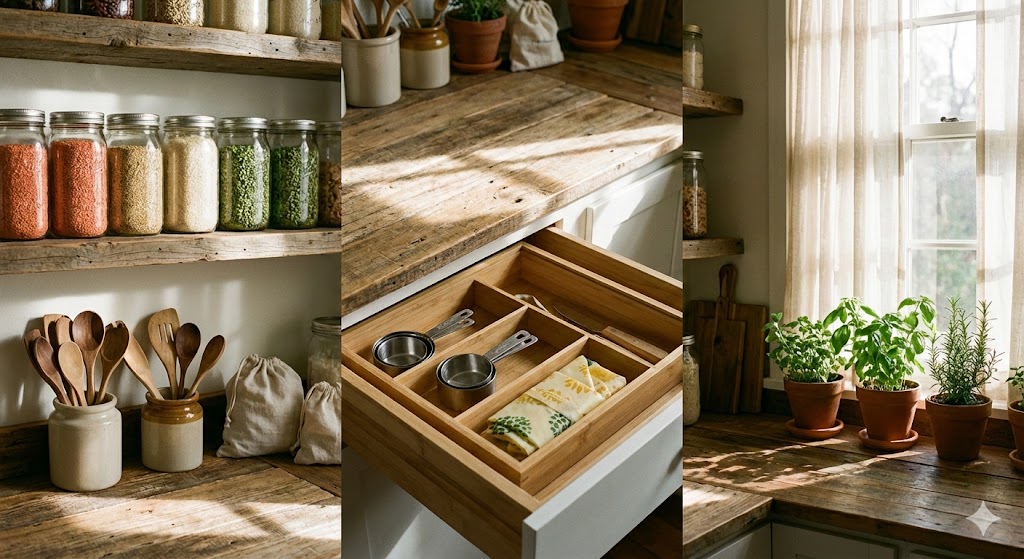
You’ll find that establishing a zero-waste pantry system requires methodical assessment of your current storage infrastructure, implementation of containerized solutions that mirror modular design principles, and adherence to strict procurement protocols that eliminate redundant packaging layers.
This approach, while demanding initial configuration overhead, yields sustained operational efficiency through improved inventory visibility, reduced waste generation cycles, and optimized resource allocation. The framework’s success depends on your commitment to systematic auditing procedures and continuous process refinement, which we’ll examine through each critical implementation phase.
Key Takeaways
- Declutter expired products, consolidate duplicates, and clean surfaces with eco-friendly products for organized, sanitary storage.
- Store dry goods in glass jars and use stainless steel containers for snacks to avoid packaging waste.
- Shop bulk at farmers markets with reusable bags and refill containers at zero-waste stores.
- Make homemade condiments, snacks, and preserves while rotating inventory by expiration dates to minimize waste.
- Conduct regular audits, label containers clearly, compost organic waste, and shop seasonally for year-round sustainability.
Assess and Declutter Your Current Pantry
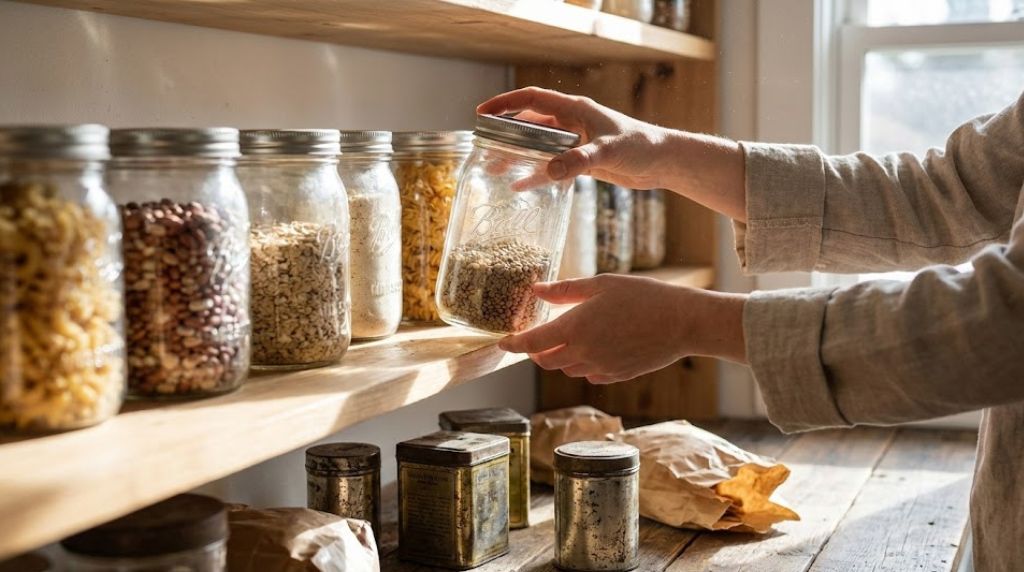
Before establishing a functional zero-waste pantry system, you must conduct a thorough assessment of your existing inventory, which begins with the systematic removal of all expired products, as these items not only occupy valuable storage space but also represent previous purchasing inefficiencies that a zero-waste approach seeks to eliminate.
After disposal, consolidate duplicate items to identify redundancies in your inventory management, which reveals consumption patterns requiring modification. Preserve jars and containers for future bulk storage deployment, thereby establishing reusable infrastructure.
Clean all surfaces with eco-friendly products to guarantee sanitary conditions for food storage. This decluttering process functions as diagnostic analysis, revealing plastic-packaged items requiring replacement with bulk alternatives, while simultaneously promoting mindful consumption through enhanced visibility of actual requirements, consequently preventing future overstock situations and reducing waste generation.
Consider the benefits of reducing waste with proper sorting, which not only aids in composting organic waste but also enhances your effort toward sustainability by minimizing landfill contributions.
Embrace Reusable Storage Solutions
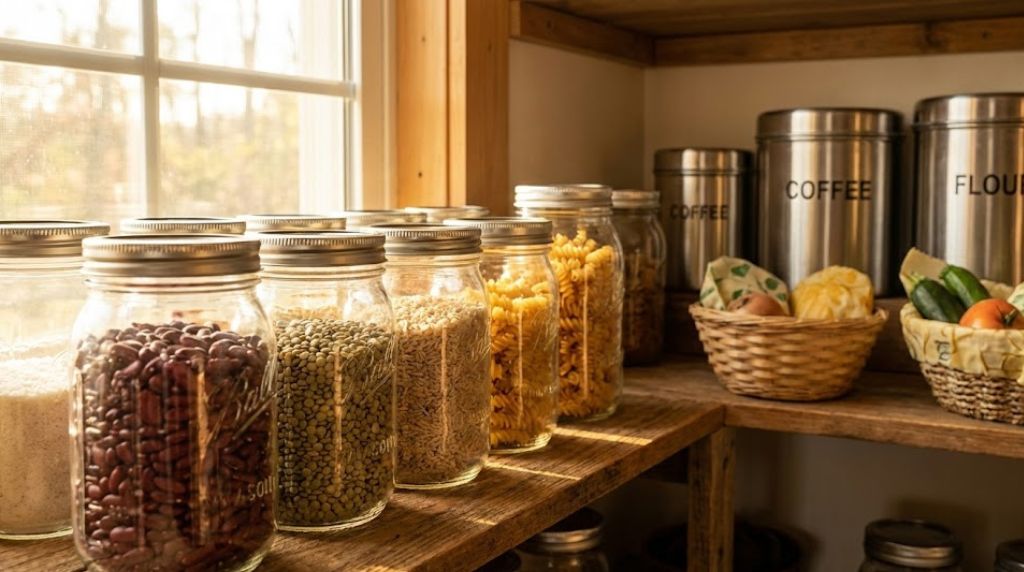
As you shift from decluttering to establishing permanent storage infrastructure, the implementation of reusable container systems becomes paramount, wherein glass jars, stainless steel vessels, and food-grade silicone bags replace single-use packaging that contributes to the 309 pounds of annual plastic waste generated per capita in the United States.
Glass jar benefits include superior airtight sealing mechanisms that preserve food freshness while eliminating chemical leaching, whereas stainless steel longevity provides decades of service without degradation. Consider these strategic deployment approaches:
- Designate airtight glass containers for dry pantry staples, maintaining ideal moisture barriers
- Allocate stainless steel units for portable snack transportation, ensuring durability through repeated use cycles
- Repurpose existing containers through systematic assessment protocols, reducing new material acquisition
Regular inventory audits enhance storage efficiency, facilitating mindful consumption patterns that align with zero-waste objectives.
Adopt Smart Shopping and Sourcing Strategies

Establishing reusable storage infrastructure within your pantry necessitates corresponding modifications to procurement methodologies, wherein strategic sourcing decisions determine both the economic viability and environmental impact of your zero-waste framework.
Bulk buying at local farmers markets eliminates plastic packaging while reducing the annual 309 lb waste burden, liberating you from conventional retail constraints. Deploy reusable jars or cloth bags during procurement operations to minimize single-use plastic dependency.
Zero-waste stores facilitate container refilling protocols, establishing circular economy patterns that circumvent traditional waste streams. Implement meal-based shopping lists to prevent overbuying, thereby mitigating the 30-40% food waste coefficient currently affecting U.S. supply chains. Online retailers offering eco friendly packaging provide scalable solutions for bulk purchasing requirements, ensuring systematic access to sustainable resources without operational disruptions.
Create Homemade Staples and Reduce Food Waste
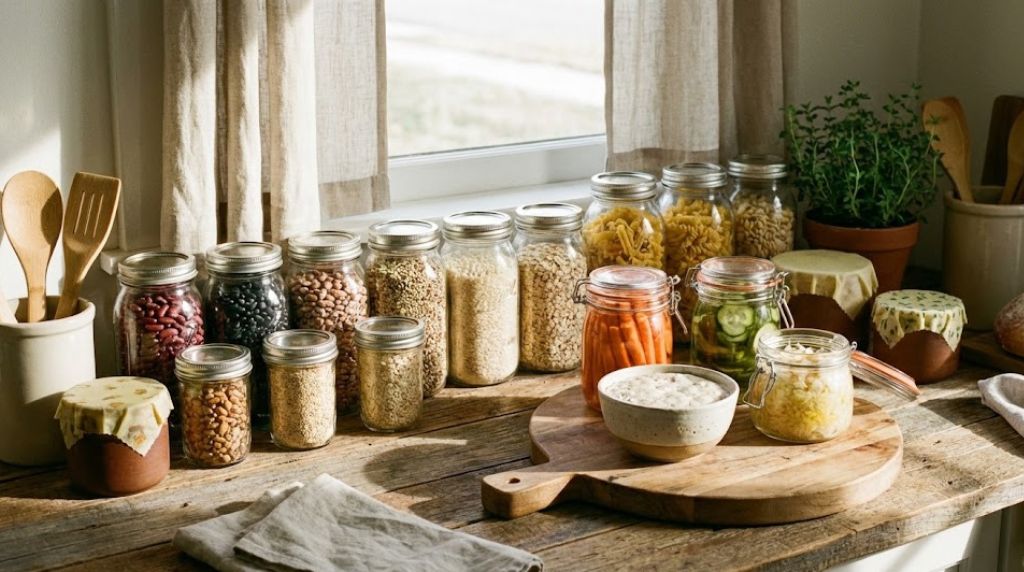
While commercial pantry products generate substantial packaging waste through multilayer plastics and non-recyclable composites, shifting to homemade staple production enables direct control over ingredient sourcing, packaging elimination, and waste stream reduction within domestic food systems. You’ll minimize dependency on ultra-processed foods by implementing these strategies:
- Develop homemade condiments including fermented vegetables, which preserve seasonal produce while eliminating single-use containers
- Manufacture creative snacks such as granola and bread, utilizing existing inventory to prevent spoilage
- Establish rotation protocols based on expiration date monitoring, ensuring ingredient freshness before deterioration occurs
Fermentation techniques extend preservation capabilities while reducing reliance on refrigeration infrastructure. By systematically producing staples from base ingredients, you’ll establish autonomous food preparation systems that eliminate commercial packaging dependencies and reduce waste generation across your domestic supply chain.
Maintain Your Zero-Waste System Year-Round
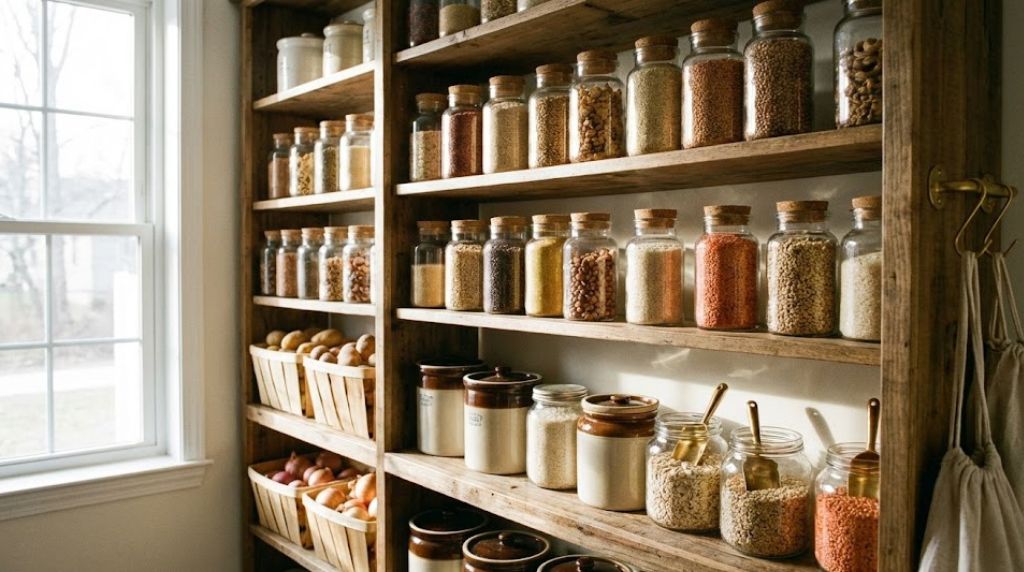
How will you sustain the operational efficiency of your zero-waste pantry infrastructure beyond initial implementation, ensuring that organizational protocols remain functional through seasonal variations, inventory fluctuations, and evolving consumption patterns? Establish recurring audit cycles to enforce first-in-first-out rotation, preventing expiration through systematic monitoring of perishable assets.
Deploy containerization strategies utilizing labeled, transparent storage units to maintain visibility across inventory stacks, facilitating rapid retrieval operations. Configure seasonal shopping manifests to prioritize local produce acquisition, minimizing dependency on polymer-based packaging systems.
Integrate composting pipelines to process organic matter, diverting waste streams from landfill destinations while generating nutrient-rich output. Consider using compost tumblers or worm composting for limited spaces, as these methods allow efficient decomposition in compact areas.
Participate in community workshops to exchange best practices, optimize resource allocation, and maintain motivation through collaborative engagement. Adapt seasonal recipes to consume existing inventory efficiently, aligning consumption patterns with available resources throughout annual cycles.
Frequently Asked Questions
How Do I Convince My Family to Support Zero-Waste Pantry Changes?
Start by implementing family involvement through structured meetings where you’ll present data-driven evidence of waste reduction benefits, environmental impact metrics, and cost analyses. Deploy persuasive communication strategies that emphasize autonomy and collective decision-making rather than hierarchical mandates. Document current consumption patterns, establish clear migration paths toward zero-waste protocols, and create feedback loops where each member’s input shapes implementation phases. This approach guarantees buy-in through transparent processes, measurable outcomes, and distributed ownership of sustainability objectives.
What Are the Best Zero-Waste Alternatives for Pet Food Storage?
“Waste not, want not” underscores efficient resource allocation. You’ll achieve ideal pet food containers through stainless steel or glass vessels with airtight seals, ensuring freshness while eliminating single-use packaging dependencies. For bulk storage, food-grade containers with gamma-seal lids provide superior longevity and reusability. You’re liberating yourself from disposable cycles by implementing modular systems that accommodate varying quantities, allowing procurement from refill stations or cooperative networks, thereby reducing environmental impact while maintaining nutritional integrity through proper storage protocols.
Can I Implement Zero-Waste Practices While Living in a Small Apartment?
You’ll successfully implement zero-waste practices in your apartment through strategic small space solutions and minimalist organization. Configure vertical storage systems, deploying wall-mounted containers to maximize cubic footage utilization. Establish dedicated composting protocols using compact bokashi bins that function without requiring external yard access. Deploy reusable container networks for bulk purchasing, eliminating packaging waste while optimizing cabinet space allocation. Implement rotation systems ensuring inventory management efficiency, preventing food waste through systematic tracking methodologies that liberate you from consumerist excess.
How Do Zero-Waste Pantries Impact Monthly Grocery Budgets Long-Term?
You’ll typically reduce expenses by 15-30% through bulk purchasing and eliminating packaged goods, though initial container investments require upfront capital. Implementing budget tracking via spreadsheet reconciliation or dedicated applications enables precise savings analysis across procurement cycles. While commodity staples demonstrate immediate cost reduction, specialized zero-waste items may temporarily increase expenditures. Long-term financial liberation emerges through decreased waste disposal fees, reduced impulse purchases, and optimized inventory management, yielding measurable ROI within six to twelve months of consistent practice.
Are There Cultural Cuisines That Naturally Align With Zero-Waste Principles?
Mediterranean cuisine and Asian staples inherently support zero-waste methodologies through their reliance on bulk grains, legumes, and seasonal produce that you’ll find require minimal packaging. These culinary traditions emphasize whole-food ingredients—chickpeas, lentils, rice, millet—that you can purchase unpackaged, while preservation techniques like fermenting and pickling extend ingredient longevity. You’re leveraging systems where root-to-stem utilization isn’t innovative but traditional, enabling you to minimize waste while maintaining authentic flavor profiles and nutritional integrity.
Conclusion
You’ve now architected a zero-waste pantry infrastructure with the precision of a Kubernetes cluster deployment, implementing redundancy through reusable containers, optimizing resource allocation via inventory audits, and establishing persistent storage solutions that eliminate single-use packaging vulnerabilities. While container orchestration typically doesn’t involve mason jars, you’ve successfully configured a sustainable system that’ll persist throughout the year, assuming you maintain your commitment to this eco-conscious protocol with the same rigor IT professionals apply to security patches, though admittedly with fewer critical alerts at 3 a.m.