You’re likely unaware that your household consumes between 80 and 100 gallons of water daily per person, with significant portions lost to leaks and inefficient fixtures. A systematic water use audit, which begins with meter analysis during complete household inactivity, establishes baseline consumption patterns and identifies anomalies indicative of waste. This methodical assessment, when executed correctly, reveals precise data that’ll transform your understanding of domestic water expenditure and expose hidden inefficiencies costing you hundreds annually.
Key Takeaways
- Toilets account for 24% of household water use, with older models using 3.5+ gallons per flush versus 1.28 for WaterSense models.
- Showers represent 20% of indoor consumption, averaging 17 gallons per session at 2.5 gallons per minute with standard fixtures.
- Faucets contribute 19% of indoor use, with bathrooms consuming about 20 gallons daily at 1.5-2.5 gallons per minute.
- Outdoor irrigation comprises approximately 30% of total residential water consumption, often exceeding 50% with inefficient systems.
- Indoor leaks from dripping faucets and toilets waste around 8 gallons daily, detectable through dye tests and meter monitoring.
Understanding Your Water Meter and Conducting a Meter Audit
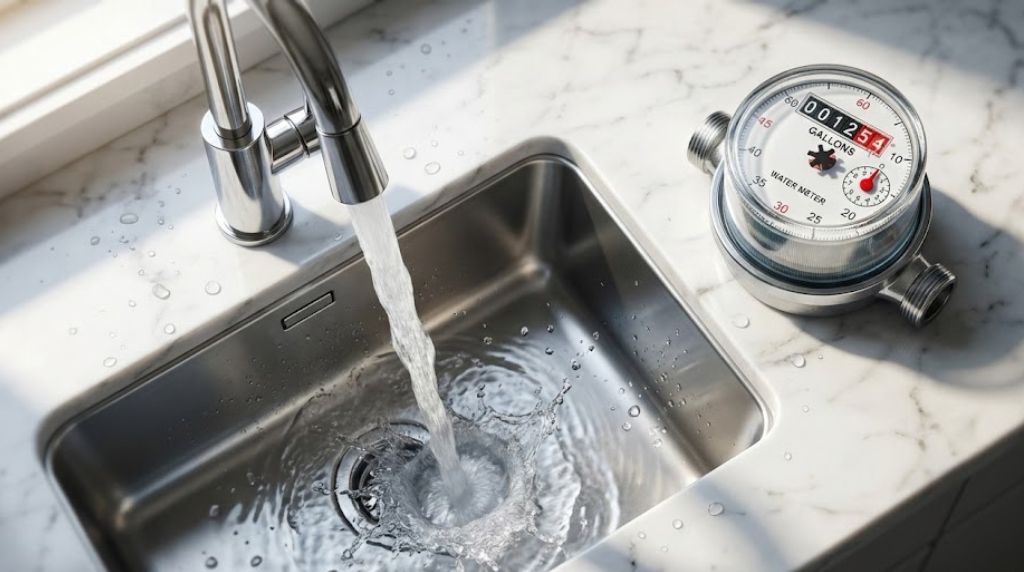
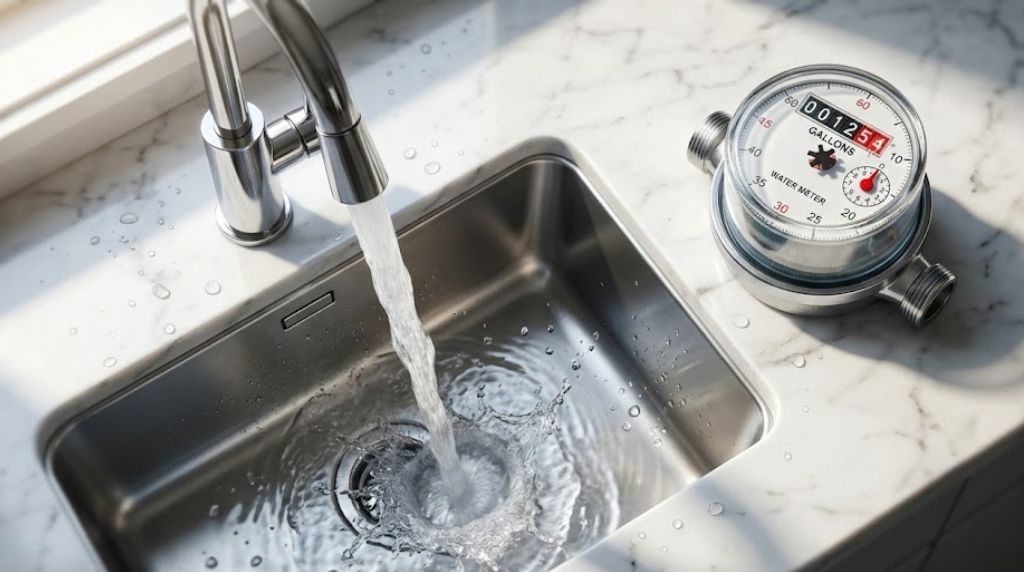
Understanding the operational characteristics of your water meter constitutes the foundational step in conducting a thorough water use audit, as the Sensus Iperl meters deployed throughout the Town of Queen Creek utilize Advanced Metering Infrastructure (AMI) technology to capture consumption data with gallon-level precision, typically recording measurements during the mid-month billing cycle.
To execute a meter audit, you’ll locate the meter box at your front property easement, carefully accessing it with a screwdriver to expose the device. Cease all water consumption within your residence, then observe the leak indicators for movement, which signals active flow requiring investigation.
Document meter readings before and after a predetermined inactivity period, enabling detection of concealed system compromises that undermine your resource autonomy and financial control.
Toilet Water Consumption and Leak Detection
Within the systematic evaluation of residential water consumption patterns, toilets represent the single largest source of indoor water use, accounting for approximately 24% of total household consumption, with volumetric discharge rates varying considerably between contemporary low-flow models that utilize a maximum of 1.6 gallons per flush and legacy installations that may expend 3.5 gallons or more per actuation.
To optimize toilet efficiency and implement leak prevention protocols:
- Execute dye tablet tests within tank reservoirs, utilizing food coloring as substitute markers to identify undetected discharge pathways
- Verify WaterSense-certified units consuming 1.28 gallons per flush maximum, yielding annual savings exceeding $300 for four-person households
- Measure tank volumetric capacity directly or verify manufacturer specifications via embedded labeling systems
Considering eco-conscious practices, incorporating a high-quality filtration system to manage any contaminants in water used for flushing could further enhance household sustainability. Regular leak detection audits prevent considerable volumetric losses, while retrofitting legacy fixtures with certified low-flow alternatives considerably reduces household water consumption, empowering you to achieve autonomous control over resource utilization.
Shower and Bath Water Usage Assessment
Bathing operations constitute approximately 20% of residential indoor water expenditure, with standard shower sessions consuming an average of 17 gallons per actuation cycle, though volumetric discharge rates demonstrate significant variability based on showerhead flow specifications, temporal duration parameters, and fixture manufacturing dates.
Contemporary fixtures maintain regulated flow rates capped at 2.5 gallons per minute, whereas legacy installations exceed 5 gallons per minute, necessitating immediate replacement protocols. Bath alternatives consume 30-36 gallons per cycle, rendering them hydraulically inefficient compared to abbreviated shower protocols.
Water-efficient retrofits reduce consumption to 1.5 gallons per minute, while shower duration optimization, specifically temporal reduction interventions, yields substantial conservation metrics.
You must implement systematic monitoring procedures to quantify current usage patterns, identify optimization opportunities, and execute remediation strategies that align with resource conservation objectives. Installing low flow plumbing fixtures can lead to substantial reductions in water usage, significantly impacting daily consumption and utility bills.
Faucet Water Use in Kitchen and Bathroom
Faucet fixtures represent the second-largest category of indoor water consumption in residential environments, accounting for 19% of total household water expenditure with bathroom installations alone consuming approximately 20 gallons daily.
Understanding your current faucet efficiency enables strategic water conservation interventions through targeted infrastructure modifications. Modern efficient bathroom faucets operate between 1.5-2.5 gallons per minute, while legacy installations demonstrate substantially elevated consumption rates. Kitchen sink operations present variable usage patterns:
- Manual dishwashing consumes 9-27 gallons depending on methodology
- Automated dishwashers utilize 7-14 gallons per cycle
- Aerator installations reduce flow to 0.5-1.0 gallons per minute for bathroom applications
Regular maintenance protocols prove essential, as faucet leaks contribute up to 8 gallons daily wastage. Installing water-efficient aerators provides immediate consumption reduction without compromising operational functionality. Rainwater harvesting promotes sustainable water usage and conservation, which can support water independence and reduce reliance on traditional water sources.
Washing Machine and Dishwasher Water Efficiency
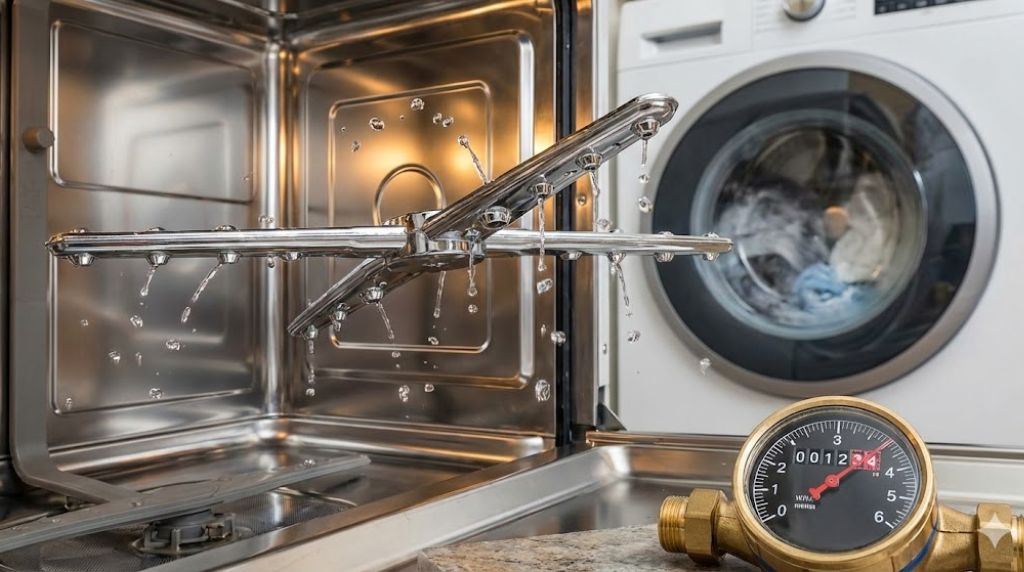
Washing machines and dishwashers constitute critical focal points for residential water conservation initiatives, as these appliances collectively account for approximately 25% of total household water consumption, with conventional top-loading washing machines consuming up to 40 gallons per cycle compared to high-efficiency front-loading models that operate at 5 gallons per load.
Energy Star appliances deliver measurable reductions in water usage, with modern dishwashers requiring merely 4 gallons per cycle versus conventional models consuming 7 to 14 gallons. You’ll maximize efficiency by operating dishwashers at full capacity, eliminating pre-rinsing practices that waste 12 gallons, and ensuring washing machines process complete loads.
Front loading machines, combined with proper loading protocols and adherence to manufacturer specifications, enable you to achieve substantial water conservation without compromising cleaning performance or operational requirements. Transitioning to biodegradable alternatives can further minimize environmental impact, reducing water pollution and facilitating sustainable practices.
Identifying and Repairing Indoor and Outdoor Leaks
Detecting leaks within your home requires systematic inspection of fixtures, appliances, and plumbing connections, beginning with faucets that may drip at rates sufficient to waste approximately eight gallons daily, followed by toilet dye tests wherein colored tablets placed in the tank will reveal leaks through bowl discoloration within fifteen minutes.
Outdoor leak detection necessitates visual inspection of irrigation systems, including sprinkler heads and emitter lines, while monitoring for saturated soil patches that indicate pressurized line failures or fitting degradation. You can verify suspected leaks by observing your water meter’s leak indicator dial with all consumption points shut off, as any movement confirms unaccounted flow requiring immediate repair intervention.
Detecting Leaks Inside Home
While many homeowners focus on external water consumption, internal leaks within residential plumbing systems represent a significant, often overlooked source of waste that can result in substantial financial losses and resource depletion. Effective leak detection requires systematic plumbing maintenance protocols that empower you to identify problematic areas:
- Inspect bathrooms and kitchens for dripping faucets and leaky pipes, as small leaks waste approximately eight gallons daily
- Conduct dye tests in toilets by adding tablets to tanks; color appearing in bowls without flushing indicates leaks requiring immediate repair
- Monitor water meters for irregular movement during zero-usage periods, as leak indicators signal active plumbing system failures
Additionally, investigate household appliances including washing machines and ice makers for connection leaks, which contribute to resource waste when maintenance protocols aren’t properly implemented.
Finding Outdoor System Leaks
Outdoor irrigation systems, which can account for up to 30 percent of residential water consumption, frequently develop leaks that remain undetected for extended periods, resulting in substantial water waste and elevated utility costs.
For effective outdoor leak detection, examine irrigation systems for missing emitters, broken sprinkler heads, and anomalous wet or green spots in the yard, which indicate subsurface leakage. Utilize the water meter’s leak indicator by deactivating all water usage points; if the indicator moves, a leak exists within outdoor systems or main supply lines.
Proper irrigation system maintenance requires regular inspection of controller settings to prevent malfunction-related waste, monitoring for damage from gophers or tree roots affecting underground lines, and isolating landscape watering systems during leak testing by shutting off their water supply, engaging professional plumbers when main supply line leakage is suspected. Regular system maintenance identifies leaks and ensures optimal performance.
Water-Saving Strategies for Appliances and Outdoor Features

Beyond addressing leaks, you’ll need to evaluate the water efficiency of your major appliances and outdoor water features, as these systems represent significant opportunities for consumption reduction through strategic maintenance and upgrades.
By implementing regular servicing protocols for water-using appliances such as dishwashers and washing machines, optimizing irrigation system scheduling and component functionality, and maintaining pool equipment to prevent evaporation and filtration losses, you can achieve measurable decreases in overall household water usage.
These targeted interventions, when executed systematically, transform high-consumption appliances and outdoor features into optimized systems that minimize waste while maintaining operational effectiveness.
Maintain Pool Equipment Properly
Pool equipment maintenance represents one of the most critical, yet frequently overlooked, components of residential water conservation efforts, as improperly maintained systems can result in water losses exceeding hundreds of gallons per month through evaporation, leaks, and inefficient operational practices. To maximize water efficiency, you’ll need to implement systematic protocols:
- Deploy leak detection techniques through bucket tests, comparing water level differentials to identify unauthorized discharge points
- Inspect all connection interfaces, hoses, and fittings for structural integrity, ensuring zero-tolerance sealing standards
- Execute backwash procedures only until output clarity meets specifications, terminating unnecessary water expenditure
Pool cover benefits include substantial evaporation mitigation during elevated temperature conditions. You must verify auto-fill calibration settings, examine infrastructure for fractures, and maintain component connections under prime pressure parameters to prevent resource depletion.
Optimize Irrigation System Efficiency
While residential irrigation systems constitute approximately 30% of average household water consumption, inefficient configurations and operational parameters can escalate usage to levels exceeding 50%, necessitating thorough optimization protocols that address hardware integrity, scheduling algorithms, and delivery methodology. Implementing rainwater harvesting can also complement irrigation systems by providing an additional water source, reducing the demand on municipal supplies.
| Optimization Component | Implementation Method | Water Reduction Potential |
|---|---|---|
| Drip irrigation | Targeted emitter deployment | 60% versus spray systems |
| Rain sensors | Automated shutoff integration | 15-20% annual savings |
| Mulch application | 2-4 inch layer coverage | 50% irrigation frequency reduction |
Conduct systematic inspections identifying leaks, compromised sprinkler heads, damaged emitters. Adjust controller parameters seasonally, preventing over-watering through climatic responsiveness. Deploy drip irrigation for precision delivery, install rain sensors enabling precipitation-triggered system deactivation, apply mulch for moisture retention optimization.
Service Water-Using Appliances
How can household water consumption be substantially reduced when domestic appliances account for approximately 60% of indoor water usage, presenting critical intervention points where systematic maintenance protocols, strategic replacement decisions, and operational optimization converge to generate measurable conservation outcomes?
Your liberation from excessive utility expenditures requires implementing appliance efficiency upgrades, specifically shifting from conventional models consuming 16 gallons per dishwasher cycle to Energy Star-certified units utilizing 4 gallons, while simultaneously replacing 40-gallon washing machines with high-efficiency front-loading alternatives requiring merely 5 gallons per load.
Critical water conservation measures include:
- Installing low-flow toilets reducing per-flush consumption to 1.28 gallons, eliminating 24% of residential water waste.
- Conducting weekly leak inspections on washing machines, dishwashers, preventing 8-gallon daily losses.
- Monitoring irrigation systems for drip leaks, mitigating cumulative outdoor water loss.
- Consider enhancing your home’s sustainability by adopting rainwater harvesting techniques, which can further reduce reliance on traditional water sources.
Frequently Asked Questions
How Often Should I Conduct a Water Use Audit?
You’ll need to establish an audit frequency of at least annually, though implementing a monthly schedule for basic monitoring maximizes water conservation outcomes. Conduct thorough audits following household composition changes, which directly impact consumption patterns, and perform seasonal assessments before outdoor irrigation periods commence. This systematic approach enables detection of leaks wasting approximately eight gallons daily, facilitates utility cost reduction, and guarantees efficient resource allocation. Annual thorough audits, supplemented by monthly checks, provide ideal oversight of residential water consumption metrics.
Are Professional Water Audits Worth the Cost Versus DIY Options?
Professional water audits justify their cost through thorough leak detection and efficiency analysis that DIY methods typically miss. While audit benefits include identifying inefficiencies saving $300+ annually, the cost comparison reveals professional services at $100-$500 yield superior returns for larger households. You’ll gain expert recommendations for water-saving retrofits and appliances, whereas DIY approaches, though utilizing free utility-provided kits, often overlook critical system vulnerabilities, resulting in suboptimal conservation outcomes and diminished long-term financial recovery.
How Much Money Can I Save Annually From Water Conservation?
Your financial liberation flows through implementing water saving strategies, with thorough cost benefit analysis revealing annual savings exceeding $300 from toilet upgrades alone, while water-efficient showerheads, dishwashers using 10 fewer gallons per load, high-efficiency washing machines conserving 35 gallons per cycle, and leak repairs preventing 2,920 gallons of annual waste collectively generate substantial economic returns, positioning you to redirect these recovered funds toward investments that align with your autonomous financial objectives.
Do Water Audits Affect Home Resale Value or Buyer Interest?
Water audits markedly enhance resale advantages through documented efficiency metrics, which establish quantifiable value propositions for prospective purchasers. Properties demonstrating verified conservation practices, including low-flow fixtures and leak-free infrastructure, generate substantial buyer attraction among environmentally conscious demographics seeking reduced operational expenditures. Such audits provide empirical evidence of water management systems’ integrity, thereby mitigating perceived risks associated with undisclosed deficiencies, while simultaneously positioning the property within competitive market segments that prioritize sustainability credentials and measurable resource optimization.
What Seasonal Factors Impact Household Water Consumption Patterns?
You’ll find that seasonal precipitation directly reduces your irrigation requirements, particularly during spring and fall wet periods, while temperature changes drive consumption variability through increased summer outdoor watering and evaporation rates. Winter months typically demonstrate reduced usage patterns as outdoor activities cease, though indoor heating systems may temporarily elevate consumption. Holiday gatherings during specific seasons increase dishwashing and laundry loads, creating predictable spikes in monthly water utilization that you can anticipate and manage.
Conclusion
You’ve examined your meter readings, you’ve identified your leaks, you’ve assessed your appliances, and you’ve evaluated your fixtures. Now, implement water-efficient technologies, repair detected leaks promptly, modify consumption behaviors systematically, and monitor usage patterns continuously. Through methodical auditing of indoor fixtures, outdoor irrigation systems, and appliance operations, you’ll reduce water waste, lower utility expenditures, and establish sustainable consumption practices that benefit both your household budget and environmental conservation efforts long-term.