You’ll need to abandon traditional thermal composting for apartment winter conditions, as indoor temperatures of 68-72°F cannot sustain the 135-160°F required for thermophilic decomposition, while insufficient mass prevents heat generation in small containers. Your viable options include vermicomposting with Eisenia fetida worms operating at 55-77°F, bokashi fermentation using effective microorganisms for 10-14 day anaerobic pre-composting, or electric composters that process waste at 160-180°F within 3-8 hours. Each method requires specific spatial configurations, moisture management protocols, and aeration systems to prevent anaerobic conditions that produce methane and odor compounds, with considerations for finished compost redistribution through community networks when garden access remains unavailable.
Key Takeaways
- Vermicomposting uses red wiggler worms to digest waste at 55-77°F without heat-dependent processes, ideal for apartment temperatures.
- Bokashi fermentation employs effective microorganisms to anaerobically decompose all food scraps within 10-14 days in sealed containers.
- Electric composters rapidly process organic waste in 3-8 hours using heat and aeration in compact, twelve-inch-square units.
- Maintain 30:1 carbon-to-nitrogen ratios, weekly aeration, and 40-60% moisture levels to prevent odors and ensure efficient decomposition.
- Position bins away from heating vents and reduce feed volumes by 25-30% during slow periods to optimize composting performance.
Why Traditional Composting Methods Fail in Winter Apartments
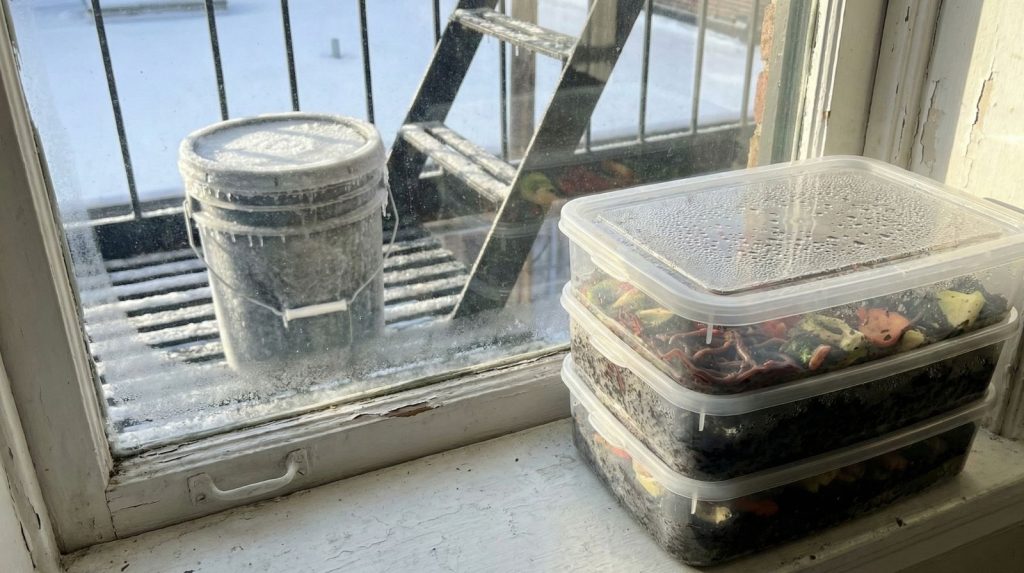
Why do conventional composting systems, which function adequately in outdoor environments during temperate seasons, prove ineffective when relocated to indoor apartment settings during winter months? The primary factor involves insufficient indoor temperature levels, which typically range between 68-72°F, falling below the ideal 135-160°F threshold required for thermophilic decomposition processes.
Standard composting containers, designed for exterior use with substantial volume capacity, can’t generate the critical mass necessary to sustain heat-producing microbial activity in confined spaces. Additionally, you’ll find that traditional bins lack proper aeration mechanisms, sealed containment features, and odor-control systems essential for apartment environments.
The reduced airflow, combined with lower ambient temperatures, creates anaerobic conditions that produce methane and hydrogen sulfide, making indoor composting impractical without specialized equipment modifications.
Related Post: Winter Composting: How to Keep the Pile Alive in the Cold.
Vermicomposting: The Worm Bin Solution for Year-Round Indoor Use
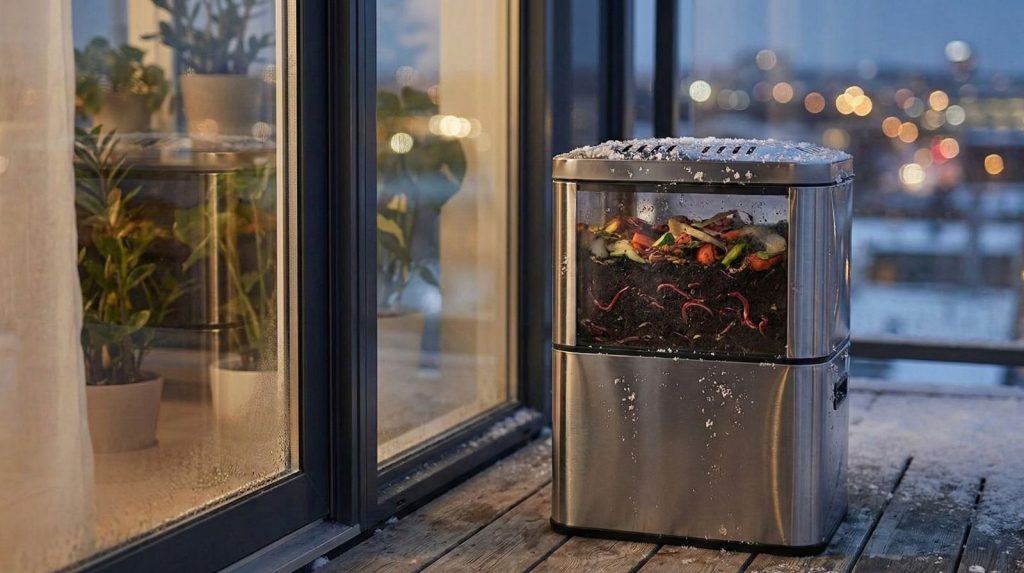
Unlike conventional thermal composting systems, vermicomposting employs specific species of earthworms, primarily Eisenia fetida (red wigglers) and Eisenia andrei (red tigers), to process organic waste through biological digestion rather than heat-dependent microbial decomposition, enabling you to maintain continuous composting operations within temperature-controlled apartment environments throughout winter months.
Proper bin setup requires selecting containers with adequate ventilation holes, drainage systems, and bedding materials consisting of shredded newspaper, cardboard, or coconut coir moistened to approximately 70% water content.
Worm care necessitates maintaining ambient temperatures between 55-77°F, monitoring pH levels between 6.5-7.0, and feeding appropriate organic materials in quantities matching worm population capacity, typically one pound of food waste per pound of worms weekly, while avoiding citrus, onions, garlic, and meat products that inhibit worm activity and generate odors.
Bokashi Fermentation: Turning All Kitchen Waste Into Pre-Compost
While vermicomposting addresses many apartment composting challenges, the method’s restrictions on acceptable feedstock—particularly its exclusion of meat, dairy, oils, and acidic materials—often leave households disposing of 30-40% of their organic waste through conventional channels.
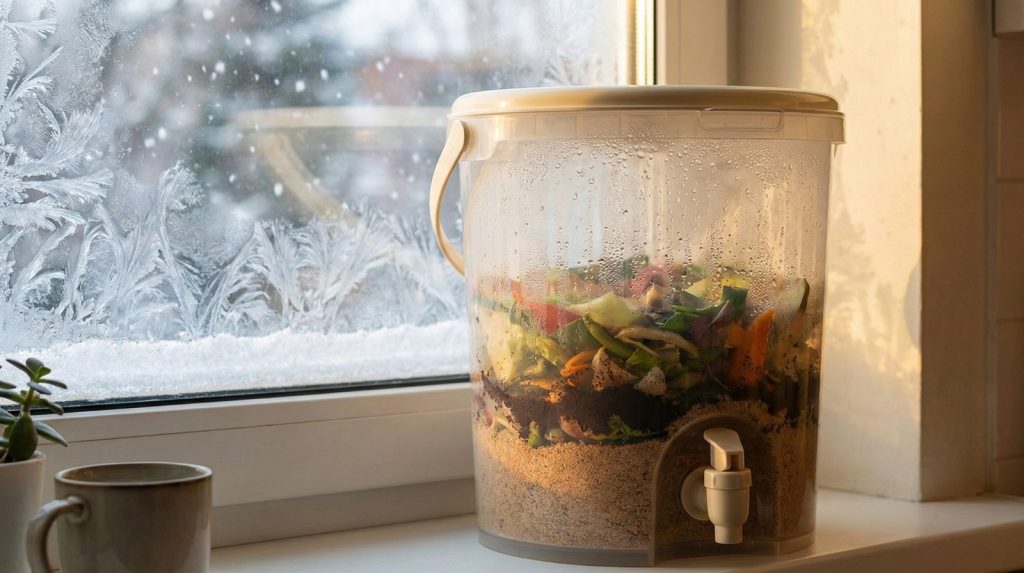
Bokashi fermentation, originating from Japanese agricultural practices, operates through anaerobic decomposition, utilizing effective microorganisms (EM) to pickle food waste in sealed containers. The fermentation process accommodates all kitchen scraps, including traditionally problematic materials, transforming them into acidic pre-compost within 10-14 days.
Bokashi benefits include odor control through inoculated bran application, minimal spatial requirements with stackable bucket systems, and liquid fertilizer production as a byproduct. The resulting material requires subsequent burial or integration into traditional composting systems, as fermented waste remains structurally intact rather than achieving complete decomposition during the anaerobic phase.
Electric Composters: Countertop Machines That Process Scraps in Hours
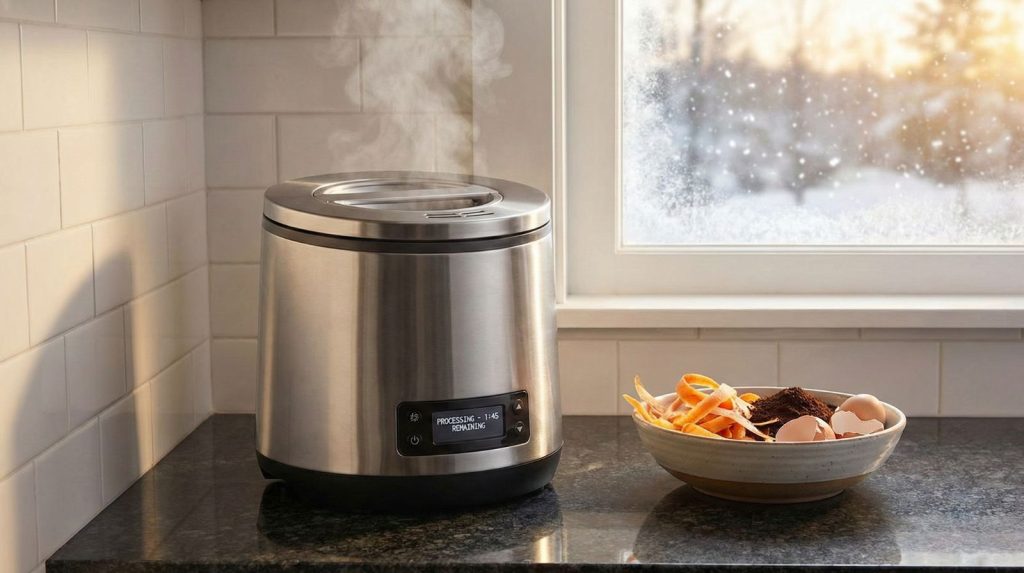
Although electric composters represent a significant departure from traditional biological decomposition methods, these appliances accelerate organic waste processing through heat, grinding, and forced aeration, reducing kitchen scraps to a dry, odorless material within 3-8 hours.
Electric composter benefits include continuous operation regardless of ambient temperature, minimal space requirements typically measuring twelve inches square, and elimination of pest attraction through enclosed processing chambers.
Popular brands such as Lomi, FoodCycler, and Vitamix FoodCycler FC-50 utilize heating elements reaching 160-180°F combined with rotating mechanisms that fragment organic matter into millimeter-sized particles.
You’ll need to differentiate between true composters, which incorporate microbial action, and food waste dryers, which simply dehydrate scraps. The resulting end product, while nutrient-rich, requires soil integration for six weeks before supporting plant growth, as the material hasn’t undergone complete biological transformation.
Related Post: Easy Steps to Start Composting at Home for Waste Reduction.
Setting Up Your Winter Composting System in Minimal Space
When establishing a winter composting system within confined quarters, you must first assess three critical parameters: available floor space measured in square feet, ambient temperature range throughout the composting period, and the weekly volume of organic waste your household generates.
Following this assessment, you’ll select appropriate compost bin types based on dimensional constraints, with stackable vermicomposting towers requiring merely two square feet of footprint, while bokashi buckets occupy even less vertical space.
Your small space solutions demand precise placement considerations, specifically positioning bins away from heating vents to prevent premature decomposition, yet maintaining accessibility for daily deposits.
You must ascertain adequate ventilation pathways exist, particularly when utilizing aerobic decomposition methods, as methane accumulation presents safety hazards in enclosed environments without proper air circulation protocols.
What You Can and Cannot Compost Indoors During Winter
Your indoor winter composting operation demands strict categorization of acceptable versus prohibited materials, as the closed-environment parameters fundamentally differ from outdoor decomposition systems where natural ventilation, microbial diversity, and temperature fluctuations mitigate problematic inputs.
Acceptable compost materials include vegetable scraps, fruit peels, coffee grounds, tea bags, and shredded paper, which decompose efficiently within controlled compost bins without generating excessive odors or attracting pests.
Prohibited materials encompass meat products, dairy items, oils, cooked foods, and citrus peels, which create anaerobic conditions, promote pathogenic bacteria growth, and emit malodorous compounds unsuitable for enclosed residential environments.
Additionally, avoid composting diseased plant matter, pet waste, or chemically treated materials, as these introduce contaminants that compromise bin integrity and final compost quality, requiring precise input management to maintain ideal decomposition processes.
Preventing Odors, Pests, and Moisture Problems in Small Spaces
Since moisture imbalance constitutes the primary catalyst for odor development, pest infiltration, and composting failure in confined indoor environments, you must establish rigorous monitoring protocols that track humidity levels, airflow patterns, and material decomposition rates throughout your winter composting operation.
Implement systematic odor management by maintaining carbon-to-nitrogen ratios between 25:1 and 30:1, ensuring adequate aeration through daily mixing, and incorporating activated charcoal filters within bin ventilation systems. Execute thorough pest control through sealed container deployment, fine-mesh screening installations, and strategic placement of food-grade diatomaceous earth barriers around composting units.
Monitor moisture content to achieve 40-60% saturation levels, measured through squeeze-test methodology, while adjusting brown material additions proportionally to counteract excess liquid accumulation, thereby preventing anaerobic decomposition conditions that generate methane emissions and attract arthropod populations.
Maintaining Your Indoor Compost System Through Cold Months
Although reduced ambient temperatures during winter months decrease microbial activity rates by approximately 50% compared to ideal mesophilic conditions, you’ll maintain decomposition efficiency in your indoor system through strategic temperature regulation, consistent feeding schedules, and adaptive material management protocols.
Monitor indoor temperature fluctuations near heating vents, radiators, and exterior walls, positioning your container in zones maintaining 15-21°C for peak bacterial performance. Implement compost maintenance procedures including weekly aeration cycles, adjusting carbon-to-nitrogen ratios from standard 30:1 to 35:1 during periods of decreased activity, and reducing feed volumes by 25-30% to prevent anaerobic conditions.
Document moisture levels biweekly, maintaining 40-60% humidity through controlled water additions of 50-100ml per feeding cycle, while monitoring pH levels between 6.5-7.5 using calibrated meters to guarantee consistent microbial function throughout winter operations.
What to Do With Finished Compost When You Have No Garden
Mature compost generated from apartment-scale vermicomposting or bokashi systems presents distribution challenges when traditional garden application isn’t available, yet you’ll find numerous practical deployment strategies through community redistribution networks, container cultivation programs, and municipal organic waste partnerships.
Finished compost uses include:
- Distributing material to local community gardens, which consistently require soil amendments for raised beds, thereby establishing reciprocal relationships that benefit urban gardening options
- Offering finished product through neighborhood sharing platforms, where homeowners with established landscapes actively seek organic matter
- Applying compost to balcony container plants, houseplants, and vertical growing systems within your residence
- Partnering with municipal composting facilities that accept small-batch contributions, integrating your material into larger-scale processing operations
These distribution methods ascertain your composting efforts contribute meaningfully to urban ecological systems.
Troubleshooting Common Winter Apartment Composting Challenges
While winter apartment composting systems offer sustainable waste management solutions, they frequently generate operational difficulties that require systematic diagnostic approaches and targeted interventions to maintain decomposition efficiency.
Temperature fluctuations present primary challenges, as indoor heating systems create inconsistent thermal environments that affect microbial activity, necessitating strategic bin placement near heat sources while avoiding direct radiator contact.
Moisture management requires continuous monitoring through tactile assessment, wherein materials should exhibit sponge-like dampness, and corrective measures involve incorporating carbon-rich amendments when excess moisture accumulates, or adding water when materials become desiccated.
Odor issues indicate anaerobic conditions, demanding immediate aeration through manual turning, increased brown material ratios, and verification of adequate ventilation apertures, while pest infiltration requires sealed container inspection and potential shift to vermicomposting methodologies that accommodate indoor environments.
Related Post: 10 Eco-Friendly Gardening Tips for Beginners.
Frequently Asked Questions
Can I Compost if My Apartment Doesn’t Allow Any Bins or Equipment?
You’ll need to explore composting alternatives that don’t require visible bins or equipment within your unit. Consider bokashi fermentation, which you can discreetly conduct in sealed containers under sinks, whereby you’ll inoculate kitchen scraps with specific microbial cultures that facilitate anaerobic decomposition. Alternatively, you might utilize vermicomposting in compact, odor-controlled systems, or you can freeze kitchen scraps temporarily before transferring them to community composting programs, municipal collection services, or designated drop-off locations that accept organic waste materials.
How Much Money Should I Budget for Starting Apartment Composting?
Your initial investment ranges from $0 to $150, depending on your chosen methodology. You’ll find cost saving tips by repurposing containers you already own, which eliminates equipment expenses entirely. Alternatively, commercial countertop bins cost $30-$80, while bokashi systems require $40-$70 plus ongoing bran purchases at $15-$25 monthly. Vermicomposting demands $50-$100 for worm bins and initial worm populations, though you can construct DIY systems for under $20 using recycled materials.
Will Composting Attract My Landlord’s Attention or Violate My Lease Terms?
Before beginning, before bothering your building manager, you’ll need to review composting regulations within your lease agreement, as certain clauses may restrict organic waste processing in residential units. You should initiate landlord communication if your lease contains ambiguous language regarding waste management, particularly concerning odor-producing activities. Indoor vermicomposting systems typically don’t violate standard lease terms, provided you maintain proper moisture levels, adequate ventilation protocols, and guarantee no pest infiltration occurs, though explicit written permission remains advisable.
Can I Take a Break From Composting During Vacation Without Ruining It?
You can safely pause feeding your composting system during vacation, though the process won’t halt entirely. Before departure, verify proper moisture levels, as decomposition slows but doesn’t cease. For extended composting breaks exceeding two weeks, consider freezing scraps until return, which maintains their decomposability. Upon return, resume normal feeding protocols gradually. These vacation tips prevent anaerobic conditions while maintaining microbial populations, confirming your system remains viable without requiring continuous inputs during your absence.
Do Neighbors Complain About Indoor Composting in Multi-Unit Buildings?
You’ll rarely face noise complaints with indoor composting, though odor concerns might arise if you’re managing your system improperly. When you maintain proper carbon-to-nitrogen ratios, guarantee adequate aeration, and avoid overloading your bin’s capacity, indoor composting concerns dissipate entirely. Bokashi systems, which utilize anaerobic fermentation with inoculated bran, or vermicomposting setups with appropriate bedding materials, generate minimal odor when you follow established protocols, making them virtually undetectable to neighboring units in multi-family dwellings.
Conclusion
You’ve now mastered multiple methods for maintaining compost in cold, confined conditions, whether through worm-based bins, bokashi-based fermentation, or electric-based equipment. By carefully controlling conditions—carefully monitoring moisture, managing material ratios, maintaining proper protocols—you’ll process produce and pantry waste productively throughout winter. Your space-saving system succeeds when you consistently check components, correct complications quickly, and commit to continuous care. Remember that proper preparation prevents problems: position your processing units prudently, provide periodic maintenance, and partition problematic materials before they compromise your carefully cultivated composting cycle.