
In tropical regions, a common challenge involves managing large volumes of rainfall that, if unmanaged, can lead to significant erosion and water loss; implementing passive rainwater harvesting systems offers a solution by utilizing landscape contours to direct runoff into storage without mechanical components.
These systems rely on natural topography, such as slopes, natural depressions, and earthworks, to facilitate gravity-fed flow into underground cisterns or above-ground containers. Understanding the specific techniques and site conditions essential for effective installation can guarantee ideal water retention with minimal maintenance, which becomes essential when considering scalable water management strategies.
Why Water Management in Tropical Zones Is Completely Different

In tropical climates, water management strategies must account for the region’s unique hydrological patterns, characterized by intense rainfall followed by abrupt dry spells, which necessitate tailored storage and distribution systems.
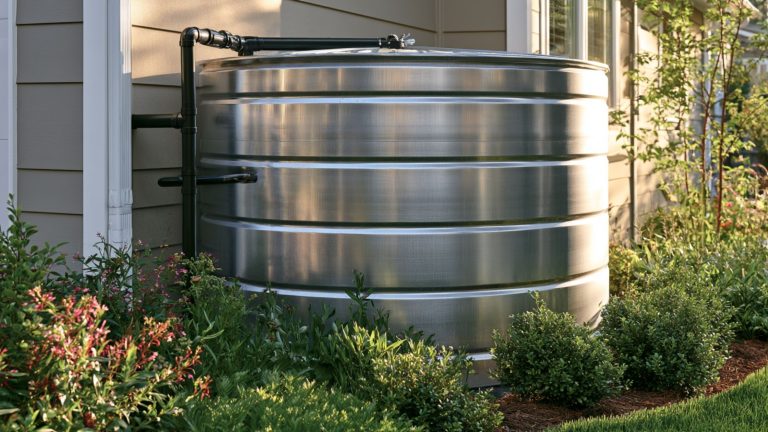
The selection of infrastructure—from simple rain barrels with diverters suitable for beginner applications to multi-barrel gravity-fed setups designed for larger-scale needs, or underground passive cisterns for cost-effective, advanced solutions—depends on specific water demand and regional variability.
Implementing these systems requires an understanding of the principles of “slow, spread, sink” in permaculture, emphasizing the importance of managing water flow to maximize absorption and reduce runoff problems caused by high humidity, pests, and soil fungal growth. Utilizing techniques such as rainwater harvesting ensures a sustainable approach to water management in these challenging conditions.
The Easiest Setup: One Rain Barrel + Diverter System (Beginner-Friendly)
No products found.
Implementing a single rain barrel paired with a diverter system constitutes the most accessible method for passive rainwater harvesting, particularly suitable for beginners in tropical environments where frequent and intense rainfall require streamlined water management in tropical climates.
Proper placement—preferably shaded areas—reduces evaporation rates and minimizes algae growth, optimizing collection efficiency. Incorporating overflow strategies, such as connecting the barrel to adjacent drainage channels or using mesh screens to prevent debris ingress, guarantees system functionality during heavy rain.
Mosquito-proofing, through mesh screens and neem oil application, prevents vector breeding, enhancing health safety. For debris management, DIY use of terracotta pots as first-flush diverters effectively captures roof debris before entering the barrel, facilitating cleaner water collection and reducing maintenance requirements, thereby making the system highly suitable for novice implementation.
Multi-Barrel Gravity-Fed System (For Larger Homes or Gardeners)
No products found.
A multi-barrel gravity-fed system offers an efficient solution for larger households or gardeners seeking to maximize rainwater collection without reliance on mechanical pumps, leveraging the natural gravitational potential created by elevated storage tanks connected in series. This configuration enables achieving sufficient water pressure solely through gravity, facilitating consistent flow for irrigation and household use.
Proper linkage of barrels guarantees continuous water supply and maintains pressure, minimizing algae growth and overheating risks prevalent in tropical zones. To optimize performance, confirm barrels are securely connected and elevated at varying heights to sustain gravity-driven flow.
Employing water-saving garden tips, such as filtering runoff and scheduling watering during cooler periods, enhances system efficiency.
| Component | Function |
|---|---|
| Elevated barrels | Create gravitational potential for pressure |
| Linking pipes | Maintain seamless water flow between barrels |
| Outlet valve | Control water distribution |
The Underground Passive Cistern (Advanced but Cheap)
Underground passive cisterns, positioned below ground level, utilize the ambient soil temperature to maintain consistently cool water temperatures, which is particularly advantageous in tropical zones where ambient heat can accelerate algae proliferation and increase mosquito breeding risks.
This subterranean placement minimizes exposure to direct sunlight, thereby markedly reducing the likelihood of algae growth and thermal overheating, while also providing an added barrier against external contaminants. For passive rainwater harvesting, DIY water systems employing underground cisterns capitalize on natural insulation, making them suitable for small yards in tropical cities.
Materials such as concrete or high-density polyethylene resist humid conditions effectively and are accessible for affordable construction. This approach guarantees a reliable, low-maintenance water supply that mitigates biological contamination risks and sustains water quality in warm, humid environments.
Passive Rainwater Harvesting: Collecting Water Without Pumps or Complications
Passive rainwater harvesting techniques enable the collection of water without reliance on mechanical pumps or complex infrastructure, emphasizing simplicity and cost-efficiency. Practical implementation involves identifying suitable sources for reuse, such as greywater systems—like the bucket-to-banana-circle method and laundry-to-landscape configurations—that require minimal tools or modifications.
By understanding the limitations of what can be safely reused and employing straightforward collection systems, users can establish sustainable water management practices with reduced technical complexity. Incorporating best practices ensures that harvested rainwater remains clean and suitable for its intended non-potable uses.
What You Can Reuse (And What You Shouldn’t)
Have you considered the types of water suitable for reuse in passive rainwater harvesting systems to maximize efficiency while minimizing risks? Typically, non-potable water sources such as laundry rinse water, bath water, and AC condensation water can be reused if properly managed, with laundry-to-landscape systems exemplifying greywater reuse tropical applications.
These sources require appropriate filtration and minimal chemical additives to prevent contamination. However, kitchen sink water containing oils and food waste must be avoided, as it attracts pests and fosters mold growth, posing health and structural risks.
Implementing strict separation protocols guarantees safe reuse, while understanding the distinctions between acceptable greywater and hazardous waste streams is essential for system integrity. Properly designed, passive rainwater systems can efficiently utilize suitable greywater sources, reducing demand on potable supplies and guaranteeing environmental safety.
The Easiest Greywater Hack: Bucket-to-Banana-Circle System
Implementing the bucket-to-banana-circle system offers an accessible and low-maintenance method for greywater recycling within passive rainwater harvesting strategies. This approach utilizes banana circles, which thrive on high water and nutrient input, making them ideal for filtering greywater through soil, mulch, and plant interactions.
When greywater is directed from a bucket into the banana circle, the soil acts as a biological filter, removing pathogens and contaminants while nutrient-rich water benefits the banana plants. This tropical water strategy capitalizes on the natural growth environment, promoting efficient water use and crop health.
Additionally, mosquito prevention measures, such as covering the system, prevent breeding grounds, ensuring safe greywater recycling. This method simplifies greywater reuse by integrating filtration, plant cultivation, and water management into a cohesive, sustainable system.
Laundry-to-Landscape DIY System (Requires Almost No Tools)
A straightforward approach to integrating greywater reuse within a passive rainwater harvesting system involves establishing a laundry-to-landscape (L2L) diy system that requires minimal tools and technical expertise. This system leverages gravity and flexible tubing to divert greywater from laundry discharge directly to landscape irrigation zones, facilitating sustainable tropical gardening.
Selecting the appropriate detergents—specifically those free from high salt, boron, or phosphate content—is crucial to prevent soil degradation. Tropical soil types that filter well and retain moisture support the efficacy of this greywater reuse, particularly in humid conditions.
Proper layout of the piping guarantees effective flow control, and testing with small volumes initially helps verify system stability without complex equipment. Such an L2L setup provides an accessible, low-maintenance method to optimize water use in sustainable tropical gardening environments.
Greywater Reuse for Gardeners: Safe, Simple, and Tropical-Approved
Proper management of indoor humidity through strategic placement of plant configurations can optimize moisture levels, thereby reducing reliance on external dehumidification systems. Integrating natural indoor dehumidifiers, such as transpiring plants or moisture-absorbing substrates, offers a zero-energy solution aligned with sustainable practices.
Additionally, external humidity control techniques, including mulching and proper drainage, actively regulate garden microclimates, ensuring ecological balance and observer safety. Incorporating efficient irrigation systems can further enhance water management, reducing excess moisture and supporting overall plant health.
Managing Indoor Humidity (Plants + Placement)
Is there an ideal approach to managing indoor humidity levels that balances plant health with environmental control? Implementing humidity hacks suitable for tropical homes involves selecting moisture-absorbing plants like peace lilies, Boston ferns, and pothos, which naturally regulate moisture levels through transpiration and absorption.
These plants should be strategically placed in areas prone to mildew, such as corners and near moisture sources, to facilitate microclimate control and inhibit mold growth. Avoid cultivating high-humidity-sensitive plants indoors, as excessive moisture can promote fungal development.
Integrating natural dehumidifiers—plants that absorb moisture—serves as an effective passive method for maintaining suitable humidity. This technique combines biological mechanisms with precise placement strategies, thereby improving indoor air quality and environmental stability without reliance on mechanical systems.
Natural Indoor Dehumidifiers (Zero-Energy)
Utilizing natural indoor dehumidifiers that operate without electrical energy offers an effective approach to maintaining ideal humidity levels, especially in tropical environments where indoor moisture tends to accumulate rapidly.
Techniques like charcoal bowls, rock salt buckets, terracotta pot-within-pot cooling systems, and DIY hygroscopic clay bricks leverage natural processes to absorb excess humidity, reducing reliance on mechanical dehumidifiers. Incorporating these methods within spaces containing coconut coir tropical soil enhances moisture regulation efficiently.
The following table summarizes key concepts:
| Method | Principle | Application |
|---|---|---|
| Charcoal bowls | Adsorption of moisture | Air humidification control |
| Rock salt buckets | Hygroscopic properties | Passive moisture removal |
| Terracotta pot system | Evaporative cooling & moisture absorption | Indoor humidity stabilization |
| Hygroscopic clay bricks | Natural hygroscopic materials | Long-term moisture regulation |
| Coconut coir tropical soil | High water retention capacity | Soil moisture moderation |
No products found.
Outdoor Humidity Control for Gardens
Harnessing greywater for outdoor garden irrigation in tropical environments offers a sustainable method to regulate humidity levels while conserving freshwater resources. Incorporating tropical home humidity solutions involves maximizing raised beds tropical, which provide improved drainage, preventing soil compaction that impairs water infiltration.
Mulch thickness should be adjusted seasonally; thicker mulch during wet months minimizes evaporation, whereas thinner layers in dry seasons promote moisture retention. Using coconut coir instead of peat moss enhances water conservation due to superior moisture retention and resistance to decomposition, aligning with sustainable practices.
Properly managing these elements reduces excess surface evaporation, maintains consistent humidity levels, and supports plant health in tropical climates. This approach effectively integrates greywater reuse within tropical gardening practices, ensuring safe, simple, and environmentally responsible humidity regulation for peak crop yields.
Humidity Hacks for Tropical Homes & Gardeners
In tropical climates, effective humidity management involves optimizing water usage practices throughout seasonal variations, recognizing that overwatering during the rainy season often results from misjudging soil moisture levels and plant requirements.
Implementing precise irrigation strategies, such as adjusting watering schedules based on seasonal demand, minimizes water wastage during dry months by leveraging self-watering systems designed for high-temperature conditions.
These systems, incorporating capillary action or moisture sensors, facilitate consistent soil hydration, reducing reliance on manual watering and preventing overhydration that can lead to root rot or nutrient leaching. Additionally, using permeable paving can help manage excess rainwater, preventing soil saturation and promoting healthier plant growth.
Water Less During Rainy Season (Why Overwatering Happens in the Tropics)
During the rainy season in tropical regions, overwatering often occurs despite the ample natural precipitation because the soil frequently becomes waterlogged, leading to a paradoxical environment for plant health.
The persistent saturation limits oxygen availability to roots, causing them to suffocate and impair nutrient absorption. This sustained waterlogged condition also creates an advantageous environment for pathogenic fungi and root rot development, exacerbating plant stress and decline.
Consequently, continued watering efforts can further exacerbate soil saturation, worsening root health issues. To mitigate this, reduce watering frequency by employing strategic drainage measures, such as installing improved soil aeration systems and organic matter amendments that promote drainage.
Monitoring moisture levels with soil moisture sensors guarantees minimal irrigation, preventing overwatering and maintaining ideal root respiration and microbial balance.
Watering Smart in Dry Months
As the tropical climate shifts from periods of intense rainfall to extended dry months, refining watering practices becomes essential to maintain plant health and soil moisture levels. Implementing deep watering techniques guarantees moisture penetrates beyond the surface, promoting resilient root systems capable of accessing water during drought conditions.
Adhering to a morning-only watering schedule minimizes evaporation loss, leveraging cooler temperatures and reduced wind activity to maximize water effectiveness. Using shade cloths effectively reduces soil surface evaporation, conserving water and maintaining soil moisture for extended periods.
These combined strategies allow for targeted water application, conserving rainwater collected via passive harvesting and mitigating overwatering risks, thereby maintaining ideal hydration levels crucial for plant vigor amid prolonged arid periods.
Self-Watering Systems That Work Best in Tropical Heat
Self-watering systems such as clay pot (olla) irrigation, wicking beds, and gravel basin planters offer effective solutions for maintaining consistent moisture levels in tropical environments characterized by high heat and humidity. These methods efficiently reduce reliance on traditional drip irrigation, which often fails due to mold buildup within tubing systems in humid conditions.
Olla irrigation utilizes porous clay vessels submerged in soil, providing capillary action for water delivery; wicking beds employ materials like bioplastics or synthetic fibers to draw moisture upward from reservoirs; gravel basin planters create a passive barrier, ensuring soil moisture stability through gravity and capillarity.
These approaches mitigate evaporation losses and minimize mold proliferation, which impairs the functionality of conventional drip systems in tropical climates.
No products found.
Watering Strategies for Tropical Gardeners — The Counterintuitive Truth
In tropical gardening, conventional wisdom often emphasizes frequent, consistent watering regimes; however, adopting a passive rainwater harvesting approach can optimize plant health by leveraging natural environmental conditions, thereby reducing reliance on supplemental irrigation.
Tropical edible plants like lemongrass and Malabar spinach thrive due to their high heat tolerance and humidity adaptation, which promote rapid growth and resilience. Sweet potato leaves and kangkung (water spinach) flourish under humid conditions that facilitate consistent moisture absorption, while banana and taro benefit from added greywater sources, enhancing their drought resilience.
Okra and eggplant, being heat-tolerant, depend heavily on their ability to access moisture during periods of intense heat, making passive harvesting a sustainable strategy that aligns with their physiological requirements by maintaining soil moisture levels naturally, without artificial intervention.
Additionally, implementing composting techniques can further improve soil moisture retention and provide essential nutrients, supporting the plants’ health in passive rainwater collection systems.
Building Your Complete Tropical Home Water Strategy (Beginner → Advanced)

Constructing an effective tropical home water strategy requires integrating multiple components that optimize the capture, reuse, and management of natural water sources, ensuring sustainability and resilience in the face of variable climatic conditions. To develop this system progressively, consider the following steps:
- Capture rainwater passively by installing gutter systems and collection surfaces that channel water into storage tanks without mechanical assistance, ensuring minimal contamination and maximizing yield.
- Reuse greywater safely through filtration and diversion mechanisms, which enable water from sinks, showers, and laundry to be repurposed for irrigation or toilet flushing.
- Support garden health with moisture-smart design and plant species matched to tropical rainfall rhythms, reducing indoor humidity naturally and storing excess water securely for future use. These components form a thorough, scalable approach adaptable from beginner to advanced levels.
- Regular maintenance and monitoring are essential to rainwater harvesting systems, maintaining water quality and system efficiency over time.
Frequently Asked Questions
How Long Does Rainwater Typically Remain Usable in Storage?
Rainwater typically remains usable in storage from several days up to two weeks when properly collected and stored in sealed, clean containers. Factors influencing its longevity include water quality, exposure to sunlight, and microbial activity. Regular inspection, maintenance, and necessary treatment—such as filtration or chlorination—are essential to prevent bacterial growth, algae, and contamination, thereby extending usability and ensuring safety for intended applications within this timeframe.
What Are the Best Materials for Constructing Passive Rainwater Collection Systems?
You should utilize durable, non-corrosive materials for passive rainwater collection systems; specifically, high-density polyethylene (HDPE) or polyethylene containers are preferred due to their chemical resistance, structural stability, and ease of formation into various configurations. Cooper or galvanized steel components may be employed for fittings, but should be coated or treated to prevent corrosion. Additionally, using smooth, non-porous surfaces minimizes microbial growth, ensuring water quality and system longevity.
Can Passive Systems Prevent Mosquito Breeding and Mosquito-Borne Diseases?
A passive rainwater harvesting system can prevent mosquito breeding and related diseases effectively by ensuring water does not stagnate in open or poorly sealed containers, which serve as breeding sites. You should implement tight-fitting covers, install screens to block insects, and promote rapid water runoff to eliminate standing water, thereby disrupting mosquito life cycles. Regular maintenance and inspections are essential to maintain system integrity and prevent unintended pooling.
How Does Climate Change Impact Passive Rainwater Harvesting Effectiveness?
Climate change alters precipitation patterns, impacting passive rainwater harvesting effectiveness by increasing variability in rainfall, which leads to inconsistent water collection. Elevated temperatures accelerate evaporation rates from catchments and storage, diminishing available reserves. Drought frequency rises, reducing collection opportunities, while intense storms may overwhelm systems not designed for such events, risking structural damage or overflow. These factors necessitate adaptive design modifications and predictive modeling for ideal water management under changing climate conditions.
Are There Legal Regulations Regarding Rainwater Collection in Tropical Regions?
Regulations concerning rainwater collection in tropical regions vary, often governing collection methods, storage, and usage, due to concerns over water rights and infrastructure impact. You are required to consult local laws, which may mandate permits, enforce water quality standards, or restrict harvest sizes, especially in areas where water resource management is strict. Failing to comply can lead to legal penalties, emphasizing the necessity for thorough understanding of regional legal frameworks before implementing passive rainwater harvesting systems.
Conclusion
Implementing passive rainwater harvesting effectively functions as a foundational node within a broader sustainable water management network in tropical environments; it operates as an unobtrusive yet essential conduit, channeling natural landscape features into a self-sustaining reservoir.
By embracing its role, you optimize resource allocation with minimal intervention, establishing a resilient, autonomous system that exemplifies the symbiosis between landscape architecture and sustainable design. This approach guarantees long-term water security, akin to a central node sustaining interconnected pathways within a complex, self-regulating infrastructure.