Have you ever walked past your plants in December and thought, “Why do you all look… tired?”
The leaves droop a little. The soil stays wet forever. Your calathea gets crispy edges even though you swear you watered it correctly. And the sun? It disappears at 4:30 pm like it has somewhere better to be.
Welcome to winter — the season when even the easiest houseplants start whispering for help.
But here’s the comforting truth: Your plants aren’t failing. They’re simply reacting to an environment that’s suddenly darker, drier, and harsher than what they’re built for. And that means you don’t need to overhaul your entire home — you just need a few clever tweaks to make winter feel more like “home” for them again.
This guide is your cold-climate roadmap. Simple, practical, energy-conscious grow hacks that keep your indoor jungle flourishing even when the world outside freezes.
We’re talking:
✨ Light tricks for gloomy rooms
✨ Humidity boosts that don’t require a greenhouse
✨ Winter watering rhythms that prevent root rot
✨ Micro-greenhouses, self-watering systems & more
If you’ve ever wished plants came with a winter survival manual… this is it.
Let’s turn your cold-season home into a warm, bright sanctuary — for you and your plants.
Why Indoor Plants Struggle in Winter
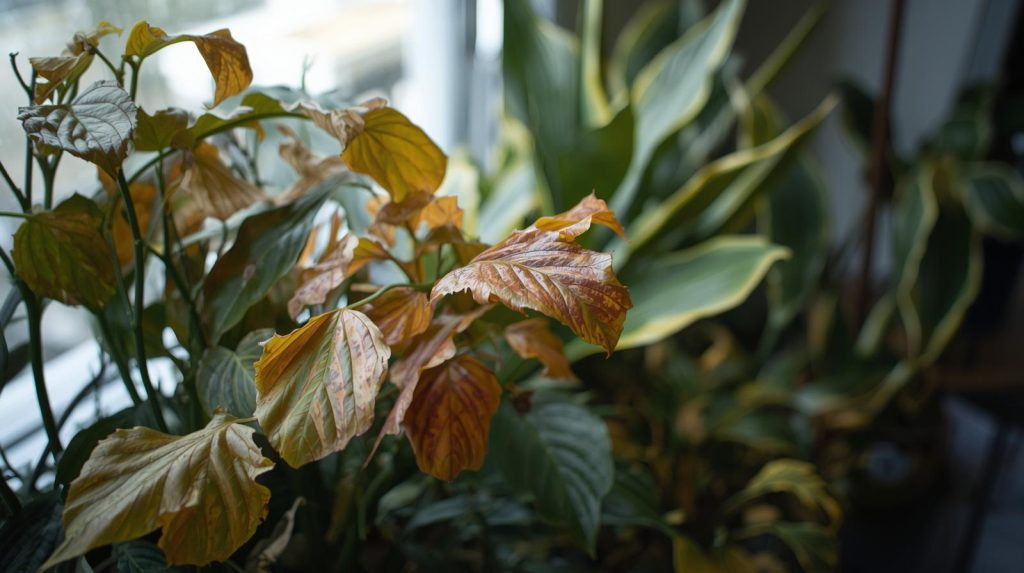
If your plants look a little “tired” by December, you’re not imagining it. Winter fundamentally changes the environment inside your home — and plants feel everything. During the cold months, sunlight becomes dramatically weaker. Daylength shrinks. The sun sits lower on the horizon. Even a south-facing window in January often delivers the equivalent of one weak summer morning hour of usable light.
Then there’s the air. When heaters switch on, indoor humidity can drop to 20–30%, which is desert-level dryness. Plants that normally thrive at 50–70% suddenly experience crispy leaf edges, curling, or slow decline. Drafts from old windows, cold floors, and rapid temperature swings also confuse plant metabolism and interrupt moisture uptake.
This trio — low light, low humidity, and inconsistent temperature — becomes the main reason winter feels like a battle for houseplant lovers.
But here’s the good news: plants can adapt with the right support. And you don’t need fancy equipment. Most winter problems can be solved with small environmental hacks, little habits, and smart placement. Once you learn how to stabilize light, humidity, and warmth, your home becomes a thriving indoor jungle even when it’s snowing outside.
No products found.
Light Hacks for Dark Homes
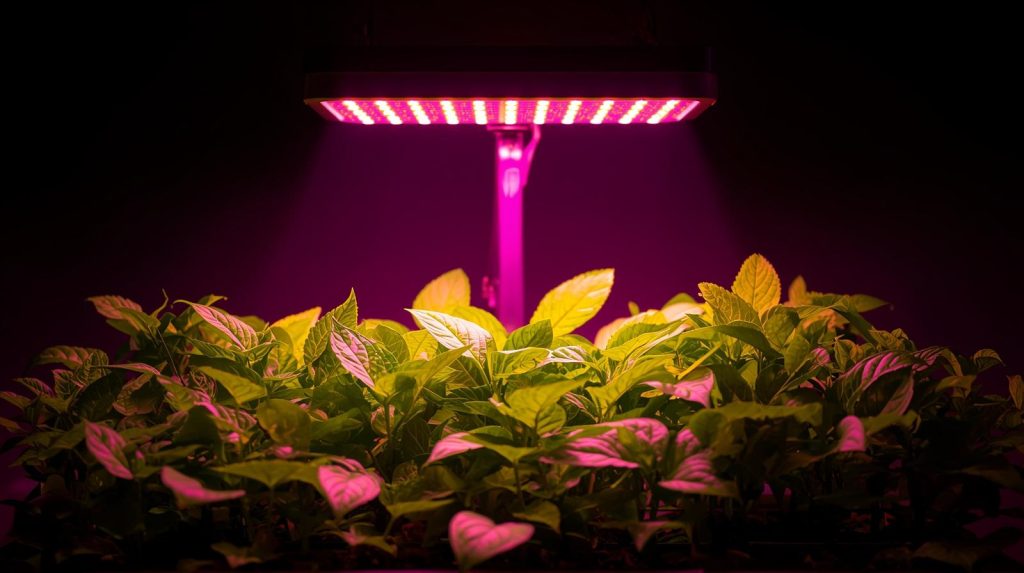
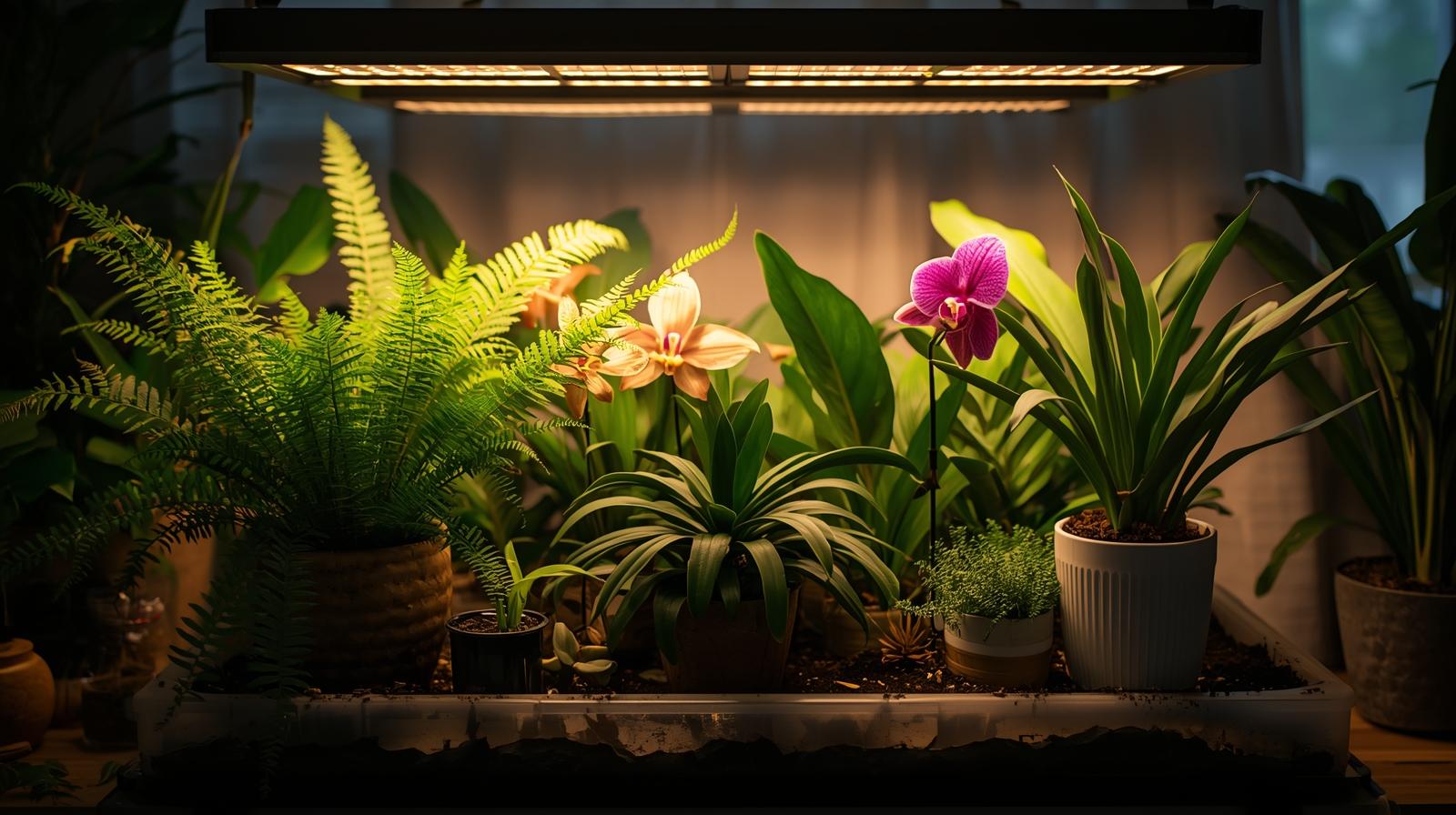
Literally, light is the most important winter resource, and the hardest to get naturally. When days shorten and the sun weakens, grow lights become the secret weapon of cold-climate plant parents. Not all grow lights are equal — and not all plants need the same intensity — but a few principles make winter lighting foolproof.
First, choose full-spectrum LED lights. They mimic natural sunlight, stay energy efficient, and stay cool enough to avoid leaf burn. Place the light 6–14 inches above your plant’s leaves depending on species: low-light plants like pothos or ZZ can stay farther away, while herbs, hoyas, and flowering plants need closer illumination.
Related Post: Indoor Aquaponics Setup: From Fish Tank to Salad in 8 Steps
Timing matters too. In winter, aim for 10–14 hours of supplemental light. Use a timer so your plants receive consistent daylight cycles — a stable rhythm reduces stress dramatically.
Placement hack: If your windows face north or east, boost the light using mirrors or reflective surfaces behind plants. Simple aluminum foil taped to cardboard can brighten a gloomy corner. Clamp lights behind furniture to transform “dead zones” into grow spots. Under-cabinet grow strips can turn a shady kitchen into an indoor herb garden.
Good lighting = winter survival. Great lighting = winter growth.
No products found.
Humidity Hacks for Heated Homes
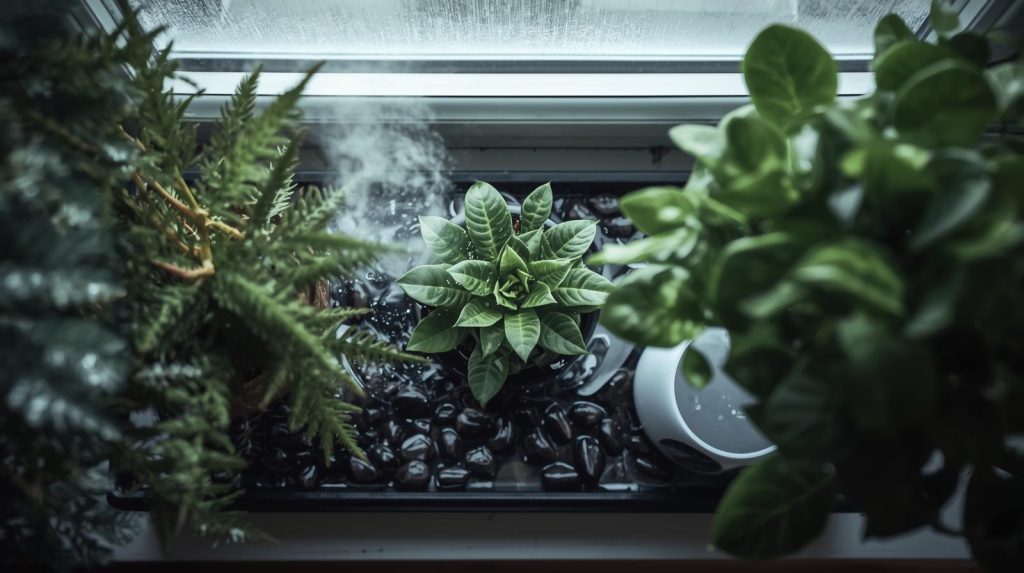
Heaters are a winter plant’s worst enemy, stealing moisture from the air and leaving humidity levels dangerously low. Luckily, cold-climate homes can easily boost humidity with a few simple hacks — no greenhouse required.
Start with the classic: the pebble tray. It’s low-tech but incredibly effective. Fill a shallow tray with small stones, add water just below the top of the pebbles, and place your plant on top. As the water evaporates, it gently raises humidity around your plant without oversaturating the room.
Related Post: 7 Winter Houseplants That Heal Emotional Stress and Bloom All Season
Next: humidifiers. Plants don’t need the entire house humidified — only their corner. Place a cool-mist humidifier about 2–3 feet from your cluster of plants. Too close, and leaves may develop fungal spots; too far, and the moisture disperses. Set it on a timer for morning or midday, when indoor air is driest.
If humidifiers aren’t an option, try DIY solutions: bowls of water near radiators, damp towels behind heaters, or grouping plants together to form a “self-humidifying micro-jungle.”
Humidity-loving species such as calatheas, ferns, anthuriums, and alocasias especially benefit. Watch for signs like crispy tips or curled leaves — they’re early warnings your plants need more moisture.
No products found.
Winter Watering & Soil Hacks
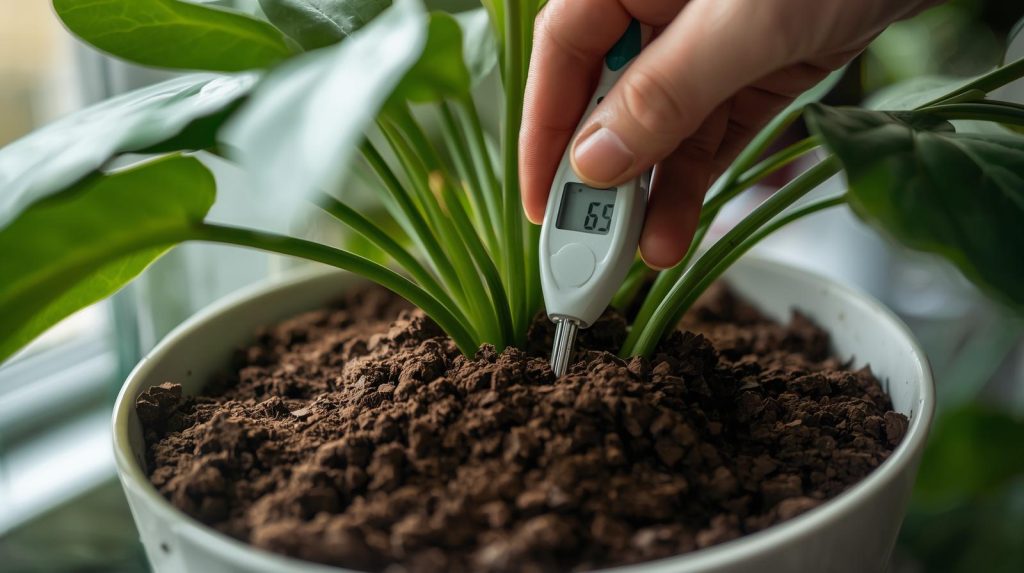
Here’s the winter secret nobody tells beginners: plants need far less water in cold months. Growth slows. Soil stays wet longer. Evaporation nearly stops. That’s why overwatering is the #1 winter plant killer.
The rule of thumb: Reduce watering by 30–50% compared to summer.
Instead of watering on a schedule, check the soil’s actual moisture. Use your finger, a wooden stick, or a moisture meter. If the top 1–2 inches are dry, it’s time to water — gently and slowly.
No products found.
Winter soil should also drain better than summer soil. Mixing extra perlite, pumice, or orchid bark into your potting blend keeps roots oxygenated during long, wet periods. For tropical plants, aim for a chunkier mix to prevent waterlogging.
Self-watering systems shine in winter because they prevent overwatering. Options include:
- Wick-watering setups (great for trailing plants)
- Self-watering pots with reservoirs
- Upside-down bottle irrigation for large houseplants
- Capillary mats for multiple plants on one shelf
Use room-temperature water — cold water shocks roots. And always avoid watering late at night; warm daylight hours help plants process moisture naturally.
Related Post: Cover Crop Combinations That Supercharge Your Soil
Temperature & Draft-Proofing Tips
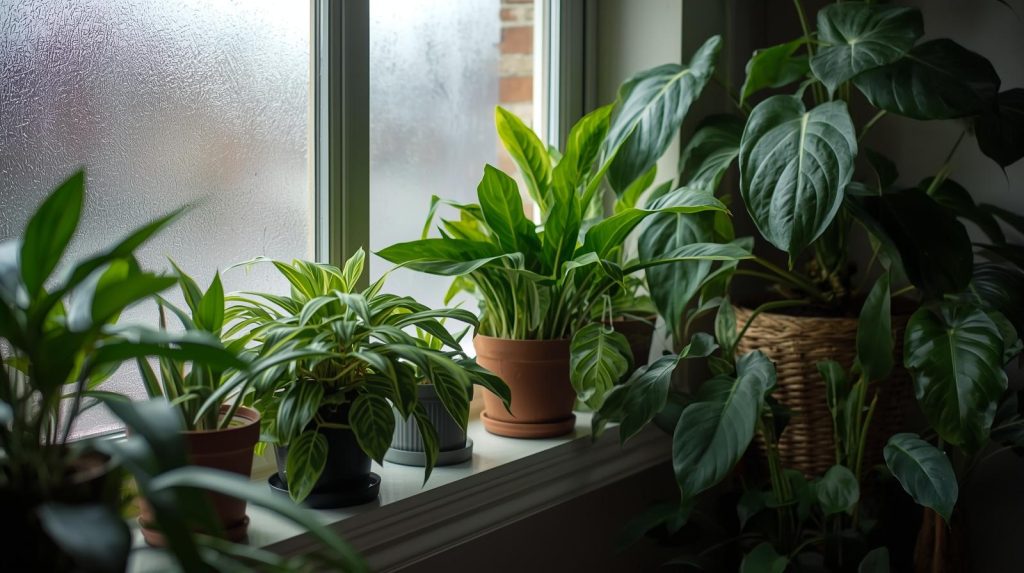
Winter homes create unpredictable microclimates — patches of warmth, pockets of cold, and sudden temperature swings that stress plants. Most houseplants thrive around 60–75°F (15–24°C), but nighttime dips or blasts from a heater can disrupt their rhythm.
Start by checking your windowsills. In cold climates, the glass can drop below 40°F — far too low for tropical plants. Move sensitive species a few inches away from windows or place insulating mats, cork trays, or decorative baskets around pots. This protects roots, which are more temperature-sensitive than leaves.
Drafts are another hidden threat. Old windows, door gaps, or chimneys can create cold pockets that stunt growth or cause leaf drop. Use door snakes, thermal curtains, or simple rolled towels to block cold air.
And don’t forget vents. Heating vents blast dry, hot air that can crisp leaves in days. Redirect vents with magnetic covers or move plants at least 3 feet from airflow.
During severe cold snaps, gather plants together. They naturally stabilize temperature for one another. A simple cluster near a bright window with a curtain drawn at night becomes a winter “micro-habitat.”
Your goal is stability. Predictable temperatures = predictable plant happiness.
Related Post: Passive Cooling Strategies for Humid Climates (No AC)
Micro-Greenhouses & Mini Grow Tents
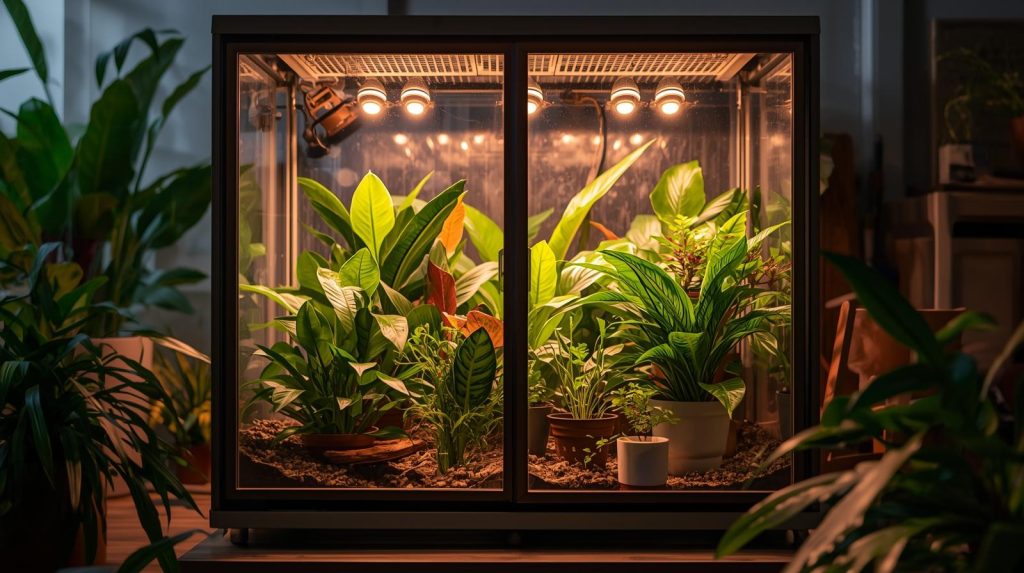
If you want to supercharge winter growth, micro-greenhouses are game-changing — and surprisingly easy to set up. You don’t need a greenhouse room or giant grow tent. In fact, many indoor gardeners use simple, elegant solutions like:
- IKEA greenhouse cabinets
- Clear plastic storage bins turned into humidity domes
- Tabletop greenhouse boxes
- Mini grow tents that fit in a corner
Micro-greenhouses trap humidity, stabilize temperature, and amplify light — creating a tropical microclimate even when it’s snowing outside. They’re especially helpful for ferns, alocasias, anthuriums, orchids, and baby cuttings.
To build one affordably, place a few glass shelves or wire racks inside a transparent enclosure. Add grow lights above, a small fan for airflow, and a humidity tray beneath. Within hours, your plant’s environment becomes warmer, brighter, and more consistent.
If you use a clear plastic tote, simply flip it upside down over a plant tray. Add two small holes for airflow and place a clamp light nearby.
Micro-greenhouses are winter lifesavers for sensitive plants — and they keep pests low by creating conditions where plants stay strong.
No products found.
Winter Care Routine & Simple Maintenance Checklist
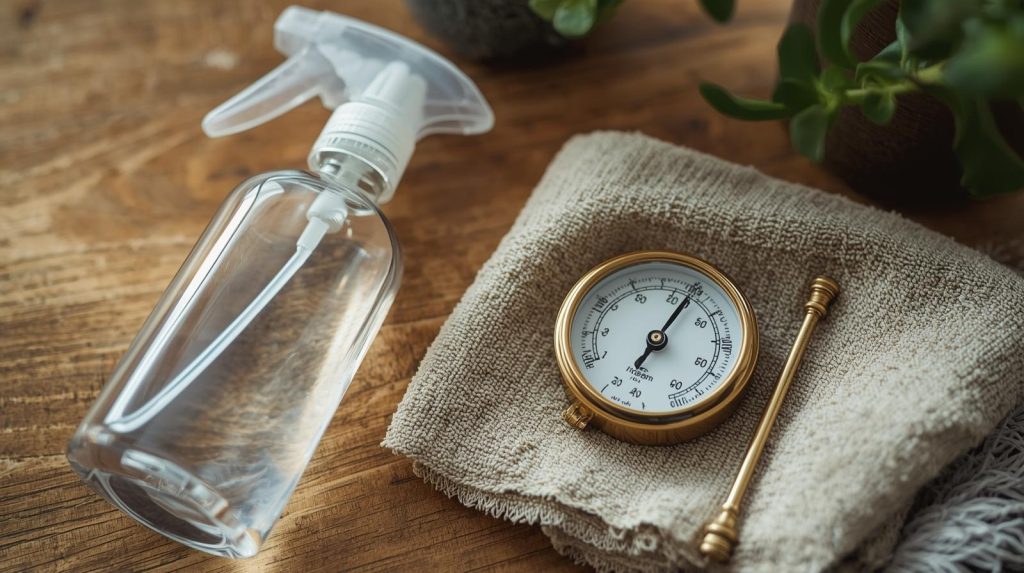
Plants love routine. And in winter, consistency is more important than ever. Instead of complex systems, think of your winter plant care like a weekly self-care ritual.
Weekly Winter Routine
- Rotate plants to ensure even light exposure.
- Dust leaves — winter dust blocks up to 40% of light.
- Check soil moisture only once a week; water slowly.
- Top up pebble trays to support humidity.
- Inspect for pests, which thrive in warm, dry winter air.
Monthly Checklist
- Wipe grow light bulbs and reflectors to maximize brightness.
- Trim off yellow or dead leaves to reduce stress.
- Refresh your humidity strategy if leaf edges are consistently crisp.
- Clean humidifier tanks to prevent mineral buildup.
Related Post: 10 Winter Greens That Boost Mood and Immunity
Seasonal Actions
- Early winter: Stop fertilizing — plants go semi-dormant.
- Mid-winter: Watch for low humidity warnings (curling, crisping).
- Late winter: Gradually increase watering and prepare for spring growth.
This simple rhythm makes your winter plant corner feel like a living, breathing ecosystem — calm, steady, and thriving.
No products found.
Best Plants for Dark Winter Homes
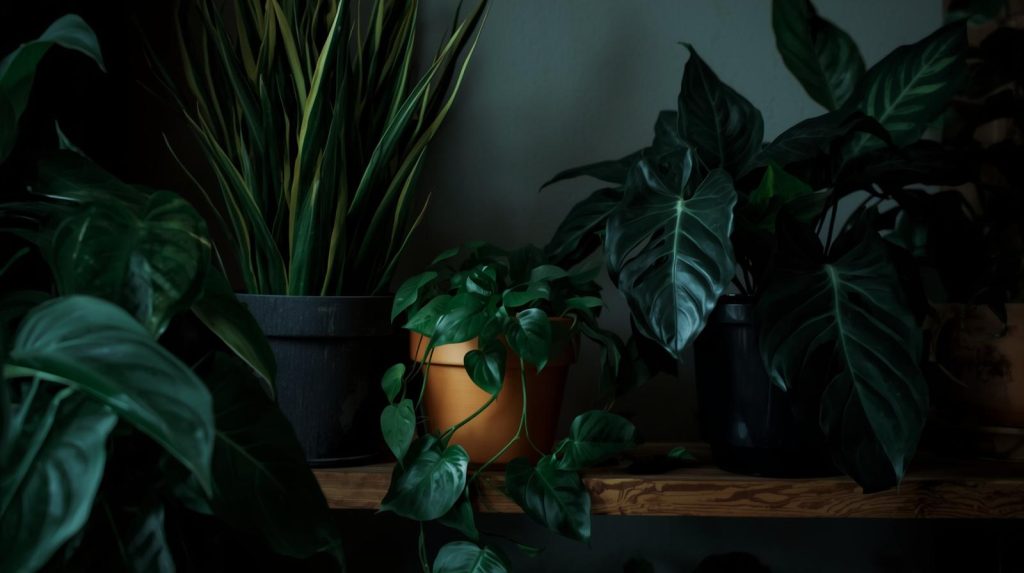
Some plants are simply better suited for low-light, cold-climate winters — and they make ideal companions for your indoor jungle when sunlight is scarce.
Top Cold-Climate Champions
- ZZ Plant: Thrives in extremely low light. Nearly bulletproof.
- Snake Plant: Tolerates dry air, low humidity, and irregular watering.
- Pothos: Fast-growing even in winter, especially under artificial light.
- Philodendron Heartleaf: Adaptable, forgiving, beginner-friendly.
- Chinese Evergreen: Excellent for dim corners and cooler rooms.
- Peace Lily: Needs a grow light in winter but stays lush with high humidity.
- Dracaena: Handles drafts, dryness, and minimal sunlight.
These species don’t just survive winter — they often grow through it. That means fewer emergencies, less stress, and more green energy in your space. If you’re just starting your winter plant journey, begin with one or two low-light heroes. As you master lighting and humidity hacks, you can build toward more sensitive species that enjoy tropical conditions.
Related Post: Fermentation for Beginners: Sauerkraut, Kombucha & Beyond
Optional: Cold-Climate Indoor Gardening Gift Guide
Winter is the perfect time to add or gift tools that make indoor gardening easier — especially around the holidays. Since search interest peaks in late November and early December, this is a great place to include natural affiliate recommendations.
Perfect Add-Ons for Winter Growing:
- Full-spectrum grow lights (desk lamps or clamp style)
- Mini humidifiers for small plant corners
- Pebble tray kits
- Self-watering pot systems
- Indoor greenhouse shelves
- Thermometers + hygrometers
- Chunky soil mix kits
- Wool propagation mats
These tools don’t replace good habits — they enhance them. And they help plant lovers feel in control during the toughest growing season of the year. Finish with a warm note: gifting someone the tools for plant success is like gifting them calm, care, and winter brightness.
Related Post: Circular Home Upgrades You Can Still Make Before Year-End
CONCLUSION — Reassurance, Warmth & Motivation
Winter can feel like a heavy season — outside and indoors. The days shrink, the light softens, the air dries out, and suddenly you’re juggling humidifiers, watering cans, and grow lights like your plants have turned into tiny seasonal divas.
But here’s the truth I want you to hold close: You’re doing better than you think. Plants aren’t asking for perfection. They’re asking for consistency, small comforts, and a little understanding while the world tilts away from the sun.
Every pebble tray you refill, every leaf you dust, every time you scoot a plant away from a cold window or adjust a grow light timer, you’re creating a stable little sanctuary in a season that feels anything but stable.
And your plants feel that attention.
Winter doesn’t have to be the “survival mode” season for houseplants. With a few mindful hacks — better lighting, reliable humidity, gentler watering rhythms, small microclimates — your indoor jungle can stay green, vibrant, and surprisingly resilient all the way until spring.
So take a breath, look around your home, and ask yourself: Which hack will support your plants the most this week? Maybe it’s adding a pebble tray, maybe it’s shifting a pothos closer to a grow light, or maybe it’s watering a little less than you think you should. It all counts. And it all helps.
Here’s to creating warmth in the dark months. Here’s to thriving plants — and thriving you. And here’s to a winter home filled with green life, calm energy, and quiet joy.