If you’ve ever lived through a humid tropical summer, you know the struggle — sticky nights, restless sleep, and electric bills that climb higher than the temperature itself. For many of us, air conditioning feels essential, yet it’s also one of the biggest contributors to rising energy use and carbon emissions worldwide.
But what if there was a way to keep your home cool, comfortable, and breezy — without touching the thermostat? Welcome to the world of passive cooling — a timeless set of strategies that help homes stay naturally cool by working with the climate, not against it.
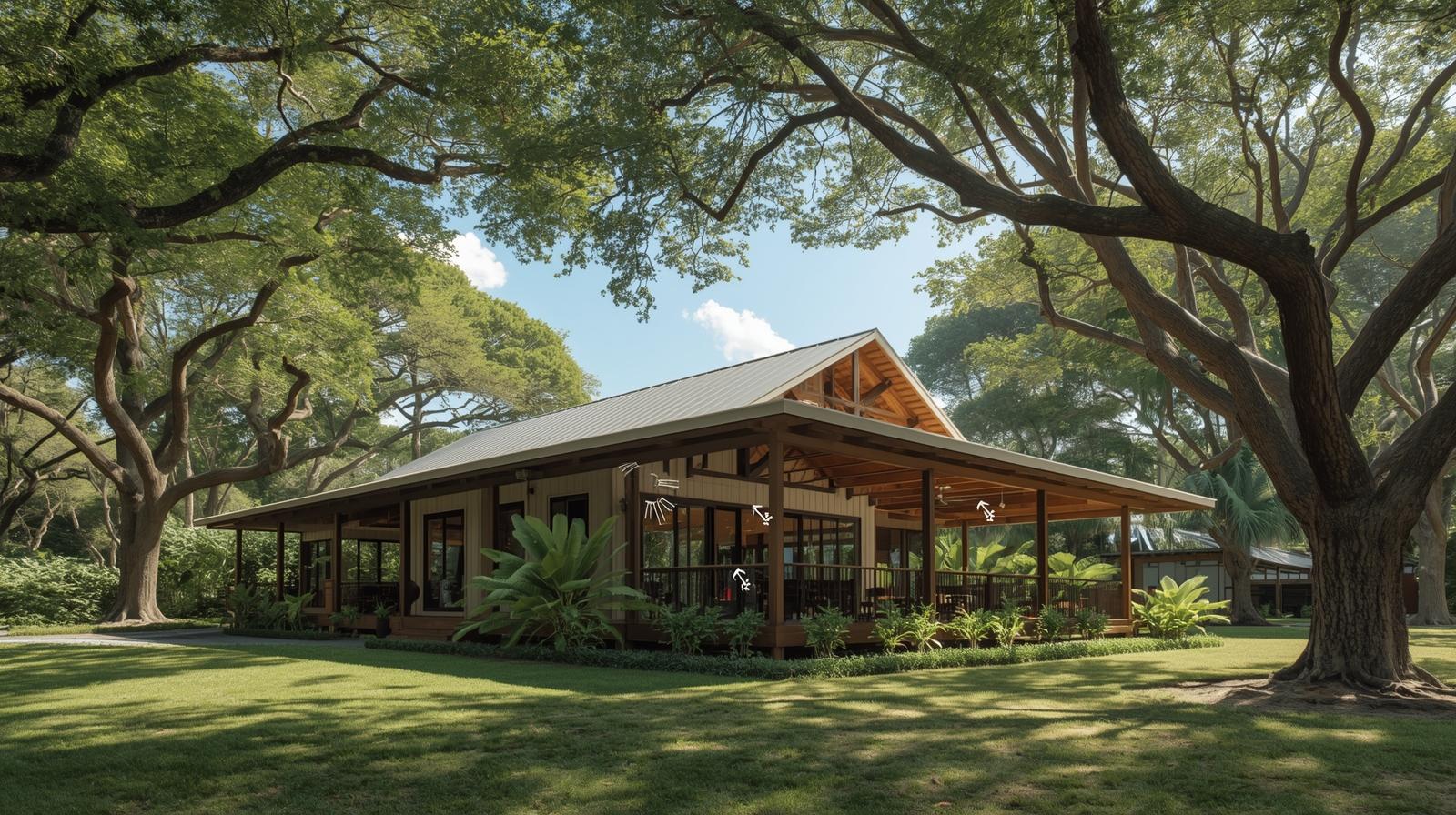
From the floating bamboo houses of the Philippines to the courtyard homes of Kerala, passive cooling has been the tropical world’s quiet hero for centuries. In this article, we’ll explore how to apply those same principles to your modern home — with tips, real-world case studies, and a few simple DIY tricks that can make your house breathe again.
⚡ Stay Powered When the Grid Goes Down
What if you could keep lights, devices, and even critical systems running during any blackout? That’s exactly what Dark Reset shows you how to do—using simple, proven methods. Discover lots of ways to prepare for energy independence.
The Science of Staying Cool Without AC
At its core, cooling isn’t about blasting cold air — it’s about controlling how heat moves.
There are three ways heat travels:
- Conduction: when it moves through solid materials (like hot roofs).
- Convection: when air carries heat around.
- Radiation: when sunlight heats surfaces directly.
Passive cooling focuses on stopping, redirecting, or releasing heat through natural airflow, shading, and materials that don’t trap warmth.
In humid climates, where high moisture makes air feel heavier, the goal is simple:
Block heat gain, release stored heat, and keep air moving continuously.
That means designing spaces that breathe, using materials that absorb and release heat slowly, and shaping shade so the sun warms the plants, not your walls.
Design Moves That Cool Your Home Naturally
1. Maximize Cross Ventilation
Airflow is your number one ally in the tropics.
Position windows and openings so that wind can enter from one side and exit the other — ideally along your area’s prevailing wind direction.
Key tips:
- Use louvered or casement windows instead of sliders; they catch breezes more effectively.
- Add vent blocks or transoms above doors to let hot air escape.
- Create open corridors or semi-permeable partitions that allow air to travel.
💡 Case Study – Balinese Open-Air Living:
Traditional Balinese homes are built as a series of pavilions surrounded by open courtyards. This layout allows air to circulate freely from all sides, keeping rooms 3–5°C cooler even under intense sun.
2. Use Roof and Wall Shading
Your roof is a heat magnet — it absorbs the majority of the day’s sun.
That’s why most tropical architecture focuses on keeping the roof cool.
Practical strategies:
- Apply reflective roof coatings or light-colored tiles to bounce sunlight away.
- Add vented air gaps beneath metal roofing so hot air can escape.
- Build extended eaves or awnings to shade walls and windows.
- Plant bamboo trellises or creeping vines along west-facing walls for living shade.
💡 Inspiration from Thailand:
Many Thai houses feature double roofs — one solid, one vented layer underneath. This “air cushion” keeps interiors surprisingly cool without a single watt of electricity.
3. Plant for Microclimate Cooling
Vegetation is nature’s air conditioner. Plants cool the air through evapotranspiration, reduce reflected heat, and even absorb humidity.
Planting tips for passive cooling:
- Place tall shade trees on the west and southwest sides.
- Use shrubs near walls to buffer radiant heat.
- Replace paved areas with grass or ground covers that hold less heat.
- Add green walls or balcony planters to shade facades.
💡 Case Study – Singapore’s Skyrise Greenery Project:
By integrating green roofs and vertical gardens across the city, Singapore lowered average ambient temperatures by up to 3°C, proving how powerful urban plants can be.
4. Choose Breathable Building Materials
In humid regions, thick insulation can actually make things worse by trapping moisture.
The goal is to let heat escape — not seal it in.
| Material | Thermal Behavior | Breathability | Ideal Use |
|---|---|---|---|
| Bamboo | Low heat storage | High | Wall panels, shading |
| Concrete | High | Low | Floors (stores coolness) |
| Clay Brick | Moderate | Moderate | Walls |
| Lime Plaster | Reflective | High | Exterior coating |
💡 Green Life Zen Tip: Use limewash or clay-based paints — they reflect sunlight and allow walls to “breathe,” unlike synthetic coatings that trap moisture.
5. Stack Ventilation (Hot Air Out, Cool Air In)
Hot air rises — so give it somewhere to go.
Stack ventilation uses vertical airflow to draw cool air in from below and release warm air above.
How to do it:
- Add high vents, clerestory windows, or roof turbines.
- Design open stairwells or vented attics to channel air upward.
- Keep ceiling fans circulating gently to support the upward draft.
💡 Case Study – Traditional Malay Homes:
Raised wooden floors and vented gables allow air to flow freely under and above the house. Even without fans, interiors stay comfortable thanks to this “chimney effect.”
Smart Modern Adaptations
Traditional designs are incredibly effective, but we can boost them with modern sustainable technology.
Solar Chimneys
Tall, dark shafts that heat up under the sun and pull hot indoor air upward — like a natural exhaust fan.
Reflective or White Roofs
White or ceramic-coated roofs reflect up to 30% more sunlight, keeping attic temperatures dramatically lower.
Cool Flooring
Materials like terracotta, polished concrete, or stone tiles stay naturally cool to the touch and help absorb body heat.
Smart Low-Energy Fans
Compact DC-powered fans enhance ventilation during windless days, consuming 70% less power than regular ceiling fans.
Related Post: Top Trends in Solar Power Technology.
Case Studies: Passive Cooling That Works in Humid Regions
Case 1: The Bahay Kubo — Philippines
This humble bamboo-and-thatch structure might be one of the world’s best-designed passive homes.
- Elevated floors allow air to flow beneath.
- Permeable bamboo walls release moisture.
- Overhanging thatched roofs create deep shade.
Despite the tropical heat, the Bahay Kubo remains cool and comfortable — a perfect model for natural ventilation.
Case 2: Singapore’s Zero Energy Building
A modern example of tropical design done right.
- Oriented to capture prevailing winds.
- Double-glazed windows with solar shading.
- Natural ventilation shafts cool the building’s core.
The result? Indoor temperatures are 5–6°C cooler than surrounding structures, with zero reliance on air conditioning.
Case 3: Kerala’s Courtyard Homes — India
Traditional homes in Kerala feature central courtyards that act as heat sinks.
During the day, the shaded courtyard stays cooler than the walls; at night, it radiates the trapped coolness back through the house.
Coupled with clay-tiled roofs and high ceilings, these homes maintain year-round comfort without electricity.
DIY Projects to Try at Home
1. Build a Solar Shade
- Use bamboo poles or reclaimed wood to create a 45° angled screen over west-facing windows.
- Add jute or reed mats for a rustic, breathable texture.
- Result: 60–70% less direct heat gain in the afternoon.
2. Create a Roof Vent
- Drill vent holes beneath the ridge of your roof (or install small attic vents).
- Add fine insect mesh and an angled rain shield.
- This simple fix can reduce indoor temps by 2–3°C.
3. The Reflective Window Trick
- Apply reflective foil boards or use white linen curtains behind windows facing west.
- The reflection bounces sunlight outward while letting diffused light in.
- Cheap, quick, and effective for renters or small apartments.
Common Mistakes to Avoid
| Mistake | Why It’s a Problem | Fix |
|---|---|---|
| Over-insulating walls | Traps humidity, makes rooms muggy | Use breathable materials |
| Glass roofs without venting | Creates heat traps | Add ventilation or reflective film |
| Sealing windows permanently | Blocks natural airflow | Install vented openings |
| Relying only on ceiling fans | Moves air but doesn’t release heat | Combine with exhaust vents |
Your Passive Cooling Checklist
1️⃣ Orient your home toward prevailing winds.
2️⃣ Install windows on opposite walls for cross ventilation.
3️⃣ Add overhangs or awnings to shade walls.
4️⃣ Choose breathable materials like bamboo or clay.
5️⃣ Ventilate at high and low points.
6️⃣ Surround your home with plants.
7️⃣ Use reflective surfaces wherever possible.
📌 Pin or print this checklist for your next home improvement project — your quick-start guide to comfort without the carbon footprint.
Conclusion — Cool Homes, Cool Planet
Passive cooling isn’t just about comfort — it’s about coexistence.
When we design homes that breathe, we’re embracing a rhythm that nature already perfected.
These timeless strategies — from the elevated bamboo floors of the Philippines to the shaded courtyards of Kerala — remind us that technology isn’t the only path forward. Sometimes, the smartest innovation is returning to what already works.
So before you switch on the AC tonight, ask yourself:
Could my home cool itself — if I just let it?
Because staying cool shouldn’t cost the earth.
⚡ Stay Powered When the Grid Goes Down
What if you could keep lights, devices, and even critical systems running during any blackout? That’s exactly what Dark Reset shows you how to do—using simple, proven methods. Discover lots of ways to prepare for energy independence.